Interpreting Binance Research's Account Abstraction Report
TechFlow Selected TechFlow Selected
Interpreting Binance Research's Account Abstraction Report
How is AA currently developing, and what about its ecosystem landscape, practical use cases, and the evolution of its development?
 Navigating Web3 tides with focused insights
Author: Colin Chan, Binance Research
Translation: TechFlow
Account abstraction (AA) has recently gained significant traction.
In July alone, nearly 300,000 smart contract accounts were created. Meanwhile, key players across the ecosystem are actively entering the space:
OKX and others have launched smart contract wallets; StarkNet and zkSync offer native AA support; Cyber Connect and Lens are also making strong moves...
Beyond discussions on what AA is, how far has it progressed? What does its ecosystem landscape look like, what use cases are viable, and how did we get here? From scattered articles and analyses, we often only gain fragmented impressions, lacking a systematic understanding of this technological frontier.
Recently, Binance Research released a comprehensive report on account abstraction, offering a systematic analysis of these questions. Given the report's length, TechFlow has summarized and interpreted its core insights to help readers better grasp the essential viewpoints and conclusions.
Key Takeaways
-
With the introduction of ERC-4337, account abstraction (AA) is now supported on Ethereum’s mainnet without requiring changes to the core consensus layer.
-
StarkNet and zkSync have already launched native account abstraction solutions, while wallet providers such as Argent and Bravoos are actively adopting them.
-
Use cases range from traditional institutions like Visa exploring the field, to protocols such as Lens Protocol and CyberConnect adopting AA—demonstrating tangible and potential benefits that encourage user adoption into Web3 environments.
AA Technical Implementation
-
For details on Ethereum account types—such as the difference between EOA and AA—we refer readers to the original report.
-
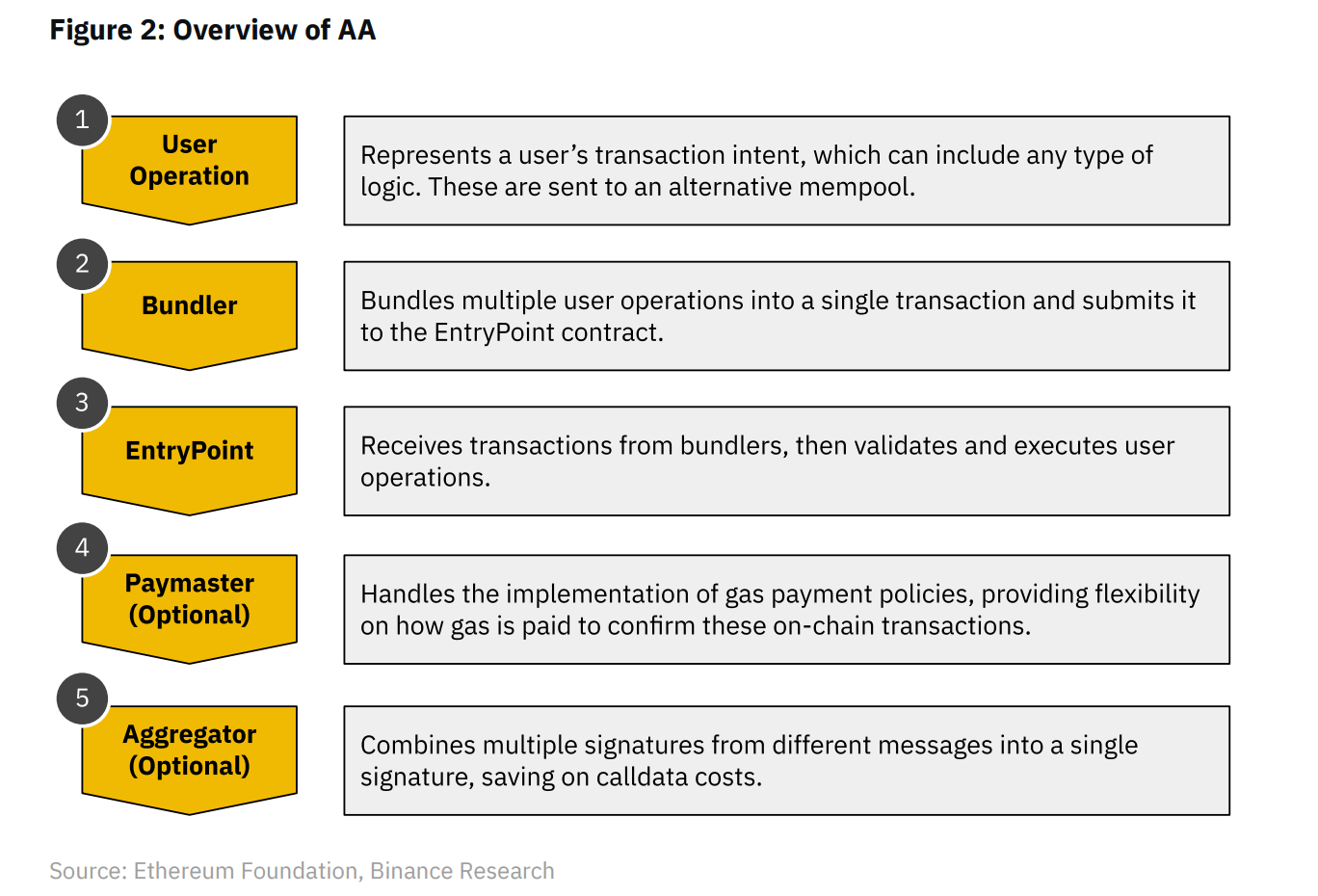
General technical implementation of AA can be understood through the following key components, which interact to enable developers to build smart contract wallets compatible with on-chain dApps.
The summarized workflow is as follows:
-
Users interact with the abstraction layer via a frontend interface, which converts user actions into underlying transactions.
-
The EntryPoint smart contract verifies user signatures and processes transactions initiated by the abstraction layer.
-
The Paymaster contract pays transaction fees for user operations.
-
On-chain applications interact with user operations just as they would with regular externally owned accounts (EOAs).
-
AA Ecosystem Landscape
The AA ecosystem has continued to expand over the past year, as developers recognize the need for clearer user experiences and more seamless interactions between users, wallets, applications, and end-users.
By implementing AA, existing infrastructure is enhanced and new possibilities for user participation in on-chain activities are unlocked. Advancements in this space can broadly be categorized into two parts: “Infrastructure” and “Social,” with key players illustrated below.
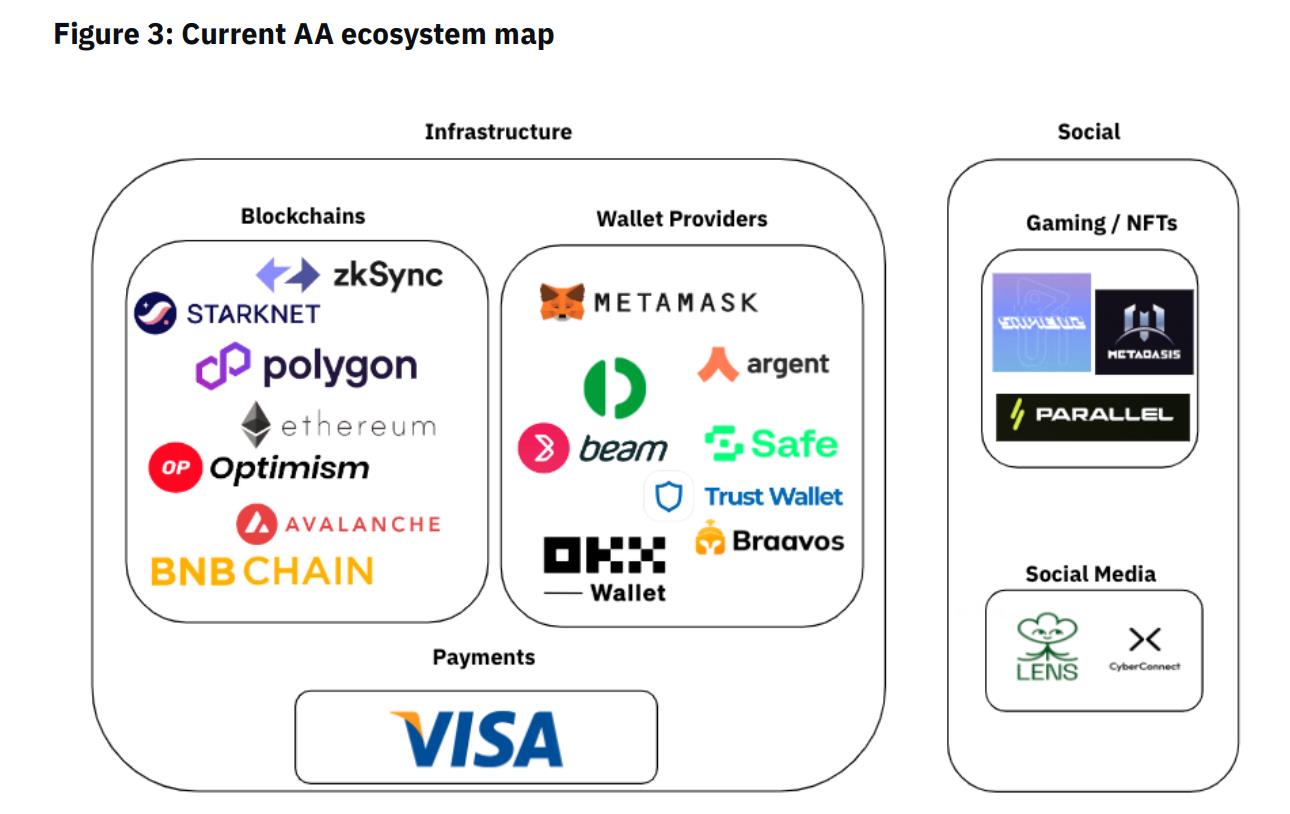
Key roles in the infrastructure segment:
-
Blockchains: EVM-compatible blockchains and zk-rollup scaling solutions supporting AA.
-
Wallet Providers: Offer users specialized functionality through AA-powered wallets.
-
Payments: Enable fee abstraction via Paymaster contracts, allowing users to execute digital transactions without holding the blockchain’s native token.
Key roles in the social segment:
-
Gaming/NFTs: Adoption of AA with token standards such as ERC-4337 and ERC-6551 to enhance on-chain gaming experiences and extend NFT utility.
-
Social Media: Integration of AA features like signature abstraction to allow users to continuously engage Web3 wallets with social networks.
Market Adoption of AA
-
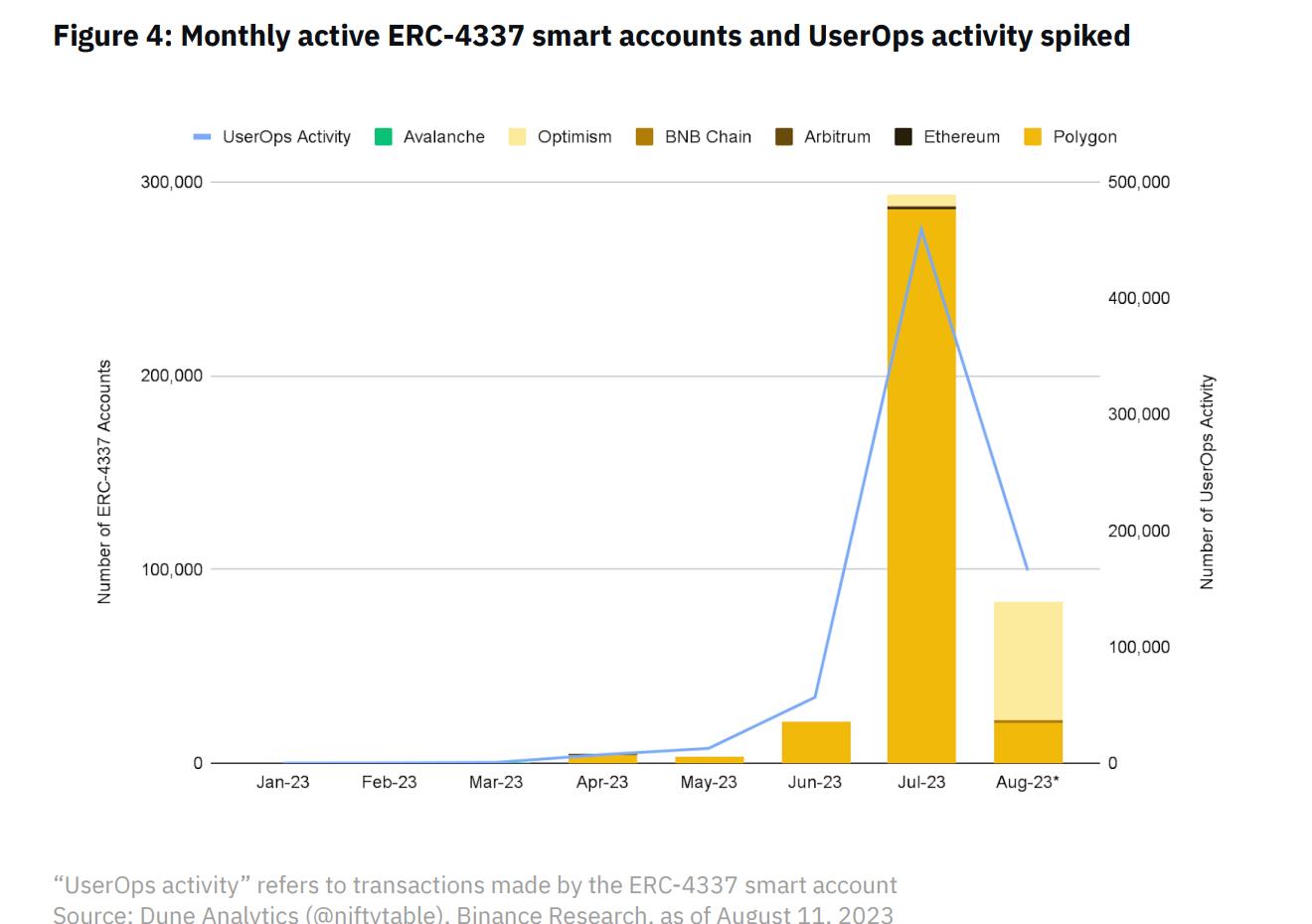
Key milestone: The ERC-4337 EntryPoint contract was officially deployed on March 1st this year. Since then, transaction activity and the total number of ERC-4337 smart accounts have surged—especially in July.
-
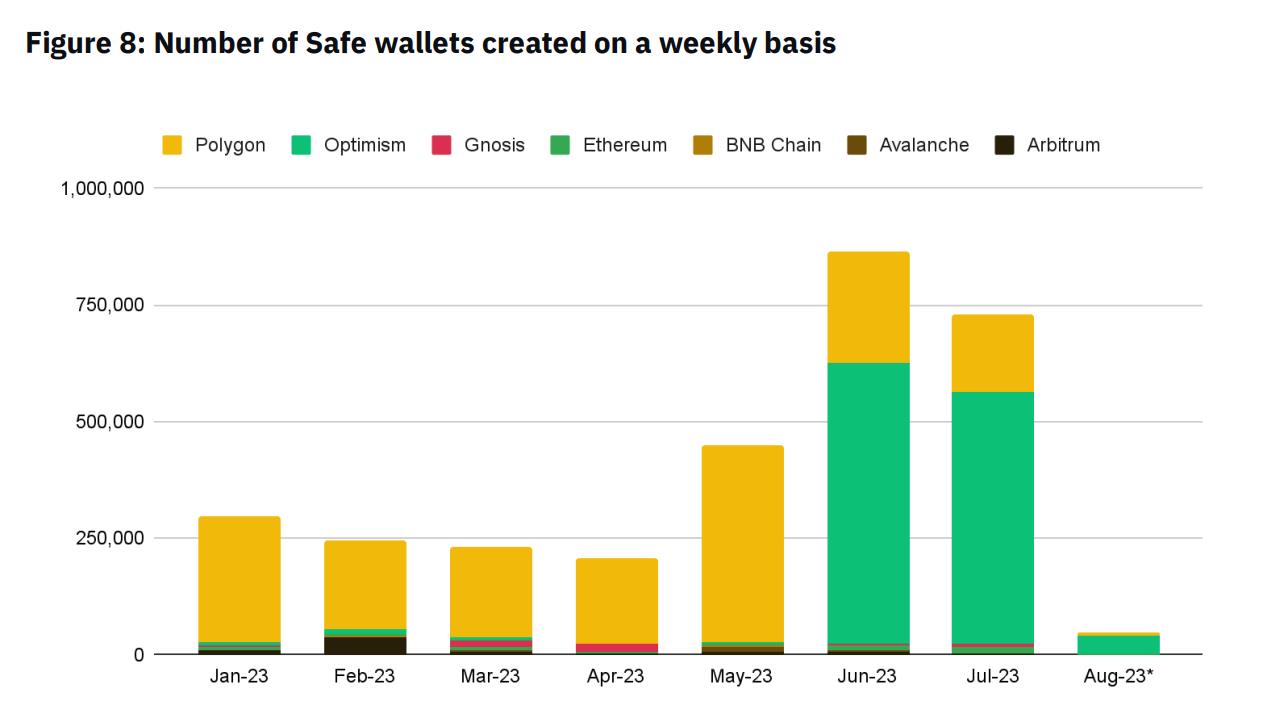
The number of smart accounts has steadily increased, with nearly 300,000 created in July alone, accompanied by a sharp rise in associated user operation activity.
-
Most AA activity is driven by Polygon, primarily due to the launch of the social network CyberConnect, where all user accounts are ERC-4337 wallets.
Overview of AA Use Cases
To understand AA use cases, the report highlights key infrastructure projects implementing new functionalities using token standards such as ERC-4337 and ERC-6551. These projects prioritize improving end-user UX, aiming to drive real-world blockchain adoption.
Payment Use Cases Based on Paymaster
-
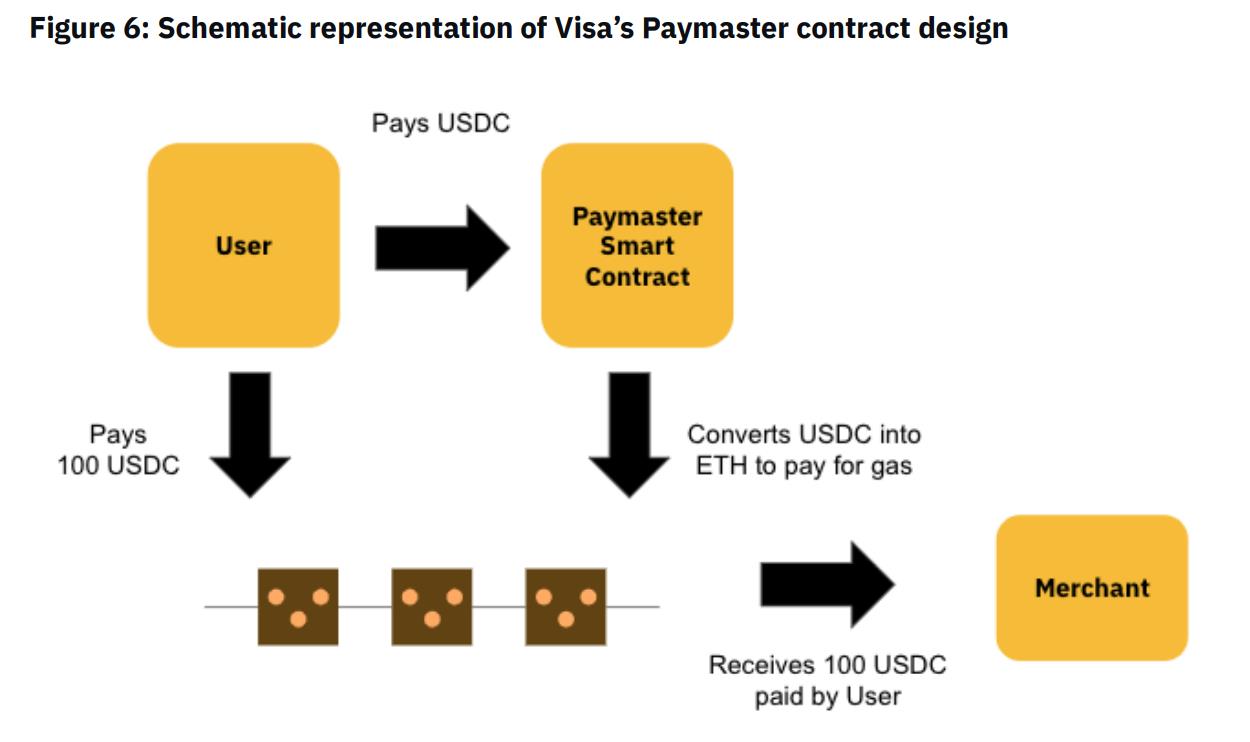
Paymaster is a component of ERC-4337. In simple terms, it acts as an intermediary that receives tokens from users and exchanges them for the blockchain’s native token to cover gas fees.
-
Notable examples include:
-
VISA: Visa demonstrated a solution using Paymaster contracts to abstract basic blockchain interactions and improve the on-chain payment experience through self-custodied smart contract wallets. Currently at the proof-of-concept stage, the goal is to reduce friction for users transacting via their wallets—enabling payments in any token while having the Paymaster cover gas costs—exploring the "untapped potential" of digital transactions for consumers.
-
Additionally, Visa is exploring other initiatives allowing users to pay gas fees directly using Visa cards.
-
Other Paymaster use cases:
-
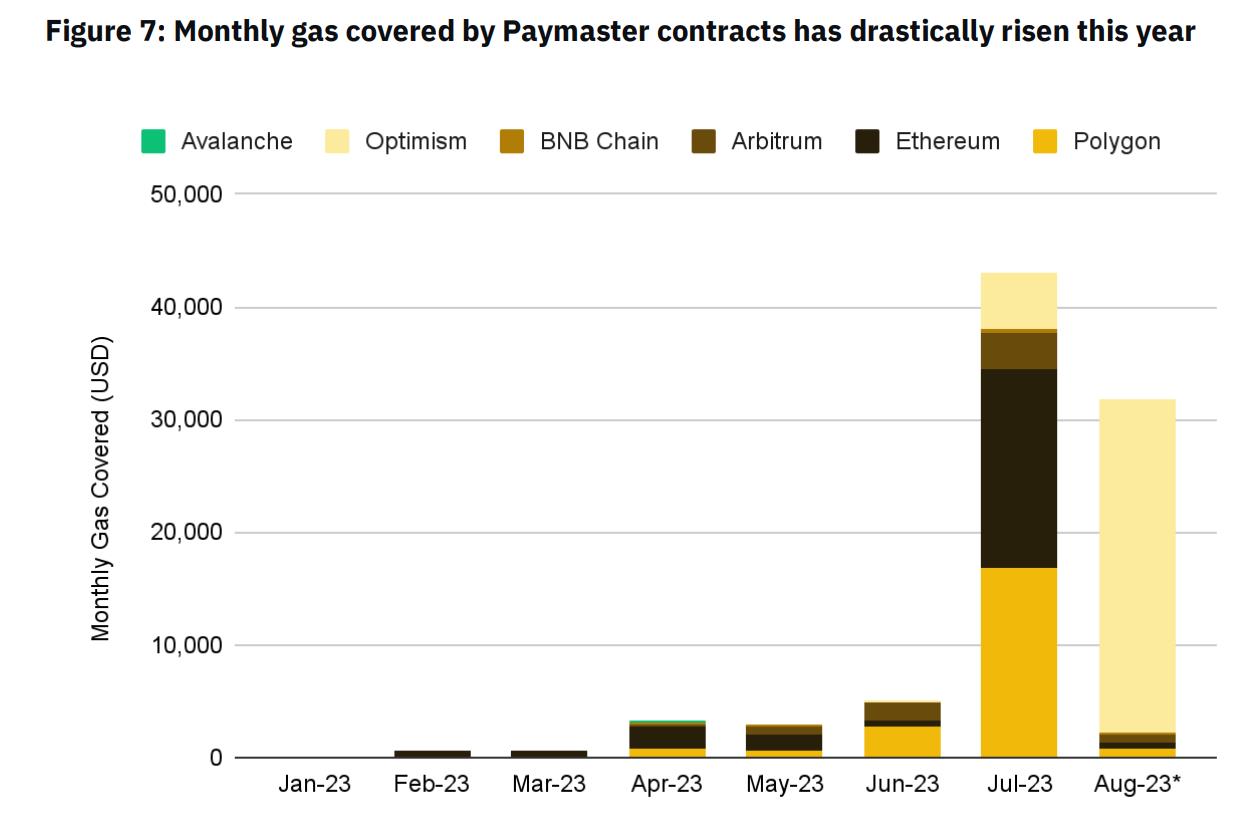
Overall growth remains steady, led by Optimism. This aligns with the late-July launch of Beam wallet on OP, enabling users to pay transaction fees in the same token used for transfers, rather than the chain’s native token.
-
In the chart below, the total gas volume processed by Paymaster contracts has significantly increased, indicating growing demand for these intermediary services to simplify user experience.
-
Wallet Management Use Cases
-
By integrating AA into existing wallet solutions, accounts are enhanced into programmable smart contract wallets, unlocking new features such as batch transactions and social recovery.
-
AA-supported wallet management solutions include:
-
Safe:
-
Offers multi-signature schemes requiring multiple authorized entities to sign for a single account, instead of relying on a single private key.
-
Recently integrated the ERC-4337 standard via pluggable interfaces, providing developers modular tools to build and customize wallets.
-
Introduced signature abstraction, allowing users to customize rules for authorizing transactions. For example, users can set spending limits to automatically reject suspicious or unusually large transactions.
-
-
Argent:
-
Pioneered the concept of “social recovery,” enabling users to recover lost or forgotten private keys.
-
Users can nominate “guardians”—trusted wallets or accounts—as backup for recovering their own wallet.
-
Alternatively, users may perform off-chain recovery using email addresses or phone numbers, introducing familiar two-factor authentication mechanisms.
-
-
Braavos:
-
A smart wallet launched on Starknet utilizing signature abstraction.
-
Users can access their wallet using biometric features from their mobile device (e.g., facial or fingerprint recognition).
-
Delegated Transaction Use Cases
-
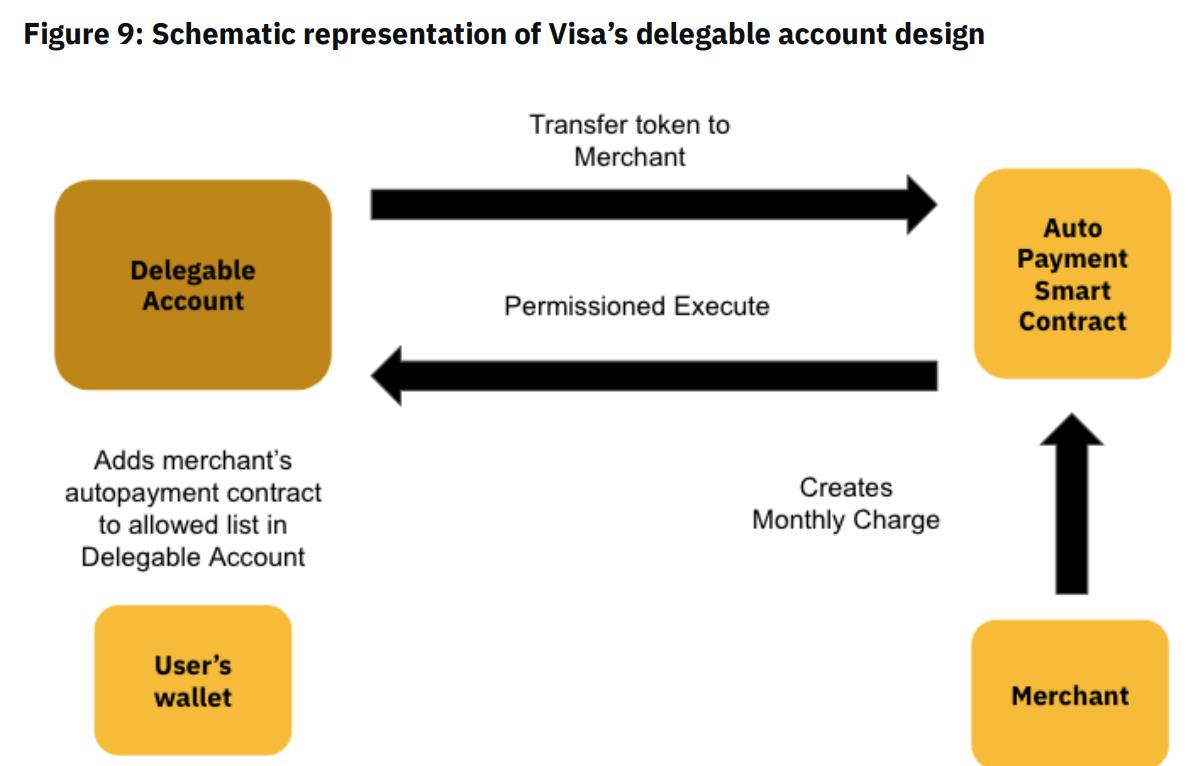
“Delegatable accounts” leverage AA to allow users to delegate signing authority to an approved external contract. The account contains user-defined rules, enabling interaction with designated applications without manually approving each transaction.
-
VISA’s Automated Payment Solution:
-
While maintaining full control over their wallet, users can approve automated payments for utilities and subscription bills.
-
This delegation effectively abstracts signature verification and transforms in-app user interactions into a smoother, more user-friendly experience.
-
-
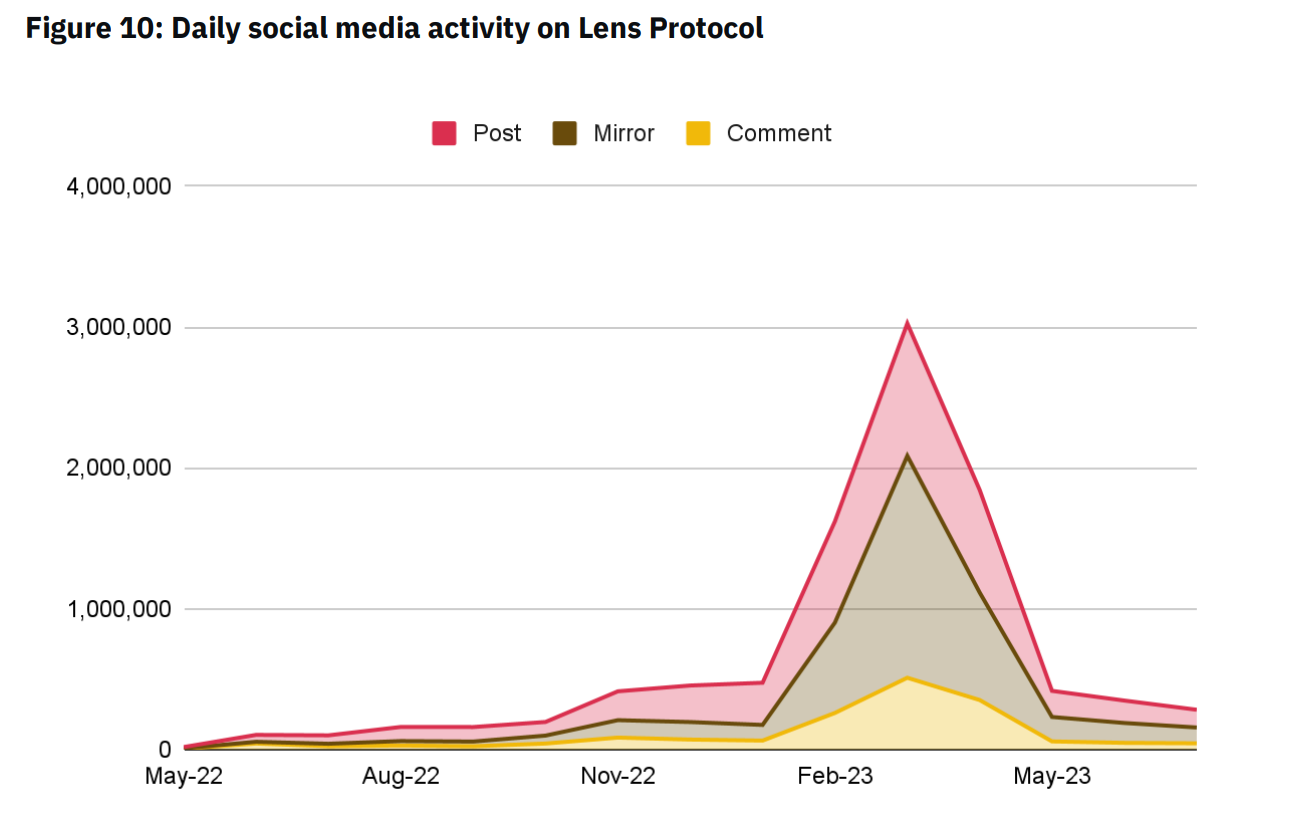
Lens Social Use Case:
-
Allows users to delegate signing rights to a dispatcher wallet to post, comment, and update profiles;
-
Enables continuous interaction with dApps without repeated approval;
-
The dispatcher also covers gas fees for these transactions, eliminating the need for users to hold the native token for in-app interactions;
-
This led to a temporary surge in platform usage.
-
Token-Bound Account (TBA) Use Cases
-
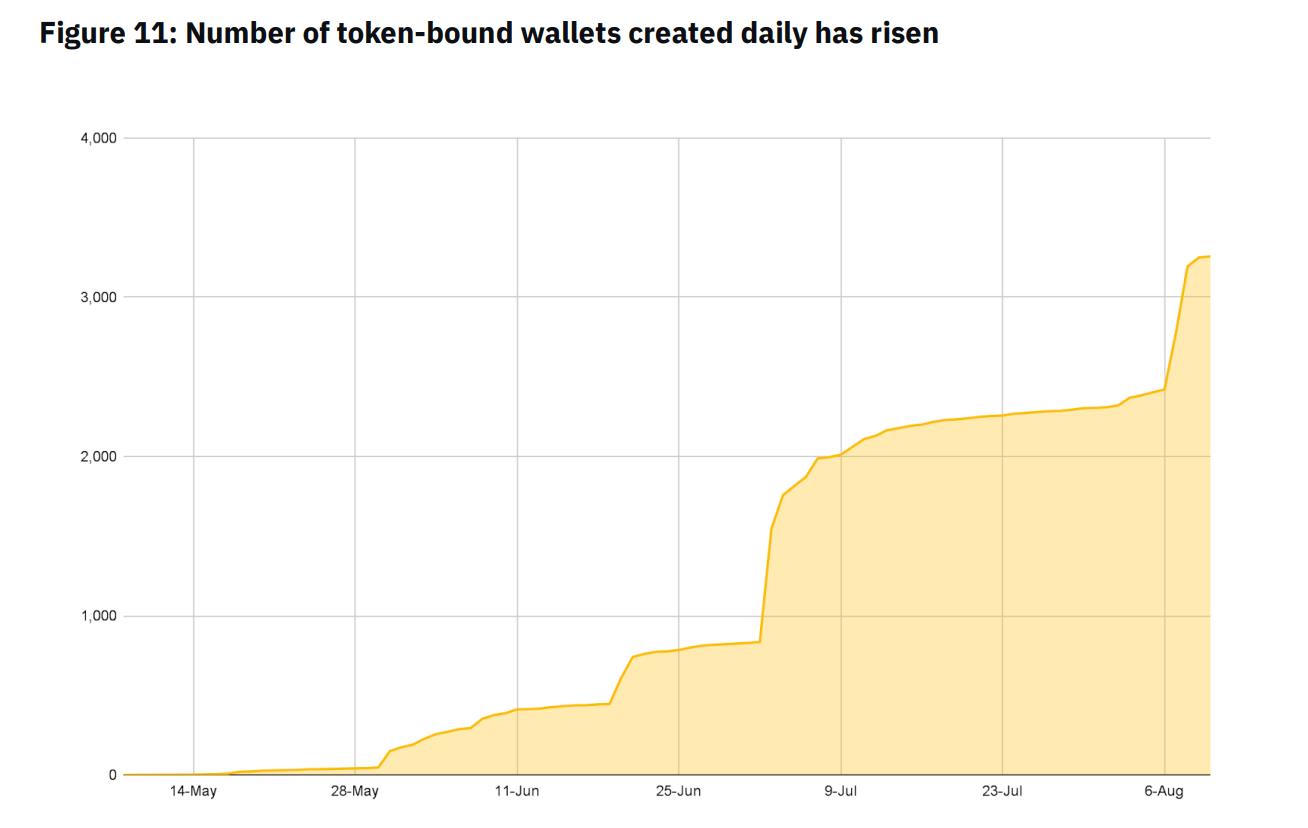
ERC-6551 introduces the Token-Bound Account (TBA) standard on Ethereum, empowering NFTs to function as “smart contract accounts” and become self-owned wallets via permissionless registration. This creates an integrated mechanism allowing owners to host NFTs within TBAs.
-
In the past month, TBA accounts have surged:
-
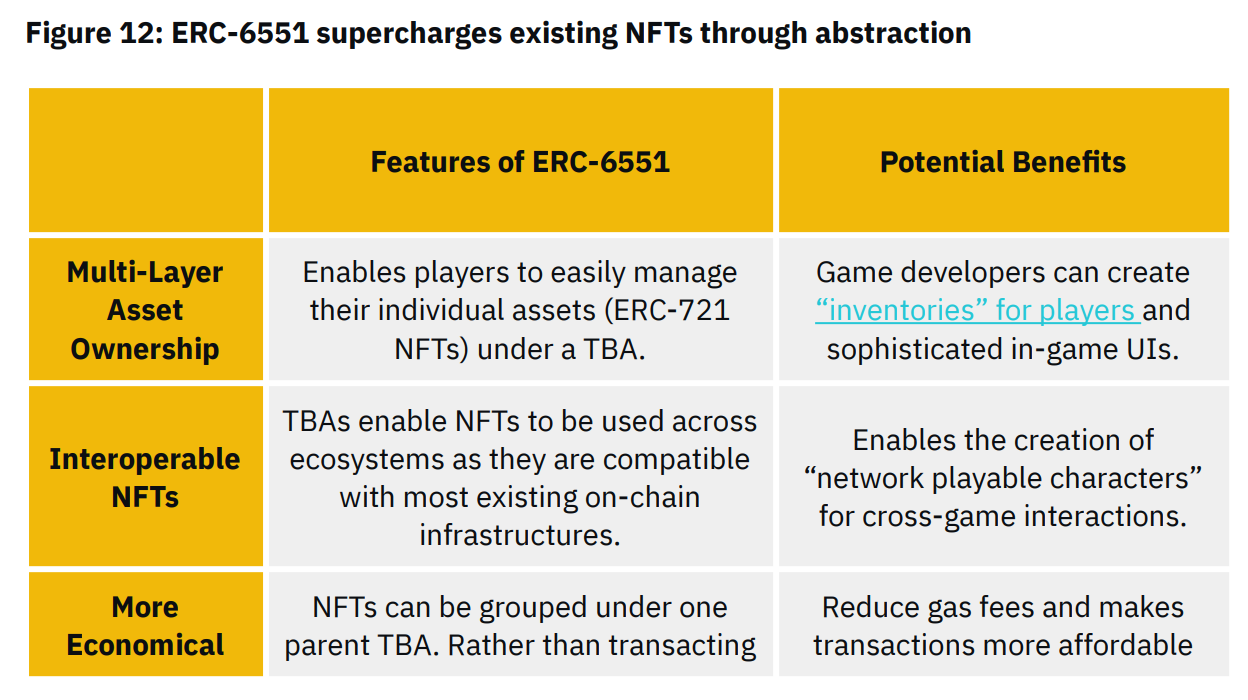
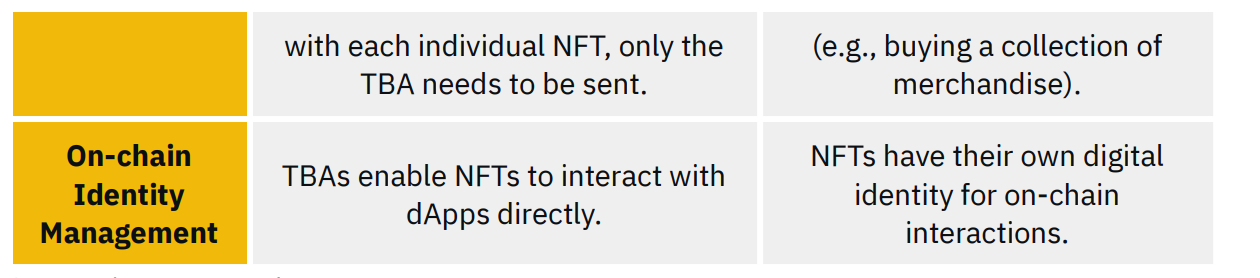
Through abstraction, existing NFTs gain powerful new capabilities:
-
Enable multi-layer ownership of assets
-
Facilitate cross-ecosystem interoperability for NFTs
-
Reduce gas costs, making transactions more economical
-
Grant NFTs their own digital identity
-
-
Use Case: Sapienz Street Culture
-
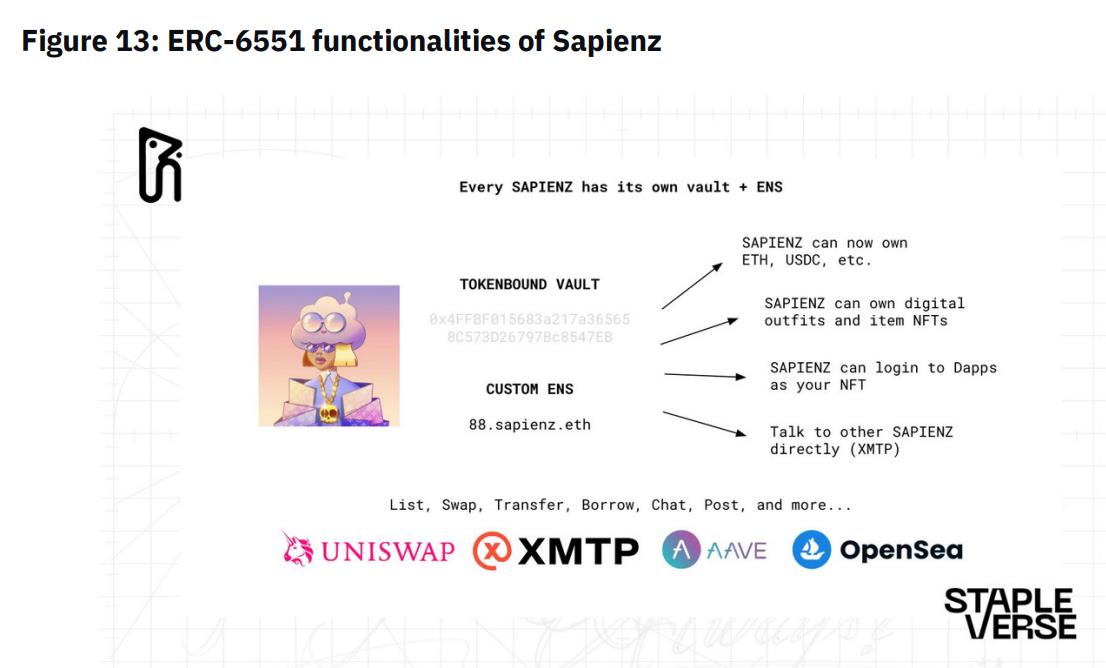
The Sapienz project brings the ERC-6551 standard to digital street culture.
-
Users receive a customizable character, whose appearance unlocks based on the NFTs they own.
-
The “character” is a customizable avatar users obtain. It serves as a virtual representation, with different visual traits unlockable based on the user’s NFT holdings. Users can equip their character with various accessories and personalize it according to their preferences.
-
Key Developments to Watch in AA
-
Currently, smart contract wallets rely on intermediary-operated “relayers” to convert user-signed messages into standard Ethereum transactions.
-
As a result, new Layer 2 chains are enabling developers to experiment with alternative AA implementations, including:
-
zkSync is the first EVM-compatible chain to implement native AA at the protocol level.
-
Similarly, the zk-rollup solution StarkNet has implemented AA.
-
Optimistic rollups such as Optimism and Coinbase’s Base have also adopted AA-like mechanisms.
-
-
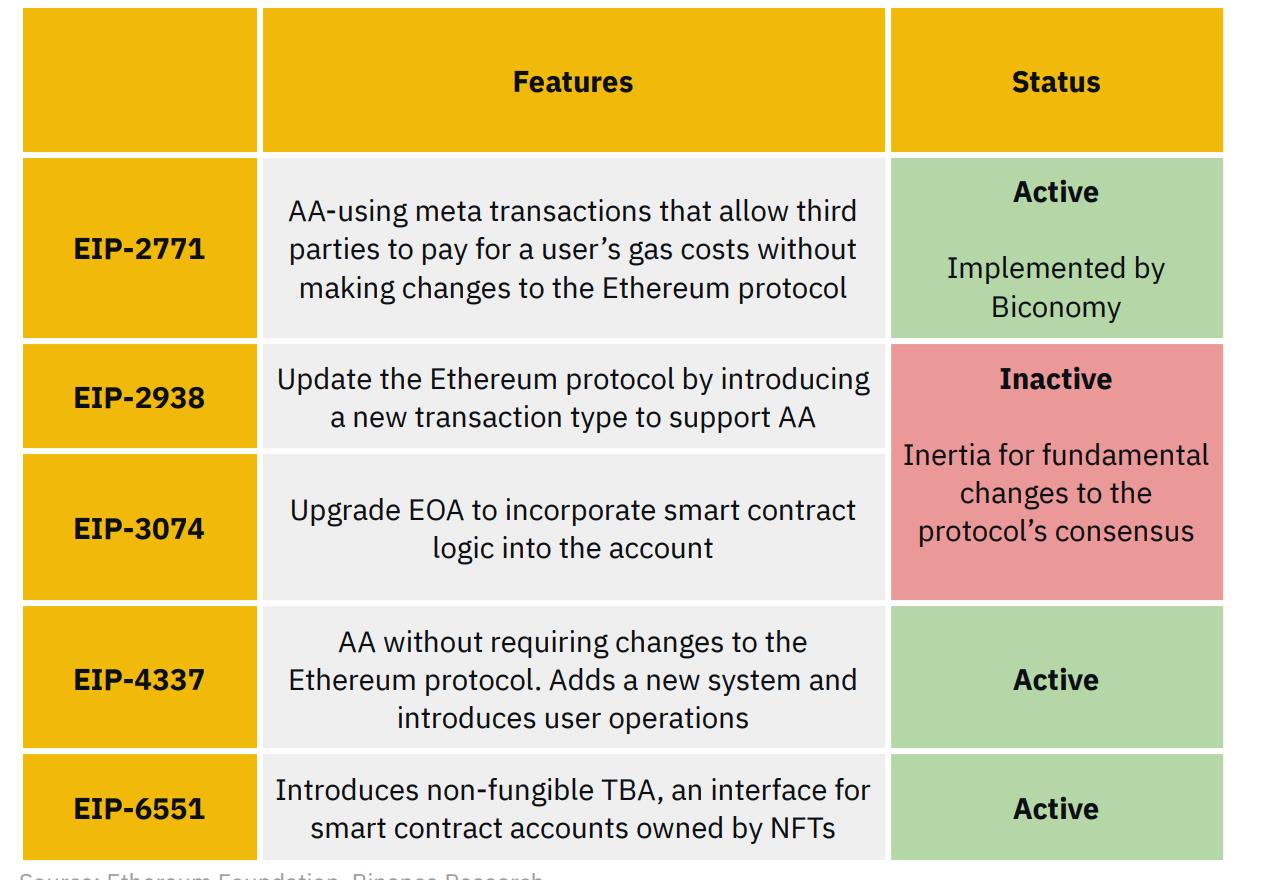
Proposals and protocols related to AA:
-
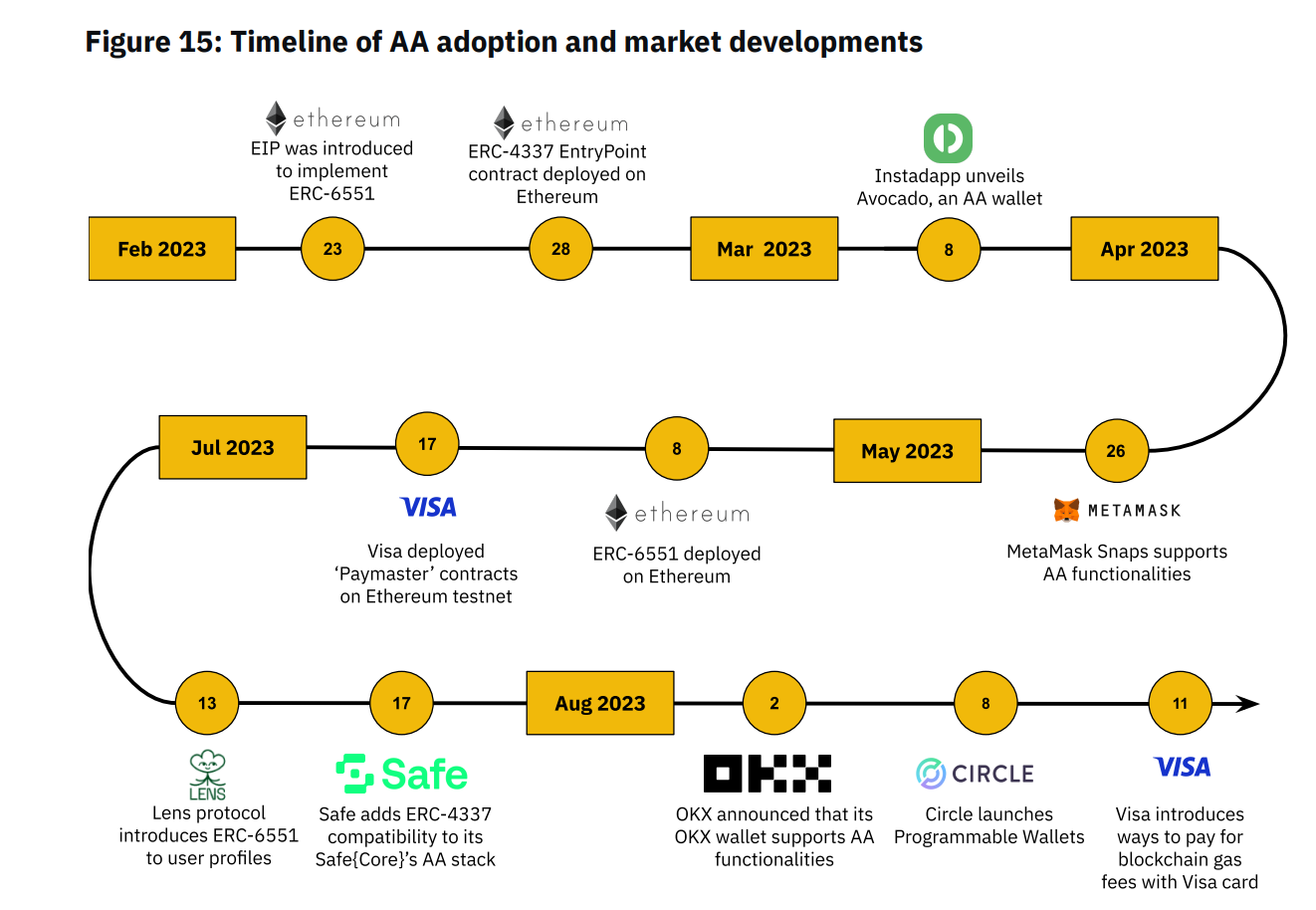
From proposal to adoption, a timeline of key events in AA development over the past six months:
Join TechFlow official community to stay tuned
Telegram:https://t.me/TechFlowDaily
X (Twitter):https://x.com/TechFlowPost
X (Twitter) EN:https://x.com/BlockFlow_News
 Binance Research