









The LSD Battle Among Project Parties of Chuan Yue Niu Xiong
TechFlow Selected TechFlow Selected
The LSD Battle Among Project Parties of Chuan Yue Niu Xiong
LSD and LSDfi-related protocols are still growing rapidly, and this is just the first shot in seizing the massive ETH TVL.
 Navigating Web3 tides with focused insights
Author: Flamie
Introduction
After Ethereum's Shanghai upgrade, LSDfi and ETH derivatives have undoubtedly become hot topics and narratives, as well as a sector attracting significant capital inflows. Unlike RWA, ETH staking addresses yield needs for crypto users in a more native way, becoming a key part of DeFi’s future narrative.
According to incomplete statistics, the current scale of ETH staking stands at 22.7M ETH, approximately $41.4 billion, while funds locked within LSDfi protocols remain under $1 billion.

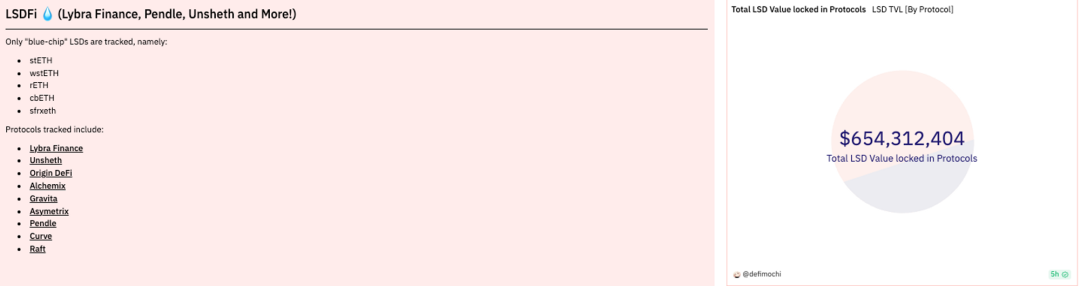
https://dune.com/defimochi/lsdfi-summer / https://ethereum.org/en/staking/
How to use ETH derivatives to build a "risk-free" yield foundation and leverage the massive ETH liquidity pool to create a flywheel effect has become one of the major看点 in the future of DeFi. In addition to protocols like Lybra and UnshETH that issue new protocol tokens to rent ETH and LSD TVL, even established DeFi projects that have weathered market cycles are quietly competing to absorb TVL.
This article reviews how tokenized projects have positioned themselves in the ETH staking / derivatives space.
1. Redacted Cartel
The bribe voting protocol Redacted Cartel officially announced in April its launch of Dinero, a stablecoin protocol backed by Ethereum blockspace — a derivative protocol leveraging premium blockspace markets through public, permissionless RPCs combined with ETH staking.
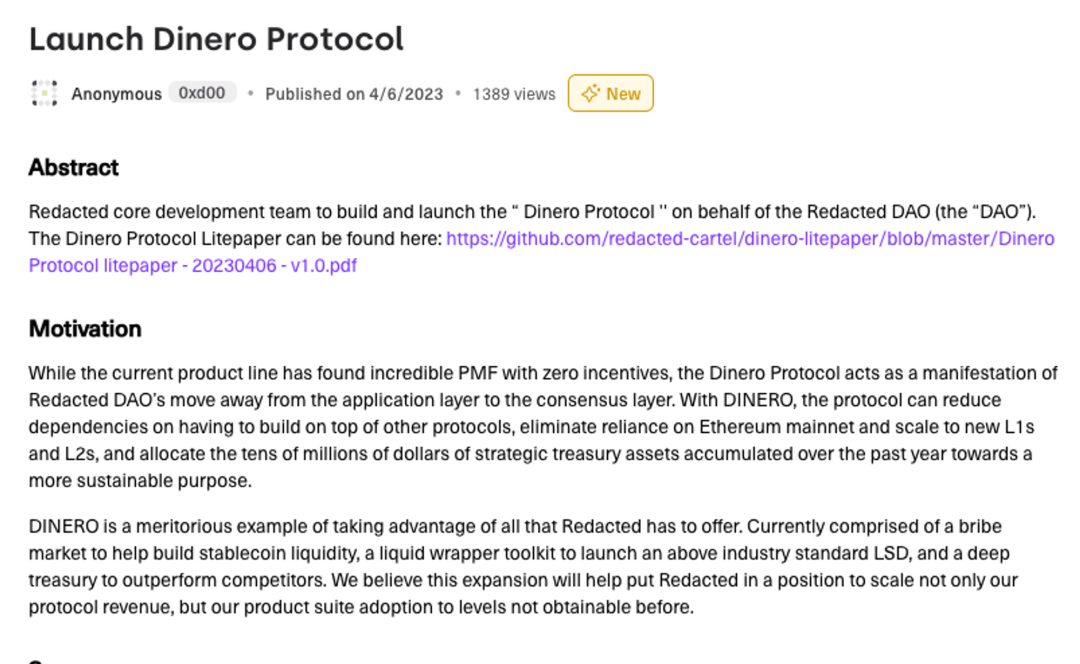
https://commonwealth.im/redacted-cartel/discussion/11005-launch-dinero-protocol
The stablecoin DINERO is minted via ETH over-collateralized CDPs. The deposited ETH is then used in ETH staking to bootstrap the Redacted Relayer RPC and block builder, protecting users from MEV, while Redacted Cartel will use its CVX and CRV governance power to bootstrap liquidity for DINERO and pxETH.
Similarly to the original DAI, the first version of DINERO will introduce a PSM (Protocol Safety Module) using USDC as collateral to mitigate price volatility. Additionally, when users mint DINERO using ETH/pxETH, the generated staking yield will be paid out in DINERO, with interest rates managed by the DAO. Dinero will also adopt an oracle design inspired by Liquity, utilizing two oracles.
Redacted Relayer completes the final piece of the Dinero puzzle, enabling meta-transactions where users can pay fees in any token to execute gasless transactions via the relayer. By accumulating sufficient ETH TVL, Redacted Cartel’s transaction processing and block-building capabilities will significantly increase, potentially enabling private mempool transactions in the future, such as payments for order flow.
Currently, the Dinero product has not launched.
2. ManiFold Finance
ManiFold Finance launched the ETH staking derivative mevETH in 2023, initiating a cross-chain liquid staking solution powered by LayerZero. Previously, ManiFold Finance had been focused on building an MEV stack comprising block builders, SecureRPC Relayers, and validators.
mevETH is a LayerZero-supported ETH staking derivative; users who mint mevETH with ETH gain additional yields from multiple MEV strategies supported by the stack. Initially, the protocol will generate revenue through arbitrage between ETH and mevETH prices. Moreover, since they operate their own validators, they can create custom blocks and ensure their inclusion on-chain.
To launch the protocol, Manifold acquired Cream Finance’s validator set. This means users who previously staked ETH with Cream Finance now stake with Manifold’s liquid staking protocol. Upon launch, this gives it control over more than 20,000 ETH. Going forward, Manifold aims to add restaking functionality to mevETH, allowing stakers’ ETH to secure multiple chains or protocols, taking on more risk for higher returns.
As of now, all ETH staked by users within Cream Finance has been redirected to launch new ETH validator nodes, with over 50,000 ETH already allocated to bootstrap mevETH staking.

https://etherscan.io/address/0x617c8de5bde54ffbb8d92716cc947858ca38f582#internaltx
3. Yearn Finance
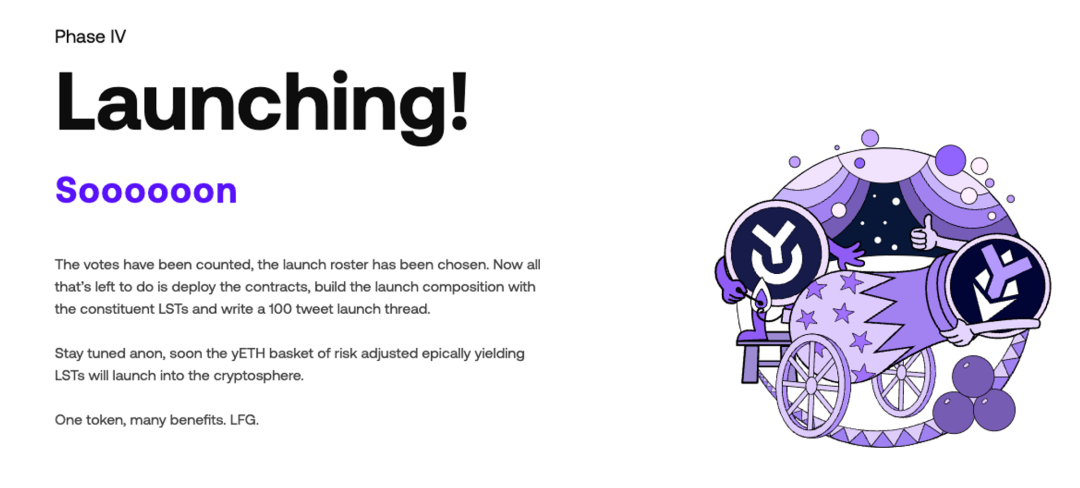
The yield aggregator Yearn plans to launch a new yield product yETH, aiming to replace a basket of LSD assets with yETH, diversifying risk across multiple LSDs and leveraging the protocol’s CRV voting power to direct liquidity and enhance yields.
Users deposit supported LSD assets into the protocol to mint yETH and stake it as st-yETH to earn compounding returns. The basket of LSD assets within yETH will be added via whitelisting, with each protocol seeking inclusion paying an application fee in yETH to yETH holders before the voting period begins—fees which are distributed to the POL contract—or adjusting relative weights accordingly.
The Yearn team formally proposed the initiative in April, receiving unanimous approval. Currently, the yETH product has not yet launched.

4. Index Coop
The cryptocurrency index protocol Index Coop launched dsETH, a diversified ETH staking index token composed currently of stETH, rETH, wseth, and sETH2.
Similar in intent to Yearn’s yETH, dsETH aims to provide holders with diversified exposure to LSDs. dsETH charges a 0.25% streaming fee to the protocol, with no minting or redemption fees. Currently, dsETH’s TVL has reached $1.5 million.

https://dune.com/index_coop/dseth
Additionally, Index Coop partnered with Gitcoin to launch gtcETH, allowing users to fund Gitcoin Grants through ETH staking rewards while charging a 2% streaming fee—1.75% directed to Gitcoin Grants and 0.25% to Index Coop. Index Coop also offers icETH, a leveraged liquid staking strategy product based on Set Protocol, delivering enhanced ETH yields. Currently, gtcETH’s TVL stands at $138,282.
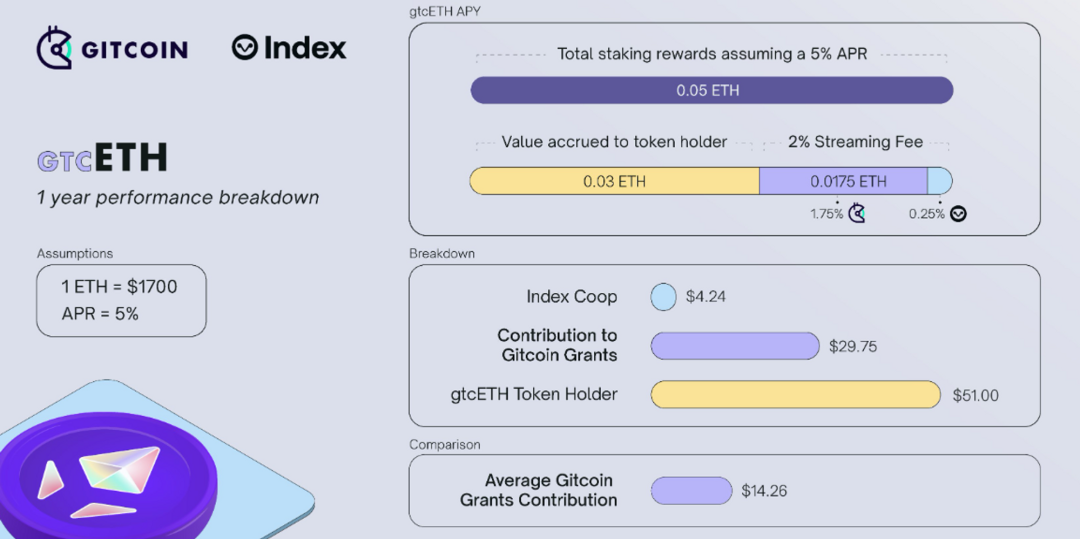
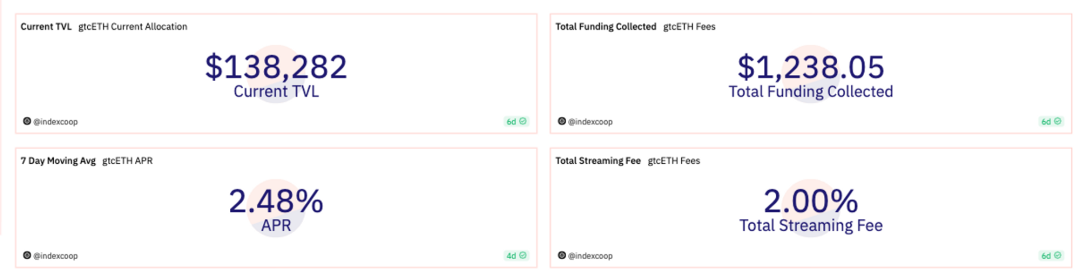
https://dune.com/indexcoop/gitcoin-staked-eth-index
5. Aura Finance
Aura, an ecosystem yield governance platform built on Balancer, is leveraging its ownership of over 35% of BAL voting power to incentivize various LSD and LSDfi protocols to create pools on Balancer.

Founder 0xMaki has actively forged close partnerships with leading ETH staking protocols. Rocket Pool was the first underlying staking protocol to collaborate closely with Aura, and since the partnership began, its TVL has increased tenfold.
Currently, wstETH has over $30 million in TVL incentivized through Aura Finance, LSDfi protocol Raft Finance has attracted over $30 million in liquidity guided by Aura, and BadgerDAO’s native token paired with rETH has around $15 million in liquidity, collectively absorbing over $200 million in LSD-related funds.


https://aura.defilytica.com/#/pools
6. BadgerDAO
The once-popular yield protocol BadgerDAO announced plans to launch eBTC, a synthetic asset backed by ETH and LSD, aiming to bring BTC into Ethereum’s DeFi ecosystem.
eBTC uses a CDP-based design allowing anyone to borrow eBTC against stETH at 0% fee, aiming to become the most capital-efficient method of using stETH on mainnet. eBTC allows minimum collateral ratios of 110%, offering users over 10x leverage to maximize capital exposure. The protocol also enables various market strategies, including long ETH for yield or shorting BTC with 10x leverage. Due to the correlation between ETH/BTC, users can utilize their ETH staking yields to reduce liquidation risk.
Currently, eBTC remains in internal testing.
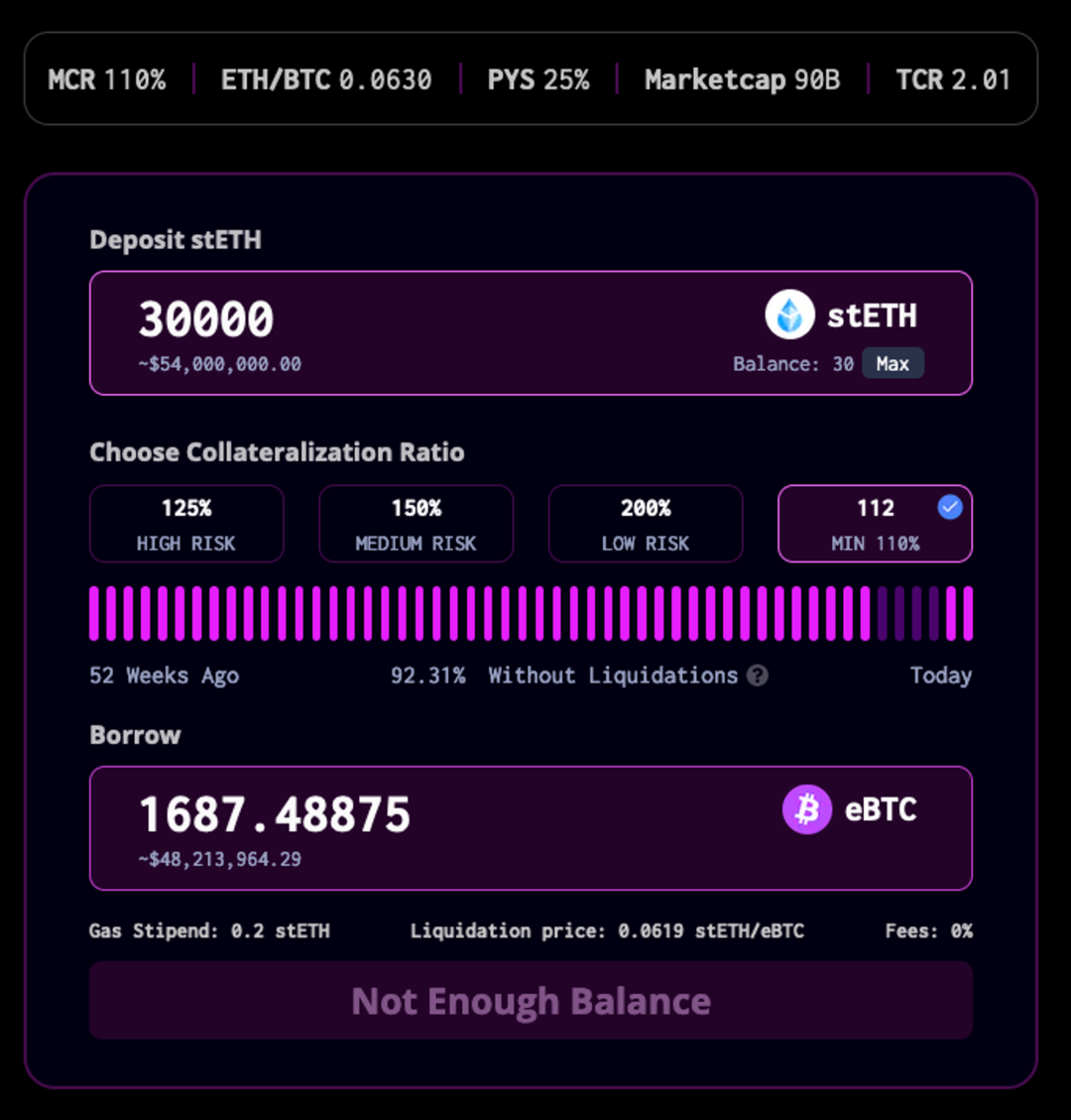
https://github.com/Badger-Finance/ebtc-purple-paper/blob/main/eBTC_Protocol_-_Purple_Paper.pdf
7. Pendle
Pendle is undoubtedly one of the biggest winners in the LSDfi narrative of 2023. By timely integrating various LSD assets, the protocol successfully rode the wave of the LSD narrative, securing a relatively stable source of assets and effectively telling its yield-bearing story—details of which are beyond the scope of this article.
After the V2 upgrade, vePendle reduced gas fees and enabled ETH payouts to stakers, giving rise to ecosystem projects Equilibria and Penpie built around its veToken. To date, Pendle’s AMM has absorbed over $50 million in ETH staking TVL.

https://defillama.com/protocol/pendle
8. Tokemak
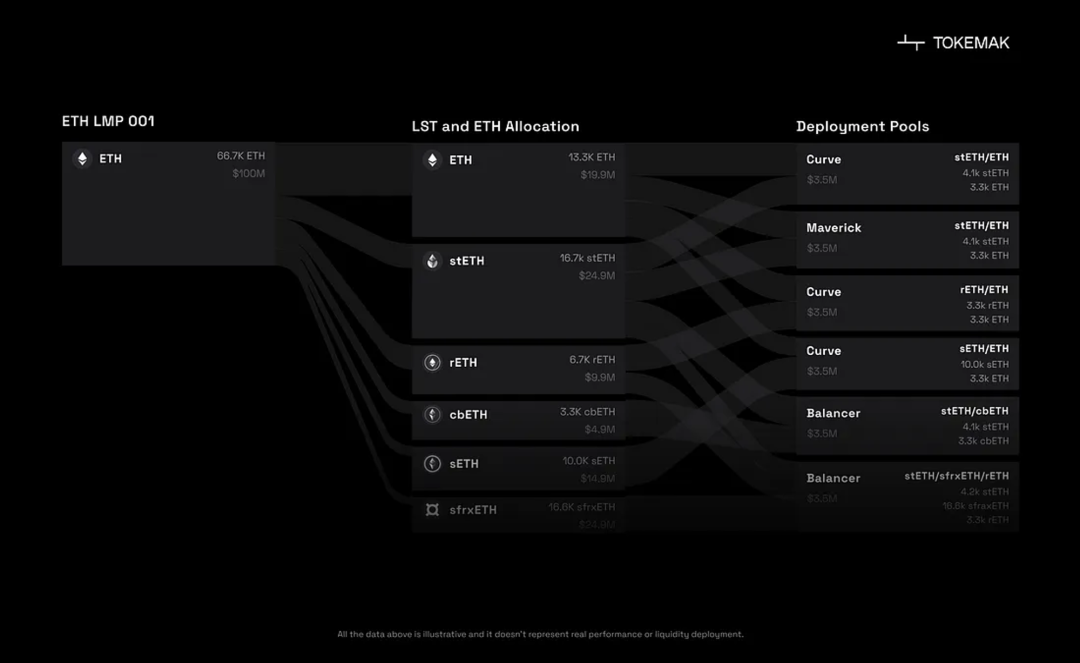
After suffering significant TVL outflows following a prolonged stagnation, liquidity protocol Tokemak announced the upcoming launch of Tokemak V2, introducing Dynamic Liquidity Management Pools (LMPs) primarily serving LSD assets.
The new system includes two independent products: the first, Autopilot, optimizes LP yields across different pools and DEXs; the second, a liquidity order book, enables DAOs to rent liquidity based on transparent market rates. Tokemak V2 will roll out sequentially, with Autopilot launching first, followed by the DAO liquidity marketplace.
Tokemak V2 provides DAOs and LPs with liquidity management pools, initially focusing on ETH liquid staking tokens, offering LPs dynamic ETH exposure and LSD protocols new tools for liquidity management. Later, Tokemak V2 will expand its product suite to stablecoins, other stable pools, and volatile asset pairs.

Overall, LSD and LSDfi-related protocols continue to grow rapidly, with many new entrants emerging—such as Prisma, a stablecoin protocol built on Curve’s ecosystem, and Ethena, Arthur Hayes’ ETH delta-neutral stablecoin protocol. This marks only the beginning of the battle to capture the vast ETH TVL.
Join TechFlow official community to stay tuned
Telegram:https://t.me/TechFlowDaily
X (Twitter):https://x.com/TechFlowPost
X (Twitter) EN:https://x.com/BlockFlow_News
 Dr.DODO






