Podcast Notes | Conversation with the Founder of Frax Finance: An Innovation Journey from Stablecoins to Liquid Staking
TechFlow Selected TechFlow Selected
Podcast Notes | Conversation with the Founder of Frax Finance: An Innovation Journey from Stablecoins to Liquid Staking
Sam mentioned their long-term goal is to make FXS one of the top five digital assets, and they are systematically working toward that.
 Navigating Web3 tides with focused insights
Compiled & Translated by: TechFlow
In a recent Bell Curve podcast episode, hosts Mike and Myles sat down with Sam Kazemian, founder of Frax Finance, to explore FRAX’s innovative journey from a decentralized stablecoin to Liquid Staking Tokens (LSTs) and Liquid Staking Derivatives (LSDs). Sam shared insights into algorithmic stability mechanisms, decentralized trust, DeFi dominance strategies, and the decentralization roadmap for FRAX V2.
Read this 5-minute summary of the podcast to save yourself 60 minutes.
Below are the key takeaways from the conversation, transcribed, compiled, and summarized by TechFlow:
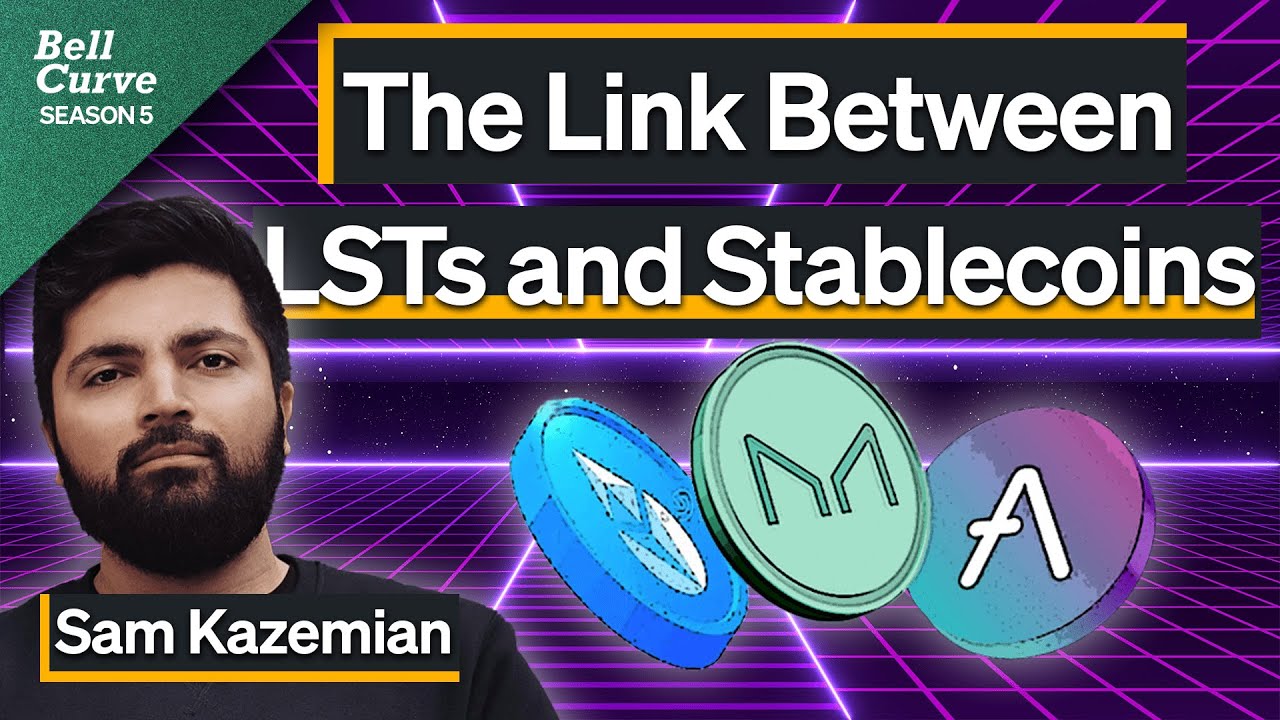
Hosts: Mike & Myles, Bell Curve
Guest: Sam Kazemian, Founder of Frax Finance
Original Title: “Frax’s Alternative Approach to Scaling LSTs”
Video Source: Bell Curve Podcast
Episode Link: Link
Release Date: August 15
The Evolution and Ecosystem of Frax Finance
-
Sam described the evolution of Frax, noting that it began as a hybrid algorithmic and collateralized stablecoin launched in December 2020. Since then, the Frax ecosystem has grown significantly and now resembles a multifunctional ecosystem composed of multiple integrated components.
-
Sam explained that Frax is more than just a stablecoin—it includes Frax Ether (a liquid staking token, or LSD), FPI (a stablecoin pegged to the Consumer Price Index), and a suite of sub-protocols such as Fraxlend (a standalone lending market) and Frax Swap.
-
The hosts asked Sam about the logic and sequence behind product expansion, particularly the shift from stablecoins to liquid staking tokens.
-
Sam drew parallels between cross-chain bridge protocols, liquid staking tokens, and stablecoins. He noted that many DeFi projects are effectively stablecoin issuers, even if they don’t realize it. Whether an LSD or a stablecoin, both involve balance sheet management and issuing debt matched to deposits. Sam explained the appeal of LSDs: users can earn additional yield without taking on significant extra risk.
-
Sam discussed how he uses first-principles thinking to guide product expansion. He believes the most important monetary units are the dollar, Ethereum, Bitcoin, and non-sovereign currencies tied to the Consumer Price Index (CPI). Frax aims to provide stablecoins for each of these units.
-
Sam mentioned Frax Chain, a hybrid roll-up set to launch by year-end, which will be the biggest release since Frax Ether and the dollar-pegged stablecoin.
-
Sam emphasized their vision for stablecoins—fully decentralized and automated. Their goal is to build a completely decentralized ecosystem that doesn't require trust in a core team to operate or manage the protocol.
-
Sam also discussed the roles of Fraxlend and the FXS token within the broader ecosystem. Fraxlend is a sub-protocol of Frax and functions as an independent lending market. It enables better collateral management and ensures issued debt matches deposits. The largest pairing on Fraxlend is Stake Frax Ether, a liquid staking derivative (LSD). By using its own LSD as collateral, the Frax protocol can support its dollar-pegged stablecoin.
-
FXS is the governance token of the Frax protocol. FXS holders participate in governance decisions and receive returns from protocol earnings. Sam noted that FXS holders capture value across multiple layers—for example, through borrower interest, growth in the supply of Frax Ether, and protocol fees paid by PoS validators. These components are crucial to the stability and sustainability of the Frax ecosystem.
Frax’s Governance Strategy & Logic Behind Product Expansion
-
The hosts asked Sam how he views competitive strategies against Lido and Eigen, especially regarding scaling and growing market share.
-
Sam analyzed two aspects: governance and decentralization, and the scope of their work. He fully agrees with Lido’s view that everything should be as trustless and autonomous as possible. Frax aims to launch fully decentralized protocols and is actively working toward that vision.
-
Sam explained Frax’s governance and decentralization strategy, including the new Frax Gov module—a fully on-chain, decentralized, multi-sig-free system for operating the entire Frax ecosystem. Sam believes that as projects grow larger, teams with ambitions for decentralized growth must expand into multiple domains.
-
Sam referenced MakerDAO’s expansion plans, including the potential Maker Chain, emphasizing the importance of maintaining decentralization during scaling.
-
Sam mentioned that Vitalik Buterin might have released a new token called "Roll Up" to scale Ethereum—but ultimately chose not to, avoiding that path.
-
Sam shares Vitalik’s belief in minimizing centralization. He pointed to FPI (the CPI-pegged stablecoin), which has its own separate governance token. However, as FPI and the broader Frax ecosystem mature and risks decrease, Sam believes it may eventually merge the FPI token back into the main Frax token.
-
Sam outlined their long-term goal: to make FXS one of the top five digital assets. They are systematically working toward this objective.
Competitive Advantages and Challenges of Frax V2
-
The host brought up Frax V2 and the plans around liquid staking, asking for specifics on what V2 entails and how it differs from the current state.
-
Sam introduced Frax V2, a complete redesign that significantly differs from V1. In V1, validators were operated by the core team, whereas in V2, anyone can run a validator in a permissionless manner.
-
Validators only need to deposit some ETH as collateral and pay an open-market interest rate to borrow and control a validator slot. This open-market mechanism encourages competition, as validators must offer the best service and rates to attract users.
-
Sam explained the motivation behind this design, calling it the most general way to build a fully decentralized LSD system. He compared it with other protocols like Rocket Pool and Lido, highlighting similarities and differences.
-
Similarities: Sam Kazemian noted that Frax V2, Rocket Pool, and Lido are all LSD systems that allow users to stake ETH and receive a token representing their stake. These tokens are tradable and usable across DeFi platforms. In all three protocols, users earn rewards from validator yields.
-
Differences: The key distinction of Frax V2 lies in validator selection and management. Lido maintains a curated list of validators selected and managed by its core team. Rocket Pool allows anyone to become a validator but uses a different market mechanism and governance structure.
-
Sam discussed the advantages and potential challenges of this model. He believes it enables full decentralization and minimal trust. The market-driven approach ensures validator efficiency, as only the most efficient validators will succeed in an open market.
-
However, it could pressure small validators and hobbyists who may struggle to compete with large-scale operators. Sam acknowledged this challenge but argued that the market mechanism ensures fair competition, as all validators have equal opportunity to attract users.
-
Sam reiterated their philosophy: stablecoins should be fully decentralized and automated. Their ultimate goal is a self-sustaining, trustless ecosystem that does not rely on a central team for operation.
Chain Aggregation vs. Wallet Abstraction
-
Sam and Mike discussed two distinct aggregation models:
-
1. Aggregating all activity onto a single chain, where data and functionality from multiple blockchains are consolidated onto one chain, enabling users to access and interact with various blockchains and protocols through a unified interface;
-
2. Or implementing chain abstraction at the wallet layer, abstracting different blockchain technologies and protocols into a single interface so users don’t need to understand underlying technical details.
-
-
Sam and Mike explored how chain abstraction and aggregation layers impact user experience and market dynamics. These layers simplify UX by allowing users to interact seamlessly across chains without understanding backend complexities. They also promote market competition by making it easier for users to switch between blockchains and protocols.
-
The first model—aggregating all activity onto a single chain—can greatly simplify user experience, enabling easy access to diverse protocols without technical knowledge. However, it risks centralization, as all data and functions converge on one chain.
-
The second model—wallet-layer chain abstraction—preserves decentralization by allowing direct interaction with multiple blockchains. However, it may increase complexity for users, who might need to manage multiple wallets and interfaces.
Join TechFlow official community to stay tuned
Telegram:https://t.me/TechFlowDaily
X (Twitter):https://x.com/TechFlowPost
X (Twitter) EN:https://x.com/BlockFlow_News
 深潮TechFlow