Podcast Notes | Conversation with Paradigm Research Director: How Will DeFi 2.0 Change Everything?
TechFlow Selected TechFlow Selected
Podcast Notes | Conversation with Paradigm Research Director: How Will DeFi 2.0 Change Everything?
Dan believes cross-chain transactions will be revolutionary, and future cross-chain technology will be more efficient and secure.
 Navigating Web3 tides with focused insights
Compiled & Translated by TechFlow
Dan Robinson is a General Partner and Research Director at Paradigm. Over the years, he has deeply explored DeFi markets, auctions, and liquidity—particularly focusing on Uniswap and Uniswap V3. Recently, Uniswap Labs launched UniswapX, a new Dutch auction mechanism that Dan believes reshapes paradigms across DeFi, MEV, and cross-chain interoperability.
5-minute podcast summary saves you 80 minutes.
Below are the key takeaways from the conversation, transcribed and compiled by TechFlow:
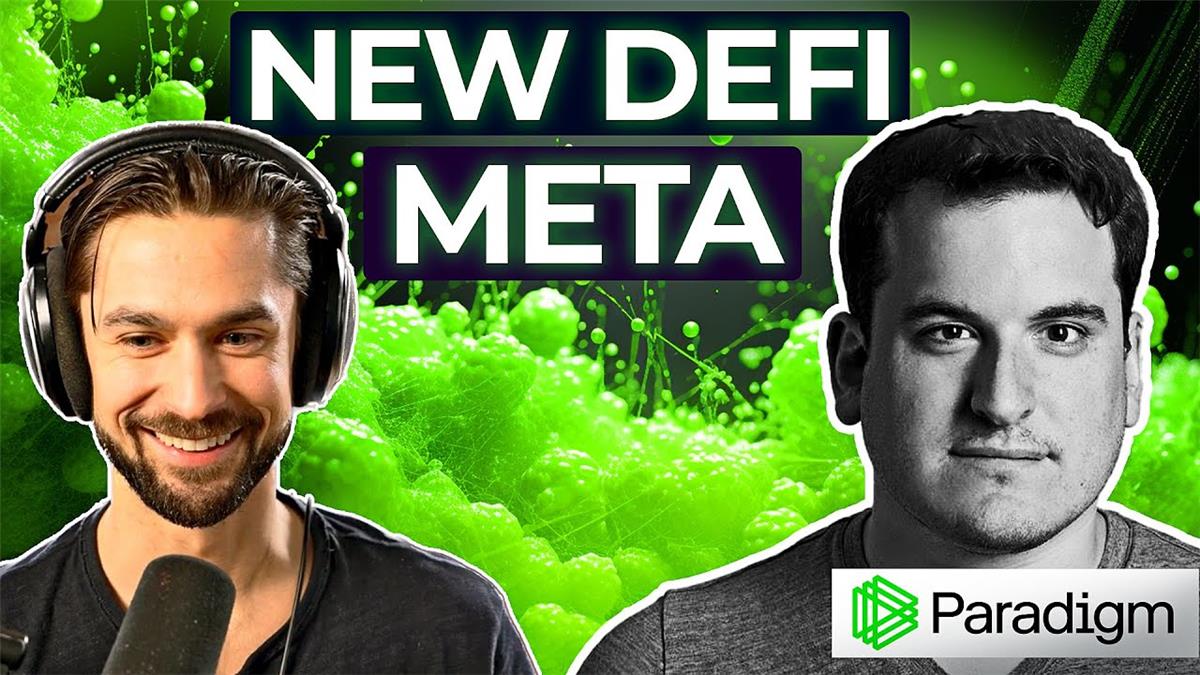
Host: David, Bankless
Guest: Dan Robinson, GP and Head of Research at Paradigm
Original Title: "DeFi 2.0: How This Changes Everything with Paradigm’s Head of Research, Dan Robinson"
Video Credit: Bankless Podcast
Episode: Link
Release Date: August 3
The Importance of Decentralized Exchange Research
-
Dan referenced his recent Twitter thread on Uniswap X—an analytical post outlining five reasons why he believes Uniswap X transforms decentralized trading, MEV, and interoperability.
(TechFlow note: The tweet includes a research paper—readers interested can view it via this link)
-
Dan emphasized the importance of research in decentralized exchanges, particularly regarding minimizing value leakage from the system. He highlighted three major sources of MEV: EIP-1559 fee burning, hedging and rebalancing losses, and price impact before and after trades.
-
While Uniswap V4 primarily focuses on reducing losses for liquidity providers due to arbitrage, Uniswap X centers on protecting swappers by ensuring they receive optimal execution prices.
-
Dan stressed that DEX research should revolve around two core participants: swappers and liquidity providers. Research should focus on maximizing value transfer between them while minimizing extraction by intermediaries such as MEV extractors, arbitrageurs, and even the Ethereum protocol itself.
The “Intent” Model & Dutch Auction Mechanism
-
The core idea behind Uniswap X is shifting from predefined trading paths to user intent. In traditional trading, users select a specific path and submit their transaction. In contrast, Uniswap X offers greater flexibility and better price execution by allowing users to express only their desired outcome.
-
Dan elaborated on the advantages of the “intent” model. Under this framework, users no longer submit concrete trade routes but instead sign an off-chain message expressing their intent. The entire MEV ecosystem then processes this intent—packaging it into a transaction and including it on-chain. This approach enables greater flexibility, allowing users to achieve optimal pricing rather than being locked into a single execution path.
-
The Dutch auction mechanism is a key component of Uniswap X. Prices start high and gradually decrease over time. When the price reaches a level where a buyer finds the trade profitable, they can immediately execute—without waiting for auction completion. This ensures users trade at what they perceive as the best possible price.
-
Dan noted that Dutch auctions are among his go-to mechanisms, serving as excellent tools for decentralized price discovery.
-
Dan added that Uniswap X opens a new frontier for exploration. This novel design space will require additional infrastructure and tooling to reach peak efficiency. He mentioned several potential innovations, including batch auctions, ring trades, and encrypted orders.
-
Dan continued discussing the benefits of the “intent” model, which offers greater flexibility and expressiveness. Users can define the range of outcomes they desire, not just fixed paths. Since intent processing occurs off-chain, computational costs are effectively zero—enabling extensive order matching without blockchain computation limits.
-
Dan described MEV (Maximal Extractable Value) as a natural force. While MEV may lead to unfair trading behaviors, when properly understood and harnessed, protocol designers can use it to enhance and optimize trading systems.
-
He likened MEV to a swarm of robots automatically and intelligently scanning for transactions that generate extra profits for block producers. Dan also mentioned other innovations like sealed-bid batch auctions and cryptographic techniques for trading.
(TechFlow note: A “sealed-bid batch auction” means that within a specific time window, all participants submit buy/sell orders confidentially. Orders remain hidden until the auction ends, at which point they’re revealed and matched according to predefined rules. This prevents market manipulation strategies like front-running, as participants don’t know others’ bids when submitting. Additionally, batching orders improves market liquidity and efficiency.)
The Role of Cross-Chain Technology in Uniswap X
-
Dan discussed the significance of cross-chain technology in Uniswap X, calling cross-chain trading revolutionary. He mentioned that Uniswap X plans to roll out cross-chain swap functionality later this year.
-
He further explained how cross-chain tech works—especially how bridges move assets between chains without requiring intermediary representative tokens. (Representative token: typically a token minted on the destination chain representing the original asset on the source chain.)
-
Dan pointed out that some cross-chain solutions create representative tokens, which could pose security risks. For example, transferring ETH from Ethereum mainnet to Optimism might yield a bridged version of ETH instead of native Optimism ETH.
-
He advised using official, chain-specific cross-chain technologies whenever possible, as these produce genuine, canonical assets rather than synthetic representations.
-
Dan predicted future cross-chain tech will become more efficient and secure. He believes cross-chain infrastructure will be vital to the crypto ecosystem, enabling seamless asset movement across different blockchains.
Uniswap V4 Innovations and Suave's Decentralized Off-Chain Solution
-
Dan shifted to discussing Uniswap V4, highlighting its benefits for liquidity providers. He provided context from Uniswap V3, especially its capital efficiency improvements. Uniswap V3 allowed LPs to concentrate liquidity within custom price ranges, boosting capital efficiency. Uniswap V4 expands on this with enhanced customization and strategic capabilities.
-
Dan mentioned potential Uniswap V4 features such as setting initial prices, adjusting fees dynamically, or restricting access for certain users.
-
Dan addressed profitability challenges for Uniswap V3 liquidity providers. Despite higher capital efficiency, most LPs reportedly lost money. Possible reasons include excessive liquidity provision, attempts to chase higher yields, and poor understanding of actual P&L dynamics.
-
He suggested potential fixes: fee adjustments, leveraging new Uniswap V4 functionalities to improve LP returns, and building new product features to attract liquidity.
-
The host brought up application-layer developments like Infinity Pools—a new app using Uniswap LP tokens as underlying assets. Dan believes such applications could increase demand for LP tokens, potentially generating higher returns for liquidity providers.
-
Dan introduced Suave, a platform aiming to decentralize all off-chain infrastructure—particularly operations that currently rely on trusted third parties.
-
Dan emphasized Suave’s significance, comparing its potential impact to the leap from Bitcoin to Ethereum. Suave brings similar programmability to off-chain operations—enabling complex logic execution off-chain while preserving decentralization.
-
Suave empowers developers with powerful tools to run code off-chain efficiently and privately, backed by decentralized guarantees.
Join TechFlow official community to stay tuned
Telegram:https://t.me/TechFlowDaily
X (Twitter):https://x.com/TechFlowPost
X (Twitter) EN:https://x.com/BlockFlow_News
 深潮TechFlow