Web3 Gaming Full-Stack Solution: Particle and Combo (Cocos-BCX) Co-create New Infrastructure
TechFlow Selected TechFlow Selected
Web3 Gaming Full-Stack Solution: Particle and Combo (Cocos-BCX) Co-create New Infrastructure
When 1 + 1 produces a result greater than 2, the product becomes more competitive in the market.
 Navigating Web3 tides with focused insights
For ordinary people hoping to jump into the Web3 world, which field should they start with? The answer is likely gaming—because it requires little specialized knowledge and its products are intuitive and easy to understand. But does being easier to grasp really mean it's easier to attract users?
Data from FootPrint shows that over the past year, more than 700 new GameFi projects launched, and throughout the year, the total number of active GameFi projects reached 2,100;
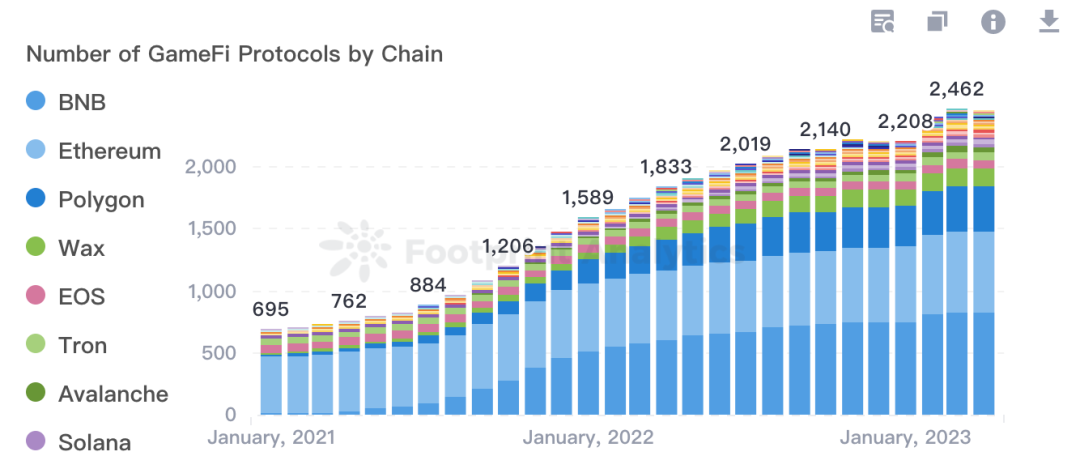
In stark contrast to this abundant project supply, only 14.5% of GameFi projects have more than 1,000 on-chain users. Behind the hype and buzzwords, it seems there aren’t actually that many players willing to participate.
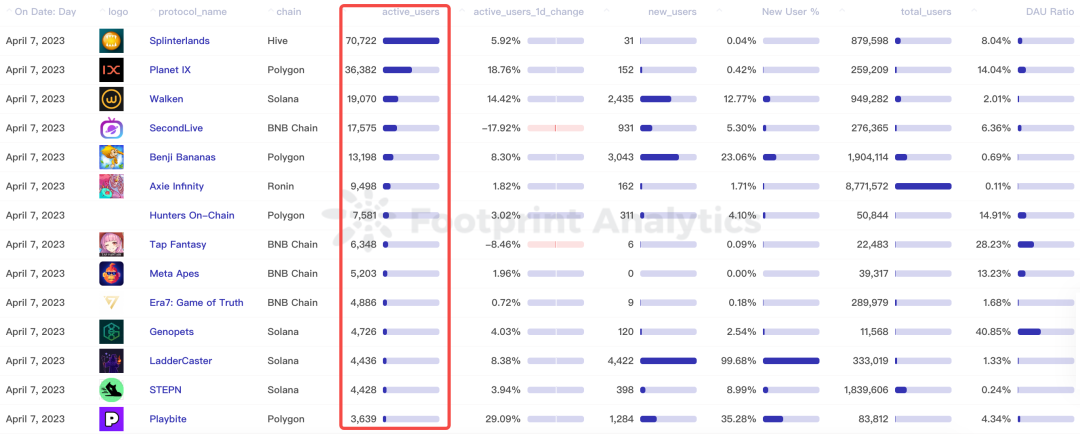
Why haven't Web3 games achieved mass adoption? Beyond commonly cited issues like excessive financialization, an often overlooked yet critical fact is: building a good Web3 game is inherently difficult.
Projects aren’t just creating a game—they must also handle wallets, NFTs, asset exchanges, and on-chain interactions, all of which add extra workload. Not every developer is proficient in these areas, and any failure in these components negatively impacts user experience.
Therefore, enabling great gaming experiences starts with empowering developers to build better Web3 games. Such support typically emerges through collaborations among infrastructure projects.
During recent events in Hong Kong, Cocos BCX announced a partnership with Particle Network, jointly launching an easy-to-use, one-stop solution specifically designed for Web3 game development, deployment, and operation.
At the same time, Cocos BCX underwent a full brand upgrade, rebranding itself as "COMBO".
One offers a full-stack middleware platform for faster app deployment; the other is a high-performance L2 built specifically for gaming. What new changes might their collaboration bring to Web3 development? Can they become capable allies for developers?
From a developer’s perspective, examining current pain points in Web3 gaming, potential solutions, and long-term visions may yield insights entirely different from those of average users.
Addressing Pain Points: The Real Difficulties and Challenges in Web3 Game Development
When we talk about poor GameFi or Web3 gaming experiences, what exactly are we referring to?
From a user standpoint, reasons may seem scattered—poor game quality, lack of playability, prevalence of gold-farming schemes, etc. However, through our collaboration with Particle Network and Cocos BCX, we found that today’s unappealing state of GameFi can be systematically attributed to two main factors:
Poor game content and subpar on-chain interaction experience.
Poor Game Content:
This aligns with subjective impressions, usually reflected in tangible aspects such as gameplay, art, animation, storylines, or modeling. Since the crypto industry remains in its early stages, and GameFi has only gained popularity in recent years, top-tier game development teams with genuine expertise have not fully committed to this space.
As a result, teams already familiar with DeFi and financial mechanisms easily create “mining games” focused on earning rather than playing—games with weak design capabilities that emphasize the “Fi” part over actual gameplay.
Low-quality game content is almost inevitable during the early phase of an industry. Users feel these games are simply not fun. Yet this doesn’t mean content quality cannot improve over time. As more experienced game studios enter the ecosystem, the situation is gradually improving.
Poor On-Chain Interaction Experience:
Compared to poor game content, issues related to on-chain interactions are more severe yet less noticeable. Unless viewed from a developer’s perspective, it's hard to recognize:
All behaviors now considered normal within the crypto community appear bizarre and confusing to outsiders.
Imagine a player with no prior crypto experience encountering numerous confusing scenarios while playing a GameFi title. For example, creating an account requires wallet signing—when strings of letters and numbers pop up asking for signatures, most users won’t know what they’re signing or why. Not to mention frequent transaction prompts involving contract interactions.
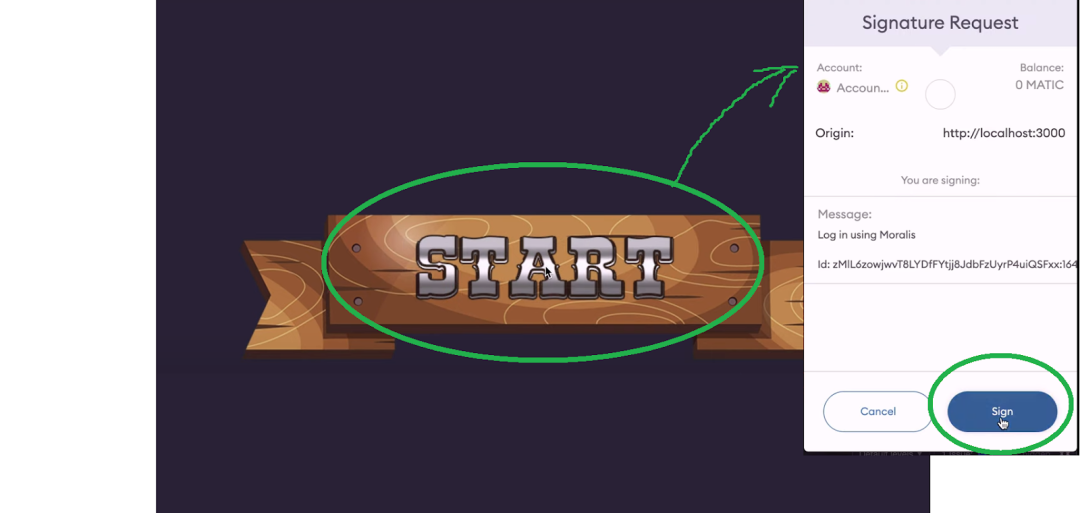
These poor on-chain experiences will become even more problematic with the rise of mobile gaming.
Consider a Web3 game on mobile—wallets are unavoidable. To store and transfer on-chain assets, a wallet is essential. How do you educate users to create one? And how do you enable seamless interaction between the game and the wallet?
If setting up a wallet requires leaving the game to register via an external website, and each in-game transaction demands opening another wallet app on the phone, the experience becomes fragmented and non-circular. Moreover, different wallets have compatibility issues, varying versions exist, and developers cannot predict which wallet users will choose—meaning mobile Web3 game developers must prepare for multiple wallet integrations upfront.
Thus, given the current linkage experience between mobile Web3 games and wallets, attracting mobile users remains inadequate. While everyone knows what kind of user experience is needed, the supply side simply cannot deliver.
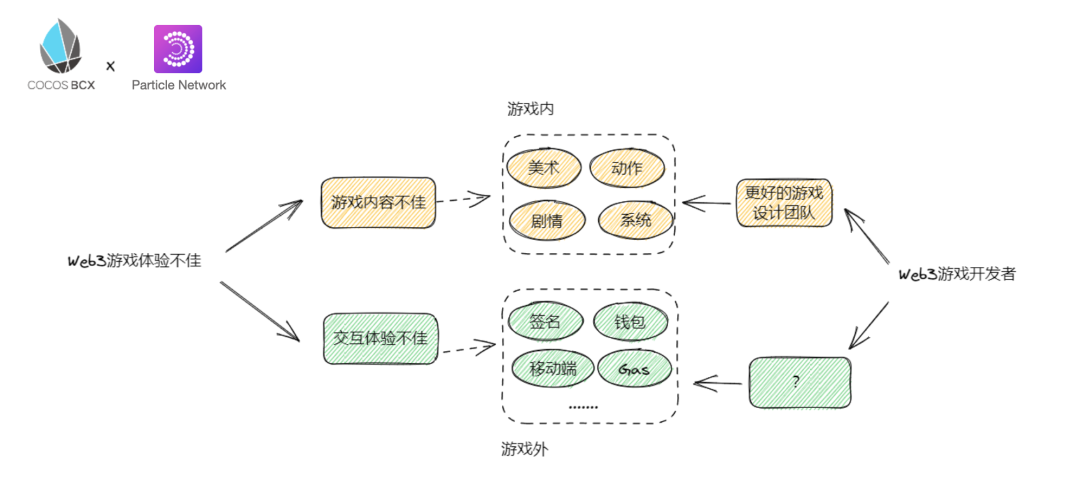
This leads to a common pain point for today’s Web3 game developers: it's extremely difficult to find a solution that enables both robust on-chain logic implementation and safe, user-friendly interactions.
Consequently, game projects end up making trade-offs. Some opt to sign transactions on behalf of users or offer custodial wallets, sacrificing security for usability. Others leave complex operations to users, ensuring security at the cost of user retention. Additionally, whether on mobile or desktop, there’s a widespread lack of mature development tools and solutions for on-chain interactions, leading to countless unresolved issues.
We’ve summarized some typical challenges currently faced by most game developers—key obstacles limiting broader user adoption:
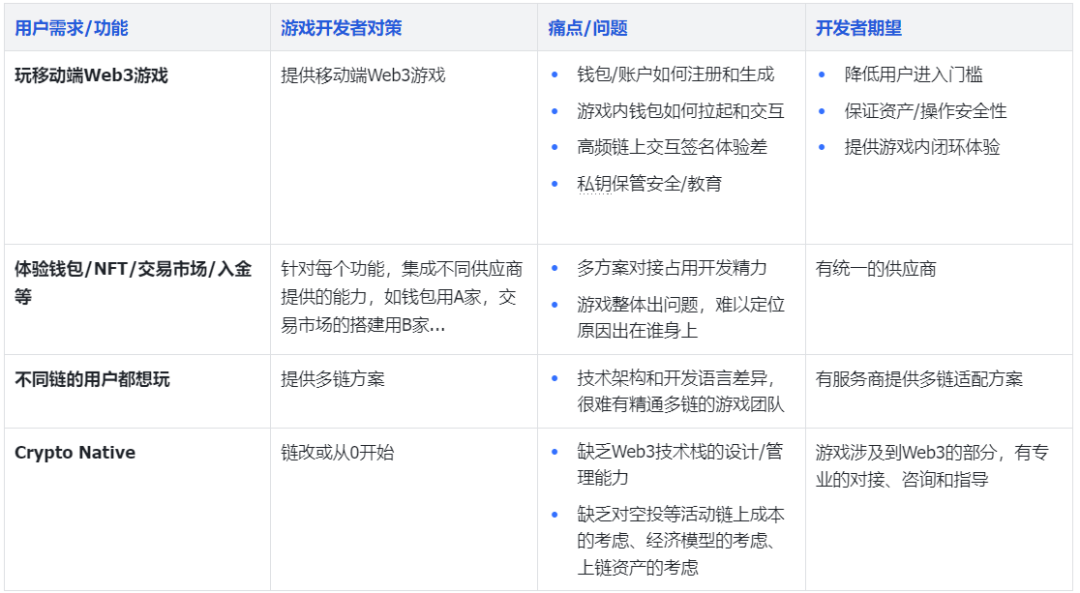
In summary, Web3 game developers aren't just building games—they're investing additional resources and effort due to blockchain integration. Coupled with weak performance and high gas fees on certain blockchains during peak demand, Web3 games lack a consistently stable operating environment.
By directly addressing these development pain points, we see that the GameFi sector faces challenges beyond the oft-repeated “gold farming death spiral.” It urgently needs professional support to alleviate developers’ burdens.
Shared Vision, Co-Creating a New Paradigm for Web3 Game Development
How can we solve the problems developers face?
The collaboration between Particle Network and COMBO (formerly Cocos BCX) offers a high-performance, user-friendly, one-stop full-stack solution for Web3 game development, allowing developers to benefit from a new development paradigm. Non-technical readers might struggle to grasp such abstract concepts, so let’s first examine the specific offerings of Particle Network and COMBO individually.
Particle Network: A Full-Stack Middleware Platform for dApps
Middleware might sound unfamiliar, but think of it simply as a bridge helping applications integrate into Web3. For a Web3 application, beyond core product features, various crypto-related components are required—such as public-private key account systems, wallets, NFTs, and asset trading.
These diverse tools and technologies can all be provided by Particle Network, enabling apps to seamlessly integrate them into their own systems before delivering unified services to end users.
By analogy, Particle Network acts like a “raw material supplier,” while dApps function as finished products.
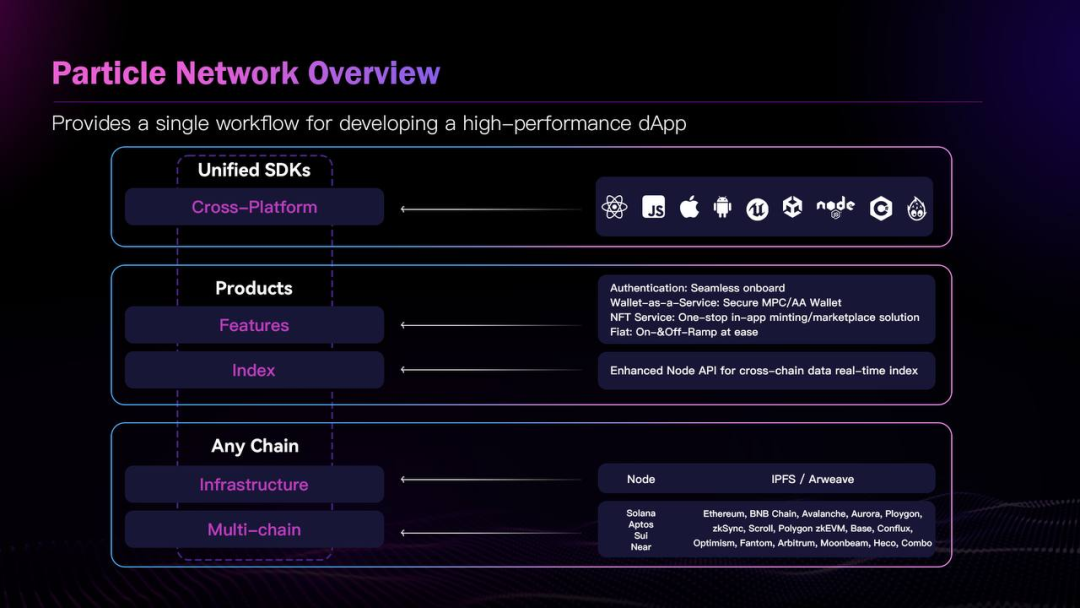
According to Particle Network, the top request from developers is simplifying user login and wallet creation. Responding to market demand, Particle Network focuses heavily on login and wallet middleware—enabling users to log in using familiar social media accounts and automatically generating MPC-based embedded wallets without needing to understand crypto concepts.
Beyond login and wallets, Particle Network also provides node services, data APIs, decentralized storage hosting, and end-to-end NFT solutions—all featuring cross-chain support and plug-and-play functionality.
COMBO (formerly Cocos BCX): A High-Performance L2 for Web3 Games
COMBO’s business model is relatively straightforward: providing infrastructure services for Web3 games by building an OP Rollup-based L2, offering higher performance and lower fees to simplify game deployment and operation.
Currently still under development and testing, COMBO’s L2 aims to deliver the following capabilities:
- Performance: Targeting tens of thousands of TPS with low gas fees;
- Storage: Integration with high-performance decentralized storage solutions like BNB Greenfield, Arweave, and Storj;
- Execution: Built on OP-Stack’s modular framework to ensure future scalability in settlement, data availability, and execution;
- Developer Integration: Offering user-friendly toolkits enabling developers to quickly implement on-chain interaction features out-of-the-box.
Moreover, deeper conversations reveal a coherent historical logic behind their focus on Web3 gaming infrastructure.
In the Web2 world, the original Cocos had already entered traditional gaming, focusing on game engine development. Since launching the open-source Cocos game engine in 2010, after more than a decade of growth, it has achieved widespread global adoption.
According to 2022 data from China Audio-Video and Digital Publishing Association’s Game Committee, Cocos holds 40% of China’s mobile game market share and 30% globally. Companies including Tencent, NetEase, Nintendo, and Ubisoft have used the Cocos engine to develop and release games such as *Fishing Joy*, *Happy消除乐*, *Dream Journey West*, *Game of Kingdoms*, and *Fire Emblem*.
Behind this broad adoption lies a thriving developer ecosystem.
Today, the Cocos engine boasts 1.5 million registered developers, 300,000 monthly active developers across over 203 countries and regions, supporting over 1.6 billion devices. Its GitHub repositories have accumulated over 30,000 stars and 10,000 forks.
Turning attention to Web3, Cocos BCX has continued exploring gaming infrastructure.
In 2018, inspired by CryptoKitties on Ethereum, Cocos BCX team members began exploring blockchain games, building chains based on various tech stacks intended to host them. With the boom of the Ethereum ecosystem in 2020, the team shifted toward incubating and launching GameFi projects within the Ethereum ecosystem.
Throughout technological evolution, Cocos BCX has undertaken extensive infrastructure work and engaged closely with developers, gaining comprehensive integration experience and deep empathy for developer pain points.
Today, as the value of L2s becomes evident, designing a dedicated L2 for gaming is a natural progression. Alongside technical advancement, the accumulated development experience and firsthand understanding of challenges remain invaluable.
Given its developmental trajectory, Cocos BCX clearly understands what game developers truly need. Recently rebranding to COMBO reflects its intent to combine partner capabilities.
The Collaboration: A Full-Stack Solution for Web3 Games
Understanding their individual offerings makes it clear how Particle Network and COMBO (formerly Cocos BCX) complement each other in infrastructure: one offers comprehensive middleware, the other builds a gaming-focused L2 blockchain—together simplifying Web3 game development.
With this context, the significance of their joint high-performance, user-friendly, one-stop full-stack solution becomes clearer:
- First, game content development—including model creation, game logic, resource management—can be handled using Cocos’ game engine;
- Second, on-chain interaction experiences—such as login, wallet creation, NFT marketplace setup, deposit/withdrawal modules—can be solved seamlessly via Particle Network’s middleware;
- Third, blockchain-level components—such as on-chain assets and game logic—can run and deploy on COMBO’s L2, benefiting from OP Rollup’s lower costs and faster speeds.
Using this solution, Web3 game developers enjoy easier onboarding, streamlined development processes, reduced operational burden, and more bandwidth to focus on refining game content—objectively contributing to improved game quality.
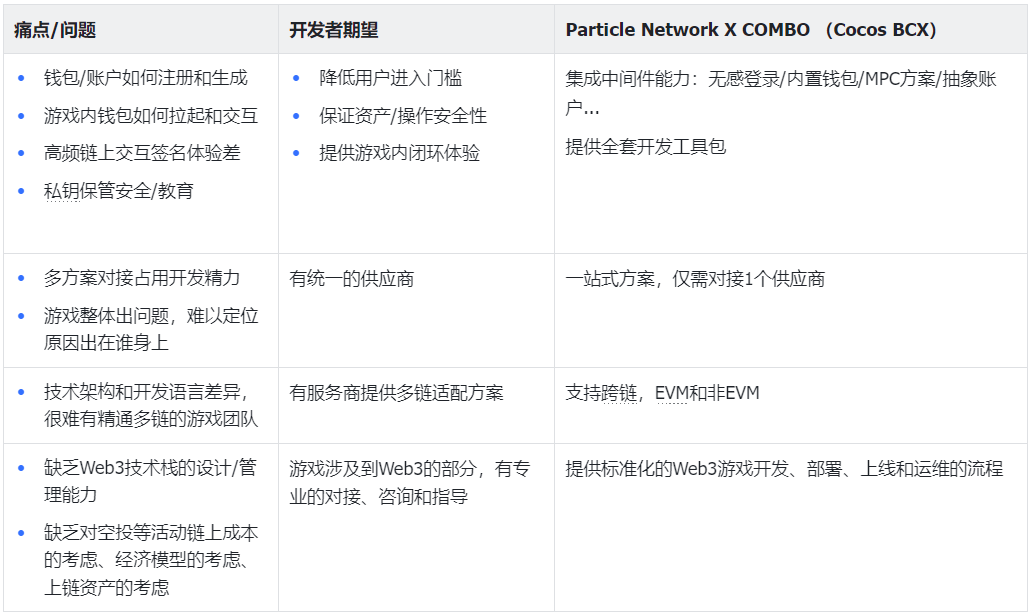
For Web2 game developers already using Cocos’ open-source engine, integrating this solution becomes even smoother. While the engine handles content creation, the full-stack solution benefits the entire Web2 development ecosystem—developers don’t need to master unfamiliar Web3 concepts, instead leveraging ready-made toolkits and components to launch quickly.
This presents a powerful way to remove barriers for talented external game design teams entering the Web3 space. Viewed from an industry-wide lens, the deeper significance of such infrastructure collaborations lies in a shift in development paradigms.
Currently, the Web3 gaming space lacks unified, timely, and universally applicable development paradigms—making development inefficient. It’s worth reflecting: the gaming industry itself is highly industrialized, where every process strives for cost-efficiency—maximizing output at minimal cost, supported by optimized production strategies.
Yet Web3 games lack standardized frameworks or optimal practices for mature, scalable production. Inadequately put, while Web3 games often promote themselves as revolutionary and forward-thinking, their production workflows resemble outdated handicrafts—disorganized, unguided, and nonstandardized.
Projects like Particle Network and COMBO aim to elevate Web3 game production from a backward “handicraft stage” to a relatively mature “industrial stage.” We can’t claim their solution is the definitive best approach, but the industrial upgrade driven by this paradigm shift deserves serious consideration from every industry participant.
Serving Developers First: Making Mass Adoption of Web3 Possible
Will the solution from Particle Network and COMBO succeed?
Success requires overcoming significant challenges.
For instance, since the solution involves collaboration between two parties, product integration becomes crucial. When developers use the solution, it must feel cohesive—not like stitching together two separate services. This level of seamless user experience requires meticulous refinement.
Only when 1 + 1 > 2 will the product gain real market traction.
Additionally, because the solution targets developers rather than end users, raising awareness among developers poses another challenge. Market education and training don’t yield immediate results like airdrops—they require sustained effort and consistent outreach.
So what’s next for this solution?
First, expanding ecosystem coverage. During Hong Kong Web3 Festival on April 11, Cocos BCX officially rebranded to “COMBO”—the name clearly implying combination:
As Web3 gaming infrastructure, combining partner capabilities to form an ecosystem alliance that simplifies Web3 game development.
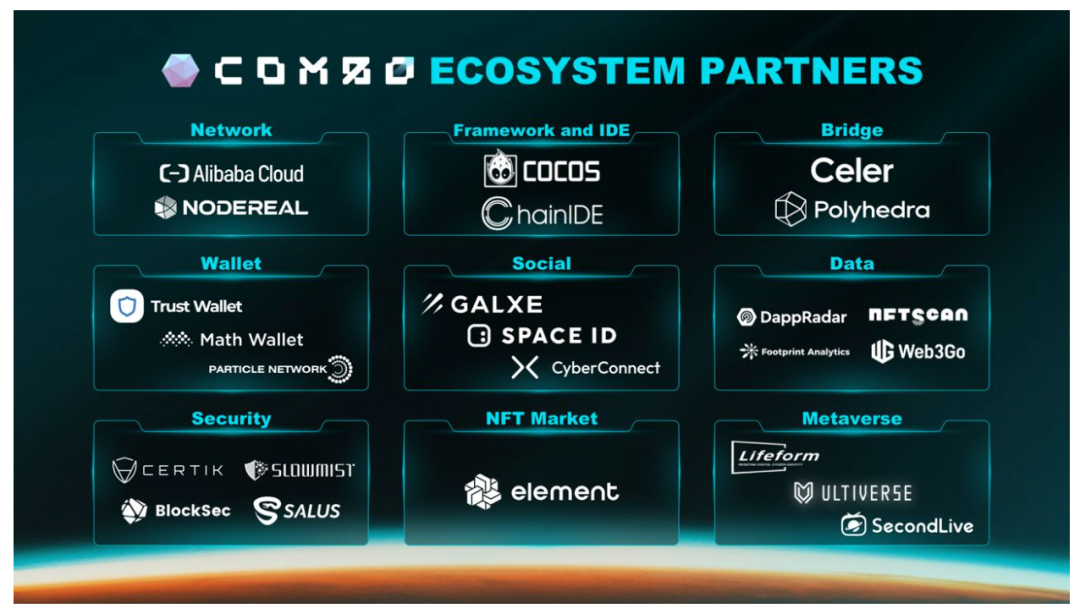
Looking at its announced partners, the network spans layers including networking, game development tools, cross-chain bridges, wallets, social accounts, data availability, security, and NFT markets. Together, these cover key aspects of Web3 game development, deployment, performance optimization, user experience, and operations.
Additionally, COMBO plans to launch its L2 testnet around April 20 for user trials, with full product rollout expected by month-end.
Long-term, COMBO intends to support cross-chain functionality and multiple game engines, enabling developers with diverse preferences and requirements to leverage its capabilities.
For COMBO and Particle Network, the journey may have just begun. But only by providing usable, trustworthy infrastructure—empowering developers and smoothing the path forward—can widespread adoption of Web3 truly become possible.
Join TechFlow official community to stay tuned
Telegram:https://t.me/TechFlowDaily
X (Twitter):https://x.com/TechFlowPost
X (Twitter) EN:https://x.com/BlockFlow_News
 深潮TechFlow