








Will the chain abstraction sector gain favor from capital after Particle's listing on Binance?
TechFlow Selected TechFlow Selected
Will the chain abstraction sector gain favor from capital after Particle's listing on Binance?
The moment of "value discovery" for chain abstraction has not yet arrived, and infrastructure needs to prepare for a "protracted battle."
 Navigating Web3 tides with focused insights
By Bright, Foresight News
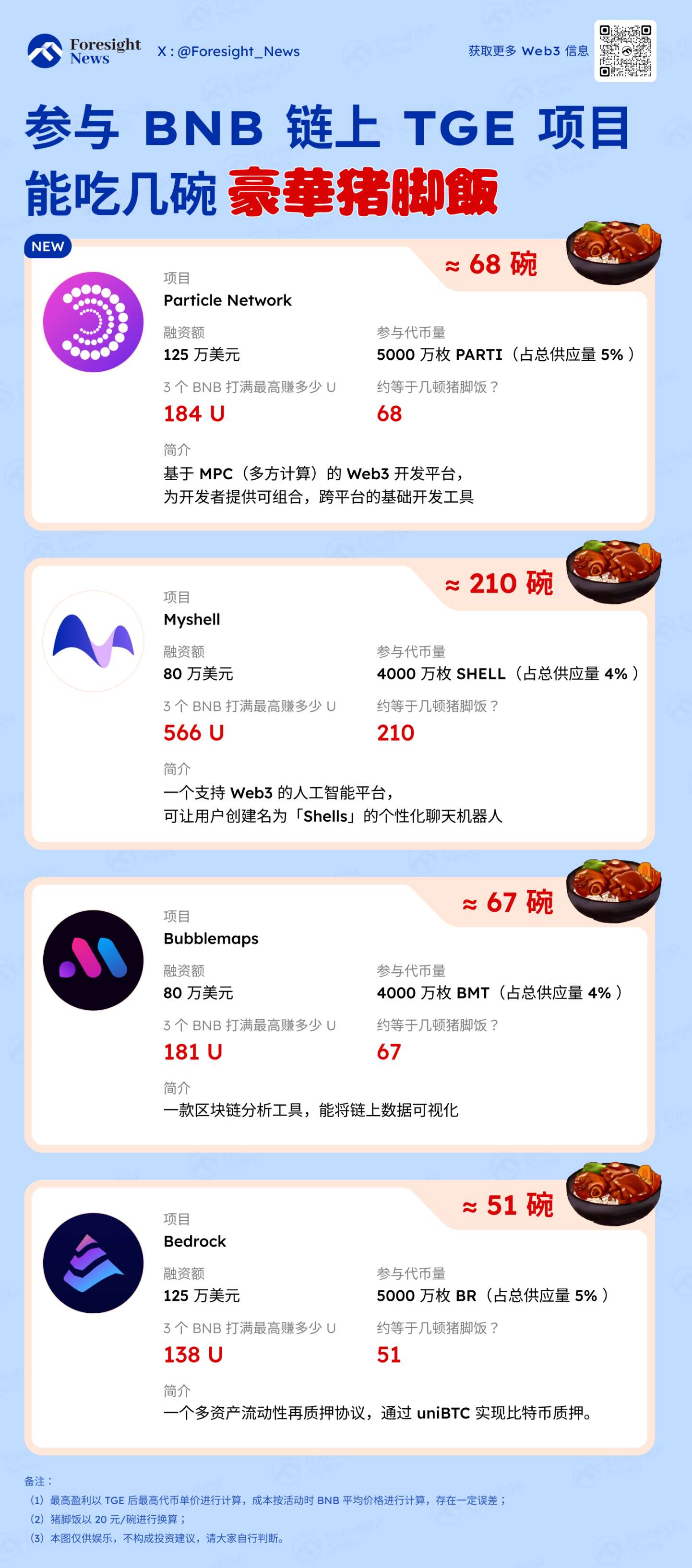
On March 25, 2025, Particle Network launched its fourth round of on-chain initial offerings via Binance Wallet, reigniting market enthusiasm. Despite Binance shortening the subscription window to just one hour, PARTI was oversubscribed by 16,389.22%, raising a total of 326,963 BNB—worth approximately $208 million—setting a new record for the highest oversubscription in Binance Wallet's launchpad history. Some community members even offered "rational analysis": "Retail gets little allocation; starting at a $500M valuation, hitting $1B wouldn't be surprising."
"Your pork knuckle rice is the赛道’s lingering regret"
As the Binance launch concluded, the immediate question became: Sell or hold? Fans of premium pork knuckle rice quickly cashed out their PARTI worth $184, satisfied with their gains. Yet others sighed in disappointment—where was the promised $1 billion valuation?
Launched in 2022 as a flagship project in the chain abstraction space, Particle Network initially focused on B2B chain abstraction solutions aiming to achieve "one account, a thousand chains," addressing the fragmentation pain point across Web3's multi-chain landscape. Its core technology enables cross-chain interoperability across more than 70 public blockchains including BNB Chain, Avalanche, and Sei, spanning both EVM and non-EVM ecosystems. In 2024, Particle Network introduced UniversalX, a consumer-facing, non-custodial trading platform built atop its proprietary Particle L1 settlement layer. With UniversalX, users can trade assets across any chain without manually using cross-chain bridges.
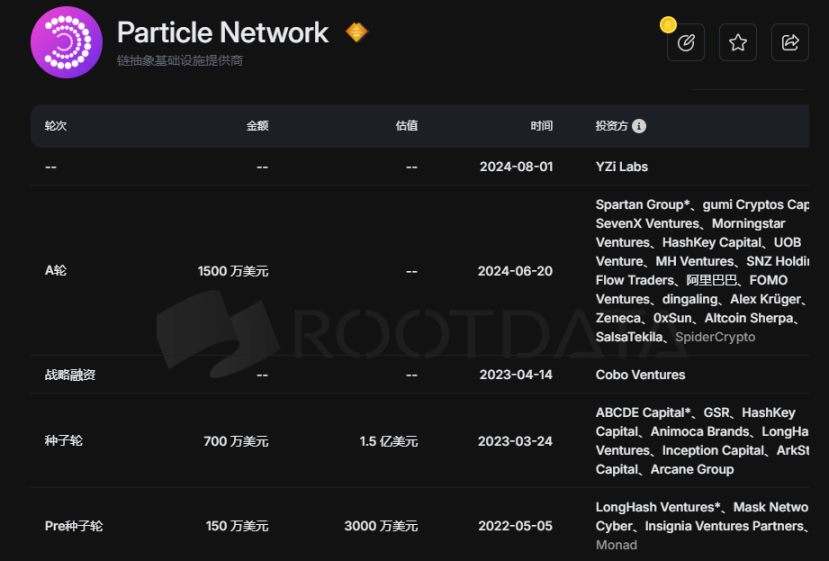
Particle Network also boasts an elite funding pedigree, having raised over $30 million cumulatively. Backers include top-tier crypto investors such as Binance Labs, GSR, YZI Labs, Spartan Group, and Animoca Brands, along with Web2 giant Alibaba. The company secured $1.5 million in a Pre-Seed round in May 2022, followed by $7 million in a Seed round in March 2023, and $15 million in a Series A round in June 2024 at a $200 million valuation—highlighting strong confidence in chain abstraction as foundational infrastructure for the industry.
However, despite early traffic support from major exchanges like Binance and OKX, Particle Network’s post-listing price performance has been “underwhelming.” After briefly peaking at $0.4949 upon listing—briefly touching a $500 million FDV—the token steadily declined. At the time of writing, PARTI hovers around $0.35, with a total FDV of approximately $350 million, far below the community’s bullish projections of $1 billion. As a pioneer in the chain abstraction space, Particle Network appears to have failed—at least so far—to ignite broader sector excitement.
"The transformation of on-chain trading paradigms will inevitably be a prolonged battle"
Previously, Messari research noted that chain abstraction has entered an "endgame" narrative—today, users want better cross-chain experiences through liquidity aggregation; tomorrow, they expect protocols to autonomously decide which chain or application to use on their behalf.
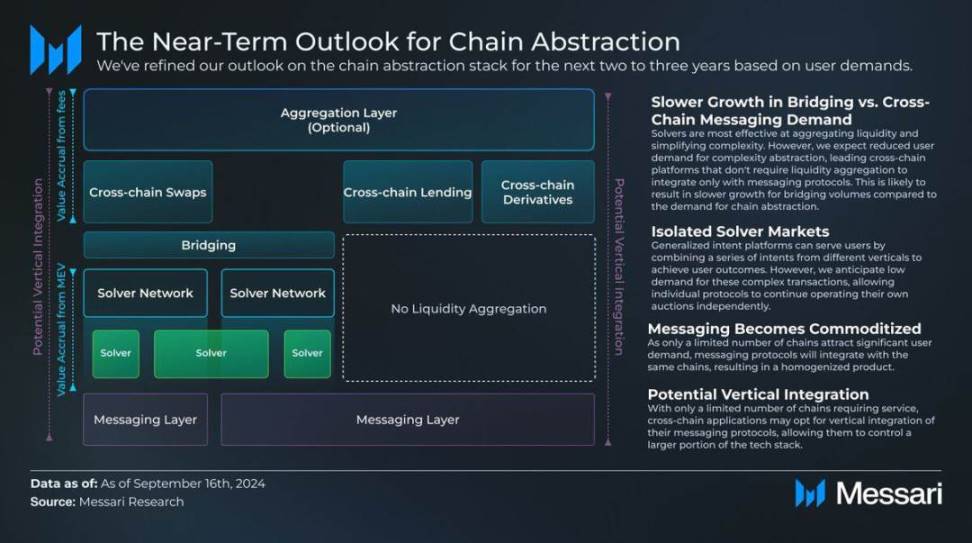
Chain abstraction addresses two fundamental industry challenges. First, the multi-chain framework fragments liquidity and users, creating isolated ecosystems. Second, externally owned accounts (EOAs) offer subpar user experiences that cannot match the seamlessness of Web2 applications. Historically, solutions to these issues have been developed separately—bridge protocols connect isolated blockchains, while smart contract wallets enhance UX. Chain abstraction integrates both approaches into a single product. While most teams traditionally focus on one solution or the other, projects like Particle Network deliver both simultaneously, thereby optimizing the core user experience.
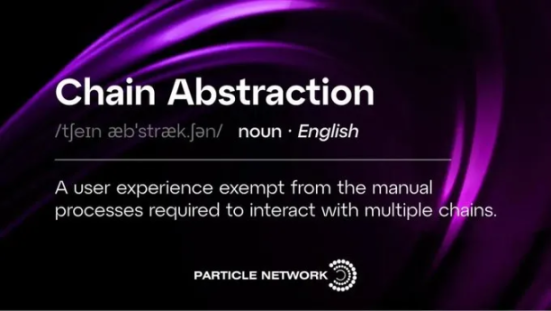
Lydia, a researcher at Particle Network, argues that both the "futility theory" and the "quick victory theory" around chain abstraction are misguided: "The transformation of on-chain trading paradigms will inevitably be a prolonged battle." Blockchain technology adoption takes time. During the gradual penetration of chain abstraction, the fragmentation of legacy multi-chain ecosystems will become increasingly evident, while dApps adopting chain abstraction architectures will quietly become mainstream. This process mirrors the early-stage development of internet infrastructure, requiring a long cycle of technical refinement, user education, and market validation.
The unique characteristics of chain abstraction and on-chain trading scenarios further extend this marathon. As a core entry point to Web3, redefining the trading experience must satisfy three critical requirements: DEX-level permissionless access, self-custody, and CEX-grade liquidity. Just as the adult entertainment industry drove early adoption of VR and AR technologies in the Web2 era, the breakout of chain abstraction will depend on breakthrough applications within the trading domain—much like Hype’s success in building a DEX. However, current obstacles—including fragmented multi-chain environments, entrenched user behaviors, and unclear business models—mean the chain abstraction sector still awaits its pivotal breakthrough.
In short, don’t panic—projects in the chain abstraction space are still actively building.
Chain Abstraction Competitive Landscape
NEAR
NEAR is a multi-functional Layer 1 smart contract platform that offers chain abstraction services. NEAR's multi-chain signature service allows users to sign transactions on Ethereum, BNB Chain, and other chains using their NEAR-based account. NEAR achieves chain abstraction through its MPC network, on-chain signing, and multi-chain gas relayer.
Avocado by Instadapp Team
Instadapp’s Avocado platform is a smart contract wallet compatible with multiple EVM networks, including Ethereum, Polygon, Optimism, Arbitrum, Avalanche, BNB Smart Chain, and Gnosis Chain. Like Particle Network, Avocado abstracts away the underlying blockchain from the user experience. Additionally, Avocado features a Paymaster gas tank, enabling users to pay all gas fees in USD.
XION
XION is a modular Layer 1 blockchain designed to create a "universal abstraction" layer for frictionless Web3 user experiences. The universal abstraction layer is an all-in-one infrastructure solution that integrates accounts, signatures, fees, and interoperability directly at the protocol level. Central to this solution are XION’s "Meta Accounts," a smart contract wallet system.
Join TechFlow official community to stay tuned
Telegram:https://t.me/TechFlowDaily
X (Twitter):https://x.com/TechFlowPost
X (Twitter) EN:https://x.com/BlockFlow_News
 Foresight News






