








Deep Dive into Decentralized Media: The Past, Present, and Future of Blockchain Technology and the Fourth Industrial Revolution
TechFlow Selected TechFlow Selected
Deep Dive into Decentralized Media: The Past, Present, and Future of Blockchain Technology and the Fourth Industrial Revolution
Bitcoin was initially designed primarily as a financial instrument, but its connection to the media industry has been evident from the start.
 Navigating Web3 tides with focused insights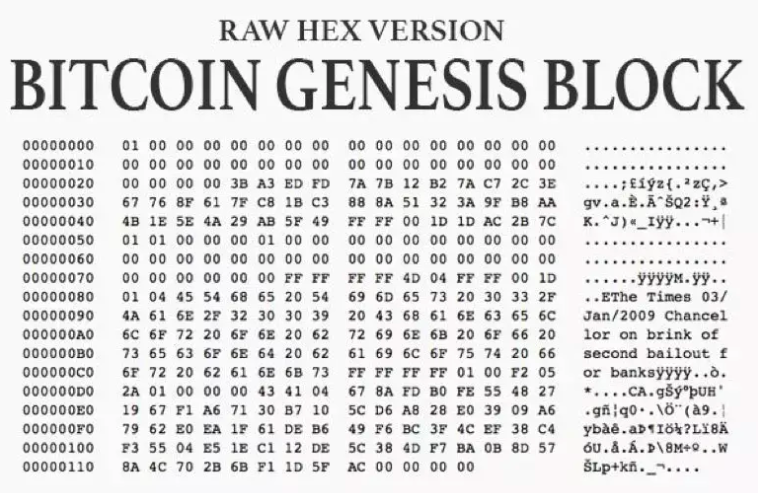
Written by: Wendy Ye
Translated by: TechFlow
*Note: This article is from the Stanford Blockchain Review. TechFlow is an official partner of the Stanford Blockchain Review and has been exclusively authorized to translate and republish this content.
Introduction
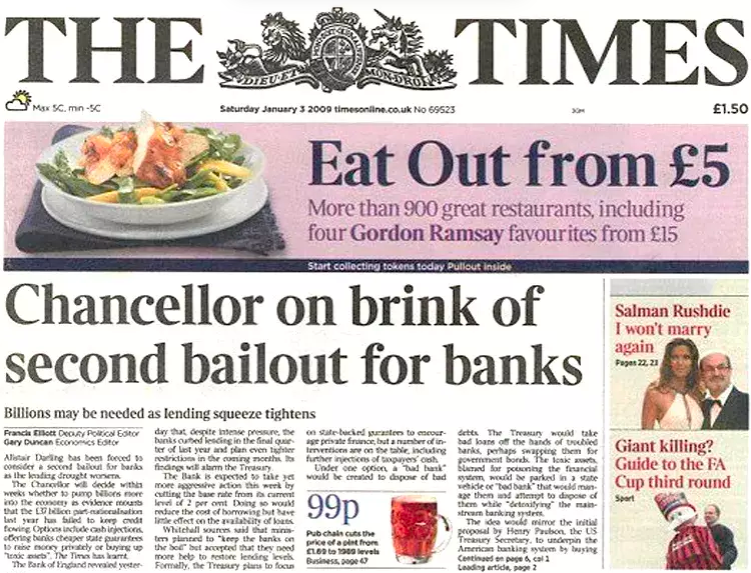
Bitcoin's primary initial function was as a financial instrument, but its connection to the media industry has been evident from the beginning. The blockchain’s first block, or genesis block, not only records transaction details but also includes a headline from The Times newspaper.
Over a decade later, blockchain technology and cryptocurrencies have sparked innovation across multiple sectors and attracted widespread attention—not just in finance, but also in media.
Due to its decentralized and transparent nature, blockchain technology holds the potential to reshape the media landscape by enabling new business models, enhancing transparency and trust, and creating new revenue streams for content creators.
However, despite this immense potential, the broad adoption of blockchain technology and cryptocurrencies in the media industry still faces multiple challenges.
Recent surveys show that only a small portion of Americans hold positive views toward cryptocurrency, with many concerned about price volatility, security, and regulatory issues. Moreover, prominent figures in business and finance, such as Charlie Munger, have called for banning cryptocurrencies, further reinforcing public skepticism and perceptions of risk surrounding this emerging technology.
That said, the intersection between the Fourth Estate and Web3 continues to innovate.
This article aims to explore the historical applications of blockchain technology and cryptocurrencies in the media industry, examine the challenges and opportunities presented by Web3 in disrupting the Fourth Estate, and envision a new era of decentralized media.
Part I: A Brief History of Crypto Media
1. Cryptocurrency-Centric News Media (2009–2015)
The emergence of any innovation creates demand for related knowledge and information. As mainstream media failed or chose not to cover developments in cryptocurrency and blockchain technology, several dedicated crypto media outlets emerged shortly after Bitcoin’s creation. Most notably, Bitcoin Magazine (co-founded by Vitalik Buterin in 2012), Cointelegraph, and CoinDesk (both founded in 2013) remain key pillars of crypto media today.
While critics argue that crypto media sometimes promoted fraud and bubbles around cryptocurrencies, these outlets played crucial roles in three aspects:
1) Educating early adopters and driving blockchain technology adoption;
2) Training and cultivating journalists with blockchain expertise, who later filled positions within traditional media organizations expanding their crypto coverage teams;
3) Alerting to fraud and potential systemic risks.
For example, a report by CoinDesk exposed Alameda’s reserves, revealing the “largest” cryptocurrency fraud in history and contributing to the collapse of FTX.

Beyond news media, providers of on-chain data analytics and market intelligence also began to emerge during this period, the most notable being CoinMarketCap and Chainalysis, founded in 2013 and 2014 respectively. These information providers enhanced market transparency to some extent and helped journalists investigate stories.
In this phase, innovations and applications of blockchain in the media industry were extremely limited. This was primarily because blockchain technology initially gained prominence through Bitcoin, which was mainly designed as a decentralized digital currency system.
Bitcoin’s original whitepaper, published in 2008 by its anonymous creator Satoshi Nakamoto, did describe a system where blockchain could be used to timestamp documents and data. However, the Bitcoin network was primarily built for payments. In 2010, Nakamoto capped the maximum block size at 1 megabyte (MB) to prevent the blockchain from growing too large for individual nodes to manage. (As of 2023, this limit has effectively increased to about 4MB per block.) Therefore, while miners could embed small amounts of extraneous data or messages into transaction records—as Nakamoto did in Bitcoin’s first block—applications beyond payments on the Bitcoin network were nearly infeasible.
Additionally, the Bitcoin network offered only a few APIs (Application Programming Interfaces) for developers to interact with it, further limiting the types of applications that could be built on top of Bitcoin. It wasn’t until Ethereum launched in 2015 that people began exploring the full potential of blockchain for data storage and management.
2. Smart Contracts and Decentralized Content Management (2015–2020)
In 2015, Vitalik Buterin’s founding of Ethereum marked a pivotal milestone in blockchain development. Through Ethereum, Buterin introduced a new blockchain architecture that enabled the creation of decentralized applications (dApps) beyond digital currencies. The Ethereum blockchain featured a programming language called Solidity, allowing developers to create smart contracts—self-executing digital agreements that automatically enforce contractual terms.
The innovation of smart contracts on the Ethereum blockchain sparked numerous advancements in the media industry. One of the most significant applications of blockchain technology in media is content management and distribution. With smart contracts, content creators can protect their intellectual property by issuing licenses and setting usage terms and conditions. Smart contracts also enable creators to receive direct compensation from consumers without intermediaries like publishers or distributors. This opens up new monetization opportunities and allows creators to earn fairer returns.
-
For instance, Steemit, launched in 2016, is a blogging and social media platform leveraging blockchain technology. Built on the Steem blockchain, it rewards users with STEEM tokens for creating and curating content. Rewards are determined by content popularity and quality, as well as community voting and comments.
While Steemit attempted to build a blockchain-based version of Twitter, many other projects aimed to create decentralized video-sharing platforms to challenge traditional giants like YouTube. Notable examples include StreamSpace (founded in 2017), Flixxo (2016), Viuly (2017), and Viewly (2017, now inactive).
-
Such as YouTube, other well-known examples include StreamSpace (founded in 2017), Flixxo (founded in 2016), Viuly (founded in 2017), and Viewly (founded in 2017, but no longer active).
Moreover, blockchain applications in media extend beyond content creation and distribution. They’ve also driven new business models, such as decentralized advertising networks that reward user attention and data sharing.
-
For example, Basic Attention Token (BAT), launched in 2016, is a blockchain-based advertising platform aiming to disrupt traditional digital advertising by offering a more privacy-focused, user-centric model. It enables advertisers to target users directly and rewards them with BAT tokens for their attention.
Furthermore, blockchain technology has also been applied to combat fake news and misinformation.
-
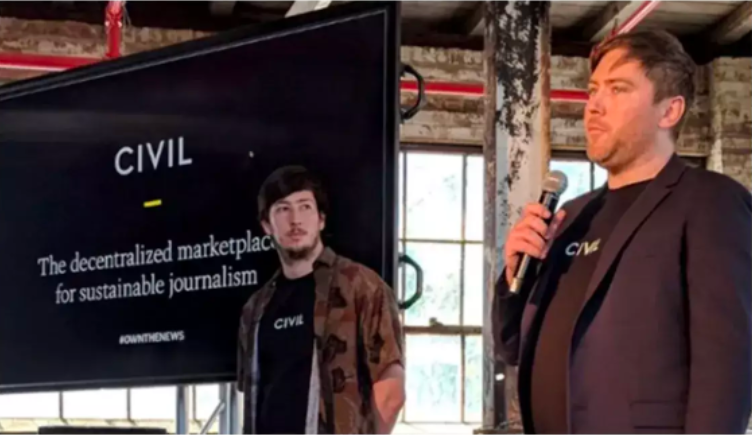
One such example is Civil, a platform launched in 2018 that uses blockchain to create a decentralized newsroom. It allows journalists to publish and monetize their work directly while ensuring transparency and accountability through community-driven verification.
During this phase, many blockchain and cryptocurrency projects were funded through Initial Coin Offerings (ICOs) rather than traditional venture capital. While this enabled rapid fundraising and visibility during market hype, it also left these projects economically vulnerable when the crypto market crashed in 2018. Notably, although many of these projects were marketed as “decentralized,” some still relied on centralized servers, using token economics purely as an incentive mechanism. This lack of true decentralization drew criticism from many in the industry.
Between 2017 and 2018, the crypto hype also gave rise to innovative ideas aiming to apply blockchain more broadly across industries, including media and entertainment. Among the most prominent innovations was the non-fungible token (NFT). With verifiable authenticity, unique ownership, and potential for new revenue streams, NFTs became ideal tools for creators and collectors alike.
Although NFTs were introduced as early as 2017—with projects like CryptoKitties and CryptoPunks—they didn’t gain widespread attention until 2021, sparking a wave of innovation across media and beyond.
3. NFTs, DAOs, and Decentralized Social Media (Post-2021)
Since its inception, blockchain remained a niche topic in traditional media until dramatic shifts occurred in 2021. Major global media companies joined the so-called NFT craze, selling various forms of content—from text to video—as NFTs on blockchains. This adoption of NFTs by legacy media marks a significant shift, demonstrating growing interest and perceived potential in blockchain technology.
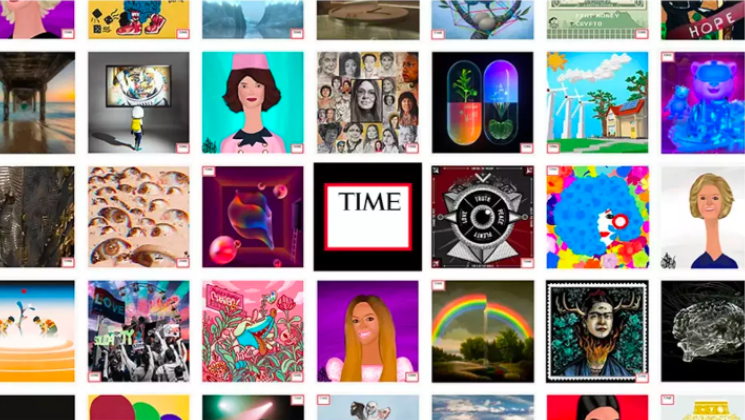
Traditional media’s embrace of NFTs has also sparked controversy, with critics like Bill Gates claiming that cryptocurrencies and NFTs are based solely on the “greater fool theory.” Nevertheless, NFT adoption has generated new revenue streams for traditional media. For example, TIME magazine earned over $10 million in profits within 14 months from its flagship TimePieces NFT collection, with ongoing earnings from secondary market royalties.
NFTs not only offer content creators new ways to earn money but also provide unique opportunities to engage with fans. As a result, an increasing number of decentralized platforms have emerged to better leverage this technology. Mirror.xyz stands out as one of the most prominent examples. Founded in 2020 and often referred to as the “crypto version of Medium,” Mirror.xyz is a decentralized publishing platform that allows anyone to create, share, and sell unique digital content as NFTs. It gives creators greater control over their content and novel monetization pathways.
With the rising popularity of NFTs, we are also witnessing the emergence of media-related DAOs (Decentralized Autonomous Organizations). These DAOs harness blockchain technology to create decentralized ecosystems for media companies and their communities, emphasizing transparency, community engagement, and shared ownership. By embracing DAOs, media organizations can offer audiences new ways to participate while building more sustainable business models that benefit all stakeholders.
For example, Mad Realities is a DAO-style startup backed by Paradigm and celebrities including Paris Hilton. It operates as a decentralized studio producing reality TV shows funded by NFT sales. NFT holders possess various governance rights, enabling participation in decision-making processes traditionally reserved for industry insiders. This innovative use of blockchain and NFTs represents a major transformation in media, with more companies seeking to adopt decentralized ecosystems and offer audiences more direct involvement.
Beyond Mad Realities, several other media-related DAOs have emerged, including Friends with Benefits (FWB, founded in 2020), Bankless DAO (2021), Pub DAO (2021), and Headline DAO (2023). FWB is a token-gated membership community where members directly support and benefit from their favorite creators’ success. Bankless DAO is a community-driven decentralized media organization whose members contribute skills and expertise to produce educational content about blockchain and cryptocurrencies, participating in governance and decision-making. Pub DAO is a decentralized media platform focused on supporting independent journalists and creators, using blockchain for micropayments so creators are paid directly for their work without relying on ads or intermediaries. Headline DAO is a decentralized journalism “experiment” funded by NFT sales, where NFT holders vote on which journalists to support.
In addition to the rise of NFTs and DAOs, 2021 also saw growing demand for decentralized social media platforms. When Donald Trump was banned from major social media platforms, it sparked intense debates around free speech and content moderation. Additionally, awareness grew regarding data privacy, data ownership, and the increasing control exerted by Big Tech over content. This fueled surging interest in decentralized alternatives where users could have greater control over their data and content. Demand continued to grow after Elon Musk acquired Twitter in 2022.
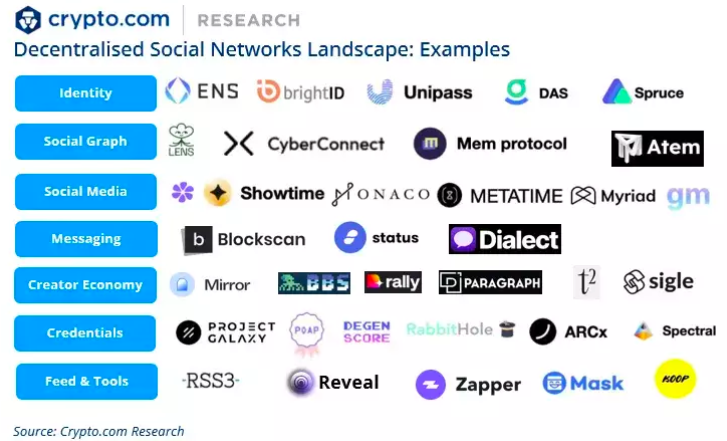
Decentralized social media offers an alternative to traditional platforms by leveraging blockchain to create networks with no single controlling entity. Unlike many projects during the 2017/2018 crypto boom that claimed to be “decentralized social media,” newer projects focus on building genuinely decentralized networks using federated architectures. Federated networks use a protocol called ActivityPub, allowing users to communicate and share content across platforms regardless of the specific service they use.
In a federated network, users can interact and share content even if they’re on different servers or nodes. This interoperability is enabled by the ActivityPub protocol, used by many federated social networks to allow connections across platforms.
Protocols like Lens Protocol, Nostr, and Farcaster aim to provide tools for building decentralized social media applications. Mastodon and Damus are two notable examples that offer end-user applications, leveraging federated networks and the ActivityPub protocol to provide alternatives to traditional social media. These decentralized platforms offer higher transparency, privacy, and user autonomy, enabling communication and collaboration in a decentralized manner while giving users control over their data and content.
Part II: Challenges Facing Decentralized Media
The rise of NFTs, DAOs, and decentralized social media platforms demonstrates blockchain’s potential to reshape the media landscape, offering creators and communities new ways to monetize and distribute content while fostering a more democratic and transparent ecosystem. However, these innovations face significant challenges:
1. User Adoption and Scalability
The media industry operates in an attention economy, where success depends on capturing broad audience attention. Yet, despite global internet penetration reaching 64.4%, according to World Bank data, global cryptocurrency adoption stood at only about 4.2% as of 2023—comparable to internet adoption levels in the late 1990s.
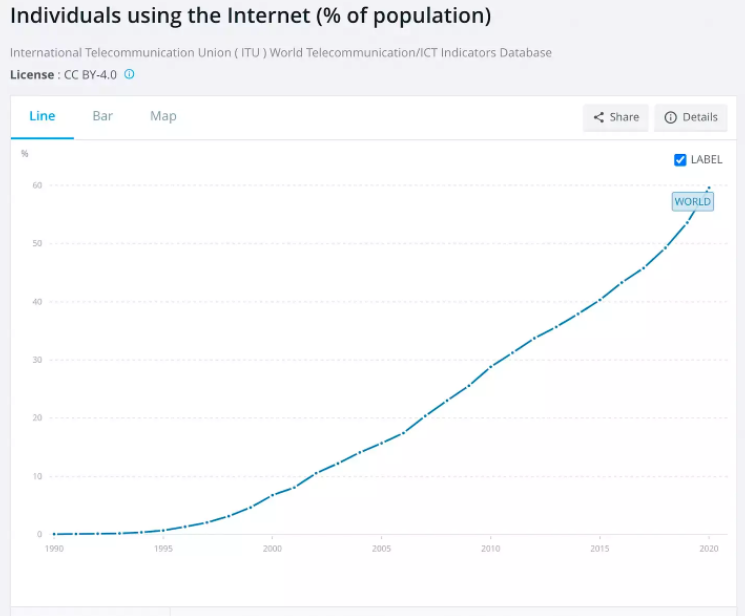
It wasn’t until 2020 that digital media adoption surpassed traditional media in the U.S., thanks to the pandemic. Thus, the path to a killer Web3 application in media remains long, especially given that only 8% of Americans view cryptocurrency positively.
Mass media plays a powerful role in public education and promoting new technologies. However, when legacy media brands embrace blockchain and Web3 concepts, they face a difficult choice. While open to innovation, they also wish to distance themselves from risks associated with crypto scams or bubbles to maintain public trust. This largely explains why most established media brands chose to donate proceeds from their “experimental” NFT sales to various foundations in 2021.
Decentralized social media platforms are still in early stages. Whether they can achieve widespread adoption and compete with mainstream centralized platforms remains to be seen. A key factor influencing their growth is the overall development of blockchain infrastructure, as decentralized platforms rely on blockchain speed and scalability. Until these challenges are addressed, it may be difficult for decentralized social media to gain enough traction to rival traditional platforms.
2. Infrastructure Limitations
Infrastructure takes time to build. For innovators, constructing a blockchain is no longer the main barrier, but new blockchains may struggle to gain attention or survive without an active ecosystem of applications. As a result, most innovators choose to build on existing, active blockchains like Ethereum, despite its scalability issues. During peak congestion, Ethereum’s network slowdowns severely degrade user experience for transactions and dApp interactions. Transaction fees can spike, making participation costly or impractical. In extreme cases, network congestion can lead to temporary outages or disruptions.
Due to these infrastructure constraints, most decentralized applications struggle to match the user experience of their centralized counterparts, making competition difficult. Take the decentralized social app Damus, supported by Twitter co-founder Jack Dorsey. Currently, users must upload images to third-party servers before posting them on the app, and video uploads are not yet supported.
3. Volatility and Inconsistency
The high volatility of crypto markets poses a major challenge to media innovation, with frequent boom-and-bust cycles making it difficult for companies to manage staff and maintain financial stability. These challenges intensify for crypto media during market downturns, when sustaining operations becomes harder.
Moreover, decentralized social media startups often struggle to maintain momentum during bear markets, as those who joined during the hype but don’t truly believe in a decentralized future quickly exit. This market volatility presents a major obstacle to startup financial health and sustainability, unfortunately leading to the closure or sale of several promising projects. For example, Civil shut down in 2020. Po.et, a blockchain-based platform founded in 2016 for managing digital content rights and ownership, also closed that year. Steemit was sold in 2020, and TruStory, a blockchain-based platform for fact-checking and verifying online content, shut down due to funding difficulties in 2020 despite early backing from prominent figures in the blockchain community.
4. Patchwork Solutions and New Problems
Decentralized applications (dApps) are promising solutions to many problems, but they also introduce new challenges and risks that must be carefully considered.
For example, decentralized social media platforms address flaws in centralized platforms regarding data privacy, censorship, and content moderation. By using blockchain, these platforms empower users to control their data and content. However, they also bring new challenges, such as difficulty removing illegal content and the potential spread of misinformation and hate speech. For instance, despite branding itself as a “free speech” platform, much of Damus’s current content consists of low-quality ads and pornography.
Additionally, in striving to create censorship-resistant networks, decentralized social platforms may inadvertently polarize user bases, as different groups migrate to platforms aligned with their views. This can lead to “echo chambers,” where individuals are only exposed to opinions reinforcing their existing beliefs, rather than engaging in productive dialogue. This is not conducive to healing an already divided society.
DAOs offer alternative approaches to producing and distributing media content, but they may face drawbacks when handling serious journalism, a field often requiring specialized expertise lacking among the general public. Decentralized decision-making may easily lead to low-quality content and lack of accountability. Another concern is the influence of wealth on voting outcomes—individuals or groups with substantial funds could sway votes. This is particularly problematic in DAOs where voting power is proportional to token holdings.
Part III: Opportunities for Decentralized Media
Despite the challenges facing blockchain adoption in media, there remain numerous opportunities for innovation and growth. These can be grouped into three main areas:
1. Further Adoption of NFTs and Web3 in Media
In recent years, major news providers such as Reuters, Bloomberg, and CNBC have expanded their cryptocurrency reporting teams and increased educational content on blockchain and crypto. Despite criticism, more traditional media brands are adopting NFTs as tools for monetization and audience engagement, even during market downturns.
Web3 technologies are also becoming more common in media. Reports indicate The Times is doubling down on its Web3 strategy, while Forbes and NBC Universal are hiring VPs for Web3, according to public LinkedIn postings.
2023 has already seen more media companies adopt NFTs. In February, GQ launched its first NFT collection, and Fox Entertainment’s “The Masked Singer” introduced a token-gated fan experience. According to CoinDesk, Fox also plans to launch “Krapopolis,” an NFT-based TV series created by “Rick and Morty” co-creator Dan Harmon.
Beyond mass media, gaming is another promising channel for tech adoption. As blockchain infrastructure improves, native on-chain games—games with built-in NFTs and economies—are gaining broader public attention. The growth of GameFi could significantly impact blockchain adoption in media. As interest in blockchain and DeFi grows, GameFi offers a novel way to attract audiences and drive adoption, especially among younger, tech-savvy gamers.
2. Zero-Knowledge Proofs and Media
The development of zero-knowledge proofs (ZKPs, or ZKs) is one of the most promising fields, attracting strong support from major venture capital firms. Several ZK startups have raised tens of millions of dollars in recent months.
ZKPs are a cryptographic technique allowing one party to prove the truth of a statement to another without revealing any information beyond the statement itself.
ZKPs have broad potential applications in blockchain and cybersecurity.
For example, in blockchain, ZKPs can verify transaction validity or digital asset authenticity without exposing sensitive information about involved parties. This can improve blockchain network speed and efficiency, protect user privacy and security, and address congestion issues on Ethereum and other blockchains. This would benefit the entire dApp ecosystem, including Web3 innovations in media.
Beyond scalability and privacy, ZKPs have direct applications in media, particularly in combating misinformation. A research group at Stanford demonstrated the feasibility of ZK technology in media, specifically using blockchain-based ZK techniques to verify the authenticity of digital images and videos. Researchers Trisha Datta and Dan Boneh published a blog post on Medium explaining how ZK proofs can fight misinformation. By combining blockchain and ZK technology, it’s possible to verify the authenticity of digital media without exposing underlying data, helping prevent the spread of false information and media manipulation.
ZKPs provide a powerful tool to verify data without disclosing the data itself, useful in fighting misinformation. By using ZKPs to verify digital media authenticity, media companies can create safer, more trustworthy platforms for content consumption and interaction. Additionally, ZKPs can protect user privacy and prevent tracking and personal data collection. By keeping user data private, media companies can build more secure and trusted platforms, increasing user confidence and engagement.
Overall, ZKPs hold significant potential in media, especially in combating misinformation and protecting user privacy. As ZKP technology evolves, how media companies adopt and leverage it to create safer, more trustworthy platforms will be worth watching.
3. Decentralized Content Curation Systems
With the rise of Web3 and the decentralization of the media landscape, the importance of building decentralized content curation systems has become increasingly apparent. While major Web2 social media platforms have empowered individuals to create content, their centralized curation systems—driven by opaque algorithms—face limitations in transparency and equitable access.
Building decentralized curation systems requires addressing various technical and governance challenges. A key technical hurdle is ensuring scalability to support large numbers of users and content while maintaining high standards of security and transparency. Governance challenges involving decision-making and accountability must also be resolved.
Despite these challenges, decentralized curation systems hold significant potential to shape the media industry, especially in content discovery and distribution. By offering more democratic and transparent curation, these systems can help foster a more diverse and equitable media environment, ensuring all voices have a chance to be heard.
Most existing media-related DAOs naturally function as decentralized sub-curation systems. Some new DAOs are being created specifically to address these issues, such as KurateDAO. Founded in 2023, KurateDAO aims to “curate world information through cryptoeconomic games,” showcasing the potential of decentralized curation systems in media. More innovative ideas in this space are expected in the coming years.

Conclusion
In summary, blockchain technology offers tremendous opportunities for the media industry in Web3. Decentralization, immutability, and security are key advantages that can address longstanding media industry issues such as misinformation, lack of transparency, and censorship. However, the road to full adoption is long, and the industry will face various challenges along the way, including regulatory hurdles and technical difficulties.
To fully realize blockchain’s potential in media, the focus must be on practical solutions that solve real problems and ensure financial sustainability. Only then can the media industry evolve toward a more decentralized and sustainable future, placing trust and transparency at the forefront of the industry.
Join TechFlow official community to stay tuned
Telegram:https://t.me/TechFlowDaily
X (Twitter):https://x.com/TechFlowPost
X (Twitter) EN:https://x.com/BlockFlow_News
 Stanford Blockchain Club






