How Bitget rose from derivatives to establish its own ecosystem, starting with acquiring control of BitKeep?
TechFlow Selected TechFlow Selected
How Bitget rose from derivatives to establish its own ecosystem, starting with acquiring control of BitKeep?
While numerous exchanges are cutting staff and scaling back, Bitget's aggressive expansion has become a notable sight amid the bear market.
 Navigating Web3 tides with focused insights
Author: 0xlee
On March 22, at the Paris Blockchain Week Summit, Bitget announced a high-profile $30 million investment in the multi-chain wallet BitKeep, securing controlling interest.
At a time when many exchanges are cutting staff and scaling back operations, Bitget’s aggressive expansion stands out as a striking contrast during this bear market.
From early 2023 to now—less than three months—Bitget has been constantly active, generating headlines: the wealth effect from being the first to list BLUR, launching dedicated zones for trending narratives like AI, restarting Bitget Launchpad, and introducing futures tokens for Arbitrum and SUI.
Coinwu, editor-in-chief of WuBlockchain, even asked on Twitter: "Bitget seems to be the only exchange still aggressively expanding during the bull-to-bear transition over the past year. It appears to have captured significant market share from other derivative exchanges overseas. How exactly did it achieve this?"
Driven by similar curiosity, we reviewed and analyzed Bitget's growth journey to uncover how this exchange rose to prominence.
Origins: Product Innovation with One-Click Copy Trading
In 2018, amid the gloom of a crypto bear market, Bitget emerged. Given the timing, it was far from an ideal—or even favorable—launch environment. The market was stagnant, with dominant players already capturing most of the traffic. As a new entrant lacking brand recognition or user base, how could Bitget break through and gain ground in such harsh conditions?
Faced with these challenges, the nascent Bitget offered its first answer—focusing exclusively on derivatives.
Looking back, this proved to be a wise decision. At that time, the spot market was bleak due to the prolonged bearish trend, and major platforms like Binance, OKX, and Huobi had already dominated the existing market. In contrast, the derivatives space remained largely untapped. But the key question was: how to identify a real pain point and unmet demand?
Back then, exchanges were locked in fierce competition for traffic, rolling out flashy marketing campaigns. However, an excessive focus on traffic might lead them to neglect product innovation.
Take derivatives trading: compared to the spot market, the futures market is more complex and unforgiving, making profitability difficult for average investors. Thus, users no longer needed just a basic contract trading platform—they sought one that, while ensuring security and smooth performance, could also help them access market insights, refine strategies, and ultimately generate profits.
Sensing this opportunity, Bitget innovated at the product level by pioneering a one-click copy trading feature.
Specifically, Bitget invited well-known traders with proven track records to join its app. Investors could choose to automatically follow a trader’s open/close positions based on their historical performance and personal reputation. For novice users, this experience was exceptionally user-friendly.
In this model, star traders are crucial—but they also present challenges. Bitget had to act like an MCN agency, continuously scouting skilled traders to onboard and retaining them long-term—a true test of operational capability.
Moreover, although Bitget is merely a platform, disputes between traders and community members can arise, and user dissatisfaction may spill over onto the platform itself, creating reputational risks. According to official data, Bitget now hosts nearly 100,000 professional traders, establishing itself as one of the world’s largest crypto copy-trading platforms.
Product innovation was not only Bitget’s founding strategy but also one of its core moats.
Going Global: Success in East Asian Markets
With a clear strategy in place, Bitget faced a second critical choice: remain confined within the comfortable Chinese-speaking bubble, or venture overseas into unfamiliar territories?
It chose the latter. Bitget’s remarkable success in East Asia is often praised across the industry. It’s no secret that markets such as South Korea, Japan, and Taiwan are heavily contested, with both local exchanges and global giants vying fiercely for dominance.
In February 2020, Bitget launched localized versions of its website and mobile app targeting East Asian markets and established a regional growth division.
In July 2020, Bitget announced the completion of a Series B funding round worth tens of millions of dollars, achieving a valuation of one billion USD. The lead investor was SNK, a Japanese gaming company headquartered in Osaka, famous for iconic IPs like "The King of Fighters." Characters such as Mai Shiranui and Nakoruru from popular games including "Honor of Kings" belong to SNK.
SNK also has strong roots in South Korea, having listed on KOSDAQ in 2019—the highest market cap ever achieved by a foreign company listing in Korea. In 2022, Saudi Crown Prince Mohammed bin Salman’s holding company acquired a 96.18% stake in SNK through multiple purchases, nearly taking full ownership.
When entering East Asian markets, Bitget stuck to its core approach: partnering with influential local crypto traders. This strategy proved especially effective in markets driven by communities and forums.
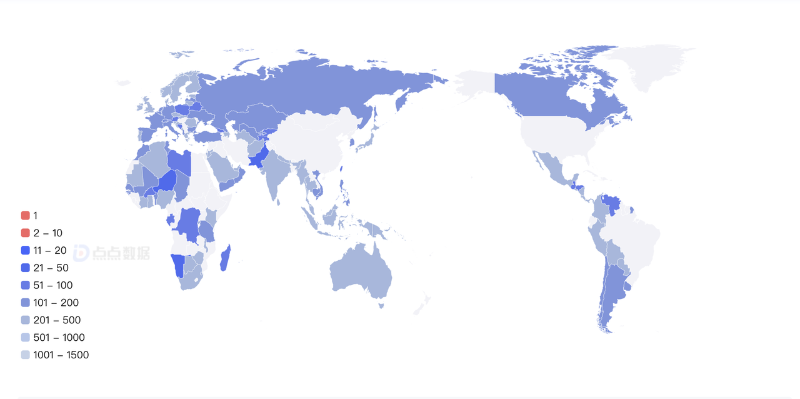
Within three months, Bitget collaborated with over 200 local crypto KOLs, and trading volume consistently hit record highs. With this success as a blueprint, Bitget replicated its strategy across Europe, Latin America, Southeast Asia, the Middle East, and English-speaking regions. By the end of 2022, according to official figures, Bitget served over 8 million users across more than 100 countries and regions.
According to DataEye, the Bitget app ranked among the top 500 finance apps in 116 countries on the App Store, placing between 21st and 50th in four of those countries—clear evidence of its growing international footprint.
Branding: Sports Sponsorships and Signing Messi
Building grassroots communities and collaborating with local KOLs represent micro-level strategies. But for macro-level global expansion, brand power is indispensable.
Like other exchanges, Bitget turned to sponsoring globally recognized sports teams and athletes to boost visibility.
In 2021, Bitget partnered with Juventus, becoming the club’s first-ever sleeve sponsor. It also teamed up with Turkish football club Galatasaray and signed world-renowned player Keisuke Honda as its brand ambassador for East Asia.
In 2022, Bitget became the exclusive sponsor of the PGL CS:GO 2022 tournament and the third season of the PGL Dota2 Championship. According to Nielsen research, fans view brand sponsorships in sports as highly credible. Such partnerships not only increase brand awareness but also drive higher conversion rates.
This explains why major crypto platforms actively sponsor sports events. On the surface, Bitget’s moves weren’t particularly novel—but it happened to get incredibly lucky: it signed Lionel Messi just before the World Cup.
As we all know, Messi captained Argentina to victory in his fifth—and final—World Cup appearance. On December 19, Argentina defeated France 7–5 in a penalty shootout, claiming their first title in 36 years and giving 35-year-old Messi his first World Cup trophy—an emotional climax to a legendary career.
For many, Messi is more than a sports icon—he embodies football faith. After the win, his commercial value skyrocketed. For Bitget, this meant hitting the jackpot.
There’s an interesting side note: Bitget competed head-to-head with another major crypto exchange to sign Messi. Bitget’s agent was IMG, the world’s largest sports and entertainment PR agency. Thanks to IMG’s efforts, Bitget secured the deal. So, what was the price tag?
TechFlow obtained information from authoritative sources in the international sports industry indicating that Bitget paid close to 100 million RMB for a two-year contract with Messi.
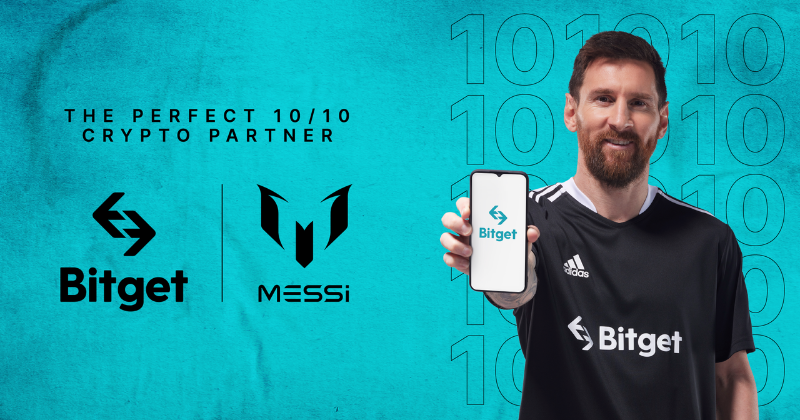
Leveraging Messi’s global influence, Bitget’s international expansion received a massive boost—especially in South America and Europe.
Security: Not Just Solvent—But Abundantly So
After FTX’s collapse, many investors developed something akin to PTSD (Post-Traumatic Stress Disorder), losing trust in centralized exchanges. The biggest concern? Are customer funds fully reserved, or are they being misused by the exchange? In response, major exchanges began publishing Merkle Tree Proof of Reserves to prove transparency.
Bitget followed suit, releasing its Merkle Tree Proof of Reserves within a month of the FTX incident and developing an open-source verification tool so users could independently audit platform assets at any time.
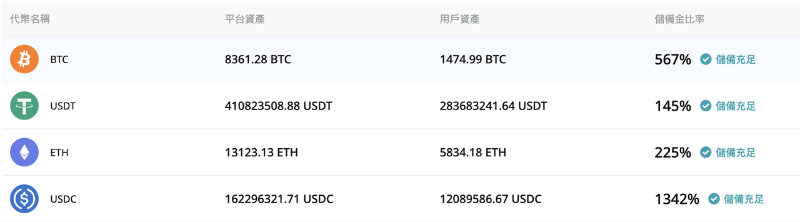
Bitget plans to update the reserve proof snapshot monthly. Latest data shows reserve ratios of 567% for BTC, 225% for ETH, and 145% for USDT, with an overall asset reserve ratio reaching 231%.
Additionally, Bitget operates a “Trade Protection Fund,” serving as a second layer of security.
In July 2022, Bitget established a $200 million Trade Protection Fund, later increasing it to $300 million post-FTX. According to its website, the fund consists of 6,500 BTC and $200 million in stablecoins, making it the second-largest user protection fund among all centralized exchanges.
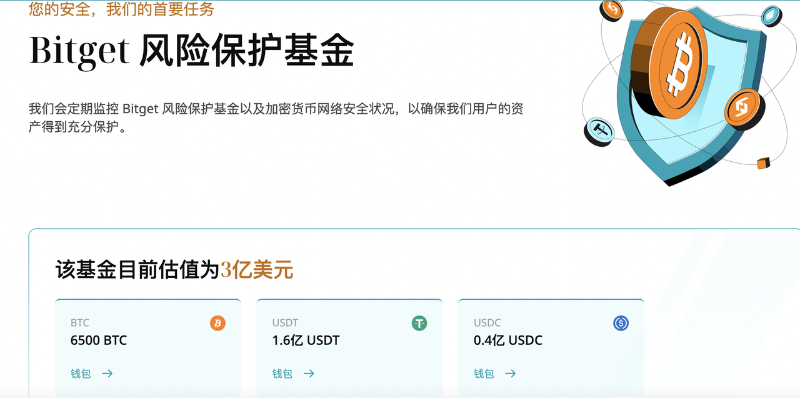
In short, Bitget sends a simple, direct message to investors: Your assets aren't just safe—we also hold substantial reserves ourselves.
Expansion: Growing in a Bear Market, Pushing Into Spot
Entering 2023, the bear market revealed its teeth!
Crypto media outlets kept reporting layoffs across major exchanges, yet Bitget went against the grain, launching large-scale hiring—not just a PR stunt, but a real phenomenon:
“Wait, you joined Bitget? Wait, you too?”
Soon, people noticed that throughout this winter, Bitget continued recruiting aggressively and started moving into the spot market with a flurry of new initiatives.
1. Launched spot copy trading;
2. Created dedicated zones for trending narrative coins like AI and Arbitrum;
3. Anticipated market trends and listed quickly—e.g., first to list Blur, the NFT platform token;
4. Restarted Bitget Launchpad, creating wealth effects;
5. Listed Arbitrum futures token ARBK.
Within months, a black-and-blue logo app began appearing on many people’s phones—even spawning underground services offering Bitget KYC registration (note: illegal activity, subject to bans).
However, as user numbers grow, mistakes become magnified. For example, the latest Launchpad round saw issues like mysteriously vanished allocations and suspiciously coordinated wins among KOLs. Bitget later clarified that a system glitch caused the problem and restored affected users’ winning records.
Recently, I met a job seeker who interviewed at Bitget. His comment stuck with me: "In terms of fighting spirit, I haven’t seen any other team pushing as hard as Bitget." This highlights perhaps the hardest aspect to analyze about any exchange or project: people are the most critical factor.
Conversations with current Bitget employees reveal a distinct, wolf-like internal culture:
Results-Oriented: Everything is outcome-driven. Only those who create value are rewarded. High performers thrive; underperformers are phased out.
Simplicity: Direct communication, no beating around the bush. If a Word doc suffices, don’t make a flashy PowerPoint. No cliques allowed—this too reflects the results-first mindset.
A friend who recently joined Bitget admitted that his workload has doubled since starting, yet he finds himself “enjoying it”—thanks to greater rewards and the satisfaction of tangible achievements.
Today, Bitget employs over 1,300 people across more than 60 countries. In terms of team size, only Binance and OKX may be larger.
Ecosystem: More Than Just an Exchange
Today, exchange competition goes beyond user count or trading volume. In an increasingly decentralized crypto landscape, platforms are building comprehensive ecosystems—wallets, blockchains, investment arms, NFT marketplaces—and moving toward a true Web3 future.
Bitget is no exception. It has evolved from a rising trading platform into an emerging Web3 conglomerate. Its high-profile $30 million investment in BitKeep at Paris Blockchain Week signals a bold commitment to Web3. Bitget is rapidly shedding its label as “just a derivatives exchange,” expanding into decentralized wallets, investments, media, incubation, and more.
BitKeep: A decentralized multi-chain wallet integrating five core functions—wallet, Swap, NFT marketplace, DApp store, and Launchpad—supporting over 90 blockchains including Ethereum, BSC, Polygon, and Avalanche.
Foresight Ventures: Founded in 2021, managing VC funds, actively managed secondary funds, and multi-strategy FOFs, with total assets exceeding $400 million. Portfolio includes high-profile projects like Shardeum and Space and Time.
Foresight News: Launched in 2021, a Chinese-language content platform focused on crypto and Web3, aiming to become the gateway to the Web3 world for Chinese speakers.
Foresight X: An incubation program distributing $10 million in funding through three channels: Foresight X Accelerator, Ecosystem Grants, and Research Grants.
Additionally, insiders report that Bitget is actively exploring ZK and MPC-related technical solutions.
Today, Bitget is far more than a top-five global derivatives exchange. Through the bull-bear cycle, it has expanded steadily and rapidly, diversified its business, internationalized its user base, and embraced Web3—completing a transformation marked by consistent growth.
If there’s one takeaway—or lesson—from Bitget’s journey, it might be this: Stay focused on your goals, prioritize results, embrace long-term thinking, and avoid major mistakes.
Join TechFlow official community to stay tuned
Telegram:https://t.me/TechFlowDaily
X (Twitter):https://x.com/TechFlowPost
X (Twitter) EN:https://x.com/BlockFlow_News