What New Phenomena and Trends Are Emerging at ETHDenver? Here’s What Attendees Are Saying
TechFlow Selected TechFlow Selected
What New Phenomena and Trends Are Emerging at ETHDenver? Here’s What Attendees Are Saying
"The vibe here (ETHDenver) is seriously amazing, I really don't want to leave"
 Navigating Web3 tides with focused insights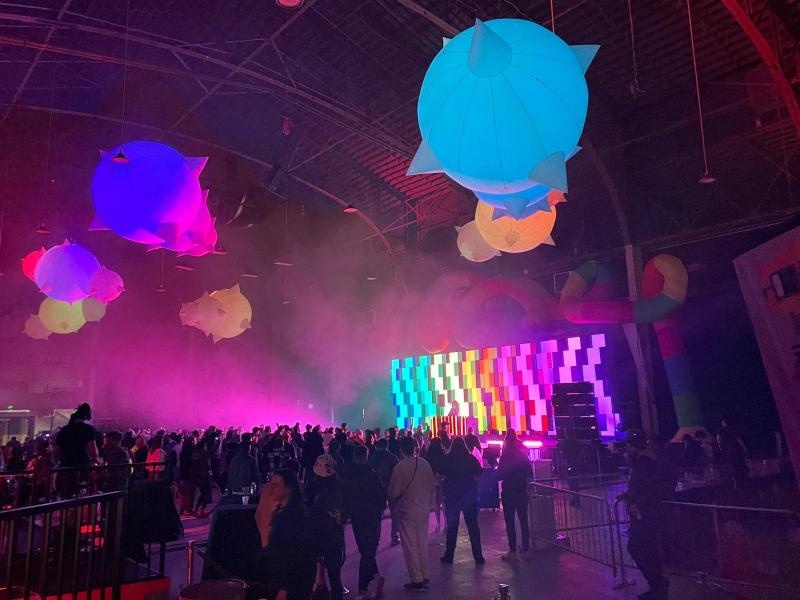
Interviewer: Will
Compiled by: Claudia
“The vibe here (ETHDenver) is seriously amazing—I really don’t want to leave.”
Will, who attended ETHDenver, shared this heartfelt sentiment. A dedicated collector and organizer of crypto insights, the diligent Will once again went all-in—conducting interviews with 75 attendees during the event to capture fresh, on-the-ground impressions from Denver.
For developers and most builders, the entire venue radiated a renewed energy, a stark contrast to the gloom of the bull market. Conversations buzzed with increasing momentum. For newcomers and students recently entering the space, the atmosphere opened their eyes. Some optimists expressed full confidence in the narrative of “China’s rise,” noting significant Chinese presence across various roles in numerous projects. However, for many investors, truly novel narratives or technological breakthroughs have yet to emerge.
Regardless, most participants still hold positive expectations for new projects. AI and ZK remain dominant focal points. Whether or not groundbreaking narratives have appeared, the passion and energy surging through ETHDenver are already more valuable than gold. TechFlow compiles insights from Will’s interviews, taking you beyond time and space to relive the intensity of the Denver scene.
Chuxia Hu
Thoughts on attending the Denver conference: It was great. My wife, who came along, said, “This ecosystem has grown so big it can’t be wiped out anymore.” I’m skeptical about things relying purely on technology—about 95% of them will fail, only 5% might succeed. But we can’t know which 5% in advance. We can only evaluate each one individually, categorizing them into three groups:
1) Financial services, such as LSD lending;
2) Data services, like APIs and developer tools;
3) Gaming.
I’m most bullish on finance, somewhat optimistic about data (though opportunities are limited), but pessimistic about gaming—entering Web2 feels like a fantasy.
Anonymous Z, Fund Investor
1) For individuals, unless you have close ties with project teams or founders, the information gap is too large. Thus, focusing solely on primary markets isn’t worthwhile unless you have an elite U.S. undergraduate CS background and work extremely hard;
2) In terms of project narratives, nothing particularly new emerged—mostly developer tools, not core Ethereum layers, but rather tools built atop Ethereum. As such, it’s difficult to capture economic value; what you can catch remains relatively outdated;
3) Overall, the quality of the Chinese ecosystem has improved significantly compared to the 2019 bear market. However, Chinese participants still lack话语权 (influence), needing support from top foreign institutions to gain traction;
4) Large-scale adoption at the application layer still feels premature;
5) Back then it was “Whoa, this thing is awesome.” Now it’s “This sounds cool, but there are already several awesome projects—will it actually work?” This applies to MEV, LSD, ZK, and middleware—the spaces are overcrowded. There are already 3–4 projects emerging in decentralized execution. The same goes for API and security fields—there’s growing aesthetic fatigue;
6) The internet is a vertical domain focused on connecting users. Web3’s foundation is horizontal—everyone is building infrastructure, leading to fierce competition. Everyone knows each other at the same level, but it’s unclear who’s better. In the past, we could go all-in easily—but not anymore.
Jenks, Filecoin Developer
Thoughts on attending the Denver conference: Pretty good. As a project team member, I met many builders—only 20 projects received grants. The event attracted numerous teams, mostly in the EVM space, using the opportunity to launch new projects and host morning lightning talks to share updates.
2. Views:
1) I believe ZK has great potential—it’s hot, and I’m actively learning and following it;
2) The distributed computing赛道 (track) is at a turning point—if enterprises can keep up with the narrative, they’ll see better growth;
3) The ETH Foundation hasn’t done much or launched notable initiatives.
4) Personally, I think ETH set a precedent, but its ultimate success remains uncertain. Bitcoin is a promise; after ETH’s issuance, it must continuously iterate to solve mainstream problems, making it hard to serve as a solid benchmark. Technically, Ethereum offers efficient solutions to many issues. Economically, BTC solves trust—but at a very high cost. While organizations aim to get more people using BTC, ETH is cheaper and solves many practical problems. Most remarkably, it doesn’t rely on any nation and enables human coordination—an revolutionary tool, akin to personal computers, printing, and written language.
Elaine Yang, Waterdrip Capital Investor
1) Thoughts on attending the Denver conference: The overall quality far exceeds Consensus or Token 2049. Founders and developers personally staff booths, enabling direct founder connections. Institutions setting up booths here would find it highly efficient;
2) Key discussion topics: Centered around the Ethereum ecosystem—L2/ZK/wallets/security/storage/DeFi. On developer platforms, focus lies on API and SDK middleware. Last year’s fundraising performed well. Entrepreneurs in AI and social also mentioned SBTs and reputation systems.
Anonymous F, Fund Investor
Overall feedback:
1) Few Asian developers present;
2) No new narratives—mainly networking among funds;
3) Few new projects—after hours of browsing, I thought, “Why not just buy Ethereum?”;
4) Stake your phone to charge BNB;
5) Many Asians going back home for warmth in April;
6) WiFi didn’t work well—OKX sponsored and fixed it.
Rick, NGC Investor
1) Thoughts on attending Denver: Very satisfied overall. Discovered many new projects—quality and innovation were impressive. Enjoyed the ability to openly express ideas and experience the unique vibe missing from online events.
2) From an investment perspective, narrative shifts weren’t dramatic. Wallets and FVM ecosystems had some standout LSD variants. ZK is currently hottest. The event gave me a strong sense of pride for Chinese contributors. In summary, the culture and atmosphere were excellent—very inclusive—and I gained a lot.
3) Personally, I see opportunities in social layers and app-specific chains over the next two years, creating downstream industry potential. Currently researching IoTeX—projects offering IoT-related opportunities. Also see potential in NFT liquidity, AMMfi, and daotools.
Anonymous L, Fund Investor
1) Thoughts on attending Denver: First, you can feel China rising—Seven X was the only VC sponsor. Second, innovation seems weaker than before—tracks are maturing, not as exciting as DeFi Summer or NFT Summer.
2) While there are still small innovations in DeFi, attention remains largely on LSD.
3) Across sponsorships, projects, and speakers, you can see the brilliance of Chinese contributors—top-tier entrepreneurs are increasing. ETH conferences feel like big markets where everyone exchanges information. Also, Denver is too cold and the food isn’t great.
Daniel, Bytetrade Lab Developer
1) Thoughts on attending Denver: Highly homogenized, lacking creativity—trends are similar, content repetitive.
2) Track views: Big projects are decent, but early-stage ones aren’t great—few promising new projects. No new trends or innovation seen. Regulation is tightening, but regulation itself isn’t necessarily good. At the venue, custodial projects performed well—market sensitivity to centralization hasn’t been proven.
Anonymous H, Silicon Valley Tech Veteran
1) Thoughts on attending Denver: Pretty good. This year felt more bearish, but many builders are shipping products—tracks have heat.
2) View on ZK track: Games related to ZK and AI need user integration to open markets. Right now, only insiders are playing—user numbers remain low. Web3’s core value is providing a more optimized value system, suitable for certain scenarios but not all. Tech empowerment isn’t a standalone business—user onboarding is a foundational mechanism from a developer’s view. High quality requires long-term iteration. ZK hype is already overpriced. Demand arises from real use cases—architectural changes may limit applicability. Vitalik’s designs have tradeoffs that need solving. For now, consensus isn’t mature enough—serious developers need to craft proper game development frameworks.
Anonymous M, Top DEX Exchange
1) Thoughts on attending Denver: As my first U.S. conference, venue design and organization were excellent—events were fun. Crowds were large and lively, diverse attendees, many project teams present. Met many people and ran into familiar faces.
2) Track views: Tired topics like Game infra still generate strong enthusiasm.
Also noticed many new projects fundraising—industry looks vibrant.
Also saw rising Asian influence—like Seven X—and proactive teams like Mask and Scroll.
Regarding DeFi, I see constant upgrades and optimization—it’s become mainstream. ZK is still expensive—real-world deployment will take time, same for ZK rollups. So I’m considering whether to partner early or wait for better investment timing. Haven’t deployed capital much yet, but Devcon and Denver differ—Devcon is more mature, but less energetic. Overall, attendees were very passionate.
Anonymous North American CS Student, Fund Intern
1) Entry path: CS major, entered via 2021 NFTs, made money, wanted to learn more, joined fund to source projects, connected via SF meetup, landed at a fund. Most school projects build things, use tools—not aligned with VC lens. Build products they like—many funded by Chinese capital, small scale, average quality;
2) Denver experience: Didn’t see anything outstanding. Chinese tend to stick together, trying hard to integrate into North American communities. Typically only access Chinese projects—contradictory, post-investment follow-up hard, possibly cultural differences. Chinese diaspora must do thorough research at home before stepping out. Pure socializing leads to shallow conversations.
3) Track views: Hard to jump directly into hottest area ZK. Personally bullish on NFTs—future holds many use cases, almost like a bridge between speculation and the real world.
ZK Freelancer
1) Denver experience: Chinese excel at tracking and trial-and-error—not just in AI;
2) Rarely hear questions in China like “Where will we be in ten years?” or “What will money change?” Governance becomes harder—who monitors info? These questions fascinate global developers—they don’t talk coins. Chinese rarely ask about passion—cooperation and profit matter more;
3) Advice for Chinese community: Translation efforts are abundant, but lack incentives and guidance—missing thought leadership and opportunity creation. Translating info alone doesn’t help the community much.
Carlos Noe Saavedra
1) Event view: High quality—possibly due to bear market keeping many away. The conference brimmed with energy—many investors and developers, all communicating efficiently.
2) Track outlook: Discussions on MEV and CryptoEconLab were fascinating—many smart people researching how to reduce it. Identity discussions were also interesting—Gitcoin is compelling, with many advances. Complex simulations underway, projects getting more complex, tools richer. Feedback loops, more founders, derivatives, on-chain data—all current trends. ZK has many projects but needs more time—development isn’t fast. L2s are hot—many solutions exist. Many favor StarkNet, Scroll, Polygon, Aztec. Gaining more confidence in my own project as newcomers spread the word. Testnet launches February, mainnet this summer.
Greg, Hackathon Mentor
1) Denver experience: Second time attending—was here last year too. 35,000 attendees, 7,500 hackers. New venue—better WiFi would help. Last year I just exhibited; this year I mentored—didn’t present at all, spent entire time talking to hackers, discussing tech instead of selling my product. Being a mentor feels great—helping others solve problems. Most common issue: I help them pitch. Spent 15 minutes teaching someone how to pitch better—they didn’t know how to convey their idea in 90 seconds. I teach how to tell a compelling story.
2) On ZK: It’s been five years developing—now finally applicable to narratives. L2s are becoming easier to use. In AA, standards finally exist and are live on mainnet—progress every year. With advancing tech, ZK and L2s are cheaper, faster, more interactive—great for adoption. AA is highly useful—even one day is enough to learn. Hackathons emphasize beginner-friendliness with abundant tutorials—excellent.
3) As a developer, understanding Web3 involves a steep learning curve—even Web2 devs struggle. VCs were generous last year, but tighter now. Millions of Web2 devs, only tens of thousands in Web3. Top devs are in Web3 because earning is easier. Talked to several devs quitting jobs—Web3 offers easier fundraising and direct monetization from builds. Building here is low-cost. As an investor, I back companies I know—especially those with experienced CEOs or CTOs. Usually pair an experienced CTO on tech, I handle business.
Jake, Hackathon Mentor, blswallet
1) Denver experience: Much bigger than last year—many booths. Happy to see so many building things—like NFT marketplaces.
2) View on ZK: Many ZK projects last year too—like a ZK battleship game and ZKmap. Many coding in hackhouses—great educational opportunities, e.g., compiler usage. A great place to scout projects. Tomorrow’s Demo Day will feel like a science fair—walk around, ask questions, watch pitches. If I were a VC, I’d definitely wander around.
3) Other tracks: Gnosis L1 has some new approaches—not paying much attention elsewhere. Mainly watching ETH ecosystem and L2s like OP. Glad to see Coinbase building permissionless L2.
Anonymous S, Storage Track Developer
1) View on storage track: Beyond transactions, storage is currently Web3’s most important field. But for Web2, Web3 storage remains early. Greenfield and ETHStorage still haven’t solved database challenges—need more stable, energy-efficient, clear solutions. Web3 needs standardized engineering solutions for real-world needs, not just single-point storage for tens of thousands of users. Many projects scale and try latest tech, but lack user cases—a尴尬 (awkward) situation. Need AWS-like self-driven approaches to push Web3 storage forward.
2) Denver feedback: Attendees are passionate, but concepts like L1/L2/ZK are too abstract for general audiences. Entry barriers are too high—unsustainable long-term. Unlike Google or Apple, whose products are universally understandable and usable. If only insiders play with insider tech in closed circles, broader impact won’t happen.
3) View on ZK: Though ZK is hot, does it have Web2 applications? Can Web2 apps thrive in Web3? Current trend is decentralization—storage, serverless computing, delegating data processing. For example, Ceramic’s composite DB (data uploaded to IPFS, updated via node network)—DB in middle layer, IPFS as storage—inspired by Web2’s Snowflake model, solution essentially identical. Also Chainlink Functions, inspired by AWS Lambda; FVM as decentralized compute. The key is EVM compatibility—that’s why I say it’s an engineering problem, not academic.
Benli, Apus Network Developer
1) View on our compute track: More projects shifting toward computation—e.g., FIL launching FVM, tilting toward compute. Storage-focused public chains have thin real-world use cases; adding compute enables better data handling and broader applications. This field remains popular—projects like Flicker and Fluence are pivoting toward compute.
With AIGC spreading, computing power is becoming increasingly scarce—an opportunity for us. AIGC demands massive edge GPU nodes for inference—we must keep pace technologically to adapt.
2) Views on other tracks: ETH is unquestionably consensus. L1 blockchains are maturing—launching new L1s is impractical. Projects like Solana and Avalanche may eventually become Ethereum L2s—this is industry consensus. Coinbase’s Base, Binance’s BNB—these have promising prospects.
3) Conference experience: Feels like CES, but different from AWS events. The event feels loose—yet side sessions are high quality.
Investors seem passive—reluctant to deploy capital. Strong project teams aren’t eager to meet investors either—ecosystem now prefers value-adding partners over mere funding.
For us, finding aligned investors matters more than just raising money. In this bear market, everyone’s cutting costs, waiting for the bull run. We’re a decentralized edge computing platform—launching next month. GPU, CPU, and network miners are welcome to collaborate. Website: Apus.network.
Alvin, Maverick Protocol Developer
1) View on DeFi AMM track: We focus on DeFi AMM—AMM tech is still early. Orderbook systems used by centralized exchanges have existed for decades. AMM’s essence is 24/7 trading. Due to high market maker costs, first-gen AMMs (e.g., UniV2) had inefficiencies. Uniswap launched third-gen AMM (UniV3) with concentrated liquidity. But a problem emerged: UniV3 works well at ETH 2000, but fails at ETH 2001—LPs earn nothing.
Maverick is also centralized, but automatically spans across ETH 2001/1999—ensuring deepest liquidity always. I believe this track is still new—many upcoming adoptions. Technically, beyond UniV3, others are mostly forks. Some token mechanism innovations exist, but capital efficiency remains the biggest challenge. For us, 50–60 TVL generates 100 volume. Went live secretly on 1inch about six weeks ago. Public launch next week. When switching to stablecoin trades with volume exceeding $20k, we offer best prices—proving low TVL can yield deep trading. We look forward to more innovative base mechanisms.
2) Conference experience: I think this conference is excellent. Developers are key integrators of the ecosystem—and many online friends came to meet offline.
3) Views on other tracks: Many tracks exist, but mastering one is hard enough. We hope to explore more in the future.
Join TechFlow official community to stay tuned
Telegram:https://t.me/TechFlowDaily
X (Twitter):https://x.com/TechFlowPost
X (Twitter) EN:https://x.com/BlockFlow_News
 深潮TechFlow