A Comprehensive Guide to Ethereum's Obol Distributed Validator (DV): Design Pillars, Adoption Strategy, and Roadmap
TechFlow Selected TechFlow Selected
A Comprehensive Guide to Ethereum's Obol Distributed Validator (DV): Design Pillars, Adoption Strategy, and Roadmap
The project lead and CEO of Obol Network introduced its design philosophy, protocol roadmap, and adoption strategy.
 Navigating Web3 tides with focused insights
Written by: Collin Myers, Oisín Kyne
Compiled: TechFlow
Obol Network has launched the first distributed validator on Ethereum mainnet. This marks the first phase in Obol’s journey to bring distributed validators (DVs) to Ethereum mainnet, ushering in a new era that promises greater security, resilience, and decentralization for all validators and stakers. Collin Myers, Project Lead at Obol Network, and Chief Technology Officer Oisín Kyne detail its design principles, protocol roadmap, and adoption strategy.
Design Pillars of Obol DV
In designing and implementing V1, Obol drew inspiration from Ben Edgington’s original post on Serenity (then Eth2) design principles.
-
Resilience: Eliminate the impact of validators as single points of failure in the network;
-
Decentralization: Make the protocol easily accessible to validators of all types and sizes;
-
Security: Enhance validator security through distributed key cryptography;
-
Anti-Correlation: Design DVT in a way that does not itself become a vulnerability;
-
Performance: The performance of distributed validators must be equivalent to or better than standard validators.
Adoption Strategy for Obol DVT
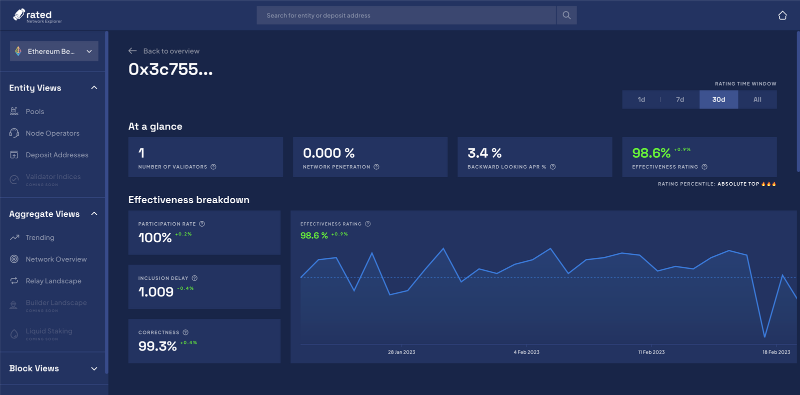
DVT will be rolled out in an open, constructive, and highly collaborative manner, similar to the phased rollout approach used for ETH2. The successful launch of dv494484.eth represents our Stage 0 version—an initial step toward Obol V1.
In the early stages of DVT adoption, maintaining performance parity with current validators is essential. This is critical for early ecosystem adoption and ongoing support, and it remains a top priority in our design, implementation, and testing of Obol.
Looking ahead, we are also focused on Charon’s performance across all validator types. We envision a future where validators are shared globally among participants, which significantly influences how we design, introduce, and test Obol DVT.
Given the diversity of Ethereum validator types, we will adopt a phased rollout approach for Obol. At each stage, specific user groups will receive targeted attention. This improves long-term DVT pipelines across verticals in the Ethereum infrastructure (e.g., LSPs, home validators, DeFi), enabling the project to deliver value to the Ethereum ecosystem while maintaining performance, security, and usability. Each phase of the roadmap will also lay the foundation for the next.
Obol V1 Roadmap
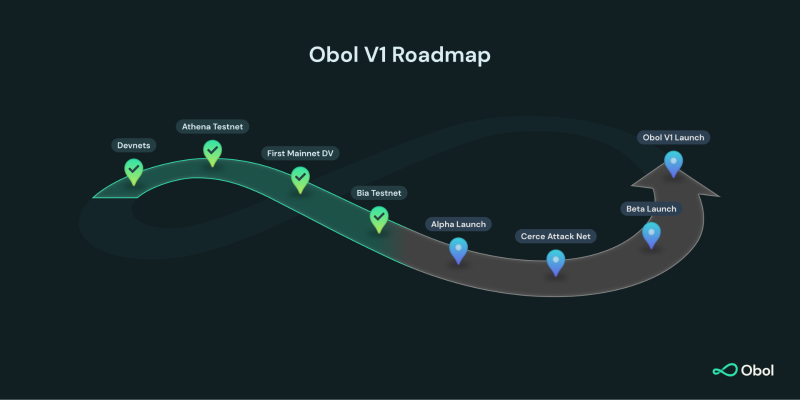
Research, design, and development of Obol V1 have spanned 24 months and stability testing is now complete. Through this work, we’ve broken down the Obol Network into four functional areas: creation, testing, operation, and coordination. These four domains collectively shape the Obol roadmap and define the capabilities of Obol V1—the first driving force in establishing a global infrastructure network for distributed validators.
Across the pillars of V1, Obol Network has developed and maintained four core infrastructures:
-
DV Launchpad—a web application for migrating to or creating Obol distributed validators.
-
Charon—middleware client supporting fault-tolerant Ethereum validators.
-
Obol Managers—a suite of smart contracts enabling validators to be shared within clusters.
-
Obol Testnets—networks for testing permissionless distributed validators.
For Obol V1, we will also follow a phased rollout approach.
Pre-Alpha: Deploy the First Mainnet DV
To understand how DVs perform on mainnet, real-world testing is necessary. We decided to deploy the first DV before submitting for our initial audit. The Pre-Alpha phase also includes submission for the first audit with Sigma Prime, and successfully completing a DVT performance report created by the Miga Labs team.
Alpha: Scale DV Validators to 1% of Active Validators
The Alpha phase will involve launching Obol with a group of trusted partners and gradually integrating Obol into existing and upcoming staking applications. This phase begins once audits are completed and any required changes are addressed. Rolling out this way allows us to give necessary attention to shortcomings, enabling deeper learning and insights.
Beta: Scale DV Validators to 5% of Active Validators
After successfully completing the Alpha phase, we will begin opening Obol to broader integration with various user types and projects using commercial licensing. This enables us to scale technology adoption exponentially based on early learnings. As more operators adopt Obol, our primary focus will remain on ensuring the protocol maintains required quality standards.
V1 Launch: Enable All Operators to Deploy Obol DV on Mainnet
The public launch phase of our mainnet journey marks the completion of Obol V1. By this point, we aim to have approximately 10% of staked Ether protected by DVT. After completing the Alpha and Beta phases, all V1 testnets and audits will be finalized, ensuring product performance, security, and usability.
During the Obol V1 phase, we will operate three testnets in total.
Athena (and Obol Operator Network) (Completed)
Athena Testnet was our first public testnet, held from July to September 2022, during which the Obol Operator Community (OOC) first tested DVT in their environments. It also served as our first comprehensive test network offering DVT to validators.
Bia (Ongoing)
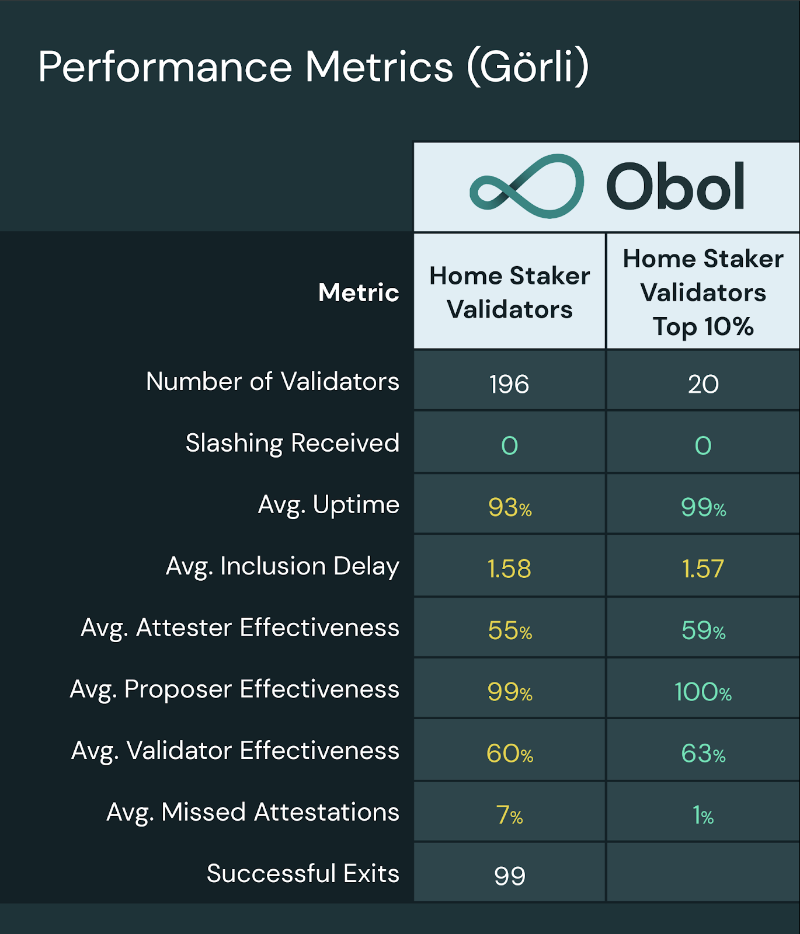
The ongoing Bia Testnet aims to evaluate Obol’s scalability in terms of performance and usability. Our goal is to activate over 500 clusters globally, assessing whether home validators can self-serve and create DV clusters without significant support. We are also testing Bia with professional operators, scaling clusters to run 1,000 validators to assess the protocol’s vertical scalability.
Circe (Upcoming)
The Circe Testnet will launch after the Beta release. Circe will stress-test the protocol to uncover potential vulnerabilities and limitations, such as slashable risks in Obol DVT. It represents a crucial final step to ensure Obol is fully secure before the public launch.
Obol V2
While the V1 roadmap is exciting, we are actively working toward the vision of Obol V2. Obol V2 primarily focuses on minimizing trust in distributed validators through enhanced applied cryptography and cryptoeconomics.
The ultimate state of Obol is a multi-client DVT protocol that allows any validator to join a cluster without trusting (or even knowing) other operators within the same cluster. The stages of V1 will establish the high-performance, secure, and usable foundation necessary for building Obol V2.
Join TechFlow official community to stay tuned
Telegram:https://t.me/TechFlowDaily
X (Twitter):https://x.com/TechFlowPost
X (Twitter) EN:https://x.com/BlockFlow_News