Is Full-Chain Layer0 the Future? Decoding zkOmnichain, the "Holy Grail of Web3"
TechFlow Selected TechFlow Selected
Is Full-Chain Layer0 the Future? Decoding zkOmnichain, the "Holy Grail of Web3"
Single-chain past, multi-chain present, but full-chain Layer0 is the future?
 Navigating Web3 tides with focused insights
Author: Kang Shuiyue, Founder of Fox Tech and Way Network, Chairman of Danyang Investment
Preface
zkRollup belongs to the Layer2赛道 (Layer2 race), aiming to solve Ethereum's congestion issues; zkOmnichain, on the other hand, belongs to the Layer0赛道 (Layer0 race), aiming to build the entire Web3 network.
However, due to the overwhelming influence of the Ethereum ecosystem, most attention has been focused on zkRollup, while zkOmnichain has been overlooked. A zero-knowledge proof-based omnichain interoperability protocol—zkOmnichain—is the holy grail of blockchain and Web3, with extraordinary significance.
If Ethereum’s market share could remain above 70% for years, then Omnichain would be a meaningless concept. However, Ethereum cannot maintain a 70% market share indefinitely. The chart below shows Ethereum's TVL share from August 2020 to February 2023. Ethereum's latest market share stands at 59.24%. Although Web3's chain-layer infrastructure will long maintain a "one dominant, many strong" landscape—and despite Ethereum’s continuous technical upgrades—as Ethereum Layer2 solutions like zkRollups and opRollups absorb traffic from Layer1, as challengers such as BNB Chain and Polygon grow aggressively, as new public chains like Aptos and Sui rise rapidly, and as the Cosmos ecosystem expands exponentially—we will see Ethereum’s market share consistently fall below 50% after 2025.
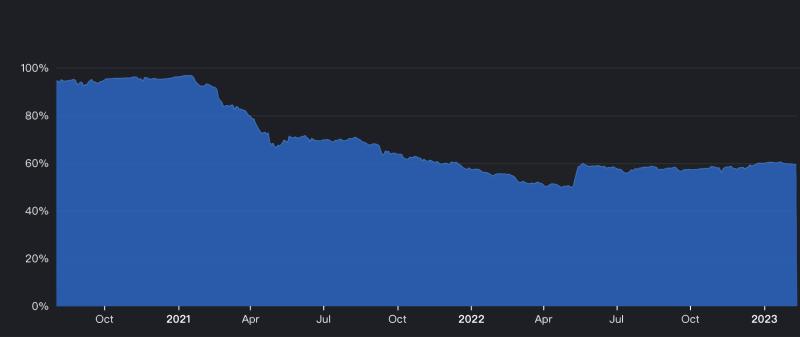
Figure 1: Ethereum TVL Share from August 2020 to February 2023, Data Source: https://defillama.com
Application Pathways to Full Omnichain Coverage
After the DeFi summer of 2020, almost all applications achieved multi-chain presence through the primitive method of deploying separately and individually across chains. This crude approach not only creates significant challenges for developers in deployment and operations but also leads to severe liquidity fragmentation across chains and large price discrepancies for identical tokens between chains.
Beyond this basic method, there are three main pathways for applications to achieve full omnichain coverage:
-
The first pathway—the common route taken by first-generation cross-chain products—is for an application to interoperate via an intermediate consensus protocol connecting the source and destination chains. The application is typically not deployed on this intermediary chain. Notable examples include self-contained ecosystems like Cosmos and Polkadot, as well as Multichain, Celer, Wormhole, Thorchain, and Axelar;
-
The second pathway involves achieving interoperability with other chains using Optimistic mechanisms. Subtypes under this category include Synapse, Nomad, and Hyperlane, which use Optimistic Verification & Fraud Proofs, and LayerZero and Across, which adopt Optimistic Oracle & No Proofs;
-
The third pathway is for applications to interoperate with other chains through a zero-knowledge proof-based omnichain interoperability protocol—zkOmnichain. Prominent examples include Electron, Polymer, and Succinct emerging from the Cosmos ecosystem, Overearlity focusing on NFT bridging, and Way Network striving to provide a universal solution.
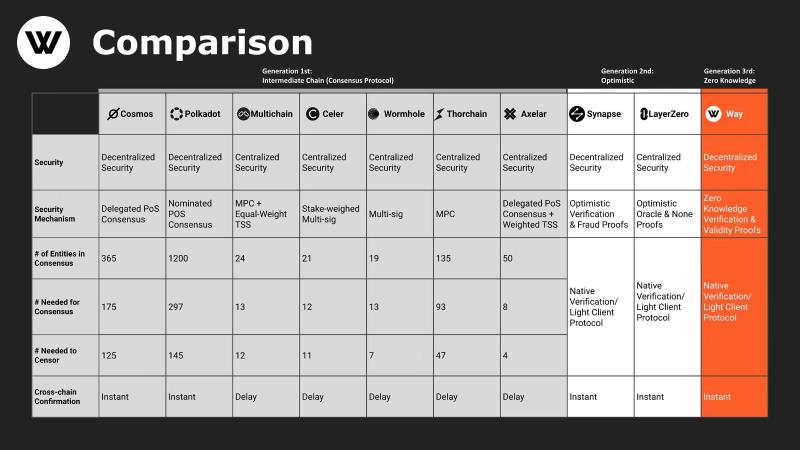
Figure 2: Comparison of Cross-Chain Protocols Across Generations
- There is also another path: deploying the application onto a brand-new smart contract public chain that then serves as the hub for interoperability with all other chains, exemplified by ZetaChain and Map Protocol. This is a heavy-duty development and operational model. It must first resolve the ledger alignment challenge faced by EVM chains when bridging heterogeneous chains—similar to first-gen products—and because it overlaps functionally with existing smart contract platforms, it inevitably competes directly for application resources. Regardless of the path chosen, they all aim to accomplish the same goal: transforming single-chain applications into omnichain applications.
First-generation intermediary chain (consensus protocol) models suffer from trade-offs: too many validators slow down performance, too few compromise security, and node operation overhead is high, making them ill-suited to serve as the foundational fabric of Web3. Thus, our focus must shift to non-intermediary-chain models, particularly examining second-generation opOmnichain and third-generation zkOmnichain approaches.
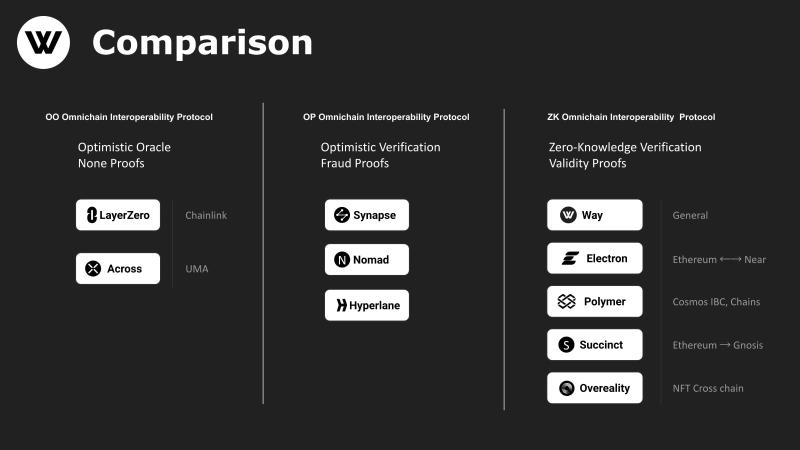
Figure 3: Comparison of OP and ZK Omnichain Interoperability Protocols
Just as Ethereum scaling solutions (Layer2) have bifurcated into OP and ZK categories, so too has the Layer0 omnichain interoperability sector split into two major types of solutions: OP and ZK.
We now examine the Optimistic Oracle sub-pattern within OP solutions:
- In this model, LayerZero uses Chainlink oracles, while Chainlink itself has its own Cross-Chain Interoperability Protocol (CCIP), creating both collaboration and competition between the two projects. Across uses UMA as its oracle, and UMA and Across are two projects under the same team.
These solutions cannot achieve true decentralization and lack Shared Security. Shared Security means that specific tokens or applications running on a given infrastructure cannot freely choose their security model but must adhere to the security requirements provided by the underlying infrastructure. All Layer1s and Layer2s possess Shared Security, and Layer0 should too—it must not rely on Isolated Security. Only with Shared Security can end users receive uniform foundational protection regardless of which application they use or what internal security policies those apps employ. The word “foundational” in infrastructure implies precisely this.
Furthermore, these Optimistic Oracle designs require strict trust assumptions: end users must trust that the oracle won’t falsely attest. In this case, the oracle becomes a Third Trusted Party. Users must believe that the oracle and relayer won’t collude maliciously to steal assets. Moreover, these schemes generate neither fraud proofs nor validity proofs, nor do they involve on-chain verification of proofs. These flaws have been previously highlighted by teams including L2BEAT, Nomad, and Way Network; we won’t delve deeper here.
Next, let's consider the Optimistic Verification sub-pattern within OP solutions:
This model is more rigorous than Optimistic Oracle and does produce Fraud Proofs. Messages are optimistically signed on the source chain and monitored off-chain by a validator network, which submits fraud proofs to the destination chain during a mandatory optimistic window (timeout period). During this interval, potentially fraudulent messages may be challenged. If any discrepancy is detected, a validator can verify and reject the message, preventing fraudulent transactions. Compared to first-gen external validation networks that rely on an honest-majority assumption, Optimistic Verification depends only on a single honest validator assumption—meaning just one honest validator initiating a change is sufficient to secure the system. The tradeoff is latency introduced by this waiting period. Fortunately, this delay isn't as long as in opRollups (which wait seven days); instead, it lasts tens of minutes—for example, Nomad sets a 30-minute timeout.
Finally, we turn to the most important: zkOmnichain:
This model falls under Zero-Knowledge Verification and offers superior robustness.
Like zkRollup, zkOmnichain generates Validity Proofs. A critical component is invoking the Sum-Check Protocol module—performing proof computation (Sum) off-chain and verification (Check) on-chain. Through this rigorous mathematical and cryptographic validation, the system achieves Completeness and Soundness.
As for Succinctness, Groth16 can be used to further compress proof size. For instance, Way Network’s zkSpark produces an initial proof size of about 100KB, but after Groth16 compression, it shrinks to just 130B.
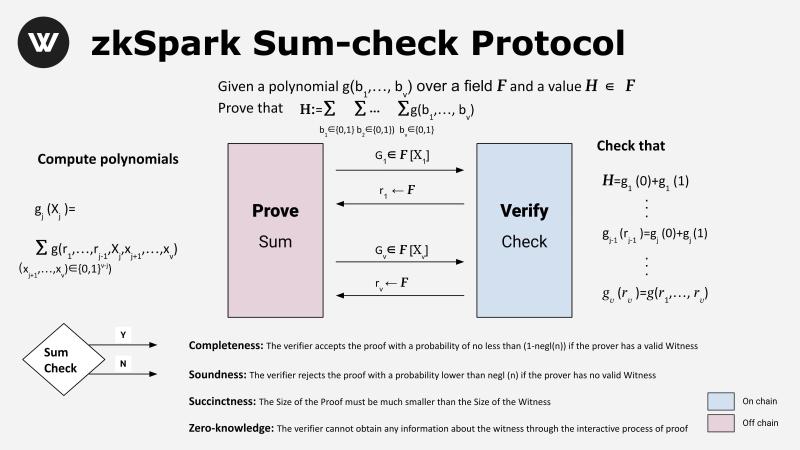
Figure 4: Way Network zkSpark Sum-Check Protocol
It is precisely thanks to zkOmnichain—a “strong cryptography”-based omnichain interoperability protocol—that we can finally achieve the highest standard for infrastructure products: Trustless, eliminating any trusted third parties, and Decentralized, removing any centralized privileged entities.
With the emergence of zkOmnichain, we finally see the possibility of evolving from isolated “chains” to a truly interconnected “network,” and the feasibility of building a Layer0 infrastructure capable of supporting large-scale omnichain application deployments across all smart contract blockchains.
What Changes Will zkOmnichain-Based Omnichain Applications Bring?
-
First, eliminating the Intermediate Chain present in first-gen cross-chain products, thereby reducing costly validator operating expenses;
-
Second, removing Intermediate Tokens and Wrapped/Pegged Tokens, allowing users to conduct Native Token cross-chain transactions without trusting these derivative tokens;
-
Lastly, eliminating the third-party trusted oracle entity—an improvement that enhances the resilience of the omnichain network.
zkOmnichain-based omnichain applications depend neither on intermediary chains nor on oracles, nor do they require intermediary or derivative tokens. Instead, they rely on rigorous mathematics and cryptography to generate validity proofs, verified on-chain, achieving the goals of decentralization (Decentralized) and trustlessness (Trustless), enabling peer-to-peer omnichain communication akin to the Bitcoin network.
From Singlechain to Multichain, and now to Omnichain—this is the fundamental trajectory of the Web3 wave. Soon, omnichain applications will no longer be rare exceptions but will become ubiquitous. Applications built on zkOmnichain offer higher cross-chain security, lower communication costs, and faster speeds, making them far more likely to succeed.
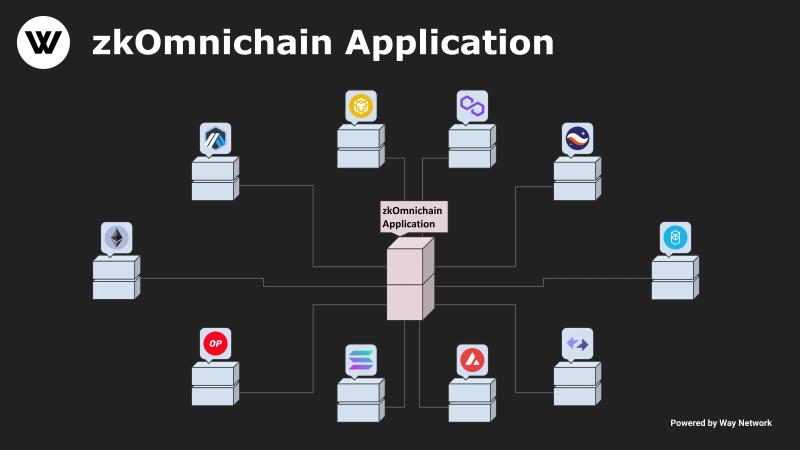
Figure 5: zkOmnichain-Based Omnichain Applications
In recent times, numerous omnichain interoperability protocols aiming to connect blockchains into a true Web3 network have emerged. In Web2 terms, Cosmos is analogous to building a Local Area Network (LAN), whereas Way Network aims to construct a Wide Area Network (WAN)—even the Internet itself.
The key criterion for evaluating such products is not how many chains the protocol supports, but whether its integration method embodies Nakamoto Consensus—i.e., Decentralized and Trustless. Because that’s the “1”; everything else is “0”. Without the “1”, no number of “0s” matter.
Conclusion
It is foreseeable that within the next three years, omnichain applications will gradually replace single-chain and multi-chain applications as the mainstream deployment model for Web3, and zkOmnichain Interoperability Protocol will be the key technological enabler and foundational infrastructure driving this transition.
Soon, we will witness a surge of zkOmnichain-based omnichain AMM applications, lending platforms, SocialFi dApps, omnichain NFTs, and more, sprouting up like mushrooms after rain.
Join TechFlow official community to stay tuned
Telegram:https://t.me/TechFlowDaily
X (Twitter):https://x.com/TechFlowPost
X (Twitter) EN:https://x.com/BlockFlow_News