








How to build a killer content and entertainment dapp? For apps to achieve widespread adoption, they need a breakout game.
TechFlow Selected TechFlow Selected
How to build a killer content and entertainment dapp? For apps to achieve widespread adoption, they need a breakout game.
app + blockchain = dapp = harder to make a good app.
 Navigating Web3 tides with focused insights
Author: Andy Tian, Co-founder and CEO of Asia Innovations Group, seasoned product expert; formerly GM of Zynga China and founding member of Google's mobile division in China, instrumental in bringing the Android system to China.
Note: This article was written in June 2018.
More than half of 2018 has passed, and blockchain remains one of the hottest trends this year.
Beyond its financial attributes and the token economy it enables, blockchain itself is a highly valuable technology. Whether Tencent, Alibaba, Baidu, or NetEase, all have launched blockchain-powered applications this year.
However, unlike the capital-fueled token economy market, purely technology-driven blockchain applications rarely enter the public eye. As a result, many people unfamiliar with the technology associate blockchain with high-risk financial investments—or even pyramid schemes and fraud.
On April 23, at Tencent’s UP2018 New Cultural Creativity Ecosystem Conference, Tencent unveiled its first blockchain-powered gamified application, Catch the Demon, which may be the most advanced blockchain-based game currently available.
So how exactly can this emerging technology integrate with mainstream applications?
This month, Tencent Research Institute hosted the fifth session of its Internet Frontier Salon PRO—Content Economy Driven by Blockchain Technology. The event brought together multiple industry experts for an in-depth discussion on blockchain’s integration with content ecosystems and gaming applications.
The following is the keynote speech by speaker Andy Tian titled “How Blockchain Unlocks the Value of Entertainment Content.”
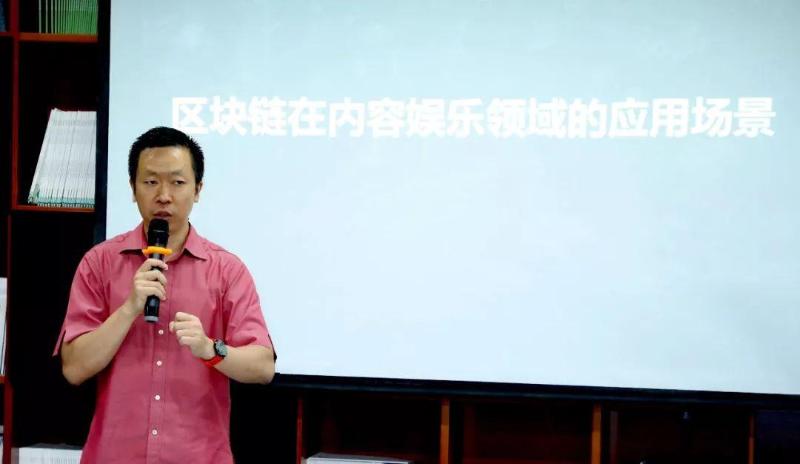
Andy Tian, Andy Tian
Hello everyone! I’m Andy Tian. We started working on blockchain last year, making us one of the first traditional internet companies to truly embrace blockchain. Last year, our revenue reached $150 million, meaning we’ve achieved relatively mature and large-scale integration of blockchain technology.
A quick introduction: I earned my master’s degree at MIT and am essentially a coder. I founded my current company at the end of 2013—it’s a mobile internet company focused on gaming, advertising, and more. Due to the organizer’s request, I won’t elaborate too much on our specific products.
Current state of blockchain users: around 25 million actual users. What does that mean?
It’s roughly equivalent to the combined population of Beijing and half of Tianjin—but only about 0.62% of total internet users. So we’re talking about a very hot yet niche market.
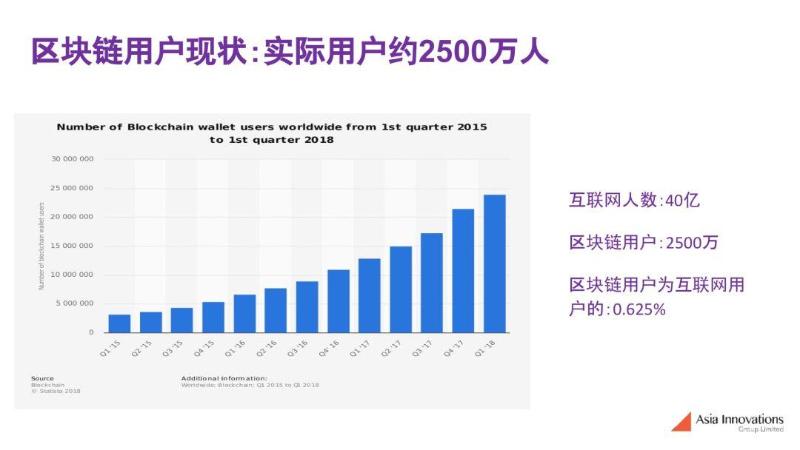
Within this group of 25 million, there are over 86,000 startup projects—making it an extremely crowded space.
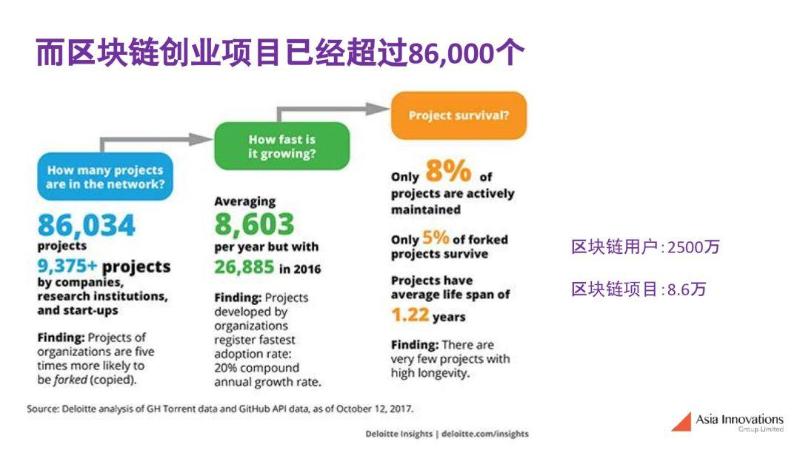
But here’s the problem: by the end of last year, before the Chinese boom kicked in, only 8% of these projects were still active—meaning they were still updating their code.
Statistics show the average lifespan of a blockchain project is just 1.22 years. So if you’re entering this industry, expect to change jobs annually—or risk your project disappearing.
Looking at Ethereum, the largest public chain today, its top application, IDEX, sees a maximum of 22,432 requests per day. Among over 80,000 projects, the most popular application receives only about 20,000 daily requests—a clear sign this isn’t yet a mass-market phenomenon.
So why is that?
The truth is, infrastructure remains underdeveloped—request speeds are slow, security is weak, and usability is poor.
Let me ask a simple question: how many of you here have a crypto wallet?
[Audience raises hands]
Very few. We’re at Tencent Research Institute—one of the leading internet research institutes—and the audience here should be quite forward-thinking. Yet among such a tech-savvy crowd, only about five people have wallets. We can only blame how backward the world still is.
So how do we make sense of all this? I believe history always repeats itself—and given how short internet history is, understanding blockchain’s future requires us to look back ten years.
Blockchain today resembles the early days of the Android market. I was fortunate enough to join Google China in 2005 and work on Android app development.
I remember in November 2005, during a training session at Google, an older man approached me: “You’re Andy from China, right?”
We sat down together, and he showed me something. I asked, “What is this?” Back then, Nokia, Motorola, and Windows Mobile dominated the scene.
But this device was different—it had Google Search, email, even maps. I thought it was so cool!
Then two minutes later, it crashed and needed a reboot. I asked him what it was called. He said, “Android.” I thought, what a terrible name—who could possibly remember that?
He replied, “Yes, it’s just an internal codename—we’ll definitely change it later.” That man was the father of Android. I was lucky enough to help introduce Android to Chinese developers and app makers.
Later, we launched the world’s first Android phone—the HTC G1 in 2007. Not bad—more people here have seen this phone than own digital wallets.

Its interface was stunning, the apps rich and diverse—truly mind-blowing at the time. The specs? A powerful 528 MHz Qualcomm ARM11 processor, 192 MB RAM, and 256 MB storage.
My Xiaomi MIX 2S also has 256—but that’s GB, not MB. In ten years, phone storage capacity has increased a thousandfold.
Blockchain in 2018 feels just like Android in 2007—extremely slow, frequently requiring reboots.
Back then, we’d restart the phone roughly every ten minutes. If I weren’t passionate about Android or didn’t work on it, I probably wouldn’t have used it.
Today, sending a message on Ethereum often fails because you didn’t pay enough gas fees—very expensive. The HTC G1 cost about $500 back then, making it the most expensive phone at the time—only true tech enthusiasts would buy it.
Now, transferring a $5 item on Ethereum might cost you $5 in transaction fees.
One big difference though: Android developers back then weren’t rich. Today’s blockchain developers are well-funded—which means they can do a lot more.
From zero to global dominance—how did Android achieve widespread adoption over the past decade?
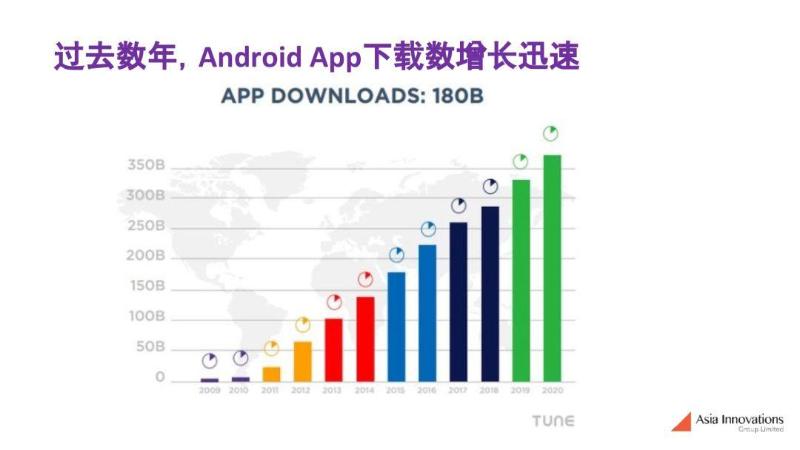
In 2007 and 2008, Android usage was negligible. It wasn’t until 2011 that it saw explosive growth.
We believe three Killer Dapps drove this ecosystem breakthrough: social, content, and gaming.
For Android, it was social tools, video/image content, and games that powered the development of the information society.
I’m a gamer and a coder. When I was deep in tech, I dreamed of changing the world with something revolutionary.
But I later realized the most revolutionary thing is actually making games—because games drive technological advancement.
So I struggled—I wanted to build the greatest operating system, the best sharding and consensus technologies. But at the same time, I wanted mass adoption, which meant creating something accessible, even “common.”
I knew my fate: starting in 2008, pushing Android forward through gaming.

I believe gaming is now blockchain’s biggest opportunity.
Why not social or communication? Because blockchain isn’t an operating system. Let’s not deify or demonize it. Blockchain is a new marketplace layer built atop existing operating systems. It’s important—but not everything.
I don’t agree that blockchain is an OS—I’ve promoted operating systems before. Blockchain is fundamentally different. But it *is* a massive amplifier. Therefore, while social and communication aren’t ideal, content and gaming are crucial for blockchain.
How many of you have heard of Steem? At least more than those who have wallets—good.
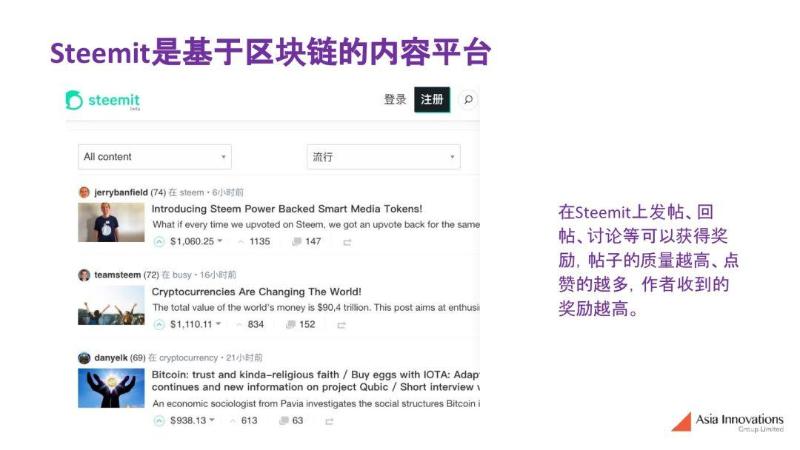
Steem has surpassed Bitcoin to become the public chain with the highest number of requests—outpacing Ethereum, Bitcoin, BTS, and others. It accounts for 31.6% of all blockchain network requests today—something many may not know.
Why? Because it has real applications supporting it. What is Steem? It’s a blockchain-based platform for paid knowledge—essentially, users write articles, get likes and replies, and earn rewards directly.
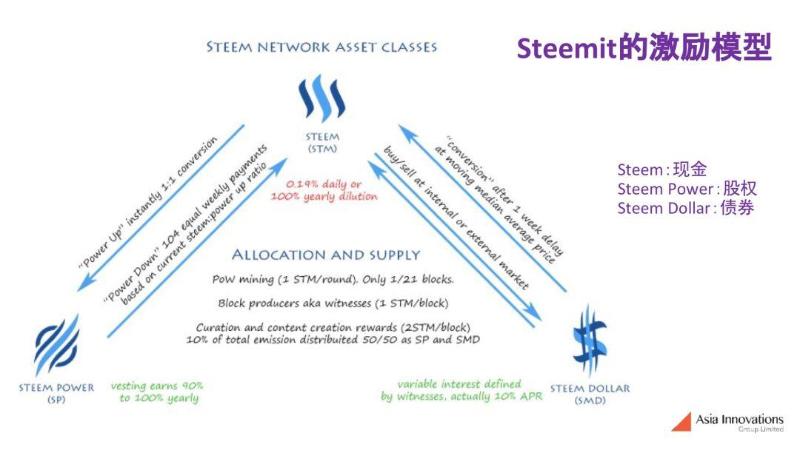
This breaks the old model. Previously, an article might generate ad revenue based on views. Remember: outside China, there’s no WeChat-style tipping. Tipping as a concept essentially began with blockchain.
Launched in March 2016, it now sees over a million requests daily—but initially, almost no one used it.
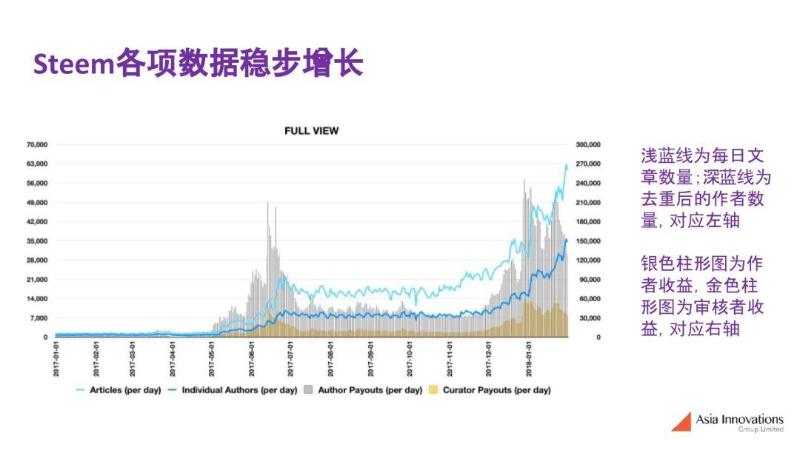
Every application faces the challenge: how do you prove it truly meets user needs? From the first three months of confusion and low adoption, to the realization that tipping was possible, to gradual growth—especially after blockchain gained popularity last year—usage exploded.
Now at millions of daily requests, it’s undoubtedly the largest consumer-facing application abroad.
The key lies in blockchain enabling fairer value distribution—peer-to-peer, decentralized, not controlled by a central corporation.
Unlike traditional platforms that take profits and redistribute them to creators, here readers directly reward writers—no intermediaries. User data is secured on the community’s blockchain, immune to tampering or theft.

Second case: live streaming—how can we apply blockchain here?
First, Uplive features cross-cultural streamers speaking 41 different languages—from the U.S. to Morocco.
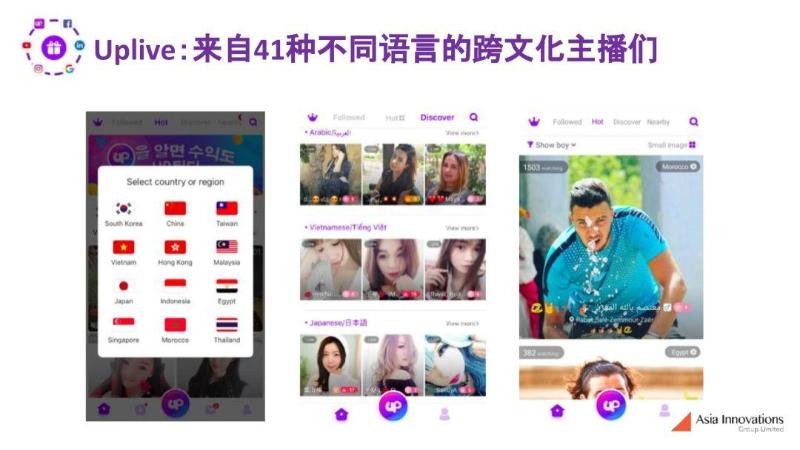
The business model is similar to domestic ones—virtual gifting. Currently, we have around 35 million overseas users, 100,000 streamers, and monthly virtual gifts totaling about 35 million.
Andy Tian: This is a Taiwan-based app.
Why would a live streaming app consider blockchain?
We were doing well with live streaming and gaming, making good money, surrounded by attractive people—life was great. Why venture into blockchain, such a painful and hard-to-use technology? Our income comes from flashy, culturally tailored virtual gifts.
Here’s where the problem arises: Olivia, for example, has 140,000 followers on Facebook. Why can’t she receive gifts from them?
Because technically, it’s impossible. Live streaming is confined to its own app, Facebook is another platform—no streaming app can collect gifts across platforms.
After explaining this logic, what do you think her response was? She responded logically: “What can we do?” Since she’s one of our top streamers and earns us significant revenue, we decided to give it a try.
We embedded H5 gift links on Facebook, allowing fans to send gifts directly via Facebook.
And it worked—no need for Facebook integration or partnerships. A simple link enabled gifting.
We soon realized this was a huge demand. Why? Global content creators struggle to monetize directly from their content. Overseas, monetization relies heavily on ads, which pay poorly—99.7% of YouTube videos earn less than $2,000.
What’s the core of blockchain? Decentralization. What does that mean?
It means value created within centralized systems can, via blockchain, be unlocked across multiple platforms—creating value beyond any single centralized entity. That’s the essence of decentralization.
We put virtual gifts on-chain—a simple idea. Previously, a virtual gift—say, a sports car—would vanish when you closed the app.
But placing it on ERC-20 changes everything. Each token becomes a unique virtual gift—exactly what we aim to create. Now, a received sports car exists permanently on the blockchain—truly yours.
We can then embed this system into other platforms like Facebook—as long as they support web links. It’s a universal system.
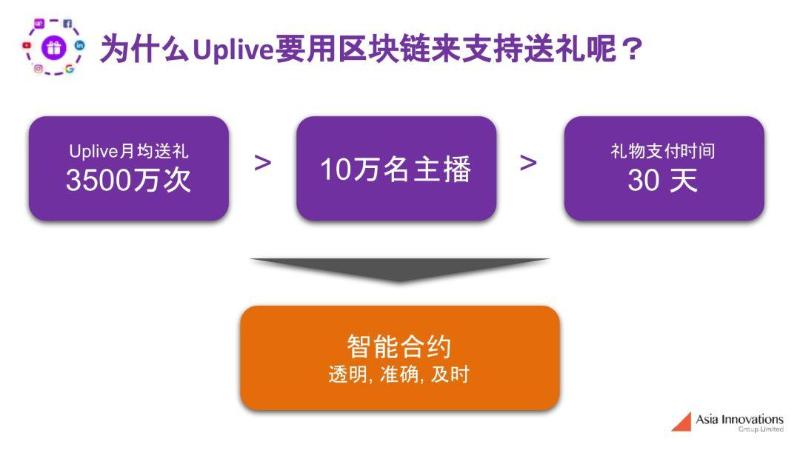
Smart contracts offer two major benefits: first, valuable virtual assets and gifts can be used, obtained, and retained permanently anywhere. Second, smart contracts enable faster, more accurate, transparent, and timely transactions—the two core advantages.
In implementation, challenges arise—such as user alignment. Blockchain users and live streaming users are distinct groups with different habits, requiring integration.
Two years ago, we focused on educating non-blockchain users on how gifting works.
Interestingly, I found that while people resist learning new technologies, they’re eager to learn if a beautiful streamer says, “Send me a blockchain gift like this.”
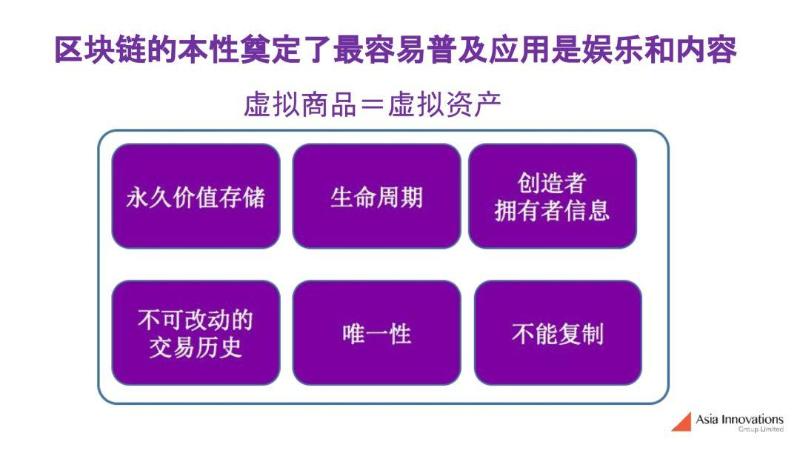

To summarize simply: blockchain’s nature makes entertainment and content the easiest applications to popularize.
Virtual goods equal virtual assets—they need permanence and storage. On-chain, as long as the world doesn’t crash and there’s no 51% attack, they remain stored forever—provided you don’t lose your private key.
Lifecycle control: you can set items to expire in a year, a month, a day, a minute, or keep them permanent.
Creator and owner: full information preserved, including immutable transaction records. For example, “At 2:28 PM on June 14, I sent Zhenghua a pink sports car”—this record cannot be altered. Uniqueness, non-replicability—these are blockchain’s core traits.
Content and entertainment are already the largest consumer markets in mobile internet—Tencent became a global leader through content, entertainment, and social.
Content and entertainment form virtual economies—key components of modern economics.
In blockchain, another crucial aspect is its strong economic linkage—setting supply-demand balance, incentives, etc.—all rooted in economics.
Frankly, all blockchain economics I’ve seen so far are superficial. Why? In gaming, we’ve been running virtual economies for years.
Many blockchain whitepapers claim to have incentive models, tokenomics, etc.—but did these teams ever build games with real economic systems?
If not, forget it. Anyone who’s made games knows: initial economic designs usually fail—you need three or four major overhauls. Otherwise, it’s all nonsense.
Even veteran game developers with ten years’ experience must constantly iterate, test with real users, and monitor data. You never know which tiny flaw—like a spot where grinding endlessly multiplies gold—could collapse the entire economy.
Blockchain can solve many current issues—copyright infringement, low willingness to pay. Copyright: my article can’t be copied. Second: tipping gives content direct value.
WeChat does this well, but overseas lags behind. Still, Steem pioneering this in a less-advanced internet environment abroad is impressive—very impressive.
Value transfer in blockchain: traditionally, value flows from user → centralized company → user. Blockchain enables direct peer-to-peer value transfer—that’s its core innovation.
Like Android, we believe Killer Dapps will drive blockchain’s true development. Today, countless public chains exist—one is iOS, one is Android. There were maybe seven or eight back then; I think the future will be similar. Despite numerous chains, only a few foundational ones are truly needed.
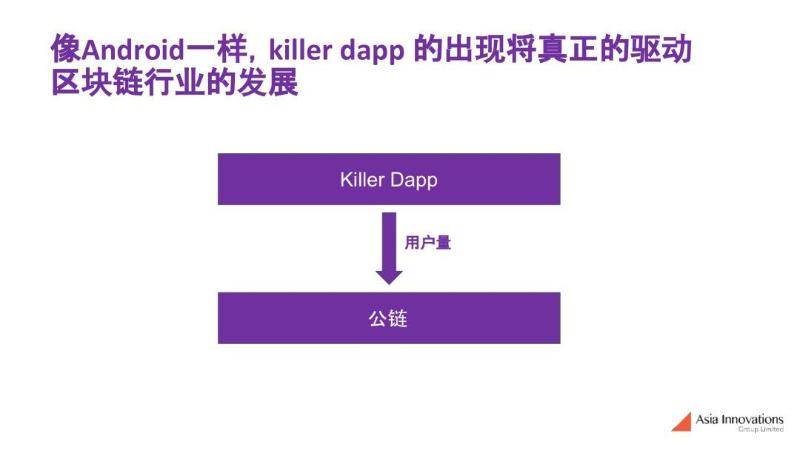
Public chains are flooding the market because people aren’t focusing on building applications. 2018 will be the year of blockchain applications, as major companies begin to enter. I hope Tencent moves slowly—so smaller companies like ours have more time to run ahead.
How to build killer content and entertainment dApps? First, build a great app. Remove the ‘d’—your app must be usable first. App + blockchain = dApp = a much harder-to-execute app.
Building a successful dApp requires a strong team—operations, product, and tech expertise are all essential.
Investors may be attracted by the inclusion of blockchain, but users won’t care. Close collaboration and execution with public chain technology are critical. Just like the internet, those succeeding in blockchain today are mostly veterans who’ve previously built successful products.
So 2018 marks the beginning of the blockchain application era.
Join TechFlow official community to stay tuned
Telegram:https://t.me/TechFlowDaily
X (Twitter):https://x.com/TechFlowPost
X (Twitter) EN:https://x.com/BlockFlow_News






