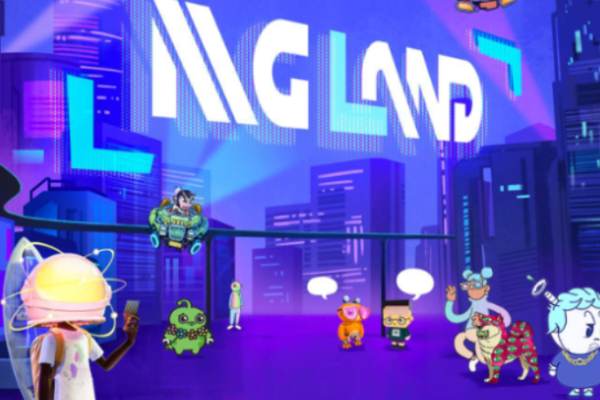
MG.Land: Exploring New Web3 Expressions in the Metaverse World
TechFlow Selected TechFlow Selected
MG.Land: Exploring New Web3 Expressions in the Metaverse World
Looking ahead, how should the concept of the metaverse intersect more with the real world?
 Navigating Web3 tides with focused insights
By: 0xDada
On January 5th, the well-known metaverse project MG.Land launched its whitelist pre-sale event, selling out all 500 whitelist land minting slots within just three hours.
At a time when the broader market remains relatively subdued, this level of performance has naturally drawn our attention.
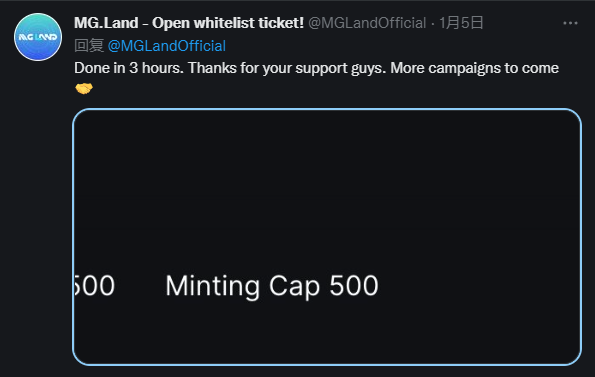
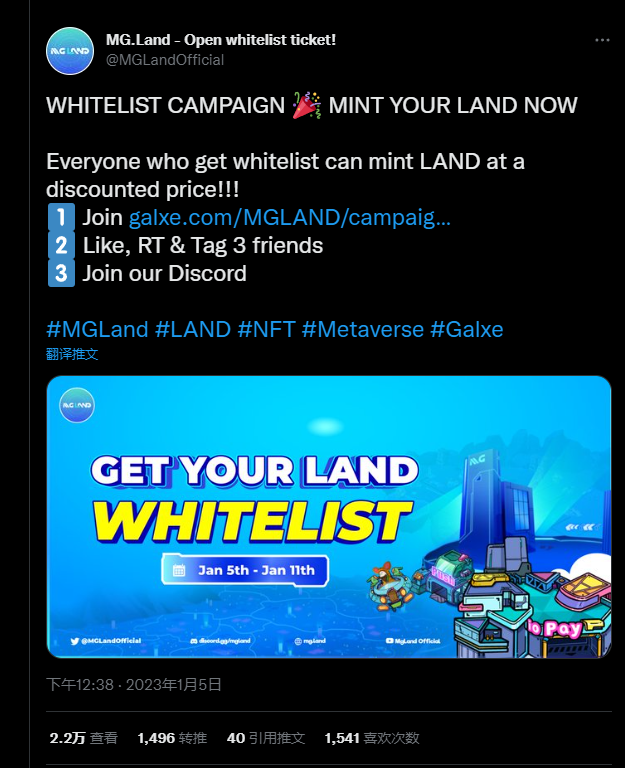
In fact, MG.Land has undergone a full year of continuous development and iteration. Unlike typical metaverse projects that remain superficial or narrative-driven, MG.Land already has a mature, functional product with a growing user base and ecosystem partnerships established during its testing phase.
Behind this impressive market response, what exactly does MG.Land offer? We conducted an in-depth hands-on evaluation. For readers unfamiliar with the project, we’ll walk you through MG.Land’s core features and unique value proposition.
An Open and Free Metaverse World
Overall, MG.Land serves as a metaverse platform.
By integrating elements such as land, buildings, and avatar NFTs, the project creates an immersive virtual space capable of hosting Web3 socializing, events, gaming, and transactions.
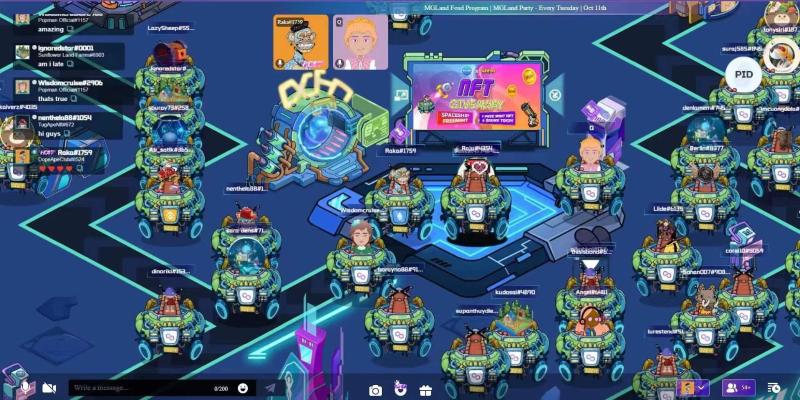
During our hands-on experience, we found that the virtual space created by MG.Land stands out particularly in terms of openness and freedom.
-
First, openness
The project is open to NFTs from all public blockchains, meaning NFT holders on ETH, BSC, Solana, and Polygon can all join MG.Land. Additionally, MG.Land already supports over 500 mainstream avatar NFT projects. Users holding these NFTs can connect their wallets to MG.Land and import their avatars directly into the land, using their NFTs as playable characters.
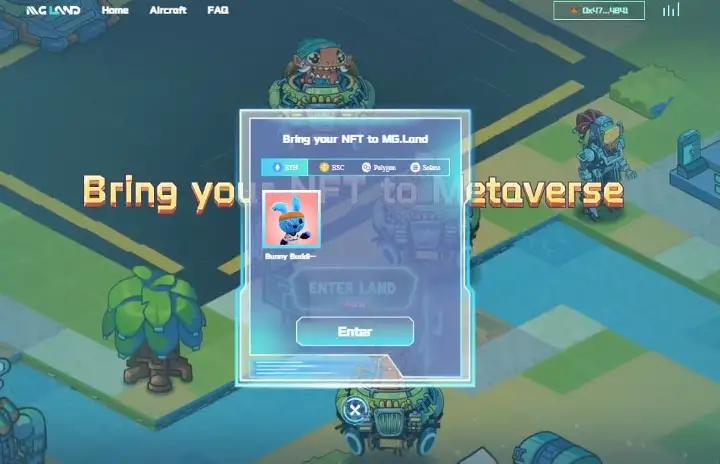
Thanks to its multi-chain support, when users from different blockchains access the same virtual space, assets across chains and platforms become interoperable, enabling direct interaction between communities.
Imagine a Doodles holder meeting a Bored Ape owner in the same virtual room. In most cases today, these two NFTs might only coexist in marketplaces like OpenSea. MG.Land brings them together in a more tangible, gamified environment. Holders of different assets can interact in a more immersive, engaging, and direct way. Even non-NFT holders can visit these spaces as guests.
This means assets and users across different chains now have a shared gathering place, opening up new possibilities for communication and event organization.
-
Second, freedom
Once a virtual space is sufficiently open, the next question becomes “What can users actually do inside?” MG.Land offers exceptional freedom within its space.
As suggested by its name, Land serves as the foundation for all user activities. Each plot of land can be freely edited and customized in layout, style, and functionality. The project provides a WYSIWYG (what-you-see-is-what-you-get) land editor—users simply select terrain, streets, vegetation, and other components from a library to design a completely unique map according to their preferences.
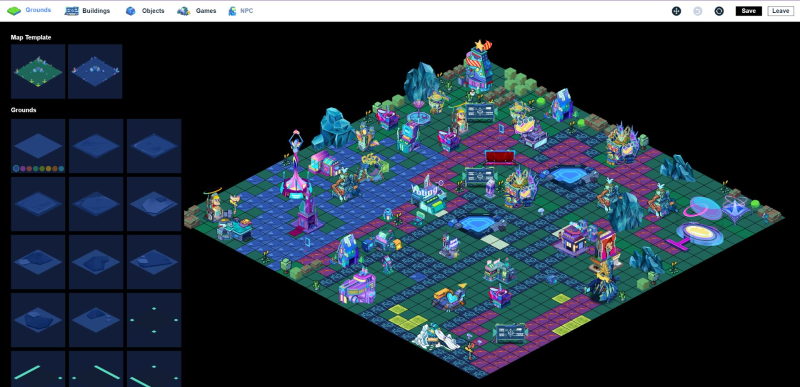
Additionally, users can add various buildings to their plots. These buildings can be assigned different functions to support specific activities. For example, you could create a “music lounge,” upload song links, and allow visitors to play music upon entry. Moreover, buildings in MG.Land support deeper Web3 functionalities—such as voting on proposals within a building or claiming event airdrops.
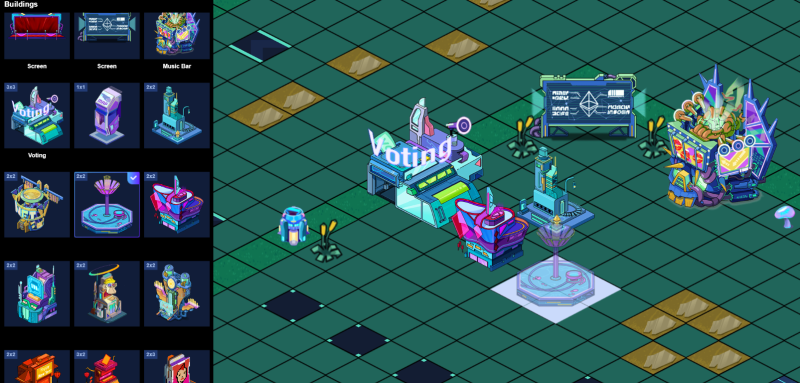
Notably, these building functions and interactive behaviors are all on-chain. The visual representation of the land and space acts as a friendly, lively frontend, providing users with a dynamic area for activity.
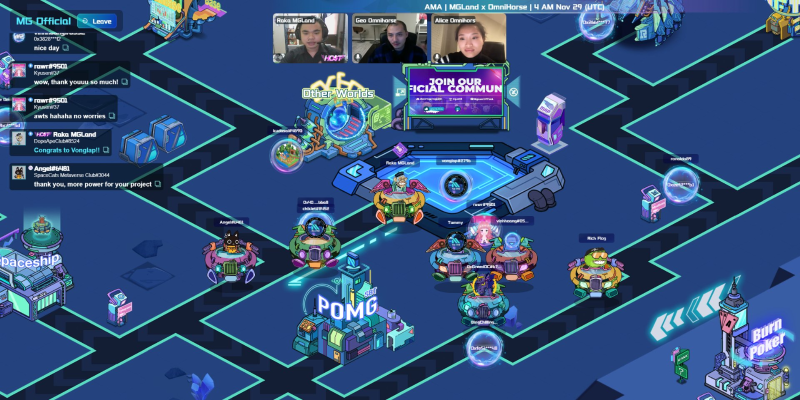
Regarding interactions, users entering a plot can freely engage in text and voice chat or communicate via live streaming. Combined with the functional buildings and tools described above, it becomes easy to design and host mini-games, raffles, airdrops, and other event formats.
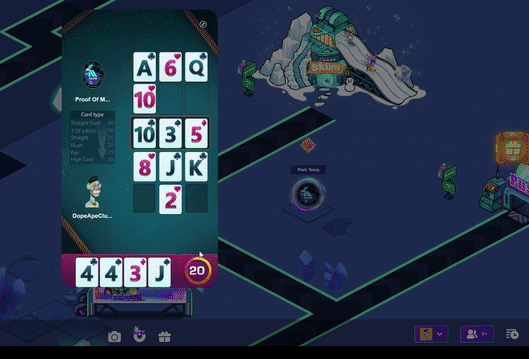
Thus far, we’ve seen how MG.Land excels in openness and freedom. Underpinning this experience is its land system, which deserves special attention.
Each LAND in the project is an ERC-721 NFT on Ethereum. Anyone can purchase land following the rules, and they may also sell or rent it. Other users can access each plot via both PC and mobile devices.
In implementation, the total supply of land is capped at 10,000, with four different sizes available. Users and projects can choose plots of appropriate size based on their needs and freely design and express themselves within them.
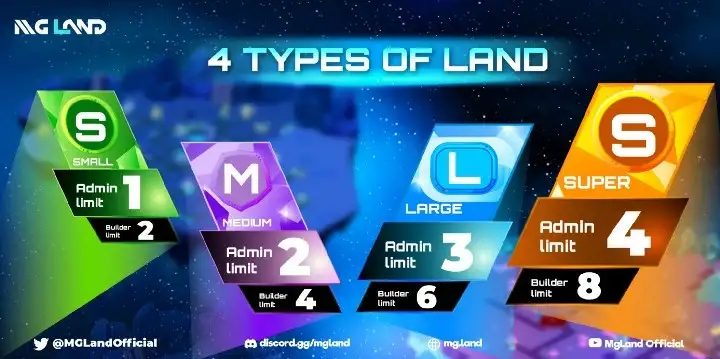
If land represents “what users can do,” then POMG (Proof of MG.LAND) records “what users have done.” Beyond land ownership, POMG is a soulbound token (SBT) designed by the project, bound to the wallet address holding NFTs. User behavior data within MG.Land is synchronized onto the Polygon network.
Holding POMG increases one's chances of receiving NFTs, airdrops, whitelist spots, and other benefits—and POMG can be minted for free. This design reflects the team’s active effort to put more assets and data fully on-chain.
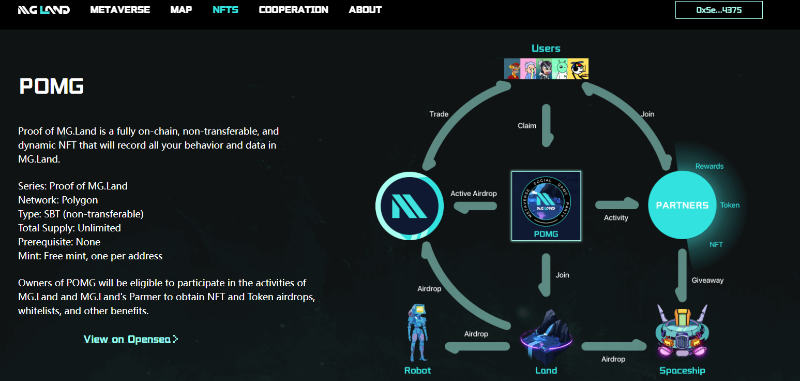
With land serving as the canvas for user actions and POMG recording those actions, together they form a richer, more dimensional metaverse experience.
A New Marketing Experience for Web3/Web2 Projects
For users, MG.Land offers a fresh gateway into the metaverse. For project teams, it presents a powerful new marketing toolkit.
The lands and buildings described earlier essentially form a practical suite of marketing tools, offering better solutions for brands and projects looking to run campaigns and host events.
Compared to traditional platforms like Twitter and Discord, MG.Land delivers a more immersive Web3 experience, while providing real utility for various NFT assets. Consider a project hosting an AMA on Discord versus gathering in a thoughtfully designed MG.Land space, surrounded by participants represented by their actual NFT avatars—the latter is clearly more vivid and engaging.
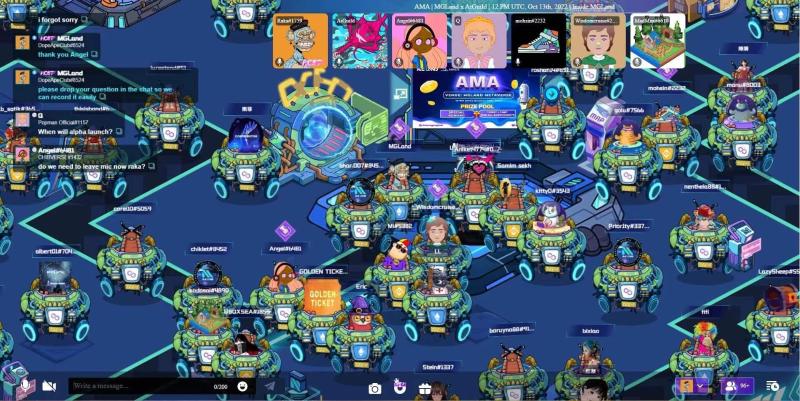
Overall, during our exploration, we identified several marketing tools available in MG.Land:
-
Screens: A direct way to showcase news, events, and holidays—essentially digital banners or bulletin boards in the metaverse.
-
Live Streaming: Supports live streams, chats, and video calls. Currently, platforms like Twitter Spaces cannot match this level of immersion—ideal for AMAs.
-
Mini-game Components: Increase brand visibility through gamified promotion.
-
Voting: Makes decentralized governance more tangible and game-like.
-
Raffle/Airdrop Modules: Quickly launch marketing campaigns within the virtual space—users simply click to participate.
-
Low-code NFT Minting: The team developed an NFT smart-deployment API, allowing landowners to issue NFTs directly on their land, customize minting conditions—all without writing code or contracts.
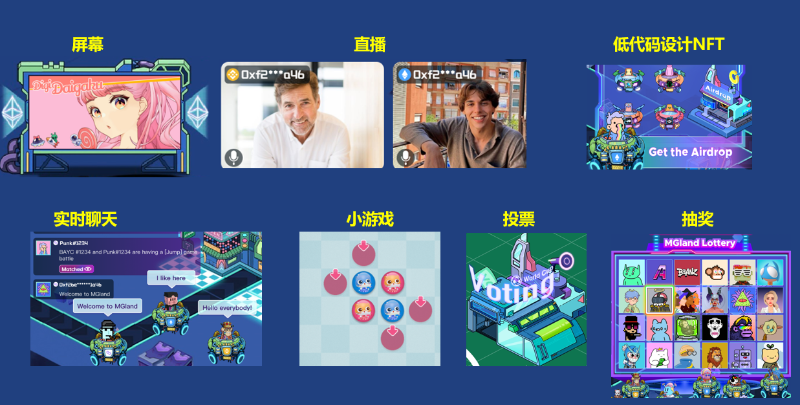
These rich marketing tools are increasingly being adopted by projects. During MG.Land’s testing phase, it has already partnered with over 50 communities, supporting hundreds of marketing events such as AMAs, interactive sessions, and airdrop distributions using these tools.
Web3 projects are already familiar with features like voting and airdrops. But for traditional Web2 companies looking to enter the metaverse, MG.Land offers an intuitive interface and logic that lowers the learning curve. With minimal training, traditional brands can build their own branded space and gain a more authentic Web3 presence.
Even more notably, owning a piece of land on MG.Land grants the holder a dedicated domain ending in mg.land.
Users can access the corresponding virtual space simply by typing the domain, meaning MG.Land enables individuals or brands to build their own “metaverse homepage”—creating a strong first impression of their brand’s metaverse identity. Compared to traditional static websites, this kind of “homepage” offers significantly higher information density and interactivity.
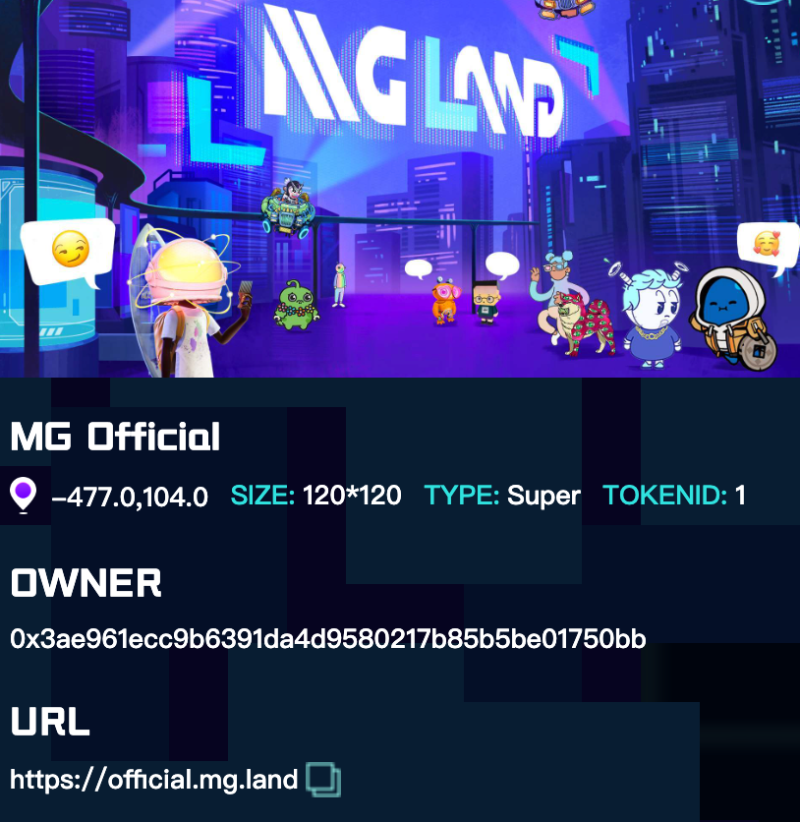
Looking ahead, MG.Land plans to open up all land plots, enabling anyone to create their own space on the blockchain. Overall, whether for Web2 or Web3, individuals or enterprises, MG.Land offers a new stage and context for marketing and self-expression—making users more crypto-native and deeply immersed.
Team and Investor Background
On the team side, most members of MG.Land come from Google and Tencent, bringing mature experience in internet product development, design, and operations. Notably, its CEO Chenny stands out.
As founder of MG.Land, Chenny graduated from the Hong Kong University of Science and Technology and has over a decade of serial entrepreneurship experience in finance, social apps, and gaming. He has also received investments multiple times from top-tier firms including Tencent.
On the investment front, Qiming Venture Partners is the lead investor. It has extensive experience in the crypto space, with notable portfolio companies including Matrixport, ImToken, InfraStones, HashQuark, and NFTGo.
Future Development and Partnership Plans
Looking forward, how should the concept of the metaverse intersect more meaningfully with the real world? We may find answers in MG.Land’s recent initiatives.
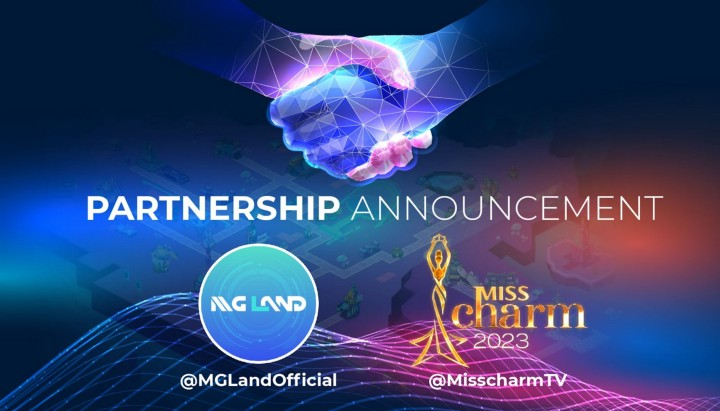
A representative example is the collaboration with MissCharm, an international beauty pageant. Beyond traditional formats, MG.Land created a dedicated virtual space for the event, hosting live streams, fan meetups, outfit voting for contestants, and distribution of commemorative NFTs.
Similar collaborations are extending into areas popular among younger audiences—especially gaming. RNG (Royal Never Give Up), a top esports team with massive popularity, recently announced a partnership with MG.Land. RNG will build its own dedicated virtual space in preparation for future events.
From our perspective, using virtual spaces to host player meetups, fan rallies, and merchandise distribution involves low barriers to entry for youth audiences in esports. For loyal fans, it also enhances engagement and sense of belonging.
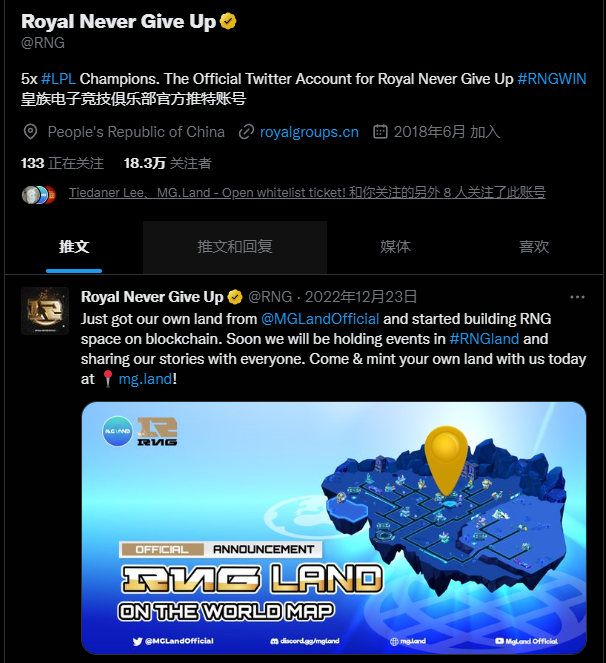
Therefore, adopting tech-forward branding and event marketing approaches will naturally attract greater consensus and participation from younger generations. Here, fan economies and community engagement find a bold new medium. Beyond these examples, nearly 30 additional projects have partnered with MG.Land, gradually forming a comprehensive ecosystem.
In Q1-Q2 of this year, the project will launch land leasing and staking features, further enriching land-based gameplay. Then in Q3-Q4, it plans to release PC and mobile clients and launch an NFT marketplace to enhance user experience. Looking further ahead, MG.Land is shifting focus toward the protocol layer. As its application gains traction and sets de facto standards, it aims to lead in establishing technical specifications.
When user scale and influence reach a critical mass, MG.Land plans to develop an open DID (Decentralized Identity) protocol for NFTs, creating a universal Web3 NFT identity standard. By connecting with other Web3 metaverses and integrating Web2 and Web3 products, it aims to achieve true, full connectivity across the metaverse.
Today, the metaverse is still in its early days. From our current vantage point, products like MG.Land may still be in their infancy. Yet by building successful use cases, expanding ecosystems, and setting standards, projects like this are paving the right path—from conceptual visions toward practical, widespread adoption. Meanwhile, MG.Land is about to launch the minting of Land NFTs, with more detailed gameplay to be revealed soon. Interested readers are encouraged to follow MG.Land’s official community for updates.
Resources
If you’re interested in MG.Land, visit the links below for more information.
-
Website: https://mg.land/
-
Twitter: https://twitter.com/MGLandOfficial
-
Discord: https://discord.gg/mgland
Join TechFlow official community to stay tuned
Telegram:https://t.me/TechFlowDaily
X (Twitter):https://x.com/TechFlowPost
X (Twitter) EN:https://x.com/BlockFlow_News