








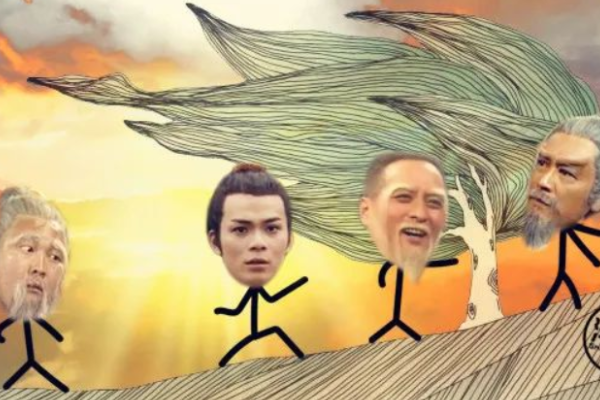
The Legend of Privacy Computing Heroes
TechFlow Selected TechFlow Selected
The Legend of Privacy Computing Heroes
Mountains remain unchanged, rivers flow eastward as ever; when we meet again someday, we'll renew our past bond.
 Navigating Web3 tides with focused insights
Author: Shi Zhong
(I) The Bloodbath Triggered by "The Nine Yin Manual"
In the Northern Song Dynasty, a genius named Huang Shang authored a two-volume martial arts scripture called "The Nine Yin Manual."
Legend has it that this manual contains supreme martial principles—anyone who masters it can become the grandmaster of all martial arts under heaven.
During the Southern Song era, the long-lost "Nine Yin Manual" resurfaced, sparking chaos across the martial world. To prevent further bloodshed, major sects decided to hold the "Huashan Swordsmanship Contest," where the ultimate victor would be granted legal ownership of the manual.
In the end, Wang Chongyang of the Quanzhen Sect defeated four rivals in one-on-one combat, claiming victory among the Five Greats and securing the manual. Yet instead of studying it himself or allowing his disciples to learn it, he hid the book away. Only on his deathbed did he pass both volumes to his junior brother, Zhou Botong, for safekeeping.
The playful old fool Zhou Botong decided to hide the upper and lower volumes separately—but due to his carelessness, the scheming "Eastern Heretic" Huang Yaoshi tricked him and stole the lower volume.
But here’s the cruel twist: the manual is designed so that you must practice both volumes together. Practicing only half leads inevitably to mental breakdown and madness.
Now the two halves are separated forever—no one can use them at all...

The archvillain "Western Poison" Ouyang Feng, always coveting both the manual and dominance over the martial world, was ecstatic when he saw the manual split into fragments. His nose practically bubbled with joy.
He began scouring the internet daily for obscure martial secrets, rapidly increasing his power. Soon, he seemed poised to crush every hero alive. At this rate, defeating Zhou Botong and Huang Yaoshi, collecting both halves, and ascending to peak supremacy was merely a matter of time...

Zhou Botong could no longer stand idly by. He traveled to Peach Blossom Island and confronted Huang Yaoshi: "If things continue like this, the entire martial world will be wiped out by Ouyang Feng! I want to train using the 'Nine Yin Manual.' Return the lower volume to me."
Huang Yaoshi replied: "I earned it through skill and cunning—why should I return it? Why don’t you just hand over your upper volume too? Once I finish training, I’ll help you deal with Ouyang Feng."
Zhou Botong snapped back: "Pfft! You dirty old man, trying to trick me again?!"
Deadlocked, the fate of the world hung by a thread.
Eventually, they sat down for friendly negotiations and came up with a solution—since neither would give up their part, why not find an honest tool—a certain Guo Jing—and let *him* master the manual, then have him protect the world?
They acted immediately, summoning Guo Jing that very night. The simple-minded young man said earnestly: "Thank you, esteemed seniors, for trusting me! I swear to serve with my life!"
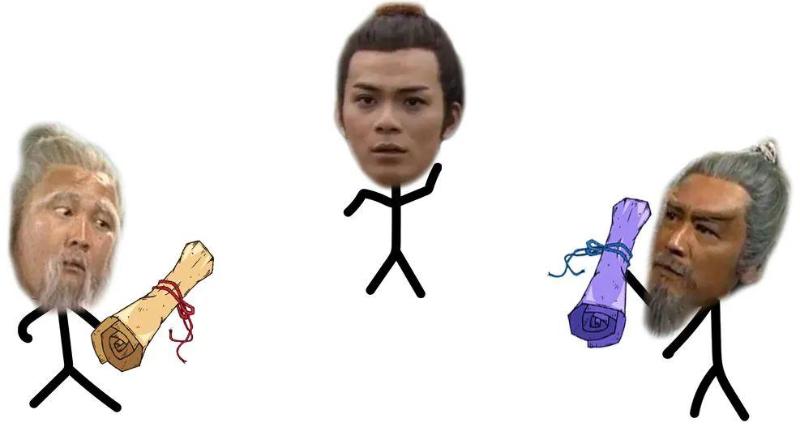
"Hahahahaha, hold on just a second!"
Suddenly, someone stepped out from behind a pillar—it was none other than Duan Zhixing, heir to the Dali Duan Clan, also known as the "Southern Emperor."
Stroking his beard slowly, he said: "You lot really don’t remember, do you? The most important chapter in the upper volume—the 'General Outline'—is written in Sanskrit. None of you three even finished elementary school—how could you possibly read it?"

Old Fool Zhou and Heretic Huang were stunned speechless. Even Guo Jing looked embarrassed.
Duan Zhixing pulled out a small notebook from his chest and continued: "Though I am no great scholar, I happened to study foreign languages in university. I always carry a Sanskrit dictionary with me, ready for translation."
Zhou Botong and Huang Yaoshi reached forward eagerly: "Then hand it over quickly!"
Duan Zhixing quickly stepped back: "This is a society governed by law—don't get physical! Since you won’t let us see your 'Nine Yin Manual,' naturally, I won’t let you see my dictionary either. If anyone reads it, it should only be Guo Jing."
"Fine!" They finally reached agreement.

Thus, the problem entered the technical realm—how exactly should the two volumes of the 'Nine Yin Manual' and the 'dictionary' be used to train Guo Jing?
They sat on the ground, drawing a "flowchart" with blades of grass:
Everyone knows Guo Jing is an honest kid—he'll follow instructions without question. For now, treat him purely as a tool, assuming no chance of betrayal.
But Huang Yaoshi soon spotted a flaw: if we simply hand all three books to Guo Jing and watch him train, given our martial expertise, we could reverse-engineer the full content of the 'Nine Yin Manual' just by observing his movements. That would leak the original text—absolutely unacceptable!

Zhou Botong said: "Easy fix—since 'watching' causes problems, let's just 'not watch.' While Guo Jing trains, we go drink somewhere else!"
Duan Zhixing countered: "No good. Ouyang Feng is lurking nearby. The moment we leave, he might kick Guo Jing unconscious and steal all three books!"
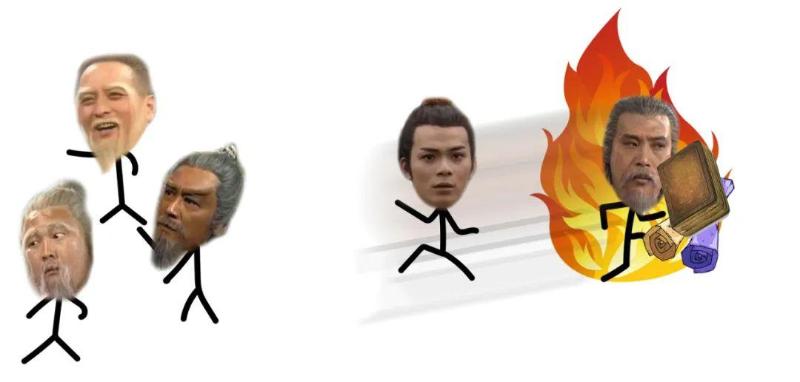
Hmm... true enough. The trio sank back into gloomy contemplation, while Guo Jing happily chased butterflies nearby.
At that moment, a bespectacled passerby with a mischievous grin floated past, sneering: "Heh. When stuck, turn to science!"
The three heroes looked up: "And who might you be, sir?"
Passerby: "I'm Shi·Million Coward·Zhong, a time traveler from 900 years in the future. What you're dealing with is called 'privacy computing.' Future scientists have developed several methods for it. My electric sports car is parked outside—care to take a ride?"
The martial grandmasters exchanged glances. Who the hell is this guy? And does your EV even have range?
In the end, since they had no better ideas, they decided to give it a shot and climbed into the car.
Shi·Million Coward·Zhong shouted: "Buckle up! Time to floor it! Waaaaaa!"

(II) Privacy Computing's "Sect Rivalries"
After holding onto a lamppost and vomiting for half an hour, the four heroes gasped: "Coward Master, where are we?"
"You see," said Coward, "people in the year 2023 use the Gregorian calendar. This is the city once known as Lin’an—the capital during your time—but now it’s just Hangzhou again. Here resides a group of privacy computing experts from a company called 'Ant Group.'"
"Ah, many hands make light work, countless ants devour elephants—lofty symbolism indeed!" Huang Yaoshi gave a thumbs-up.
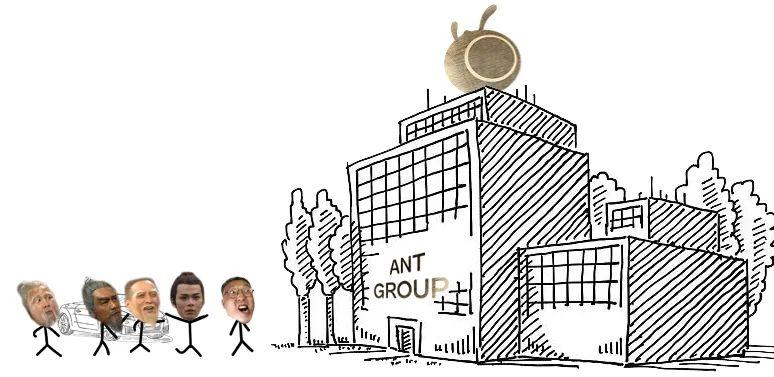
Upon hearing of the visiting martial artists, Wei Tao, Ant Group’s privacy computing lead, welcomed them into a conference room.
You’ve probably tasted fine tea, but what lies before you is called cola—an exquisite modern beverage I drink daily.
Take your time sipping cola while I explain how today’s challenges relate to your 'Nine Yin Manual.'
Wei Tao said.

In 2023, the world still has many bandits. But they no longer raid homes openly—they've upgraded their tactics—using scams to trick victims into transferring money from Alipay or bank accounts.
As operator of Alipay, Ant Group grew weary and assembled top talents to build a comprehensive "risk control system." Using big data analytics, it identifies potentially fraudulent transactions made by confused users—and blocks risky transfers instantly. (See "Alipay's Ten-Year War Against Zhang San")
Similarly, other banks and financial institutions have built their own risk control systems based on internal data.
Herein lies the problem: different institutions possess different datasets.
For the same transfer from Account A to B, Alipay’s data may clearly identify it as fraud and block it. However, “Qianhei Bank” lacks such data and thus sees no risk, approving the transaction. Conversely, Qianhei Bank might detect risks unknown to “Qianhuang Bank.”
Scammers exploit these gaps—having victims try multiple channels until one bank fails to flag the fraud, letting the transfer slip through.
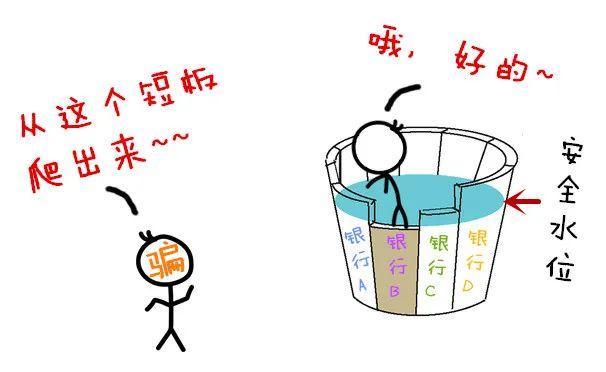
Faced with relentless scammers, what’s the best countermeasure?
Obviously, combine Alipay’s data with those of Banks A, B, C, and D for joint computation—like wearing a single, impenetrable suit of armor.
But real life brings complications.
Due to data privacy laws and corporate interests, each institution cannot share raw data, yet still wants access to enhanced risk detection via joint computation—a frustrating dilemma.
At this point, Wei Tao paused and looked around.
"Ah, I get it!" Huang Yaoshi suddenly realized. "Master Wei, isn't this 'data' just like the 'scriptures' of our 'Nine Yin Manual'? Us handing our respective volumes and the dictionary to Guo Jing for study—isn’t that precisely 'joint computation'? And our refusal to let others see our scriptures—that’s protecting our own 'data privacy,' right?"
Wei Tao nodded.
"Alright, enough talk," Zhou Botong urged. "How exactly do we practice this 'privacy computing' technique that protects privacy while enabling joint computation?"
"Don’t rush, great hero," Wei Tao replied. "Privacy computing is just an umbrella term. Just as your martial world has sects like Wudang, Quanzhen, and Gumu, privacy computing has distinct technical schools. And Ant Group happens to have practitioners of all major types. Allow me to briefly explain the differences."
"No need, Master Wei Tao. Let me explain," interrupted Shi·Million Coward·Zhong.
"Excellent!" everyone applauded.
"Tell me, gentlemen—are you people-trusters or universe-trusters?" he asked.
"What do you mean by trusting people versus the universe?" the heroes chorused.
Shi·Million Coward·Zhong strode to the whiteboard and wrote three large characters—"Trust Root."
A trust root is like a tree's root. No matter how tall the tree grows, it relies on its roots for nourishment. Similarly, privacy computing requires a fundamental basis of trust.

Based on differing trust roots, privacy computing splits neatly into two schools:
School One: Your "trust root" lies in people.
This approach requires hiring a trusted artisan to build a secure "safe house," keeping the key exclusively with the builder—never handing it to anyone else.
Heroes Huang, Zhou, and Duan place their copies of the 'Nine Yin Manual' and 'Sanskrit Dictionary' inside for computation. The artisan guards the entrance—data enters but never leaves; only the final output—Guo Jing after mastering the art—may exit.
Of course, for data, this "house" isn’t literal—it usually refers to a trusted chip environment, technically known as TEE (Trusted Execution Environment).


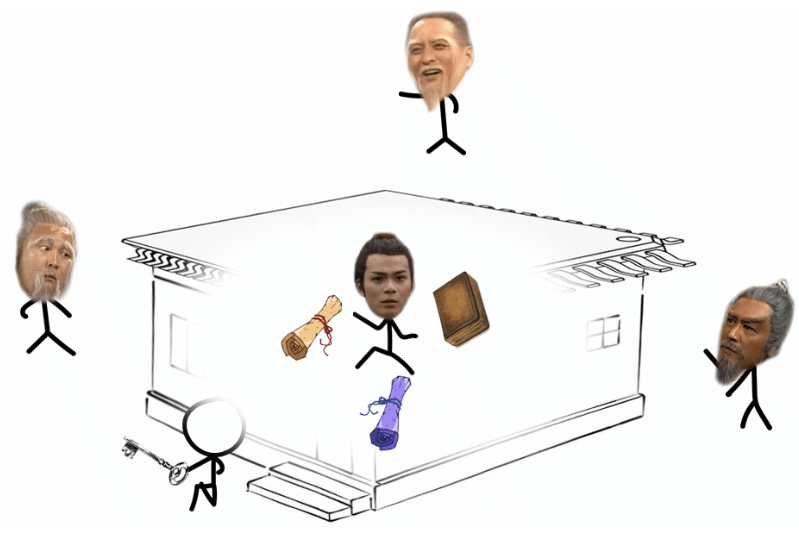
School Two: Your "trust root" lies in the heavens—in the fundamental laws of the universe: mathematics.
There are various techniques under this "trusting the universe" school, broadly summarized as "Federated Learning" and "Secure Multi-Party Computation."
These methods protect privacy because they adhere to sophisticated mathematical principles.
Take "Secure Multi-Party Computation" as an example.
The heroes must dismantle their manuals page by page and follow strict protocols for encryption and transmission.
This results in a miraculous phenomenon: Guo Jing’s every move during training appears bizarre—even participants watching closely cannot deduce the original data.
Yet despite the strange process, the ultimate mastery remains perfectly intact.
Thus, there’s no need for any "safe house"—training can occur openly in broad daylight.

The above three—TEE ("trusting people"), Federated Learning, and Secure Multi-Party Computation ("trusting the universe")—are currently the most popular privacy computing approaches.
Shi·Million Coward·Zhong concluded.
"In our martial world, sects constantly feud, each claiming supremacy. Do these privacy computing schools fight similarly?" asked Duan Zhixing.
"Well… yes, more or less," admitted Shi·Million Coward·Zhong.
"In my opinion, 'trusting people' is inferior to 'trusting the universe'—human hearts are unpredictable! Didn’t my 'Nine Yin Manual' get swindled away already?" Zhou Botong shot a sideways glance at Huang Yaoshi.
"Stick to the topic—no veiled insults…" Huang Yaoshi rolled his eyes.
"Hold on, great heroes—don’t jump to conclusions based on emotion. Each approach has pros and cons and requires careful weighing," Wei Tao interjected calmly. "I know martial artists value subtlety. Since you’ve come so far, why not learn more about the detailed mechanics of privacy computing before choosing the best method to master the 'Nine Yin Manual'?"
"We’re all ears!" the heroes exclaimed.
Wei Tao laughed heartily: "Excellent! Ant Group has many talented experts—why not invite them to speak directly?"
(III) The "Clothing Knights"
Shen Si sat before the heroes, smiling warmly.
He was one of Ant Group’s earliest pioneers in privacy computing.
Back in 2017, when Shen Si joined Ant, the term "privacy computing" didn’t even exist—people vaguely sensed that data would grow exponentially and eventually circulate widely between organizations. But releasing raw data felt like walking naked in public—uncivilized and unacceptable.
So they set out to develop technology to "dress up" data—not just covering shame, but providing warmth.
To design clothes, you need a model. But most companies’ data stayed locked internally—no need to "go out," so dressing wasn’t urgent.
Thus, these "clothing knights" spent their days reading research papers, designing garments purely in imagination...

Half a year later, opportunity knocked.
A financial institution wanted to pioneer joint data computation with Ant Group to reduce loan risks.
Shen Si and team were thrilled and began technical evaluation. Their initial choice, however, was rather crude by today’s standards: "Matrix Transformation."
In matrix transformation, one common operation compresses "high-dimensional data" into "low-dimensional data."
Simple example:
Original data: Four students—Xiaohong (female, 4), Xiaohua (female, 5), Xiaoli (female, 6), Xiaoming (male, 7).
After transformation: Four students—3 females, 1 male; 2 aged 1–5, 2 aged 6–10.
See? This preserves statistical features while (partially) removing sensitive details.
Like flattening 3D Mario into 2D:

"But wait—the transformed data seems less accurate!" Huang Yaoshi raised his hand.
"Exactly. While privacy is protected, the data becomes vague. It improves risk control slightly, but neither elegant nor perfect. Without cryptographic protection, security is weak. Think of it as the prototype of privacy computing," Shen Si explained.
Still, progress begins with a first step. Once Adam and Eve took that bite of apple and realized their nakedness, civilization surged forward like a tide.
In 2018, Ant Group partnered with another financial institution demanding higher standards—no more slapping a leaf on and calling it clothed. The "clothing knights" needed an elegant (and feasible) solution.
Two paths lay ahead: left: Federated Learning, right: TEE.
What is "Federated Learning"?
Simply put: suppose joint computation of two datasets takes 10 steps, generating intermediate data at each stage.
Basic "Federated Learning" means parties compute initial steps locally, then send modified "intermediate data" to complete remaining steps jointly.
Since intermediate data isn't raw data, it offers inherent confidentiality!
It’s like each hero first studies their copy of the 'Nine Yin Manual,' then transcribes a summarized version to give to Guo Jing for training.


But here’s the catch: without rigorous cryptographic proof, this "summary" (intermediate data) may still leak information.
For instance, if Huang Yaoshi is highly skilled, he might partially reconstruct Zhou Botong’s original manual from the intermediate data—at least some fragments.
This semi-exposed, quantum-like state is known as "information entropy leakage."
After deep analysis, the "clothing knights" found Federated Learning easy to implement but uncomfortably leaky—like pants with a small hole, exposing flesh intermittently—unreliable.
Not that the tech is bad—just needs patches when applied to high-security financial data.
So they opted for a more refined approach: TEE (Trusted Execution Environment).
How does TEE work?
Specifically, three steps:
Step 1: Find a reliable craftsman to build a "secure house."
In reality, the craftsman is Intel, and the "secure house" is a segregated zone within Intel chips called SGX (Software Guard Extensions).
Like this diagram:

Step 2: Upon receiving a task, each chip generates a secret key, locking data inside.
This key is given to no one. Only upon completion does the chip unlock itself and release the final result.

Step 3: Shen Si’s team writes extensive engineering code.
This code breaks computational tasks into pieces, automatically distributing them across multiple Intel chips and reassembling results.
Like this:

"Impressive! Lightning-fast computation with zero data loss!" Huang Yaoshi clapped.
"True," Shen Si frowned. "We were excited initially, eager to promote this technique widely—until we faced skepticism..."
One financial institution challenged him: "Even though you say data is encrypted, aren’t the computing machines still housed in your Ant Group data centers? How can we trust you haven’t tampered with them?"
Shen Si replied: "That’s incorrect. TEE’s trust root lies in Intel’s chip architecture. Although hosted by us, the chip programs are immutable and never reveal keys to us..."
The skeptic pressed: "Chip software is written by humans—who says it’s free of vulnerabilities? Moreover, Intel is an American company. Using this tech may violate our national security requirements..."
Shen Si conceded: "While these risks are extremely unlikely, I can’t fully refute them..."
Early 2019 brought the ultimate test for the "clothing knights":
An East China bank approached Ant Group, seeking joint risk-control computation—but insisted on "trusting the universe"—requiring mathematically provable security, with absolutely zero data leakage.
After discussion, Shen Si agreed: to achieve true mastery in privacy computing, they must accept this Huashan-level challenge.
But what "divine technique" guarantees absolute data safety? The answer appeared clearly: "Secure Multi-Party Computation."
(IV) The Ultimate Challenge and Secluded Cultivation
That bank was in a hurry, hoping to launch the system within two months.
But most Secure Multi-Party Computation solutions existed only in academic papers—with almost no practical implementation. We’d have to build a production-grade system from scratch...
Shen Si recalled.
As mentioned earlier, Secure Multi-Party Computation protects data by splitting it into parts, transmitting them incrementally with encryption—like threading a needle back and forth until reaching the final result.
This approach presents at least two major challenges.
Challenge One: Building the System Is Extremely Difficult.
Because it involves "multiple parties," the system cannot be centralized—it must be deployed both at Ant and at the partner bank.
These act as "cultivation arenas"—Guo Jing must occasionally visit Huang Yaoshi’s arena for practice, then Zhou Botong’s for reflection, then Duan Zhixing’s for drills.
This constant back-and-forth requires robust system support.

Challenge Two: Writing Algorithms Is Also Hard.
"Algorithms" are abstract logic. To function, they must be translated line-by-line into executable code for machines.
Experts must first understand the algorithm, then assign computational tasks layer by layer to specific machines. With no automation tools, all deployment must be done manually...
Like choreographing every movement and script sequence before Guo Jing begins practicing the 'Nine Yin Manual'—no mistakes allowed.
Otherwise, the trained Guo Jing will surely suffer mental collapse.

Back then, a dozen engineers worked nonstop from early January through February, finally building a working prototype—complex, but mathematically proven secure, with zero privacy leaks.
Testing showed both sides’ risk models improved by 10–20%.
Shen Si felt hopeful: "If we popularize this 'Secure Multi-Party Computation' technique, more institutions could benefit—problem solved!"
But reality hit hard: while powerful, the system relied entirely on hardcoded instructions, usable only for specific scenarios and algorithms. For new partners, the entire codebase had to be rewritten from scratch.
Like artisans handcrafting one Lamborghini with hammers and wrenches—then a customer says: "Great job—now make me ten thousand!"
The artisans nearly fainted—impossible to complete!

After struggling through several "hand-coded" projects, Shen Si shared a bold idea with his team:
To do quality work, one must first sharpen the tools. We need to build an industrial-scale "privacy computing framework"—one that automates algorithm deployment across multi-party systems.
Better yet, it shouldn’t just support "Secure Multi-Party Computation," but also "Federated Learning," "TEE," and all mainstream privacy computing schools.
Such a framework would bring two benefits:
First, deploying new privacy computing systems would become hundreds of times easier for us.
Second, even less experienced developers—or newcomers to privacy computing—could easily deploy tasks, enabling widespread adoption across the industry!
If successfully built, this "privacy computing framework" would become foundational infrastructure for all future privacy computing. This was nothing short of founding a new sect—everyone grew increasingly passionate.
Shen Si calmed the team: "Remember, creating a new martial art is far harder than winning a duel. This framework won’t be ready in months. We must retreat into seclusion, refine it patiently, endure loneliness. We won’t emerge until success—or never!"
All cheered enthusiastically, vowing to enter closed-door cultivation!
The story paused here.
The four heroes listened intently: "Then what happened? Did your secluded cultivation succeed?"
Shen Si smiled: "Don’t rush. This framework integrates numerous underlying technologies from various privacy computing schools—like a pearl necklace. To appreciate its brilliance, please sit back and enjoy a few shining 'technical pearls' first. Then I’ll return to explain everything."
Just then, a graceful figure emerged from behind the door, silently facing the group.
(V) Shining "Technical Pearls"
While Shen Si’s team struggled with applying "Secure Multi-Party Computation," the temporarily sidelined "TEE technology" (the "secure house") was being meticulously refined by another group of experts—rapidly catching up.
Yan Shoumeng, a man of few words but great skill, was one such expert.

To many back then, TEE was just a prefabricated "secure house"—use as-is, hard to modify, hence inconvenient.
But to Shoumeng, TEE was like a gentle horse—add the right "saddle," and it could carry riders far while becoming safer.
His confidence stemmed from prior experience at Intel—specifically Intel China Research Institute, the birthplace of many cutting-edge technologies.
"No wonder Master Shoumeng understands Intel chips like a master butcher dissects an ox!" Duan Zhixing bowed.
"Too kind, too kind—I know a little," Shoumeng modestly replied.
Indeed, Shoumeng and his peers left a significant mark on the development history of Intel’s TEE—SGX.
To explain this contribution, we must first understand how SGX works.
Intel CPUs operate in layers—Ring0 to Ring3.
Why so many layers?
Lower layers have greater CPU privileges, managing higher ones—for example, if a Ring3 application crashes, the Ring0 operating system tells the CPU: force close it.
Join TechFlow official community to stay tuned
Telegram:https://t.me/TechFlowDaily
X (Twitter):https://x.com/TechFlowPost
X (Twitter) EN:https://x.com/BlockFlow_News






