








The Top Five Web3 Achievements of 2022 in Vitalik's Eyes
TechFlow Selected TechFlow Selected
The Top Five Web3 Achievements of 2022 in Vitalik's Eyes
Vitalik shared his 2022—what he learned, reflected on, and thought about, how he views Ethereum's victories, and his hopes for 2023.
 Navigating Web3 tides with focused insights
For many people, 2022 was brutal. The Web3 bear market continues, Terra and FTX collapsed one after another. But Ethereum founder Vitalik Buterin (Vitalik) believes 2022 wasn't as bad as imagined: "Many remember the terrible things that happened this year... but I think it's also important to see the positive side of Web3."
Vitalik shared his reflections, learnings, thoughts, and hopes for 2023. Looking back at 2022, Vitalik identifies five major Web3 achievements: the Ethereum Merge, innovations in ZK-EVM, Sign-In with Ethereum, cryptocurrency use during the Russia-Ukraine conflict, and crypto philanthropy. From this, we can see that leapfrog technological upgrades, breakthroughs in sustainable development, and realizing Web3's social value are what Vitalik cares about and expects from the Web3 industry.

The Ethereum Merge
The Ethereum blockchain successfully transitioned from Proof-of-Work (PoW) to Proof-of-Stake (PoS) consensus mechanism on September 15, 2022. Vitalik praised this successful transition as Ethereum’s biggest victory of 2022. Merging the Ethereum blockchain with the Beacon Chain involved a core change in consensus mechanism, meaning users could now gain transaction validation rights through staking, avoiding escalating "mining competition," and building a "green blockchain" (How blockchain empowers environmental protection and addresses its own limitations?).
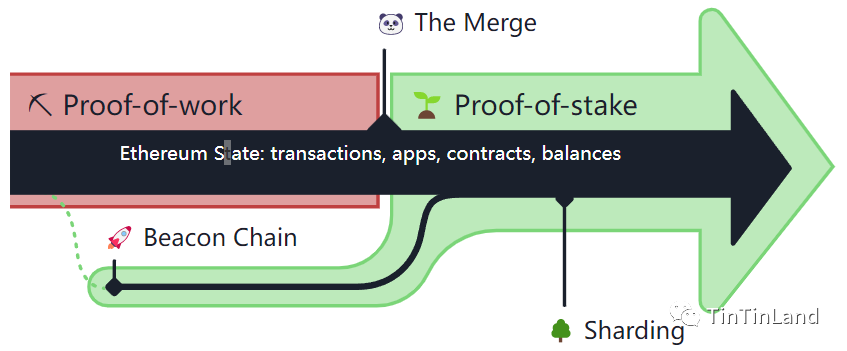
Why the Merge Was Necessary
1. Improved Security for Shard Management
Under PoS, increased ETH holdings do not lead to concentration risks because stakes are diluted across different shard chains, enhancing security. Under PoW, miners directly control mining hardware; if hash rate exceeds 51%, miners could compromise shard chain security. Therefore, replacing PoW with PoS is essential for secure sharding and sustainable growth.
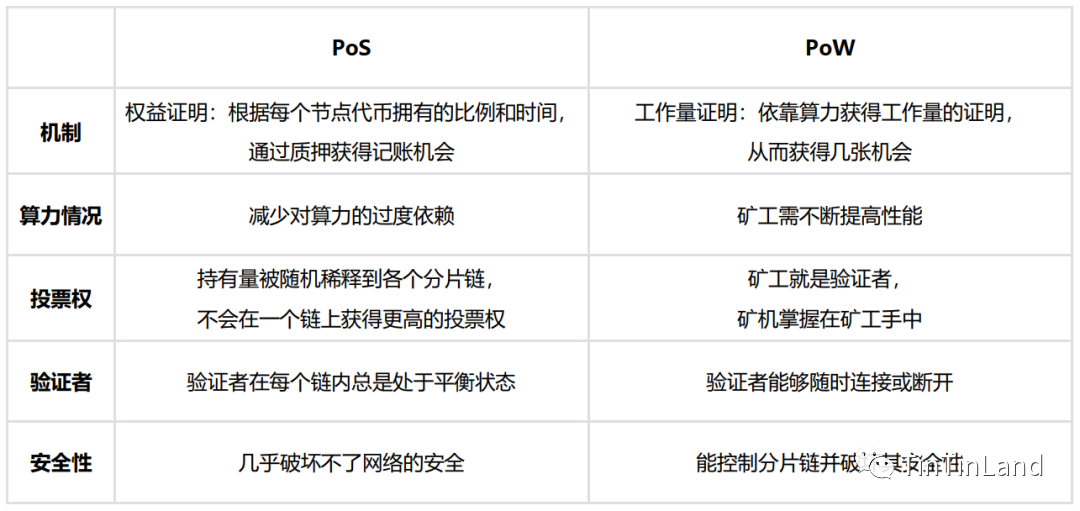
Comparison between PoS and PoW
2. Reduced Energy Consumption
High electricity consumption has long been a criticism against Ethereum. Under PoS, network maintenance no longer requires repetitive computational work, eliminating massive energy waste. According to the Crypto Carbon Ratings Institute report, post-Merge, energy usage and carbon footprint dropped by 99.99%.

Key Features of the Merge
-
Deterministic block production time: A new block is generated every 12 seconds following each slot.
-
Lowered client requirements: Lightweight nodes that previously couldn’t store full network state can now participate, validate transactions, and verify state proofs.
-
Seamless transition to PoS: Most functionalities (e.g., EVM, state, execution methods) and APIs remain unchanged after the Merge.
Impact of the Merge
-
Deflationary pressure: After the Merge, reduced issuance needs help prevent inflation. Meanwhile, the token burn rate exceeds issuance, potentially leading to overall deflation.
-
Improved user experience: By offloading large amounts of data burden via rollups and working collaboratively with Layer 2 solutions, Ethereum continues to reduce network congestion and increase transaction speed.
Vitalik personally noticed improved Ethereum UX: "When I submit a transaction, within just a few seconds, I can see it included in a block and confirmed—this level of convenience already rivals POS machines."
ZK-EVM Innovation
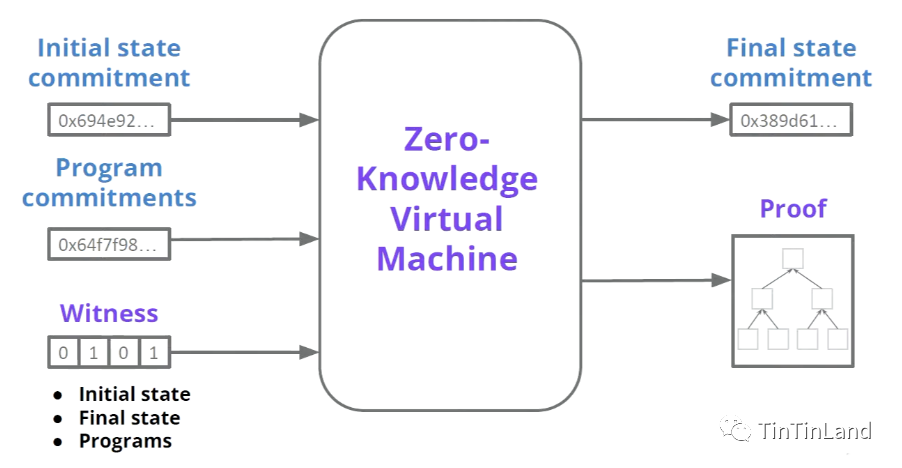
Zero-Knowledge Ethereum Virtual Machine (ZK-EVM) is a virtual machine that generates zero-knowledge proofs to verify program correctness. ZK-EVM aims to verify correct execution of smart contracts and execute them in a way compatible with zero-knowledge technology. Vitalik is highly optimistic about ZK-EVM’s potential, seeing these projects evolve from “non-existent fantasies” into “the medium-to-long-term future of Ethereum.”
Innovations in ZK-EVM
ZK-EVM verifies various elements in each computation by generating zero-knowledge proofs.
-
Bytecode access: Was the correct program code properly loaded from the right address?
-
Read/write operations: Before computation, did the program retrieve correct values from stack/memory/storage? After execution, were correct output values written back?
-
Computation: Were opcodes executed correctly (in sequence, without skipping)?

Importance of ZK-EVM
1. Secure Scalability: According to protocol rules, all validator nodes must re-execute every computation performed in the EVM, ensuring security but limiting Ethereum’s scalability.
2. Lower Costs: By minimizing CALLDATA usage, zk-rollups reduce dApp usage costs—for decentralized exchanges, NFT markets, prediction markets, etc.
3. Faster Finality and Capital Efficiency: Based on zk-rollups, transactions executed in zkEVM are typically finalized once posted to Ethereum. Instantly verifiable validity proofs allow Ethereum mainnet to quickly update application states.
4. Network Effects: To leverage Ethereum’s ecosystem, teams have built EVM-compatible zkVMs.
Key Players in ZK-EVM
-
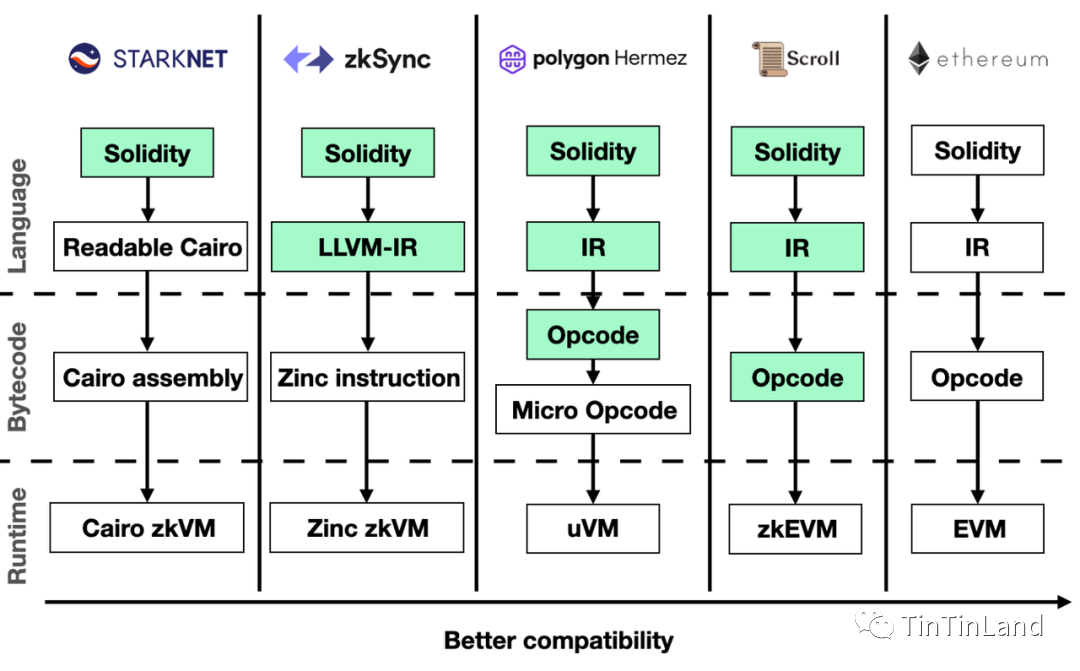
Polygon zkEVM (Polygon Hermez): On October 10, Polygon launched its public zkEVM testnet. Open-source and using Type-2 zkEVM approach, aiming for EVM equivalence, though not achieving full Ethereum equivalence; Polygon expects its zkEVM to handle 2,000 transactions per second and reduce transaction costs by 90%.
-
zkSync: Created by Matter Labs, zkSync uses Type-4 approach, supporting compatibility with Ethereum programming languages Solidity and Vyper; developers can write Solidity smart contracts, which the protocol converts into another language, Yul; currently, zkSync 2.0 is live on Ethereum testnet.

-
StarkNet: Starkware’s StarkNet uses ZK-STARKs, theoretically more secure than the ZK-SNARKs used by most projects, but requiring more gas, longer verification times, and occupying more block space; currently, StarkNet has released its Alpha version.
-
Scroll: Collaborating with Ethereum Foundation’s Privacy and Scaling Explorations team, Scroll is building a zkEVM solution targeting Type-2 zkEVM, similar to Polygon zkEVM, with high composability but suboptimal performance; the project is in pre-alpha stage, inviting developers and testers for real-world trials.
The progress of current ZK-EVM projects surprised Vitalik: "We will have multiple ZK-EVM implementations, planning mainnet launches next year. They can be used both for ZK rollups and for verifying Ethereum itself. Theoretically, different clients can use different proofs, so we continue benefiting from code redundancy."
Sign-In with Ethereum
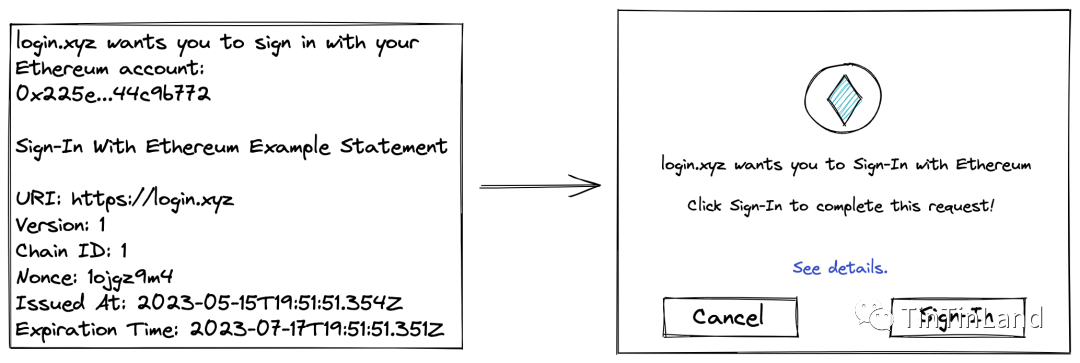
The third major achievement of Ethereum in 2022 was Sign-In with Ethereum (SIWE). SIWE revolutionizes how users interact online—no passwords, no reliance on internet intermediaries handling personal data. Users can now log in directly using the same private key controlling their blockchain account, owning their digital lives.
How Sign-In with Ethereum Works
-
The wallet provides users with a structured plaintext message or equivalent interface for signing using EIP-191 signature format. Before signing, the message prefix defined in EIP-191 is \x19Ethereum Signed Message:\n<length of message>. The message must include the Ethereum address, requesting domain, message version, chain ID, URI for scope, acceptable nonce from relying party, and timestamp.
-
Submit the signature to the relying party, who then checks the signature validity and message content.
-
Other fields such as expiration time, not-before, request ID, statement, and resources may also be included as part of the login process.
-
The relying party can further retrieve data associated with the Ethereum address, such as from the Ethereum blockchain (ENS, account balance, ownership of EIP-20/EIP-721/EIP-1155 assets), or other permitted or unpermitted data sources.
Advantages of Sign-In with Ethereum
-
Free: No cost to end users—only require confirmation and signature to complete login.
-
Empowers users: When logging in or linking existing accounts via wallet, users choose voluntarily whether to share information, creating mutual value.
-
Boosts product adoption: SIWE service symbolizes Web3 organizational models, enabling products to reach vast Web3 audiences and attract users.
Vitalik noted that adoption of Sign-In with Ethereum has visibly increased, reflecting Ethereum’s efforts to explore alternatives to social media platforms like Twitter.
Cryptocurrency Use During Russia-Ukraine Conflict
Supporting the Ukrainian people via cryptocurrency services was Ethereum’s fourth major achievement in 2022. People worldwide directly donated millions of dollars via Bitcoin and other cryptocurrencies. When traditional payment infrastructure failed, crypto payments and permissionless networks became critically important.
In 2022, Ukraine’s president signed a virtual asset bill recognizing crypto as legal property post-war. Vitalik further emphasized, “Cryptocurrencies have actually been lifelines for nations and countless civilians.”
Crypto Philanthropy
Long criticized as “profit-driven speculation with no utility,” blockchain and crypto are increasingly being used by young Web3ers exploring ways to create social impact in the Web3 world. Vitalik agrees that cryptocurrency achieved significant milestones in philanthropy in 2022, demonstrating the effectiveness of permissionless payment infrastructure for cross-border transfers and showcasing the generosity and compassion of the Web3 community during crises.
Cryptocurrency Empowering Charity
-
Crypto donations help nonprofits blocked by government restrictions: In 2010, international nonprofit WikiLeaks was blacklisted by Visa (V), Mastercard (MA), and PayPal (PYPL); today, WikiLeaks has received millions in crypto donations.
-
Web3 companies fulfill social responsibility via crypto donations: NFT platform DoinGud automatically allocates 5%-95% of sales proceeds to charities; creators on DoinGud participate in deciding donation recipients and ratios, forming charitable governance protocols.
-
Participation in crypto giving becomes popular among Web3ers: Numerous公益 funds on crypto donation platforms have emerged across domains, attracting widespread participation; Giving Block reported total donations reached $69 million in 2021, up 1558% from 2020.
-
Traditional nonprofits enter Web3: For arts and culture nonprofits, crypto philanthropy presents opportunities; San Diego Museum of Contemporary Art partnered with The Giving Block to promote crypto donations, including promoting CryptoClub, a donor recognition system for crypto philanthropists.
Youth Demographics in Crypto Donations
On average, crypto donors are younger than traditional charity donors, consistent with over 60% of crypto users being under 40. United Way data shows average age of crypto donation website users is 25–35, compared to 45–65 for traditional platforms.
Key Players in Crypto Philanthropy
-
Pine: Pine pioneered crypto philanthropy, established by an anonymous donor; in 2017, as Bitcoin surged in value, Pine converted 5,104 BTC into ~$55 million, supporting 60 charities, becoming an early catalyst for crypto giving.
-
Endaoment: Endaoment is the first tax-exempt community foundation offering on-chain financial services for charity, using smart contracts to enable faster, transparent donations; it has helped over 900 organizations raise more than $50 million.
-
Every.org: Every.org is a nonprofit that primarily provides fundraising buttons supporting crypto donations on websites, charging zero fees; it has served over 3,000 nonprofits and raised $20 million.

Advantages of Crypto Donations
-
Lower transaction costs: According to the 2020 Global Trends in Giving Report, crypto donation fees are lower than credit/debit cards; card donations incur 2.2%–7.5% processing fees deducted directly from donation amounts, while Ethereum gas fees are roughly one-third of card fees.
-
Tax deductions: Countries like the U.S., Canada, Australia, and New Zealand allow tax deductions for crypto donations.
-
Preserves anonymity: As donation pressure increases, donors often prefer anonymity. However, large donations usually require identity verification, increasing exposure risk. Crypto donations help protect donor privacy.
Vitalik also donated approximately $1 billion worth of SHIB tokens to an Indian COVID-19 relief fund. His attention to crypto philanthropy encourages more Web3ers to support charitable causes via crypto and blockchain.
2022 saw turbulent developments in Web3, yet notably, Web3 has embarked on a path toward sustainability and social empowerment. As the year ends, echoing Vitalik’s words, let us look ahead positively to Web3’s future in 2023—a future filled with technological innovation and social compassion.
References
https://foresightnews.pro/article/detail/16265
Everything you need to know about the Ethereum Merge
https://shows.banklesshq.com/p/vitaliks-top-5-crypto-wins-of-2022#details
Vitalik's Top 5 Crypto Wins of 2022
https://www.alchemy.com/overviews/zkevm
What is a zkEVM?
https://blog.pantherprotocol.io/what-is-a-zkevm-heres-everything-you-need-to-know/#the-race-to-build-the-first-zkevm-polygon-vs-scroll-vs-zksync
zkEVMs – Everything you need to know
https://blog.spruceid.com/why-sign-in-with-ethereum-is-a-game-changer-part-2/
Why Sign-In with Ethereum is a Game-Changer Part 2
https://www.theverge.com/23138465/decoder-ukraine-war-cryptocurrency-michael-chobanian-interview-bitcoin-usdt
How Ukraine’s wide use of cryptocurrency is playing out during the war
https://www.coindesk.com/layer2/2022/04/05/how-crypto-is-changing-philanthropy/
How Crypto Is Changing Philanthropy
Join TechFlow official community to stay tuned
Telegram:https://t.me/TechFlowDaily
X (Twitter):https://x.com/TechFlowPost
X (Twitter) EN:https://x.com/BlockFlow_News
 @OurTinTinLand






