








Web3 Adoption Landscape: Enterprises and Brands Struggling in the Wild
TechFlow Selected TechFlow Selected
Web3 Adoption Landscape: Enterprises and Brands Struggling in the Wild
Are Web3 use cases unsustainable?
 Navigating Web3 tides with focused insights
Author: Yury Lifshits, CEO of SuperDAO
Translation: Baize Research Institute
As native inhabitants of the Web3 world, we are already witnessing individuals and businesses increasingly experimenting with Web3 mechanisms—launching NFTs, crypto assets, and digital goods.
Understanding why they do this, what goals they pursue, and which mechanisms work best (or worst) has become highly intriguing. Therefore, we conducted a large-scale study covering over 500 cases of traditional individuals/businesses adopting Web3. This article presents the findings of that research.
We hope this article helps innovative leaders at brands and institutions explore Web3, while also offering valuable insights for Web3 startups, investors, marketers, and brand managers.
Industries Adopting Web3
Fashion, Luxury & Beauty
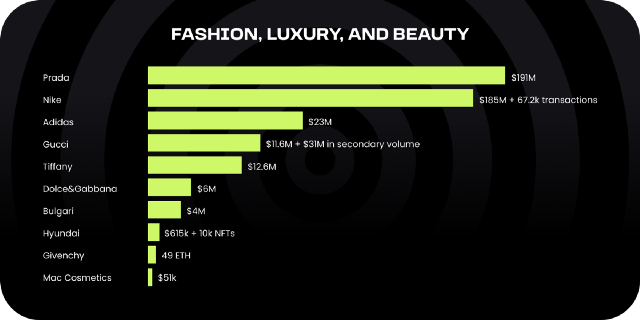
This sector leads all others in Web3 revenue, primarily driven by digital products launched under well-known brands.
Brands such as Gucci, Nike, Tiffany & Co., Bulgari, Porsche, and Sephora have primarily adopted Web3 through digital goods paired with exclusive access to private events—both offline and within the metaverse.
This has elevated customer-brand interaction to a new level—virtual wearables in games or the metaverse, digital rights, and linkages between physical and digital items. Tiffany & Co. is a prime example, demonstrating how blockchain can eliminate the distinction between a customer’s virtual and real-world identity.
Key Examples:
-
NFT issuance: Gucci, Bulgari, Skoda Auto;
-
Launching “physical + digital” combo products: Adidas, Dolce & Gabbana, Tiffany & Co., Porsche, MAC;
-
Creating digital products based on popular physical items: Nars;
-
Launching digital goods: Nike;
-
Customer loyalty rewards: Bentley, Sephora;
-
Building metaverse experiences: Gucci, Audi;
-
NFT charity auctions: too numerous to list;
Web3 Revenue Ranking:
Media, Film & Television
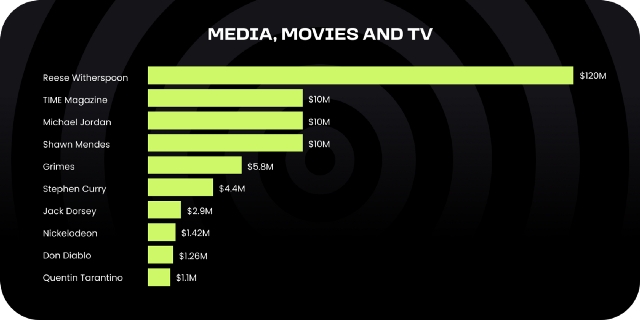
This sector focuses on exclusive content access and digital collectibles. Participants include TIME Magazine, Forbes, Netflix, Rolling Stone, singer Shawn Mendes, artist Grimes, and renowned director Quentin Tarantino.
Access to exclusive content or services and digital collectibles are applicable across nearly all industries. Nevertheless, media companies have embraced these Web3 use cases faster than any other.
Key Examples:
-
NFTs representing lifetime membership: TIME Magazine;
-
Digital collectible NFTs: Quentin Tarantino, Grimes, Shawn Mendes;
-
Private meetings: comedian Bill Murray, author Ben Mezrich;
-
Calls and chats: Ben Mezrich;
-
Unlocking behind-the-scenes content: Quentin Tarantino, Ben Mezrich, FOX Network;
-
Turning content into NFTs: Quentin Tarantino;
-
Launching “physical + digital” combo products: Rolling Stone;
-
NFT membership clubs: FOX Network, Harry Potter;
-
Granting IP ownership rights via NFTs: Grimes;
Web3 Revenue Ranking:
Consumer Goods
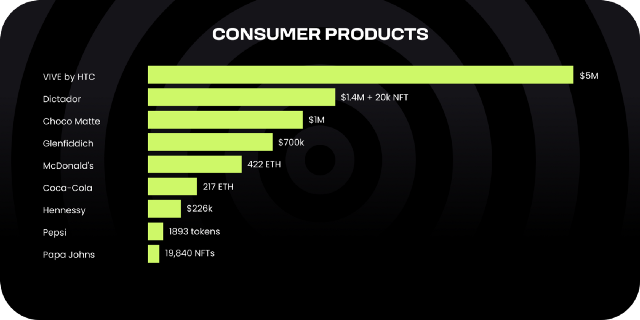
Food, beverage, and toy industries were among the earliest adopters of Web3 technology. Brands like Coca-Cola, Pepsi, Barbie, Hennessy, and others have entered the Web3 space by launching occasion-specific NFTs.
This group demonstrates excellent taste in Web3 adoption, combining physical and digital goods for sale. Customers not only purchase real products but also gain immersive experiences or interactions with virtual counterparts in digital worlds, significantly enhancing user engagement.
Key Examples:
-
Launching digital collectibles: Pepsi, Papa John’s, Glenfiddich, Hennessy;
-
Offering lifetime discounts: McDonald’s, Starbucks;
-
Launching “physical + digital” combo products: Coca-Cola, McDonald’s, Papa John’s, Glenfiddich, Barbie, Mattel, Procter & Gamble;
-
Exclusive products: Papa John’s, e-commerce platform Shopify, Starbucks;
-
Token-holder communities: Shopify;
-
Creating metaverse experiences: Unilever, HTC VIVE, Starbucks;
-
Hosting events for NFT holders: Unilever;
Web3 Revenue Ranking:
Sports, Music & Art
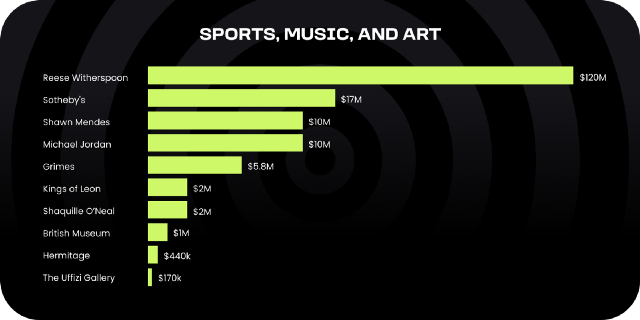
When it comes to fan engagement, brands have long strived to surprise their fans and deliver unforgettable experiences. Web3 appears perfectly suited for this purpose.
For example, American rock band Kings of Leon released their first NFT album, which also serves as a ticket granting front-row seats at any of their concerts. Another example is former professional boxer Mike Tyson collaborating with artist Cory van Lew on an NFT series, where ownership grants winners the chance to train with Mike Tyson and spend a day with him.
Key Examples:
-
Albums as NFTs: Kings of Leon;
-
NFT ownership (songs, art, moments, etc.): NBA Top Shot, Stephen Curry, Snoop Dogg;
-
Enhancing fan engagement: Serie A, Super Bowl, McLaren, Red Bull Racing;
-
Art collectibles in NFT form: British Museum, Vatican Museums, MoMA;
Web3 Revenue Ranking:
Most Popular Web3 Use Cases
Collectibles and Virtual Goods
-
Nike sneakers usable in Roblox virtual worlds, along with RTFKT virtual sneakers from Nike itself;
-
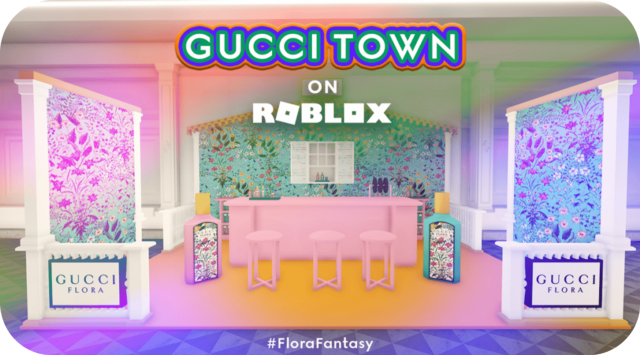
Gucci’s virtual town “Gucci Town” built in Roblox, featuring wearable virtual fashion;
-
Adidas releasing virtual sneakers and hoodies incorporating Bored Ape elements;
-
Tiffany launching virtual jewelry inspired by CryptoPunks;
Selling “Physical + Digital” Combo Products
-
Chipotle opening a virtual restaurant;
-
Metamall Group building a metaverse "shopping mall" to create more immersive online shopping experiences;
NFT Charity Auctions
-
L'Oréal Paris donating 50% of secondary market resale proceeds from NFTs to charitable causes;
-
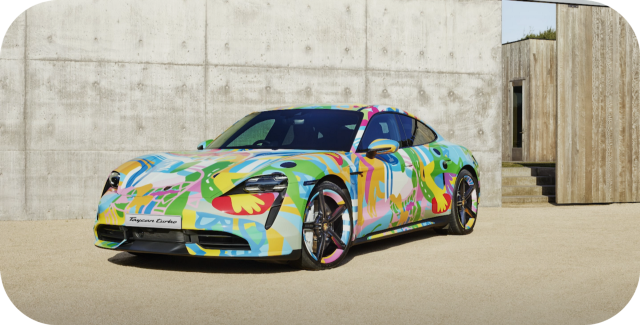
Porsche partnering with Web3 firms to conduct NFT charity auctions;
Event Rewards and Tickets
-
Sephora's metaverse event held as a virtual gathering, where attendees received free NFT prizes;
-
McLaren launching 2,012 NFTs through its MCO LAB event, available exclusively to McLaren car owners;
-
Red Bull auctioning factory tour pass NFTs, with winners attending esports events in person;
-
Coachella music festival auctioning two NFTs representing lifetime tickets;
Social Media Engagement
-
Retweeting posts to win McDonald’s rib NFTs, redeemable for free ribs at physical stores;
Loyalty Programs
-
ShopNEXT partners with Visa to launch a Web3 loyalty platform. Visa cardholders enjoy seamless shopping and earn token rewards;
-
Singapore Airlines launches NFT wallet Loyalty, unlocking exclusive access to physical merchandise;
Education
-
Hoseo University in South Korea awarded 2,830 NFT diplomas;
Accepting Cryptocurrency Payments
In addition to fiat currencies, some brick-and-mortar stores have begun accepting cryptocurrency payments.
-
McDonald’s in Switzerland;
-
Atlas Cafe in San Francisco;
-
Konzum supermarket chain in Croatia;
-
Varus supermarket chain in Ukraine;
Brands Successfully Adopting Web3
We’ve observed varying outcomes from Web3 adoption efforts—some brands driven by revenue, others aiming to boost audience engagement.
Revenue:
-
Nike—$185 million in revenue + 67,200 transactions;
-
Gucci—$11.6 million in revenue + $31 million in secondary market sales;
-
Prada—$191 million in revenue;
-
Tiffany & Co.—$12.6 million in revenue;
Engagement (participation, downloads, etc.):
-
Louis Vuitton—2 million game downloads;
-
Sephora’s metaverse event—over 16,000 participants;
Lead Generation (“Capturing” Potential Customers):
- Fashion brand Balmain—over 10,000 members joined the community;
Social Media Engagement:
- Fashion brand Lacoste—12.12 million social media mentions in September;
Creativity (Community-Driven Design):
- Actor Tom Felton—received over 500 fan art submissions for charity;
Failure Cases

Despite countless success stories of individuals and enterprises adopting Web3, we must also remember the lessons from corporate failures.
-
CNN—shut down its NFT marketplace Vault just one year after launch;
-
Lil Nas X—TikTok canceled its NFT collaboration project with Lil Nas X;
Are Web3 Use Cases Sustainable?
Some initiatives appear one-off, largely due to rapidly growing consumer demand for NFTs over the past few years.
Some companies target superfans willing to pay premium prices for digital goods linked to their idols. Another model involves IPs with decades-long audiences who have been waiting for the brand to launch NFTs.
For instance, the launch of a Harry Potter NFT series thrilled fans eager to own digital memorabilia of their favorite characters.
But if the project decides to release a similar NFT series a year later, will fans buy again?
If no new Harry Potter fans join, where will future demand come from?

Looking Ahead
What can we expect from traditional markets regarding future Web3 demand?
Below are several trends likely to shape future demand.
Faster Experimentation Cycles:
- Web3 advocates and leaders must continue lowering barriers for Web2 businesses to adopt blockchain by providing accessible tools and strategic guidance.
Advanced NFT Mechanics:
- NFT collections will feature more sophisticated mechanics such as blind boxes, QR codes, and richer metadata embedded in each NFT.
Collaborative Culture:
- More collaborations between brands and influential celebrities will drive additional Web3 activations.
Adopting Web3 presents both opportunities and risks—how will you choose amidst the Web3 wave?
Join TechFlow official community to stay tuned
Telegram:https://t.me/TechFlowDaily
X (Twitter):https://x.com/TechFlowPost
X (Twitter) EN:https://x.com/BlockFlow_News






