








The FTX Heist Mystery: Who Is the Elusive CTO Gary Wang?
TechFlow Selected TechFlow Selected
The FTX Heist Mystery: Who Is the Elusive CTO Gary Wang?
In just one week, FTX, once the world's second-largest exchange, collapsed spectacularly.
 Navigating Web3 tides with focused insights
Author: Kari McMahon, The Block
Translation: Loopy Lu, Odaily Planet Daily
Within just one week, FTX, once the world’s second-largest cryptocurrency exchange, collapsed spectacularly. Then came an even bigger drama—the already cash-strapped FTX suffered a mysterious hack, with hundreds of millions of dollars stolen.
According to Arkham Intelligence data, as of now, wallets linked to the FTX hacker still hold on Ethereum $292 million worth of ETH, $48 million in DAI, $44 million in BNB, $4 million in USDT on Avalanche, and $3.8 million in MATIC on the Polygon Matic bridge.
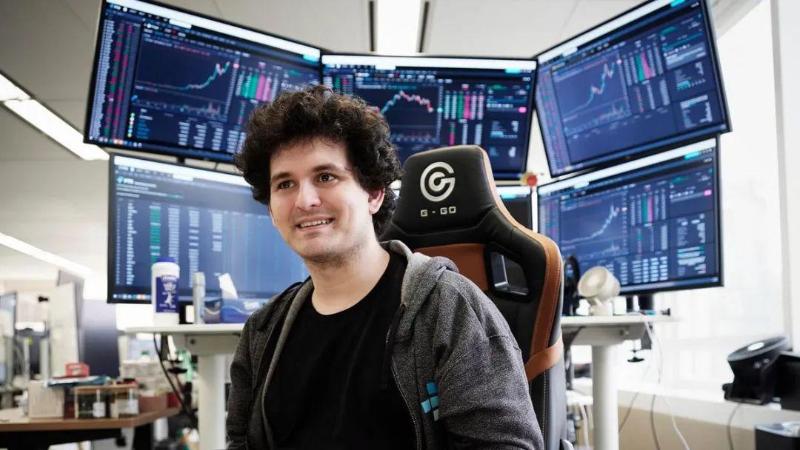
Starting on the morning of November 12, user deposit balances, deposit/withdrawal records, and transaction histories all disappeared. For users who remained with FTX, the last glimmer of hope has nearly vanished.
On November 15, FTX users discovered that login attempts returned a "503" error—FTX was no longer accessible.
The timely appearance of the hacker has fueled market speculation about the unfolding events.
Autism Capital, a Twitter user closely tracking this incident, proposed a more sensational theory: the hacker never existed—it was an inside job, with insiders fleeing with funds. Autism Capital noted inconsistencies between the hacker's activity timeline and FTX’s public disclosures, and highlighted that the hacker had extremely high-level access, suggesting this was unlikely achievable by an external party.
Some community members observed that Gary Wang, co-founder and CTO of FTX, continued committing code to GitHub until the company collapsed. This active "work" scenario naturally raised suspicion.
-
On November 11, Gary Wang made five code commits.
-
On November 10, he made 19 code commits.
-
After that, his account showed no further activity. Since these were private repositories, we cannot see the actual content of the commits, but it is believed they were related to FTX’s codebase.
Caroline Ellison, CEO of Alameda, previously stated that she, SBF, Gary Wang, and another executive were aware of FTX transferring customer deposits to Alameda.
The ripple effects triggered by FTX’s collapse are becoming increasingly evident and widespread, affecting over a hundred companies and severely damaging the entire crypto financial ecosystem.
Following the FTX hack, Gary Wang, long hidden beneath the surface, has drawn intense scrutiny. As a core figure at FTX and Alameda, a billionaire featured on the Forbes list, this enigmatic individual lacks any digital footprint, professional history, or even photographs. The Block has published an article introducing the mysterious Gary Wang.
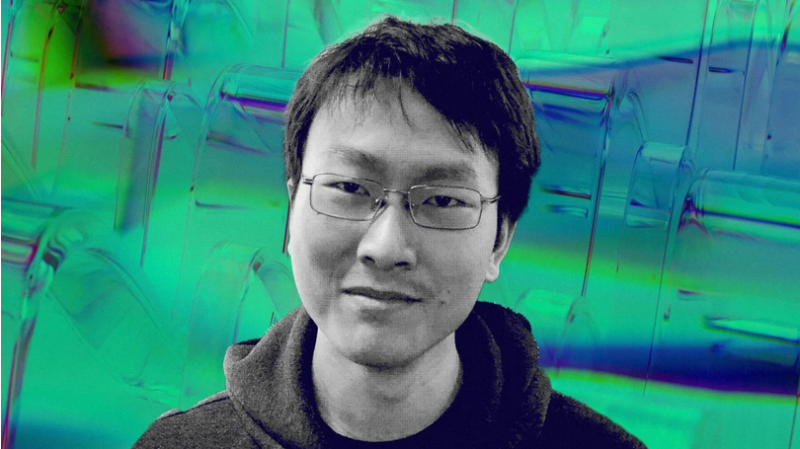
Who is Gary Wang?
According to insiders, at least $1 billion in customer funds have gone missing from FTX.
On the afternoon of the 12th, a Reuters report revealed further red flags. FTX’s legal and finance teams discovered that SBF implemented a so-called “backdoor” within FTX’s accounting system, which was built using custom software. This backdoor allowed SBF to carry out actions that could alter the company’s financial standing without alerting others—including external auditors. It was through this mechanism that SBF transferred $10 billion to Alameda without triggering any risk warnings.
Such a high-privilege backdoor would naturally not be something an ordinary employee could implement. Media and investors have turned their attention toward Gary Wang.
On FTX’s official website, only SBF and Gary Wang held the title of “Founder.” Additionally, Gary Wang also served as FTX’s CTO. Yet this individual maintained extreme privacy—despite being a billionaire once worth nearly $6 billion, even Forbes could not find a proper photo of him.

(Gary Wang ranked 227th on the Forbes Billionaires List)
FTX’s website stated that Gary Wang earned a degree in Mathematics and Computer Science from MIT and previously worked at Google.
Yet among a full page of team member profiles, only Gary Wang’s image shows a silhouette.
Additionally, Gary Wang’s LinkedIn profile has been deleted, and Sequoia Capital, an investor in FTX, likewise only lists a silhouette photo of him.

(Image from FTX’s official website, now removed)
Four former colleagues of Gary Wang, who declined to be named, described him as a quiet and coding-obsessed individual.
A source familiar with Alameda and FTX operations said: “From an employee perspective, Gary was always very distant; he usually didn’t appear in the office.” “He preferred working from home—he was almost the only one allowed to do so. Everyone else had to stay in the office; Gary was always the exception.”
The source added that Gary’s sole interest was programming in solitude. “He always gave me the impression: ‘Tell me what to do, then leave me alone.’ Whenever SBF reached a critical moment, Gary was never around. Gary was just a weapon waiting to be deployed.”
An “Ultra-Lean” Engineering Team
FTX was known for its lean engineering team—the exchange was initially built by just two developers. In an interview with Insider, SBF stated that even by the end of 2021, the exchange and all its subsidiaries operated with only 10 to 25 developers. By contrast, Binance currently has 185 engineer positions open, while OKX is hiring 43 engineers.
A source familiar with Alameda said, “We only had five engineers.” The source speculated, “In hindsight, this might be because nearly everyone had root access—they didn’t want others to see.”
According to SBF, he himself wasn’t skilled at programming, so he needed a small engineering team to help build FTX. In one interview, he admitted, “Most people think I’m a good programmer. That’s not true—I didn’t write any of FTX’s code. There were many other people behind FTX.”
Recent reporting by Reuters pointed to SBF installing a backdoor at FTX. But one FTX investor offered additional insight: “If the infrastructure had a backdoor, it’s hard to imagine Gary wouldn’t have known.” Another source familiar with FTX and Alameda agreed, stating Gary Wang was one of the few individuals with root access to the codebase.
“If Gary didn’t add the code himself, there’s no way he wouldn’t have noticed,” said one source.
A Mysterious Figure
One insider said that although he had seen Wang before, they had never spoken, and that “he rarely talks to anyone.” “When you need to contact Gary, he batches replies weekly. He’s extremely hard to reach.”
A former employee at both FTX and Alameda said Gary spoke little and asked for little, but had an exceptionally close relationship with SBF.
SBF was the person Gary communicated with most. Caroline Ellison, CEO of Alameda, was one of the few people who could get a prompt response from Gary. “It’s unclear exactly how he was involved, but he was certainly considered part of the inner circle,” said a former employee.
Gary Wang lived in a luxury penthouse suite in Albany, a high-end community in the Bahamas, sharing the residence with SBF, Caroline Ellison, and several others.
Short-seller Marc Cohodes has been warning investors about FTX since May. In a statement, he expressed distrust toward Gary: “Gary Wang has no digital identity—he has no searchable email or phone number, and hasn’t spoken to anyone I could find. This behavior raises more questions than answers—no one worth $11 billion hides themselves like this.”
Benjamin Robertson and Frank Chaparro contributed to this article.
Join TechFlow official community to stay tuned
Telegram:https://t.me/TechFlowDaily
X (Twitter):https://x.com/TechFlowPost
X (Twitter) EN:https://x.com/BlockFlow_News
 The Block






