








a16z: How to Prevent Financial Risks Like FTX from Happening Again?
TechFlow Selected TechFlow Selected
a16z: How to Prevent Financial Risks Like FTX from Happening Again?
We need to regulate Web3 applications, not protocols.
 Navigating Web3 tides with focused insights
Author: Miles Jennings, Chief Legal Officer for Crypto at a16z
Translation: TechFlow
This week’s events will lead even more people to view Web3 as the "Wild West." In reality, these incidents—like past examples of excessive financial risk-taking that led to crises—are preventable failures. We must stop this from happening again.
Ironically, credible U.S. participants are likely to face regulatory backlash, while others continue evading scrutiny by operating in the shadows of crypto—compare Coinbase with its overseas competitors.
It’s time to flip this tired script.
The best place to start is by refocusing regulatory efforts on the most obvious targets:
-
Fraudsters and criminals who exploit technology for self-serving purposes,
-
Those who want to build a global casino rather than a global computer.
The questionable practices of many businesses are widely known—including to U.S. regulators—but preventative action has not been taken.
The U.S. government already has numerous laws to prevent such issues, including anti-fraud, anti-money laundering, securities, and commodities laws. However, domestically focusing solely on enforcement-based regulation remains too narrow, too slow, and too inconsistent to be effective.
Regulation through enforcement has failed; our approach must change. Good builders need constructive public guidance that helps better distinguish good from bad, making enforcement more effective. We also continue to support new rules and regulations that constrain centralized actors while preserving decentralization. This will foster a vibrant Web3 ecosystem, protect users, and provide entrepreneurs with a level playing field.
These outcomes can be achieved by giving Web3 the same protections as Web1, which enabled the United States to lead global internet policy and development.
In other words, we need to regulate Web3 applications, not protocols.
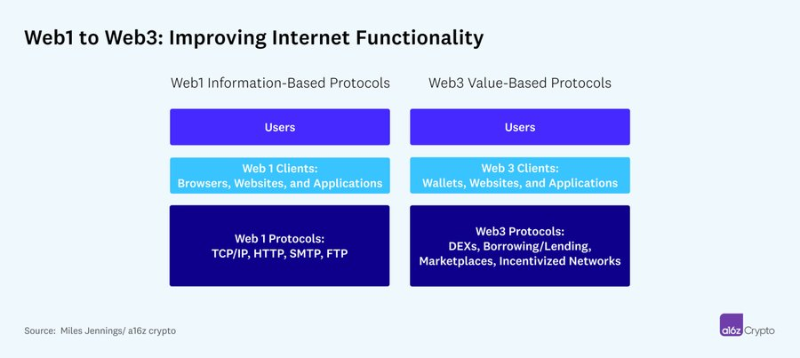
Protocols are simply software, while Web3 applications operated by centralized, for-profit companies can comply with jurisdictional regulations and should be regulated accordingly. Just as in Web1, we don’t regulate the email protocol SMTP—we regulate applications like Gmail.
This approach can achieve every major U.S. policy goal, including addressing national security concerns, reversing the trend of entrepreneurs fleeing to less-regulated markets, and empowering the U.S. to have greater influence in improving, nurturing, and overseeing the Web3 industry.
But none of this is possible if Web3 is treated as a monolith.
The risks of CeFi and DeFi are different, and attempting to regulate software will only drive further offshoring of Web3 developers.
Undeniably, this week’s events have been deeply damaging and disheartening.
Yet this moment also presents an opportunity for the United States to finally become the leader in Web3. We can’t wait any longer.
Join TechFlow official community to stay tuned
Telegram:https://t.me/TechFlowDaily
X (Twitter):https://x.com/TechFlowPost
X (Twitter) EN:https://x.com/BlockFlow_News
 a16z
a16z






