








Hong Kong Fintech Week Day 1 Highlights: What Did SBF, Simon Xiao, and Adriel Zheng Say?
TechFlow Selected TechFlow Selected
Hong Kong Fintech Week Day 1 Highlights: What Did SBF, Simon Xiao, and Adriel Zheng Say?
As a participating media partner of Hong Kong FinTech Week 2022, TechFlow compiles and summarizes the first-day updates based on official content for everyone to share.
 Navigating Web3 tides with focused insights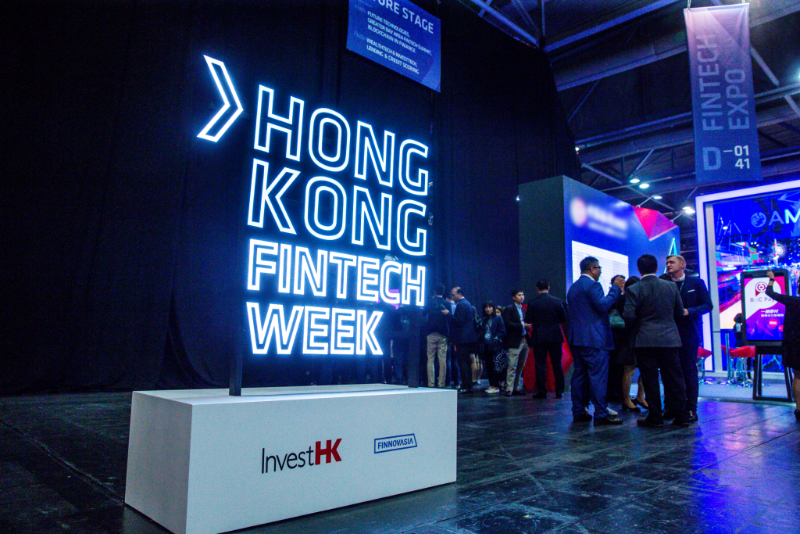
Written by: TechFlow
On October 31, the Hong Kong Monetary Authority (HKMA) and the Government’s Investment Promotion Agency co-hosted “Hong Kong FinTech Week 2022,” officially launching in Hong Kong. During the event, the Hong Kong Special Administrative Region government released its "Policy Statement on Virtual Assets Development in Hong Kong," outlining its policy stance and direction for fostering a vibrant virtual asset industry and ecosystem in the city.
In addition, star entrepreneurs including FTX founder SBF, Animoca Brands founder Yat Siu, and Adrian Cheng, CEO of New World Development, participated in discussions about the future of fintech in Hong Kong.
As an official media partner of Hong Kong FinTech Week 2022, TechFlow summarizes key highlights from the first day based on official content.
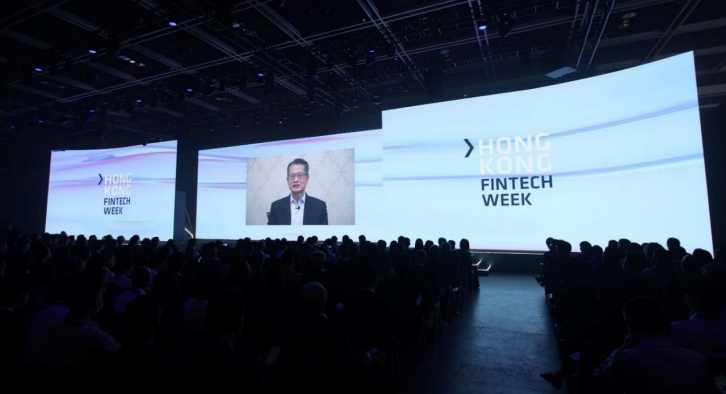
Financial Secretary Paul Chan delivered the opening keynote, marking the start of Hong Kong FinTech Week. He noted that five years ago, there were fewer than 180 fintech companies in Hong Kong. Today, the number exceeds 800 — ranging from startups to large enterprises.
He attributed this growth to Hong Kong’s open market, rigorous regulatory framework, rule of law, robust infrastructure, and free flow of capital and information. Mr. Chan also emphasized that Hong Kong remains open and inclusive to the global innovator community engaged in virtual asset businesses.
He added: "The government, together with financial regulators, is actively working to provide an enabling environment to promote sustainable and responsible development of Hong Kong’s virtual asset industry."
Policy Statement on Virtual Asset Development in Hong Kong
This morning, the Hong Kong government announced a policy statement on the development of virtual assets (VA) in Hong Kong. The statement, issued by the Financial Services and the Treasury Bureau (“FSTB”), outlines the government's policy position and approach toward building a dynamic virtual asset industry and ecosystem in the city.
One of the key topics covered in the policy statement is regulation. The Securities and Futures Commission (SFC) will launch public consultations on how to appropriately enable retail investor access to virtual investment products. Hong Kong will also remain open to the possibility of VA exchange-traded funds (ETFs) being listed on local markets.
The government expressed openness toward legal reviews of property rights for future tokenized assets and the validity of smart contracts, aiming to support their development in Hong Kong.
"This dynamism partly stems from Hong Kong’s rapidly growing ecosystem"
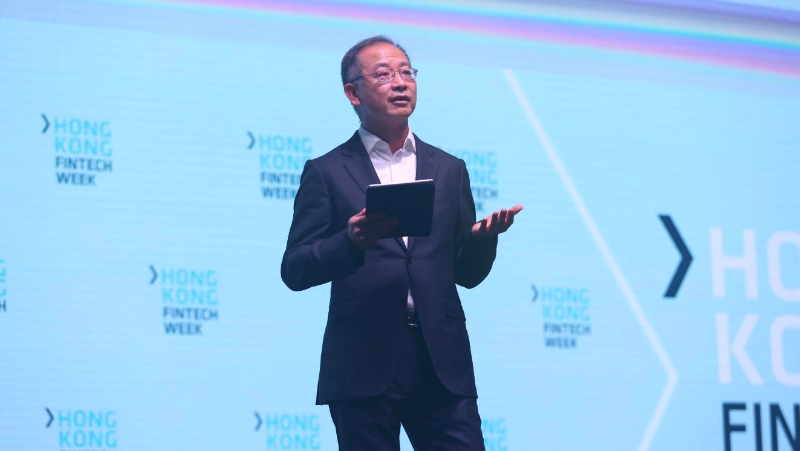
Eddie Yue, Chief Executive of the Hong Kong Monetary Authority, appeared on stage via avatar, expressing his eagerness to explore how the metaverse could reshape the future landscape of real-world financial activities.
He shared three major takeaways from his fintech journey so far:
-
Radical Open-mindedness—A radical openness to new ideas and experimentation is essential to improve the financial system. This mindset has driven Hong Kong to develop its popular Faster Payment System (FPS), establish eight virtual banks, and support more advanced data infrastructure within the financial system.
-
New Platforms Bring New Users—New platforms in retail payments, data infrastructure, and cross-border payment systems tend to become more successful and sustainable when widely adopted, creating strong network effects. In short, the larger the network, the more users it attracts.
-
Going Beyond Technology—Creating network effects requires more than just technology. For projects aiming to disrupt the status quo, adoption can be challenging. Ensuring value and appeal for all stakeholders goes beyond technological advancement. For example, commercially viable arrangements were made in the CDI initiative; the Ambridge cross-border payment project considered policy and other business challenges.
Animoca CEO Yat Siu: "Web3 Transforms Consumers into Owners"
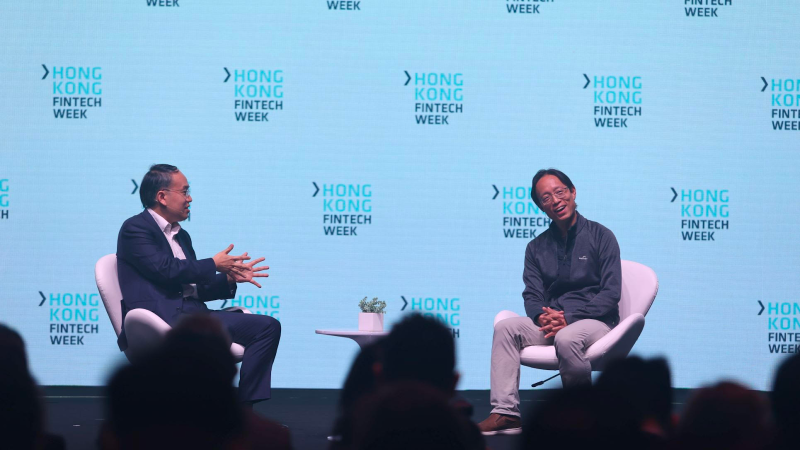
During a fireside chat hosted by Financial Secretary Christopher Hui, he asked Animoca Brands Co-Founder and Executive Chairman Yat Siu which of his many ventures was his favorite. While Siu didn’t pick one, he shared insights on how emerging infrastructure is reshaping society.
“In traditional capitalism, value typically accrues only to shareholders. While Hong Kong has thrived under this model, it has been difficult for some to participate. What Web3 does is transform this relationship—from customer/consumer to customer/owner who shares in the potential of the business itself.”
“Speed is one of Hong Kong’s hallmarks—the pace of technology adoption is fast. Four years ago, most people in Hong Kong didn’t even know what NFTs were. Now, the Hong Kong government is issuing NFTs. This shows genuine enthusiasm for these new technologies and unlocks Hong Kong’s developmental potential.”
SFC: Regulating Crypto Service Providers Is the Only Way to Embrace Innovation
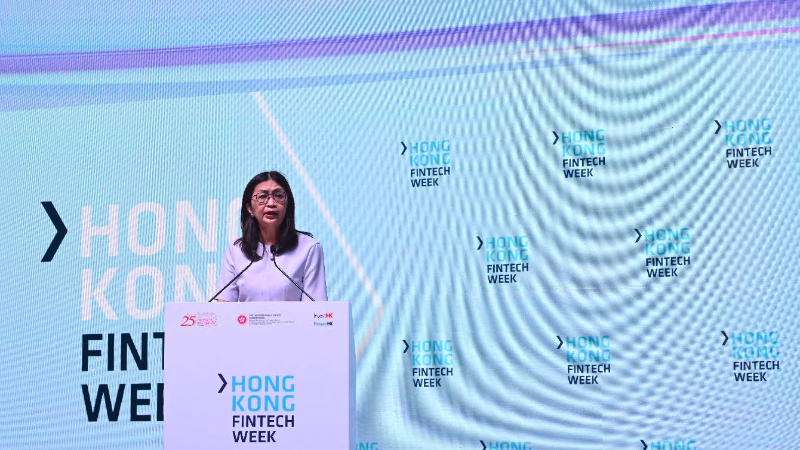
Julia Leung of the Securities and Futures Commission (SFC) advocated for orderly market development in crypto to protect the industry and support innovation. “For a long time, the crypto community believed regulation stifled innovation, limiting fintech development and investor choice. But excessive behavior by certain crypto firms has threatened the entire crypto ecosystem, reducing the market cap of crypto assets from a peak of $3 trillion to $1 trillion,” said Leung.
She added: “Let me be clear—we support underlying DLT technology and welcome the development of Hong Kong’s fintech community. NFTs, the metaverse, and Web3 are beginning to reshape our lives.”
“However, the crypto winter shows that seizing these opportunities is far from easy. Indeed, they come with significant risks that may harm investors and undermine confidence in the sector. Bringing crypto-as-a-service providers under regulation is the only way to truly embrace innovation.”
PBOC Governor: Privacy Protection Is Among Top Priorities for e-CNY
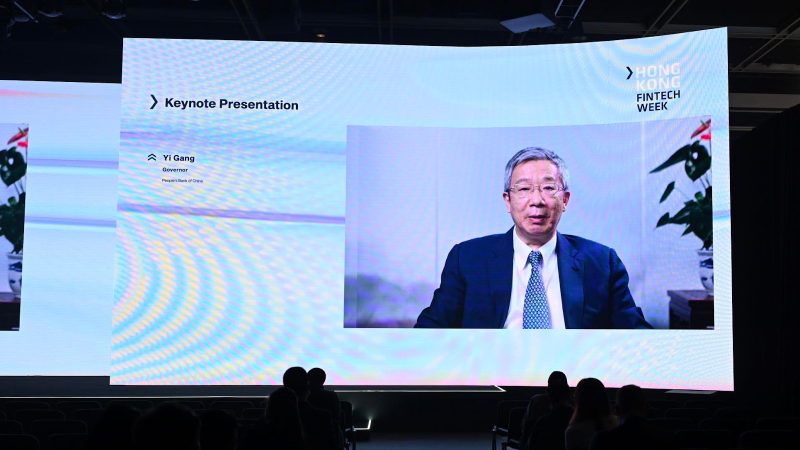
PBOC Governor Yi Gang also spoke at the event, stating that e-CNY, China’s central bank digital currency, aims to meet domestic payment needs, promote inclusive finance, and enhance the efficiency of monetary and payment systems.
He added that the People’s Bank of China (PBoC) limits e-CNY operations to authorized intermediaries, which collect only the information necessary for conversion and circulation services. Personal data security is ensured through advanced technology and strict management, fully complying with consumer privacy protection laws and regulations.
Sensitive encrypted information is de-identified for all non-transacting parties, and no entity or individual may conduct arbitrary queries without legal authorization. However, Mr. Yi noted that the situation isn't black and white—a delicate balance must be struck between protecting privacy and combating illegal activities.
The PBOC is collaborating with the HKMA and other monetary authorities on CBDC initiatives to better serve global and domestic investors and strengthen Hong Kong’s role as an international financial center.
SBF: We Need a Knowledge-Based System, Not a Wealth-Based One
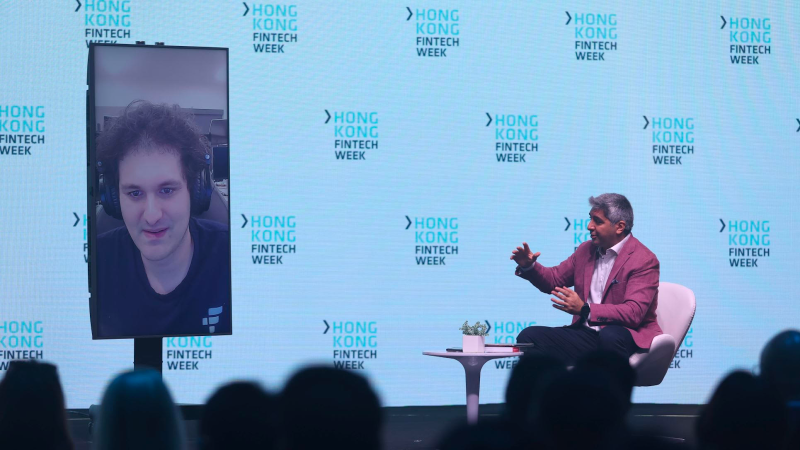
Cryptocurrency entrepreneur Sam Bankman-Fried argued that access to assets and investments should be based on knowledge, not wealth.
“Wealth-based access is classist and racist, creating massive, unfair disparities in digital asset access. It simply makes the rich richer.”
“We want to ensure people understand what they’re accessing, know the risks, and can make informed decisions. That’s why implementing a knowledge-based system for access control is more effective than a wealth-based one,” he said.
Ant Group: Digital Technology and Opportunities for Hong Kong

Ant Group Chairman Jing Junhai, speaking via video, pointed out that thanks to its global vision and technological leadership, Hong Kong has solidified its status as a global hub for trade, logistics, and finance. He believes advanced technology can unlock new growth opportunities for Hong Kong, which already possesses abundant tech and innovation resources.
He said: “Research shows that the government’s decision during COVID-19 to replace traditional stimulus measures with digital vouchers was at least three times more effective than conventional methods.”
“The technologies redefining consumer markets are now reshaping industrial value chains—and once again, Hong Kong stands at the forefront of the digital era.”
“New technologies and related solutions can significantly reduce 'trust costs' and friction. Through smart contracts, procurement-related information is automatically verified and executed. This high level of collaboration enhances efficiency across the entire trade and logistics value chain while minimizing errors.”
Central Banks and Innovation: Evolution or Revolution?
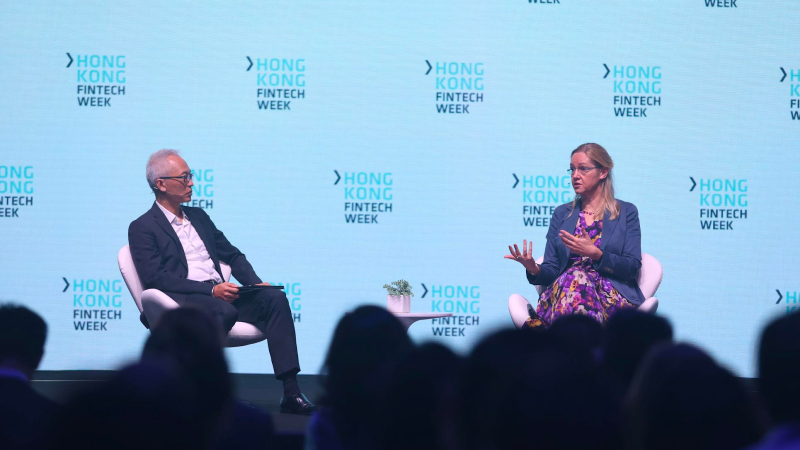
In a fireside chat moderated by HKMA Deputy Chief Executive Edmond Lau, Ms. Cecilia Skingsley, Head of the BIS Innovation Hub, shared her passion for the relationship between central banks and innovation. She noted that central banks and governments have a close relationship, as domestic institutions vary greatly across countries.
The BIS Innovation Hub continues to create opportunities for central banks worldwide to collaborate on developing future financial infrastructure and exploring innovative technological approaches.
Reports and code developed by the BIS Innovation Hub over the years are highly transparent, allowing other institutions to learn and use them for their own experiments. For central banks, understanding both the capabilities and limitations of technology is equally important.
Embracing Greater Bay Area Opportunities for a Sustainable Future
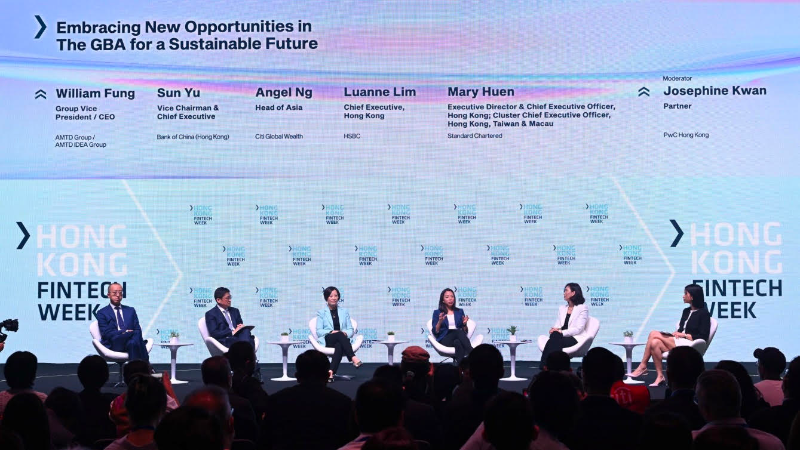
Leaders from major banks and financial service firms discussed how and why they integrate ESG into financial decisions. From the outset, Sun Yu of Bank of China (Hong Kong) echoed sentiments shared by many panelists: “ESG is no longer just a concept or corporate slogan—it’s now becoming concrete business strategy.”
Meanwhile, Mary Huen, CEO of Standard Chartered Hong Kong, said: “Hong Kong’s strength lies in serving as a funder and advisor for companies from mainland China, the Greater Bay Area, and globally. In both roles, we have the opportunity to guide clients toward more sustainable choices.”
William Fung, CEO of Li & Fung, stated: “ESG is a lifestyle. It’s not about what you want, but what we need. We all must do our part to build a better world for future generations.”
Adrien Cheng: Hong Kong Will Lead Cross-Border Blockchain Infrastructure in the Greater Bay Area
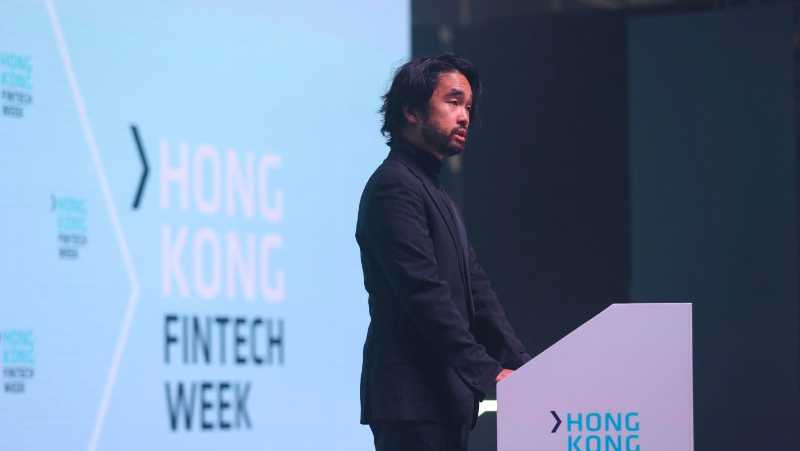
Adrien Cheng, CEO of New World Development, expressed support for the Hong Kong SAR government’s latest policy statement on virtual asset development. He said Hong Kong has much to offer in digital assets, cryptocurrencies, and blockchain. He also highlighted the importance of blockchain support from China’s State Council.
“With our unique position in the Greater Bay Area, Hong Kong will lead regional development in cross-border blockchain infrastructure and ecosystems. We are best positioned to help businesses capture blockchain opportunities in mainland China.”
“We also see opportunities where physical and digital dimensions converge, offering innovators and entrepreneurs a new stage to shape and lead the next wave of cultural and artistic experiences. This is a once-in-a-lifetime opportunity—for all of us, especially younger generations who already live immersed in the Web3 world.”
Meta: Entering Asia-Pacific’s $1 Trillion Metaverse Opportunity
Dan Neary, Meta’s Vice President for Asia-Pacific, joined the conference via video, expressing excitement about the rapid growth of finance in Hong Kong and the Asia-Pacific region, as well as advancements in Web3 and the metaverse.
Meta views the metaverse as the next evolution of the internet in social connectivity—a digital space where people can communicate anytime, anywhere, and with anyone, using any device.
Mr. Neary said, the immersive nature of the metaverse holds transformative power. Our relationship with the internet has always been screen-based, but with the metaverse, I believe people will live inside the internet and become part of it.
Andreessen Horowitz (a16z): The Next Frontier of Fintech
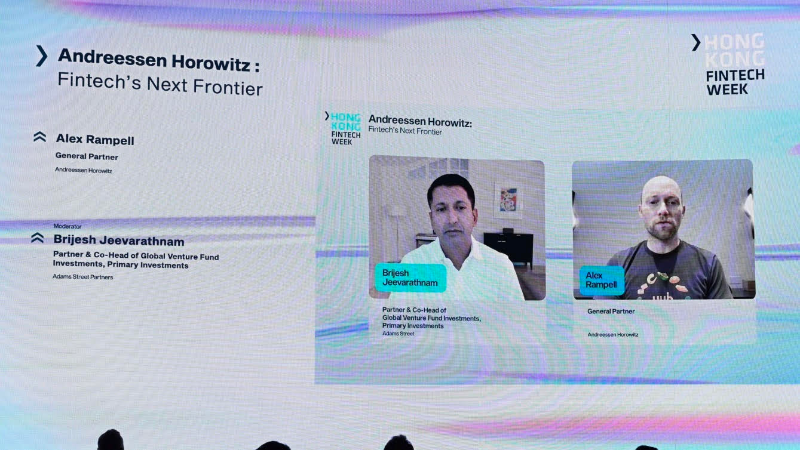
Rampbell, Partner at Andreessen Horowitz, said he believes fintech companies have vast opportunities to meet small, everyday needs of consumers. Just as Airbnb was built for people needing temporary housing and Uber for those needing rides, fintech can fill many small gaps in ordinary customers’ financial lives.
When asked why this hasn’t happened yet, Alex said it’s because much of financial technology is still new and required a pandemic-driven trend to accelerate full digitization.
“HSBC and most other banks profit from inertia,” he said.
“Just like objects in motion stay in motion and objects at rest stay at rest, bank customers tend to stay put unless pushed by major disruption. At least in the U.S., a simple app that eliminates the hassle of banking with any institution could vastly simplify life for many customers.”
Top Fintech Investments and Trends

In this session, Gobi Partners Co-Founder Mr. Cao advised the audience to start looking southward, as Southeast Asia is a vast market filled with young, innovative individuals. He also stressed the importance of focusing on the Chinese market, which has entered its third phase of development. “The Greater Bay Area, especially Hong Kong, is highly suitable for fintech growth,” he added.
Jehan Chu, Co-Founder and Managing Partner of Kenetic, mentioned that blockchain represents the next version of the internet. “Hybrid is the new buzzword,” he added. He believes returning to 'Web 2.5' is key to blockchain and fintech success, as it makes these technologies more accessible to the broader public.
Meanwhile, GGV Capital Managing Partner Lee said a company must be innovative and distinct from other Hong Kong fintech firms to succeed. Achieving growth at manageable cost with predictable and attainable ROI is also crucial. “Simply put, make sure you’re making money!” she said.
WestCap’s Tosi: Three Fintech Investment Areas for the Next Decade
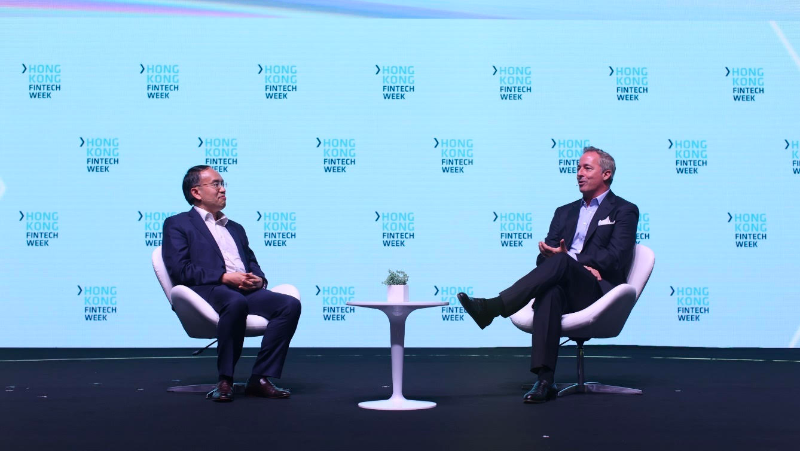
In a fireside chat hosted by Financial Secretary Christopher Hui, WestCap’s Tosi highlighted three key areas for fintech investment over the next decade: payments, banking technology, and access to private markets. He said the most impressive companies are those that adapt and continuously iterate over time.
He also offered advice to aspiring entrepreneurs:
-
Stay Passionate—Do what you love. Sometimes success comes from solving deeply personal problems.
-
Keep Learning—It’s vital to understand and stay informed about developments in the ecosystem.
-
Create Culture—Foster a culture where people challenge the status quo and embrace new ideas.
Christopher Hui also mentioned that the government is actively recruiting fintech talent from abroad to expand Hong Kong’s talent pool and help existing professionals upgrade their skills.
HKMA and Bank of Israel: The Journey Toward CBDC Adoption
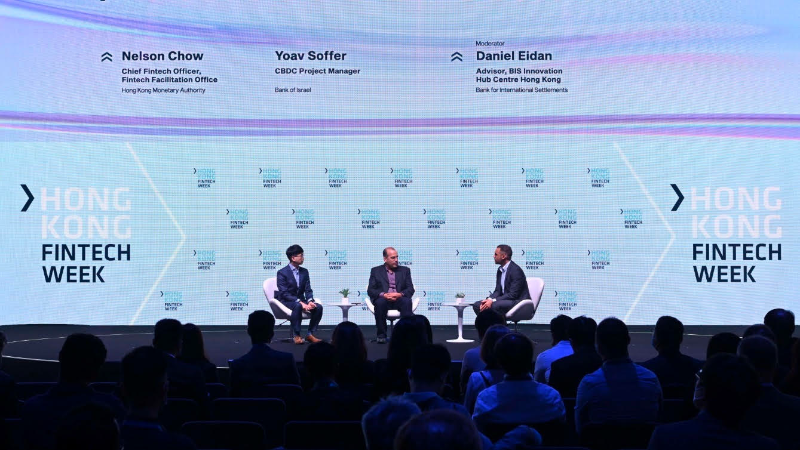
The HKMA is partnering with the Bank of Israel to develop a Central Bank Digital Currency (CBDC). The idea is to create a one-stop solution for digital payments.
“I recently bought a new phone,” said Nelson Chow, HKMA’s Chief FinTech Officer, “and I realized how many different payment apps I had on it.”
By creating a CBDC, the general public will find digital banking and transactions with merchants more convenient, as everything will be unified under a single digital currency.
Make Hong Kong Great Again!

While millennials and Gen Z are primary drivers of financial digitization, they aren’t the only demographic banks should consider, said Maggie Ng, HSBC Hong Kong’s Head of Wealth and Personal Banking. Older segments may adopt new technologies more slowly, but they are equally important.
"We must ensure no one gets left behind," she added. "It’s crucial for us to leverage digital tools to make services accessible to everyone. If slower-adopting older groups are excluded, we haven’t achieved our goal—we’ve merely shifted focus to younger demographics."
Global Leaders – The Economy of Tomorrow
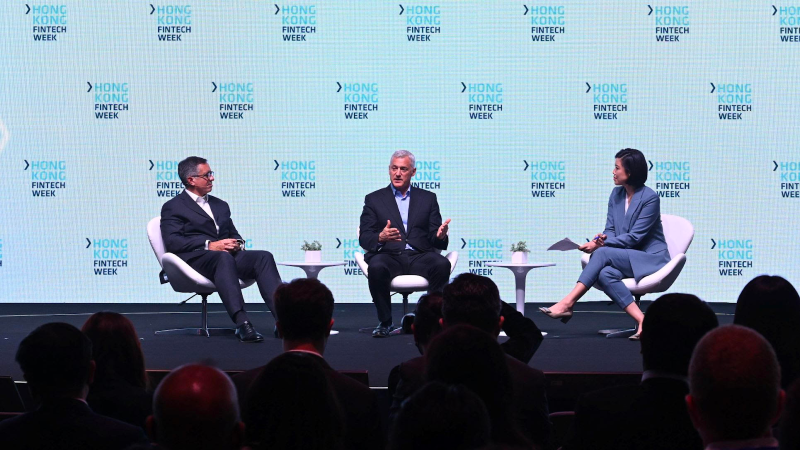
Moderated by Bloomberg journalist Yvonne Man, JPMorgan Chase President and COO Daniel Pinto and Standard Chartered CEO Bill Winters discussed the structure of financial services and the broader banking industry. Mr. Pinto said banks are adapting to technological advances, but challenges remain—especially around investment.
Regarding data, Mr. Pinto said today’s banks are trying to turn data into something useful for their business and customers. Banks can use data to segment clients and tailor services or products accordingly. On the other hand, Mr. Winters said banks cannot win this race alone, as many specialized firms focus solely on data analytics. Given the market’s rapid pace, Mr. Winters suggested banks educate their employees on the importance of data. Knowing how to use data wisely might be the true edge in winning the banking game.
Join TechFlow official community to stay tuned
Telegram:https://t.me/TechFlowDaily
X (Twitter):https://x.com/TechFlowPost
X (Twitter) EN:https://x.com/BlockFlow_News






