Finding the Next Alpha: A Comprehensive Overview of the DAO Infrastructure Landscape
TechFlow Selected TechFlow Selected
Finding the Next Alpha: A Comprehensive Overview of the DAO Infrastructure Landscape
Cheers to the future of DAOs!
 Navigating Web3 tides with focused insights
Author: Old Fashion Research
TL;DR
-
DAOs are having increasing influence in the crypto space, yet their development faces numerous challenges; a growing number of DAO tools and solutions have emerged to help overcome these hurdles and optimize operations.
-
We believe that in the next bull cycle of cryptocurrency, DAOs are likely to take over from P2E gaming projects as the primary vehicle for attracting non-crypto users into the ecosystem, because the core value proposition of DAOs is more diverse and not solely profit-driven like P2E games.
-
We conducted research on key features of DAOs addressed by these tools—DAO frameworks, contributor incentives (payment/streaming management, identity and reputation platforms), financial management, and DAO governance/voting.
-
As a relatively new field, DAO tooling is evolving rapidly, with many tools already available. However, why aren't these tools being fully utilized?
-
In reality, the DAO tooling space is oversaturated and highly fragmented. Most tools are built independently to address specific needs, lacking integration and synergy between them.
-
What we need is not just tools, but DAO infrastructure—a modular hub capable of integrating all efficient tools and enabling seamless collaboration, helping DAOs overcome challenges and thrive.
What is a DAO?
A DAO, or "Decentralized Autonomous Organization," is a community-driven entity without centralized authority. Fully decentralized and open to public scrutiny, a DAO operates based on rules encoded in smart contracts and executes agreed-upon decisions. At any time, proposals, voting records, and even the code itself can be audited publicly.
The purpose of a DAO is to manage and oversee an entity similar to a company. However, DAOs function best when no single authority dominates; instead, collective leadership and members serve as its governors. Members are the sole decision-makers on all matters concerning the organization’s future, including technical development and fund allocation.
Voting processes within a DAO are recorded on the blockchain. Users must choose among mutually exclusive options, and typically, voting power is proportional to the number of tokens held. For example, someone holding 100 DAO tokens has twice the voting power of someone with 50 tokens.
This mechanism encourages large stakeholders to act honestly. If a user holds 25% of total voting power, engaging in malicious behavior would also harm the value of their own 25% stake.
Most DAOs also maintain a treasury containing tokens potentially used for fiat transactions. Members vote on how funds are spent—for instance, a DAO seeking rare NFTs may vote to use treasury assets to acquire them.
Current Problems and Challenges
Despite rising popularity, early adopters inevitably encounter obstacles. Since those interested in DAOs represent only a small fraction of the Web3 community, DAOs remain in their infancy. We anticipate they could become a superior organizational structure compared to traditional corporate models. This section outlines some operational and managerial difficulties related to DAOs in the Web3 ecosystem.
1. Discovery and Onboarding
Let’s imagine the steps a Web3 participant might take to join a DAO and contribute expertise.
The first step involves comprehensive research to find a DAO aligned with one's goals and in need of assistance. For most people, this initial stage is extremely difficult. With the number of DAOs continuously growing and their purposes vastly different, identifying the ideal DAO is challenging.
It becomes even harder for potential contributors who are uncertain about success, possibly causing them to abandon the attempt. Resources like Messari’s DAO list offer some help, but they don’t provide individuals with enough information to confidently commit to joining a particular DAO. Simply publishing vision statements on websites and social media platforms is far from sufficient for a DAO.
Once someone finds a suitable DAO, the next critical step is the onboarding process and documentation. Due to varying operational methods across DAOs, onboarding differs significantly—some require only token purchases, while others involve multiple interview rounds and applications.
As highlighted in Avenueplace.eth’s article on DAOs, clarity and execution of onboarding procedures play a crucial role in attracting the right members—addressing background fit.
2. Incentives – Personal Growth
When discussing incentives in DAOs, rewarding contributions with tokens is common practice—effort should be fairly compensated.
However, money should not, and will not, be the primary motivator for DAO participants.
What hasn’t been emphasized is that working in a DAO offers benefits beyond financial gain—such as skill development, expanded knowledge, and network growth.
Given the nature of DAOs, individuals can easily participate and contribute to multiple organizations simultaneously. In traditional Web2 career paths, employees gain experience, increase capabilities, deliver greater value, earn higher compensation, and receive more challenging tasks over time. So how can individuals demonstrate verified, DAO-relevant portfolios to gain an advantage when applying to other DAOs?
SourceCred is one such tool designed from this perspective, tracking DAO participation on-chain. Many SBT-related applications can also issue non-transferable tokens to verify individual contributions and achievements. DAOs can also learn from established enterprises by implementing mentorship programs and member evaluations.
3. Development of DAO Systems
Ensuring fairness, scalability, and adherence to decentralized governance remains a challenge for DAOs and many other Web3 projects. As noted in an article by TheDefiant, many DAOs simply copy existing systems without considering whether those strategies suit their unique needs.
Due to their digital and decentralized nature, DAOs often lack the mature, efficient infrastructure enjoyed by traditional organizations. Many DAOs are required to build their own tools and infrastructure before launching, yet most available tools are still quite “clunky.” DAOs face shortages in proper infrastructure for reporting, financial management, governance, payroll, communication, and identity management. Without adequate management infrastructure, many DAOs risk member attrition and loss of cohesion.
Regarding scalability, DAOs could grow faster if centralized and operated through legal entities. While flawed, traditional systems exist to coordinate decision-making among parties with shared economic interests. Zero participation from token holders in voting on proposals is another major hurdle DAOs must overcome. Inactive token holders negatively impact DAO operations. Although many may quickly vote yes, delegation introduces centralization risks. Some DAOs are exploring incentive mechanisms—rewarding active participants and penalizing inactive ones.
Deep Dive into DAO Tools
As the number of DAOs and digital communities continues to grow, so does the demand for infrastructure and technology to accelerate their development. DAO tools enable DAOs to overcome the aforementioned challenges.
The expanding range of DAO technologies allows us to effectively organize DAOs, manage finances, align incentives, conduct voting, and reward contributors—fostering ecosystem growth and unlocking the true potential of DAOs.
DAO Frameworks
A key idea when developing or building a DAO is establishing a Minimal Viable Community (MVC). Building a DAO involves unexpected considerations around work and design. Past technologies have simplified the setup process. However, as DAOs evolve, older tools become outdated, making product iteration slow and cumbersome.
We know that small organizations, like startups, benefit from agility and speed. Without rigid rules or standards, introducing the MVC concept in the DAO space enables smooth operation and rapid results.
Syndicate recently launched Collectives, a social networking protocol allowing users to easily create their own communities via a no-code platform. Built on the ERC-721M standard (an extension of ERC-721 developed by Syndicate, where M stands for modular), it offers high composability and interoperability across the ecosystem, supporting customizable metadata tailored to each collective’s needs. Modularity, customizability, expandability, and programmability are core principles behind Collectives—aligning closely with our vision for future DAO tools.
Another project focused on the MVC concept is Metropolis (formerly Orca Protocol), which refers to each MVC as a pod and rebranded the entire project to emphasize how individual pods (multi-sig wrapped) connect and collaborate to form complex, powerful digital cities.
Aragon is a DAO management platform simplifying the creation and administration of various organizations. Aragon offers a suite of products—from creating simple DAOs to integrating with various DAO applications—and provides expert support upon request. Platforms like Aragon allow creators to easily establish a DAO meeting their specific needs. Another notable feature is its ability to grow communities and businesses using a wide array of DAO tools; Aragon partners with these tools to enhance DAOs built on its platform.
With the MVC-first approach, DAO infrastructure and framework tools provide builders with hands-on experience, enabling continuous optimization and adaptation of necessary tools at each stage. While more DAOs will emerge soon, it's important to recognize that speed isn't always the top priority when launching a new DAO.
I believe adaptability and fluidity will be key differentiators between a good launchpad and a merely aspirational one.
Contributor Incentives
In terms of incentivizing DAO members, distributing tokens based on contribution levels has long been the most direct method of rewarding contributors.
However, deeper consideration should be given to personal development—as mentioned earlier, while many DAO tools assist with financial management and payment flows, few offer meaningful recognition of individual contributions.
Let’s first examine some treasury management and payment flow tools mentioned above, such as Gnosis Safe, Utopia, Superfluid, and Zebec Protocol.
Treasury Management Layer
Gnosis Safe is a multi-signature treasury management platform designed for DAOs. Multi-sig treasuries are not uncommon—they provide flexibility in managing digital assets. Since the treasury is one of the most critical aspects of a DAO, securing its funds is paramount. Gnosis Safe requires confirmation from multiple team members before executing transactions, preventing unauthorized access to organizational assets.
Gnosis Safe also includes additional features such as DeFi integrations, enhanced privacy, and support for other digital assets like ERC-721 tokens (digital art, ENS names, gaming assets, etc.).
Tools like Gnosis Safe make on-chain transactions within DAOs more secure and efficient. Other multi-sig applications such as Exponent, Domo, and Multis aim for similar goals; however, interacting with these platforms reveals strong similarities—most support multi-chain compatibility, offer clear UIs, detailed asset and transaction dashboards, and accounting analytics.
Payment/Streaming Management
Due to the decentralized nature of DAOs and the constant influx of contributors adding value, rewards, payments, and salary distribution can become chaotic. Utopia and Superfluid are both DAO tools helping DAOs manage, streamline, and automate payment processes more efficiently. These tools integrate with multi-sig wallets like Gnosis Safe and fit seamlessly into DAO workflows.
Utopia allows users to generate lists of recipients (contributors), recurring payments, or requests before initiating payments (gas fees covered by Utopia). DAOs can implement scheduled payouts categorized by contributor roles, retain historical contribution and compensation records, and comply with tax regulations (especially in the U.S.).
Superfluid functions similarly to Utopia but introduces the concept of streaming payments—a continuous, time-based payment model (e.g., annual, monthly, weekly, or even per-second payments)—where tokens flow continuously on-chain without capital lockup. Funds transfer indefinitely unless canceled or the sender’s balance runs out, and stream speed can be adjusted anytime.
Having discussed multi-sig treasury management, automated payroll, and streaming payments, let’s now turn to Zebec Protocol. Zebec is a comprehensive DAO treasury management platform incorporating all the above functionalities. By combining these tools, Zebec enables DAOs on Solana to perform all financial operations within a single protocol. Additionally, Zebec supports direct fiat deposits and withdrawals, reducing the hassle of frequent currency conversions.
Compared to other products, Zebec holds significant functional advantages, though I believe other platforms will eventually adopt similar concepts to expand their offerings.
Contribution/Recognition
Beyond monetary benefits, we emphasize the importance of recognizing contributions across different DAOs. Internal recognition fosters community unity and motivates members to contribute more. In this section, we’ll explore task management/contributor recognition platforms like DeWork and CharmVerse.
Dework is a Web3-native project management platform featuring token payments, verification, and bounties for completed work. Here, DAOs can clearly define project roadmaps and required tasks, provide context for ongoing initiatives, and attract new contributors. They can screen applicants based on various criteria and select the most suitable individuals or teams. Upon task completion, contributors receive bounties paid in any form of on-chain token. Beyond financial rewards, all completed tasks are stored in the contributor’s on-chain profile, forming a verifiable resume showcasing their DAO contributions.
Similar to Dework, Charmverse is a Web3 workflow operations platform offering task lists, bounties, document management, and voting. Teams can create token-gated groups for token/NFT holders or use the Moloch DAO protocol to invite members. CharmVerse also provides governance tools guiding communities smoothly through proposal stages—from initial drafting to discussion and voting.
Dework reminds me of a blend between Web2 DAO tools, Discord, and Notion. It’s user-friendly for both project leads and contributors. One feature I particularly appreciate is contributors earning achievement badges based on their contributions. Both CharmVerse and Dework promote recognizing DAO contributors’ value through “Proof-of-Attendance” (POAP) badges. Contributors can easily build on-chain professional identities, standing out in the DAO space and making their accomplishments visible to others.
DAOU is another intriguing new project converting activity data within DAOs into on-chain verifiable credentials using Soulbound Tokens (SBTs) and Social Oracle. Recently, it won third place at ETH Shanghai Hackathon. By leveraging “Social Oracle” to incentivize DAO members to validate data generated by peers, it enhances data credibility. Members are scored based on social activity, engagement, and overall contribution, earning reputation within the DAO that can be used for targeted airdrops, whitelists, and more. This concept is fascinating—it acts as a social aggregator helping DAOs identify key members and contributors. In principle, it avoids equating high-frequency low-quality activity (like spamming “GM” hourly on Discord) with consistent, high-value content creation.
DAO Governance/Voting
Governance and voting processes are another critical aspect of DAO decision-making.
Initially, tokens and shares served as the primary forms of voting power.
Later, more advanced DAO voting techniques emerged to ensure governance remained decentralized and encouraged broader community participation. Snapshot, Commonwealth, and Tally are representative DAO governance and voting tools widely adopted by active DAOs.
Snapshot is a gas-free off-chain multi-governance client known for easy verification and dispute resistance. It offers flexibility in calculating voting power and supports various voting methods to meet diverse organizational needs. Creating proposals and conducting votes on Snapshot is straightforward due to off-chain execution, requiring no gas fees.
From the perspective of DAO owners and members, Snapshot is user-friendly. Space creation takes less than five minutes, enabling DAO owners to quickly set up their governance model. For voting, members can draft proposals, set start/end dates, and publish votes. Proposal creators can choose voting types—single-choice, approval voting, quartile voting, etc.—to accommodate various scenarios.
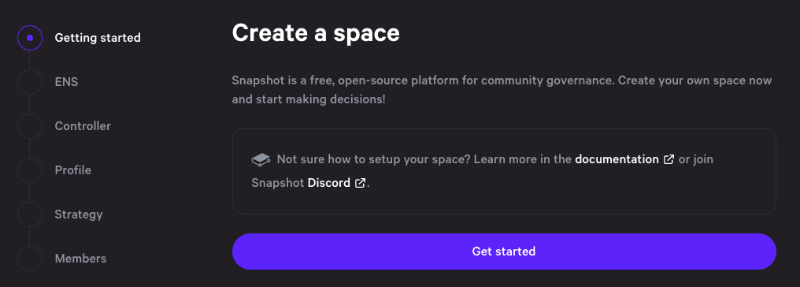
Snapshot’s Space Creation Overview
DAO members can also search for preferred DAOs, join, and participate in eligible voting processes. Over 10,000 DAOs from various blockchains have joined Snapshot, including major ones like Uniswap, Aave, and ENS.
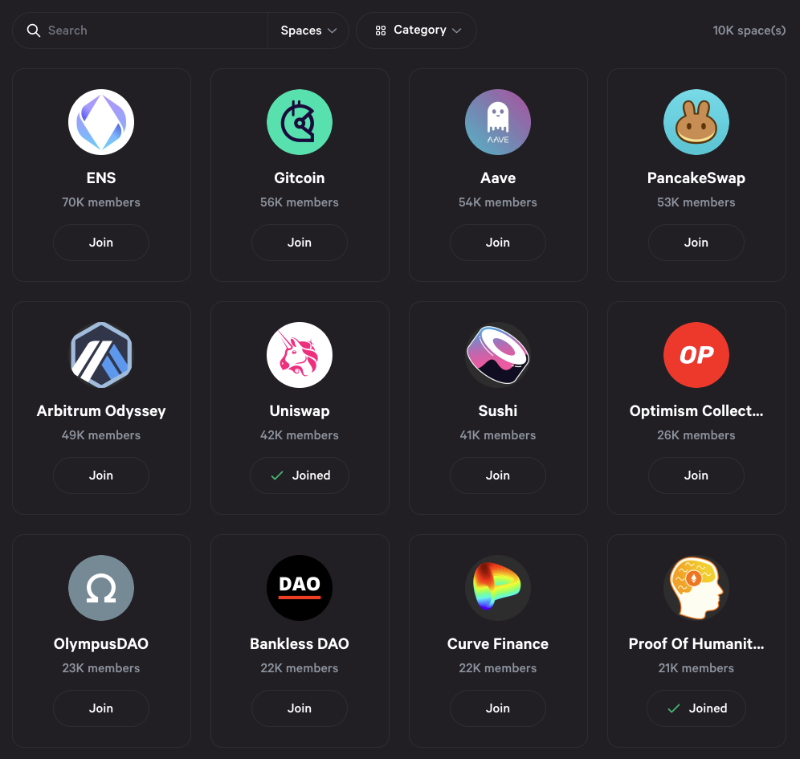
Snapshot’s Spaces Dashboard
Tally.xyz is another DAO governance platform operating similarly to Snapshot with off-chain voting. What makes Tally interesting is its “Governor Contract”—an open-source smart contract enabling token holders to govern the DAO via on-chain voting. The Governor Contract manages DAO proposals: tracking progress, tallying votes, and determining approval. If approved, the Governor executes the proposal on-chain. On-chain proposals can do anything—transfer treasury funds, adjust DeFi protocol parameters, modify sub-DAO permissions, mint NFTs, or change governance rules.
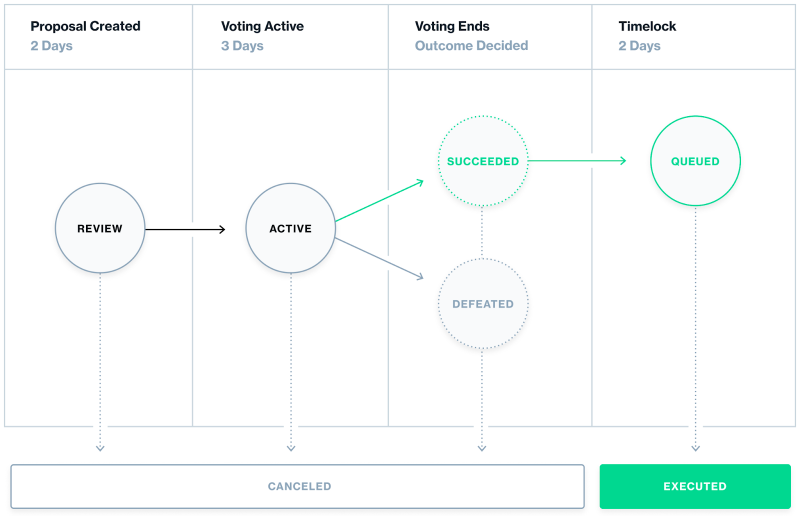
Tally’s Governor Contract Workflow
The biggest advantage of the Governor model is that all decisions occur on-chain. Since smart contracts handle everything, voters don’t rely on third parties to count votes or execute transactions. Anyone can interact with the Governor via their preferred interface by calling the smart contract directly.
I believe this Governor concept already exists—or if not, it will be the next logical evolution. This decentralized, autonomous approach prevents backroom manipulation within DAOs, ensuring full transparency throughout the process, despite potential smart contract risks initially.
Emergence of DAO Infrastructure
Compared to other areas of Web3, the DAO tooling space remains relatively underdeveloped and unexplored. Currently, most operating DAOs rely heavily on traditional platforms like Discord and Twitter, along with a few Web3 tools such as Gnosis (for multi-sig) and Snapshot (for voting). Web3 DAO tools haven’t offered compelling enough value to persuade large existing DAOs to overhaul their current workflows.
The DAO tooling landscape is fragmented, with solutions targeting specific problems and use cases. In my view, the lack of cohesion and composability among projects is a primary reason why DAO tooling remains underutilized. Of course, while all these efforts benefit DAOs, can actual implementation be improved?
We believe that as the number and quality of DAOs grow exponentially, creators and members will require more sophisticated mechanisms for management, scaling, and contribution. This urgent need will drive the next wave of DAO tooling innovation.
While we believe DAO tooling projects will succeed in the long run, we advocate a directional shift—from building the next great DAO tool to constructing infrastructure applicable to all DAOs. Below, we discuss key insights that could expand the DAO tooling field and establish it as a blueprint for future organizations—and why we argue for building infrastructure rather than isolated tools.
What Types of Tools Are Still Needed?
Generally speaking, certain domains have better tools and more comprehensive functionality than others. For example, in financial management, projects like Gnosis Safe, Multis, and other multi-sig treasury and payment streaming platforms effectively manage DAO assets. Similarly, apps like Snapshot, Tally, and Commonwealth effectively address DAO voting and governance, although not entirely comprehensively.
For instance, there’s clearly room for innovation in community engagement and DAO discussion platforms. Currently, most DAOs conduct these activities on Web2 apps like Discord, Telegram, or even Slack. We haven’t seen any Web3 system satisfying this fundamental DAO requirement. A Web3 solution designed to manage, engage, and reward DAO communities—and outperforming its Web2 counterparts—would be highly valuable. Yet many argue there’s no need to replace Discord/Telegram, following the logic of “if it ain’t broke, don’t fix it.”
We envision a chain-agnostic DAO hub where DAOs can handle everything—from on-chain voting analysis to off-chain community interaction. We’re not advocating for a one-size-fits-all solution, but rather a system enabling integration and collaboration across different DAO tools. Imagine a more modular version of Aragon’s DAO onboarding process—a solution accessible to both seasoned Web3 veterans and newcomers or domain explorers. Having a way to unify all these resources, allowing DAOs to build their platforms like LEGO blocks, would be ideal.
From DAO Tools to DAO Infrastructure
Based on our research and experimentation with these diverse projects, we’ve compiled insights and ideas for the future of DAO infrastructure.
DAOs should prioritize modular design, maximizing flexibility, adaptability, and openness to enable LEGO-like integration into existing DAO tool stacks. We hope to see DAOs upgraded modularly—like computers—without replacing entire systems. Our goal is DAO infrastructure, not just tools.
There’s no need for universal or all-encompassing solutions: DAOs must explore processes and frameworks with their members while learning from other DAOs and organizations. We believe each community has unique infrastructure needs, requiring flexible, customizable solutions.
Communities should be infinite and collectively mobile. Guilds, for example, stand in contrast to integrated platforms. Our aim is interoperability across all community platforms, enabling sharing, collaboration, and interaction.
Through cycles of tool development and adoption, DAO tools will continue evolving alongside DAOs and DAO frameworks. When gaps appear, new tools will emerge. Given this, OFR is actively seeking individuals moving in this direction. If you know of relevant projects, please DM us on Twitter or send an email.
To the future of DAOs—cheers!
Join TechFlow official community to stay tuned
Telegram:https://t.me/TechFlowDaily
X (Twitter):https://x.com/TechFlowPost
X (Twitter) EN:https://x.com/BlockFlow_News
 Old Fashion Research