








When Web3 Gently Sweeps Over Real Estate (Part 1)
TechFlow Selected TechFlow Selected
When Web3 Gently Sweeps Over Real Estate (Part 1)
Applying Web3 thinking to the real estate industry may offer new solutions for breakthroughs.
 Navigating Web3 tides with focused insights
I. On the Collapse of an Industry
If we rewind the clock by a year—to August 2021—anyone who claimed on social media that within a year, bonds issued by most private firms among China's top 30 real estate companies would plummet to single-digit prices would likely have been reported as mentally ill and publicly shamed into social oblivion. After all, at that time, although life wasn't easy, these companies still held billions in assets, ranked on the Fortune 500 list, and were esteemed guests of major financial institutions.
Yet this seemingly absurd scenario has indeed come true. We've watched helplessly as an entire industry collapsed—from grand banquets to crumbling towers—its bond prices crashing from 95 to 5 in less than a year, plunging into a brutal redemption path. Compare this with the so-called largest Ponzi scheme in history—the crypto world: Bitcoin fell from its November 2021 peak of $69,000 into a bear market and now hovers around $20,000. Which one is more surreal?
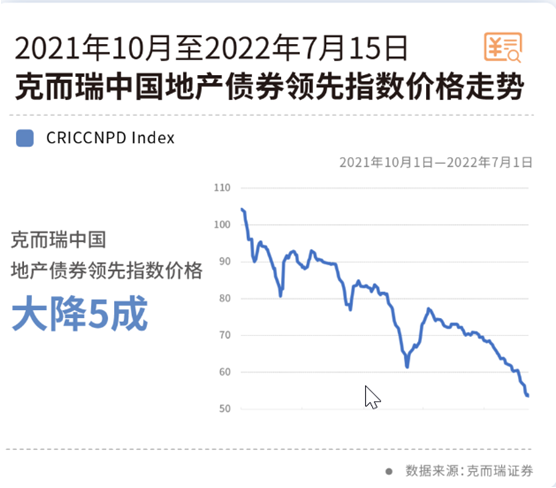
Many friends in the real estate sector are now enduring their darkest moments, suffering not only financial losses but also damage to their health and confidence in the future. If we extend our timeline and broaden our perspective horizontally, perhaps we can evolve a new forked track from what seems like an increasingly narrow road—one that leads toward a future full of possibilities.
II. Land Reigns Supreme for Three Thousand Years
Throughout human history, land has always been the most important means of production and the source of wealth—especially in agrarian cultures across southern Eurasia. Owning land meant having the foundation of wealth. Historically, wise emperors often reformed head-based taxes (poll taxes) into land-based taxation, reasoning that while people could flee, land could not.
In Europe, where modern civilization originated, feudal lordship prevailed: dukes, marquises, counts, viscounts, barons—all granted land by the king in layers. As long as they managed the people and finances on their lands properly, they’d answer the call when war arose. Thus, land was the greatest reward for every tier of feudal lords.
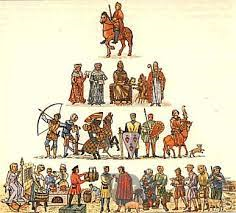
China during the Zhou Dynasty followed a similar feudal model. The much-idealized "well-field system," later praised by reformists advocating “reforms under ancient pretenses,” divided square plots into nine grids: eight outer sections belonged to individual farmers, while the central plot was jointly cultivated, its yield going to the state. Even after Qin Shi Huang unified China and replaced the "feudal enfeoffment system" with the "commandery-county system" administratively, there wasn’t much change regarding private land ownership.
From the Qin to the Qing dynasties, each dynasty made flexible adjustments within the broad framework of private land ownership. For example, Emperor Wu of Han, drained by endless wars, shifted slightly toward public ownership, extracting more surplus from peasants. During the chaotic period of Five Barbarians, the Northern Wei Dynasty, seeking population growth and social stability, introduced the “equal-field system”—leaning toward privatization: “Come settle in the north; cultivate these vast fields—they’ll be yours.” Much like America’s westward expansion.
Dr. Sun Yat-sen clearly advocated “equalization of land rights” during the Republican era, but failed to implement it due to overwhelming opposition. When the KMT and CCP first cooperated in the Northern Expedition, initial progress was smooth until tensions erupted near Wuhan. While Communist work teams advanced militarily, they simultaneously carried out land reforms—confiscating lands belonging to families of mid- and low-ranking KMT officers. With homes raided behind the frontlines, morale collapsed.
After liberation, the system was clearly defined: a clean break. All land became publicly owned—belonging to the state or collectives. This laid the groundwork for housing reforms beginning in the 1990s. Premier Zhu Rongji leveraged housing reform to kickstart the first wave of national economic transformation. Though land remained state-owned, individuals gained usage rights and trading privileges. This taught ordinary citizens about commodity economics—a system now lasting three decades.
Thus, in agrarian cultural consciousness, land is the root of all wealth; in Confucian tradition of the East, land remains ultimately under central authority: “All land beneath heaven belongs to the king.” No matter how private it appears, if the state wants your land, there are always ways to take it. Why did Western societies successfully uphold private land ownership? It took significant struggles—such as the signing of England’s Magna Carta 800 years ago, forced upon the king by rebellious nobles. One key clause: “Private property is sacred and inviolable.” Even if you commit crimes, the sovereign may imprison or execute you—but cannot seize your legally owned money or land.
III. Economic Development Models and the Rise of WEB3
Bringing us back to today, the current nationwide paralysis of China’s real estate sector represents a “hard landing”—similar to Japan’s property bubble burst following the Plaza Accord in the 1980s, or the 2008 U.S. subprime crisis—both instances where real estate served as the primary vehicle for correction during downturns in long-term economic cycles.
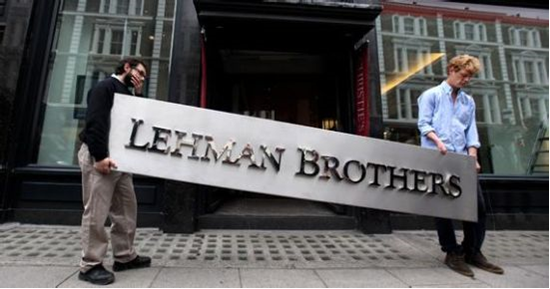
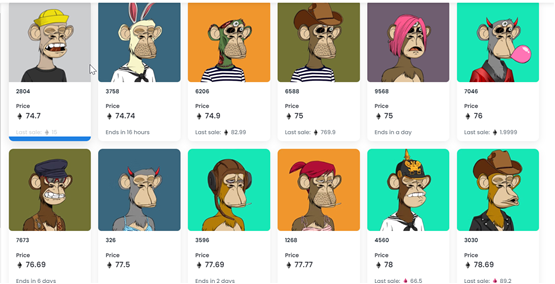
In China’s unique governance and public ownership framework, necessary adjustments were simply delayed. During the past three decades of explosive economic growth, real estate acted as a reservoir for national wealth—too big to disrupt easily. In WEB3 parlance, real estate’s role in national wealth resembles that of NFTs (Non-Fungible Tokens) in the overall TVL (Total Value Locked) of the crypto world—both share characteristics of strong asset accumulation and poor liquidity. Before NFTs became popular in 2021, bear markets hit faster because most holdings were liquid tokens—easy to sell off. But in this downturn, part of the capital is locked into NFTs. Do you really think someone would quickly part with their Bored Ape Yacht Club (BAYC)?
Sometimes I daydream: comparing China’s two-decade economic boom with the blockchain bull run starting in 2020 reveals some interesting parallels. The foundations of China’s reform and opening-up over the past 20 years include:
- Relocation of global manufacturing bases to China;
- Accession to the WTO;
- Rise of e-commerce;
- Mobile internet disrupting operational models across civilian industries. The result: Made-in-China exports leading wealth accumulation, with part of that wealth sinking into internet ventures and another portion flowing into real estate (as a reservoir). Hence, the early Chinese billionaires on rich lists were either from the internet or real estate sectors.
The first half of this trajectory has largely repeated itself over the past century: global economic leaders first become manufacturing hubs. From Britain—the birthplace of the Industrial Revolution—to the U.S. around WWI, then post-WWII shifts to Germany and Japan, followed by the Asian Tigers in the 1970s–80s, and finally mainland China rapidly emerging as the world’s factory leader. The second half adapts according to contemporary advances in productive forces, integrating cutting-edge applications that benefit society broadly—from mechanization to electrification, high-end electronics, and eventually the internet.
Now consider the crypto bull market beginning in 2020, which established several new foundations distinguishing it from prior cycles:
- Emergence of various public blockchains;
- Establishment of DeFi ecosystems at the foundational layer;
- Breakout applications such as NFTs and blockchain gaming;
If we boldly speculate this is merely the first phase, many practical application paths remain unexplored: Interoperability and security improvements among blockchain infrastructures; integration of DeFi with traditional finance; empowering use cases for NFTs; flourishing real-world applications in gaming, social networking, and entertainment under WEB3 consensus; hardware breakthroughs in AR+VR enabling large-scale metaverse ecosystems…
IV. WEB3 and Real Estate
Let’s refocus: WEB3 and real estate. In the physical world, real estate is the closest analog to NFTs—not just due to strong asset entrenchment and weak liquidity, but also because: Both possess investment value and utility (though NFT utility is still building consensus, with game passcards being one example); both require clear title verification; both represent non-fungible assets; and both derive value primarily from collective belief.
A new frontier thus emerges: If today’s crypto community widely accepts virtual land as valuable (e.g., Sandbox metaverse plots, Otherside monkey lands, Illuvium game territories), can the tide of WEB3 bring fresh perspectives and transformations to real-world land and housing?
A core member of W Labs participated in a project linking real estate with blockchain back in 2016—an ambitious two-year effort that ultimately fizzled out. His conclusion: all efforts on-chain still had to be redone off-chain—pricing, titling, settlement, financing. On-chain mechanisms felt like over-engineered solutions—or mere gimmicks—with no reduction in required off-chain procedures. How can a highly centralized industry like real estate meaningfully interact with WEB3, which champions decentralization?
Yet I believe something impossible five years ago may now be worth revisiting—especially since ERC721 standards didn’t even exist in 2016. True industry transformation only occurs when earlier participants reach dead ends and undergo profound reflection. Whether in new energy, electric vehicles, or our focus area of gaming, the pattern repeats.
In the next article, we’ll explore potential WEB3-driven breakthroughs for real estate—such as finding balance between decentralization and centralization: Using DAOs (decentralized autonomous organizations) to replace traditional developers in community-driven projects; leveraging SBTs (Soulbound Tokens) to verify real identities on-chain; applying NFTs for asset ownership certification; utilizing blockchain-based securitization for financing.
Whoever builds the first solid bridge between the virtual and real worlds will gain access to the road toward freedom.
To be continued.

Reposts welcome. Original content is hard—please credit “Gua Tian Lab W Labs”
Gua Tian Lab Discord: https://discord.gg/wggdao
Gua Tian Lab Twitter: https://twitter.com/GuaTianGuaTian
Gua Tian Lab Long-form Research Mirror: https://mirror.xyz/iamwgg.eth
Gua Tian Lab Medium: https://guatianwgg.medium.com/
Join TechFlow official community to stay tuned
Telegram:https://t.me/TechFlowDaily
X (Twitter):https://x.com/TechFlowPost
X (Twitter) EN:https://x.com/BlockFlow_News
 瓜田实验室W Labs






