Wu Jitan: The Beauty of Computing Power
TechFlow Selected TechFlow Selected
Wu Jitan: The Beauty of Computing Power
What is the purpose of human existence?
 Navigating Web3 tides with focused insights
September 15 will be remembered in the history of cryptocurrency—the Ethereum Merge, transitioning from Proof-of-Work (PoW) to Proof-of-Stake (PoS), seems to mark the end of an era.
PoW or PoS—that is the question.
On this special day, TechFlow takes you back through three classic articles: Wu Jihan’s "The Beauty of Computing Power," Vitalik Buterin’s "Why Proof of Stake?", and Jan Xie, Chief Architect of Nervos, "The Great Debate Between PoW and PoS: Who Owns True Openness? Who Can Escape the Thermodynamic Endgame?".
Main Text:
『 Editor's Note 』
This article is a preface written by Mr. Wu Jihan for the book "Everyone Understands Blockchain", compiled by Luo Jinhai, founder of Quantum School, and co-published by Quantum School and Peking University Press. It is the first volume in a blockchain education series, with prefaces recommended by Huang Yiping, member of the Monetary Policy Committee of the People's Bank of China, and Wu Jihan, founder of Bitmain. The book aims to help the general public truly understand the foundational theories of blockchain and grasp future trends in the blockchain world.
Ever since humans looked up at the stars and began pondering "Who am I?", the ultimate conclusion has been that "the meaning of life lies in entropy reduction"—everything we do is to establish tiny bits of order within this chaotic universe.
According to the second law of thermodynamics, the universe naturally increases in entropy. It overlooks all beings, eroding everything. Even someone as great as Einstein or as resilient as Hawking is powerless against it. Throughout history, after every burst of noise comes silence; after every flourish, only brevity remains—heat death is the final destination...
In this sense, human existence is inherently defying the heavens.
We are insignificant as dust, yet we strive to resist the universe.
With merely 70 years of life, we challenge a creation process spanning 14 billion years.
This is even more tragic than Sisyphus fighting against the gods.
What is the purpose of human existence?
Yet, even though some great philosophers have perceived this fate,
they still refuse to accept this destiny. They attempt through reasoning and computation to find a "sliver of hope" for humanity. Thinkers like Descartes, Leibniz, Spinoza, and Kant—outstanding carbon-based lifeforms—each strive to become Maxwell’s Demon, using their individual computing power to uncover the absolute existence hidden in the cosmos, seeking to determine whether humanity is just a meaningless "recursive loop."
Even with supreme intellect, individual computing power eventually reaches its limits. A more effective method must be found to advance further in mathematics and philosophy. Beyond optimizing algorithms, harnessing concentrated silicon-based computing power to serve humanity is also a viable approach.
The pursuit of computing power appears on the surface to be about wealth, but beneath it lies a subtle desire to seek truth.
Computing power may be an effective means for humanity to reach a higher civilization—and the most effective way to combat entropy increase.
If we speak of ultimate significance, from the essence of science, possessing greater computing power is more meaningful than possessing money.
Bitcoin’s current network-wide computing power reaches approximately 300 million trillion hash collisions per second, equivalent to roughly 600 Tianhe-2 supercomputers. It seems formidable, but when viewed against the vastness of the cosmos and the quest for cosmic truths, this level of computing power hardly constitutes real influence. In my view, computing power aims to reduce the weight of human nature within the system. In the future, it might transcend carbon-based will, becoming an unexpected safeguard we cannot yet imagine. We should not overly question the computing power mechanism now—it requires time to verify. If we haven’t found a better alternative, we shouldn’t overestimate our own critical judgment.
Some argue that such a computing power mechanism lacks elegance—every ten minutes, 300 million trillion hash collisions produce one valid hash value. This seems like microscopic violence, lacking macroscopic aesthetic appeal. But what is the aesthetics of the universe? During the "first three minutes," the universe exploded from an infinitely small point, generating matter and energy. That moment of immense force didn't it also create infinite beauty? Perhaps the aesthetics of the universe differ from our human perception.
The essence of hashing is mathematics. Should mathematics necessarily align with art? We don’t know.
We can reframe the beauty of computing power: previously quiet and obscure villages in western China, territories untouched during the industrial age, now begin to emit a "sci-fi" glow due to the influx of computing power. These computing centers are scattered along the Dadu River, a tributary of the Minjiang; they are immersed in the nights of Dalad Banner in Ordos; they sleep peacefully in a small town in Ili Kazakh Autonomous Prefecture, Xinjiang... Technological civilization and natural forces achieve a fusion through computing power.
Since Leibniz opened the door to mathematical logic, reinforced by Boole, Gödel, Turing, von Neumann, and others, the pursuit of greater computing power has gradually become an instinct. Here, let’s discuss quantum computing, a topic of widespread interest.
In theory, a single qubit can store infinite information, with the data within constantly evolving dynamically. In other words, each measurement isn't of the same system, but of different worlds—hence the saying that "quantum computing" leverages parallel universes, possessing extraordinary parallel processing capabilities.
Imagine you are Neo from *The Matrix*, starting from "Taiji" and needing to open either the "1 gate" or "0 gate" of "Liangyi," then one of the "00," "01," "10," or "11" gates in "Si Xiang." After completing 160 steps, you find Zion. If the pursuer Smith uses classical computation to analyze Neo’s 160-step path, it would take 47,515,528,679,349,475,857 years. By the time he exhaustively computes it, Neo would have already liberated all humanity. But if Smith exists across 2^160 parallel realities, with each version taking one path, he could catch Neo in just 30 minutes. This is the magic of superposition—quantum computers allow you to replicate 2^160 versions of Smith, each walking one path. It’s not that supercomputing chose quantum computing, but that quantum computing inherently possesses supercomputing power. As long as quantum computing lives, defying the heavens continues.
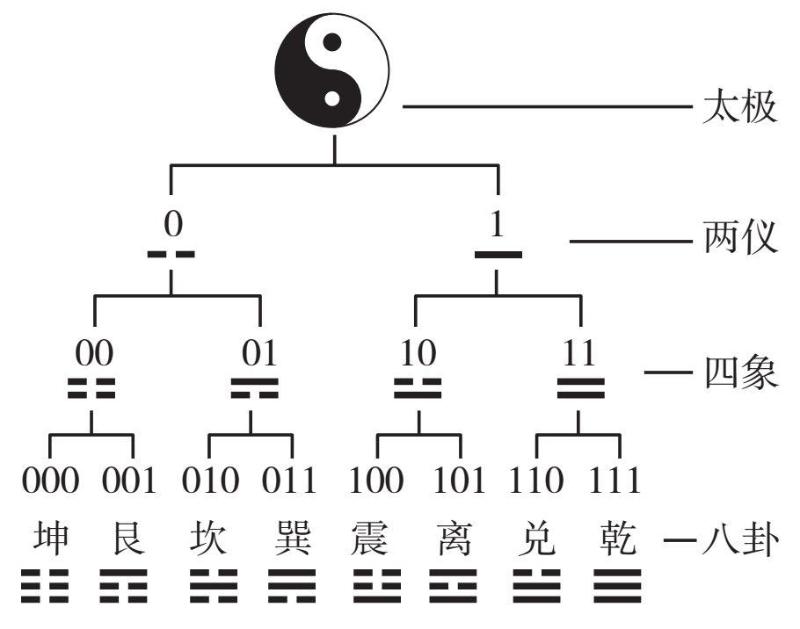
Quantum computing reveals an unparalleled physical force. When power reaches a certain extreme, it becomes beautiful.
The greatest contradiction facing humanity in the future is the growing demand for data processing versus the limitations of computing power! As a holder of computing power, beyond seeing its beauty, I also hope computing power can demonstrate its true strength—maximizing limited computational resources.
This is precisely why Bitmain has invested efforts into transforming toward AI chips. Bitmain wants to leverage its computing power to empower other industries, especially AI, where it shares a natural synergy. I also aim to enhance productivity more efficiently through computing power in AI chip R&D, integrating it with blockchain to embrace this new transformation and jointly build a true blockchain civilization. In 2016, AlphaGo defeating Lee Sedol marked humanity's entry into the intelligent era. When AI (productivity), big data (production materials), and blockchain (production relations) truly converge in the future, they will propel civilization forward at unprecedented speed and efficiency.
Drawing inspiration from Schrödinger’s book *What Is Life?*—written by the infamous cat-torturer—we can understand computing power as follows: life extracts ordered "computing power" from a disordered environment to resist societal "entropy+", thereby delaying the universe’s "heat death." Computing power represents order, while all other disputes remain disorder. Viewing computing power from this godlike perspective, acknowledging the second law of thermodynamics and having yet to discover Maxwell’s Demon, one must admit: computing power is also Don Quixote, battling windmills.
Wu Jihan
June 2018
About the Author
Wu Jihan graduated from Peking University with dual degrees in psychology and economics. A pioneer in Bitcoin advocacy, he was the first to translate Satoshi Nakamoto’s Bitcoin white paper into Chinese and remains one of the most enigmatic figures in the Bitcoin community. He is also a co-founder of Bitmain. Founded five years ago, Bitmain has grown into the world’s largest Bitcoin chip company—a dominant force in the crypto space encompassing mining hardware, mining pools, mining farms, and trading platforms. Recently, Bitmain completed its Series B funding round led by Sequoia Capital, with a valuation of approximately $12 billion.
Join TechFlow official community to stay tuned
Telegram:https://t.me/TechFlowDaily
X (Twitter):https://x.com/TechFlowPost
X (Twitter) EN:https://x.com/BlockFlow_News