








SAF3: The Web3 Version of SAFE, Enabling NFTs to Provide Higher Liquidity for Private Equity
TechFlow Selected TechFlow Selected
SAF3: The Web3 Version of SAFE, Enabling NFTs to Provide Higher Liquidity for Private Equity
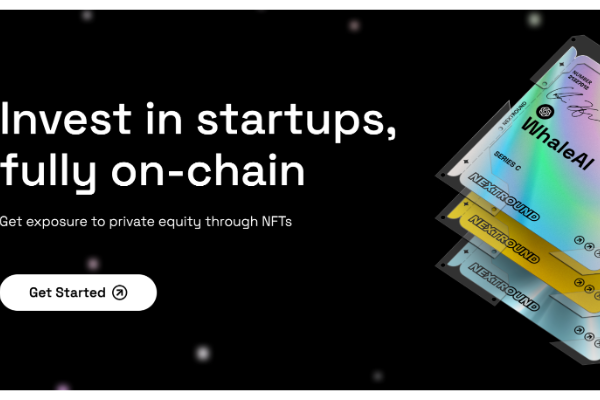
SAF3, a new model using NFTs as the carrier for SAFE agreements, not only lowers the barrier for individuals to access SAFE instruments, but also enables direct investment in equity of top global companies using USDC, with the same legal validity as traditional SAFE agreements.
 Navigating Web3 tides with focused insights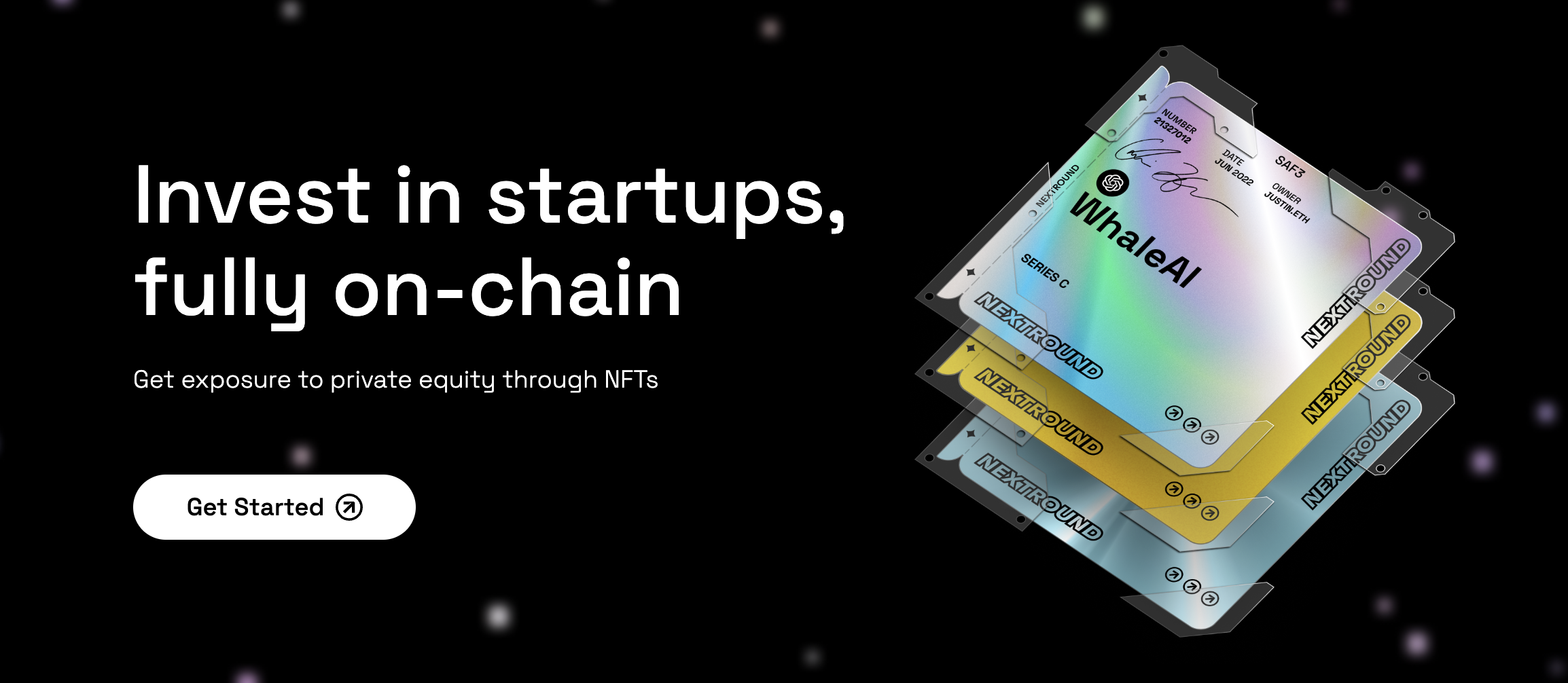
Author: Aya, TechFlow
SAFE (Simple Agreement for Future Equity) is a concept introduced in 2013 by Y Combinator (YC), a renowned U.S. startup accelerator, originally designed to ensure fair transactions between investors and founders. Under this model, investors provide cash funding to a company, which converts into equity only upon a specific future event—such as a Series A financing round.
As a flexible fundraising instrument, SAFE was created to help startups and investors reduce legal costs and minimize time spent negotiating investment terms. Founders and investors need only agree on one key term: the valuation cap. In 2018, YC further optimized and revised the tool, making it highly popular in early-stage investments across California's Bay Area.
Today, within the efficiency-driven Web3 investment landscape, both SAFE and SAFT are widely used. However, in terms of legal enforceability, SAFE offers stronger protection. As a result, most Western projects adopt a SAFE + Token Warrants structure. Nevertheless, two persistent "pain points" remain for Web3 investors.
First, investors accustomed to the high-efficiency, on-chain funding processes of Web3 may find returning to traditional Web2 equity investment somewhat inconvenient. Many investors also have strong interest in emerging technology sectors such as aerospace and biotech—can they directly invest in Web2 equity using Web3 methods?
Second, capital efficiency and liquidity are core tenets of Web3. Can SAFE instruments in the primary market also become more liquid?
To address these issues, NextRound has launched SAF3—the Web3 version of SAFE—a new model that uses NFTs as the carrier for SAFE agreements. SAF3 not only lowers the barrier for individuals to use SAFE, enabling direct investment in global high-quality companies' equity using USDC, but also maintains the same legal validity as traditional SAFE. Furthermore, it enhances liquidity—once regulatory conditions are met, investors can transfer their NFTs to others and profit from the transaction.
How does one invest using SAF3?
All you need is a wallet and sufficient USDC. With these, you can immediately participate in an investment via SAF3 and receive an NFT as your investment receipt.
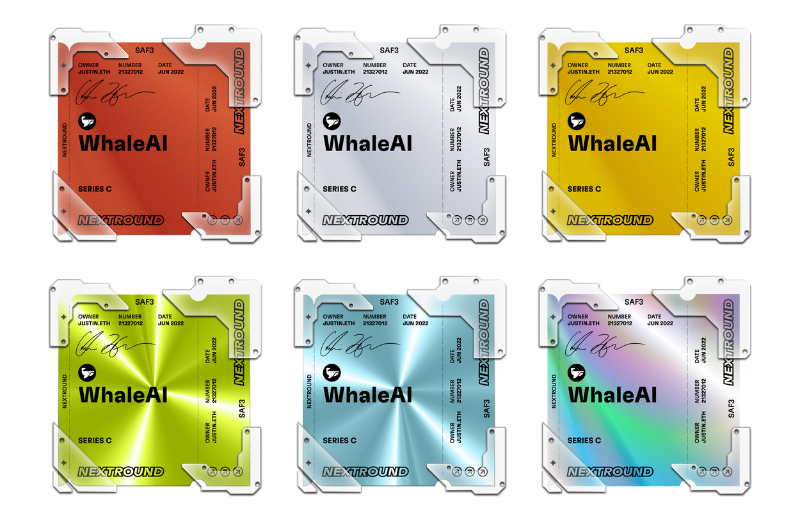
The process is simple. First, the project team sends a link to the investor, who can then view their allocated investment amount upon opening it.
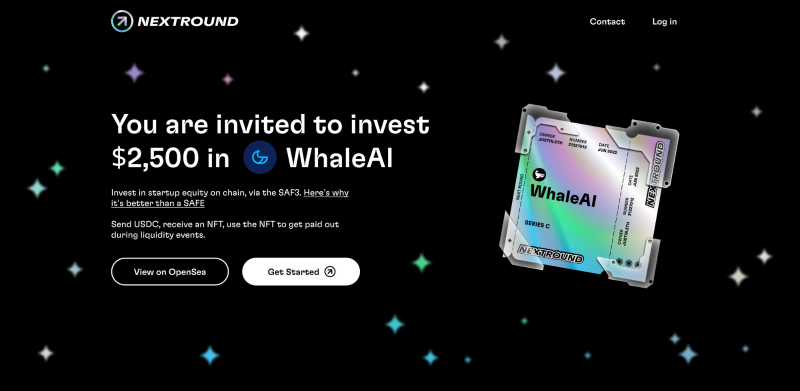
Next, the investor completes KYC verification and signs the agreement using their wallet to confirm the contract.
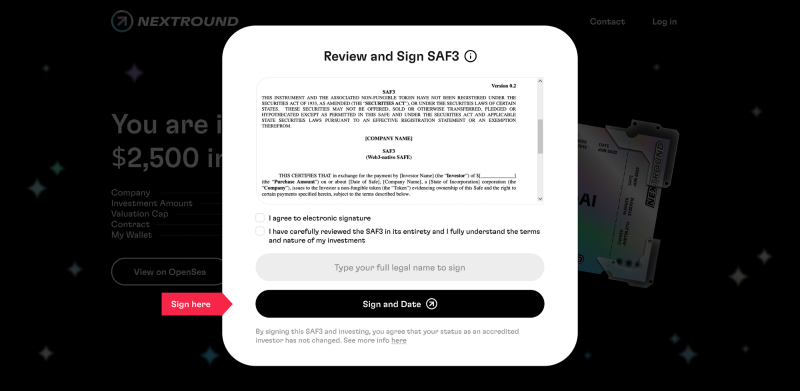
After signing, the investor sends USDC to the designated account and mints the SAF3 NFT, which serves as the official investment凭证.
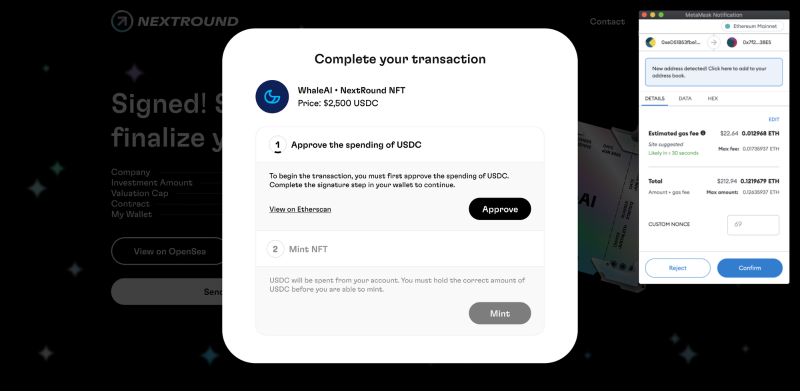
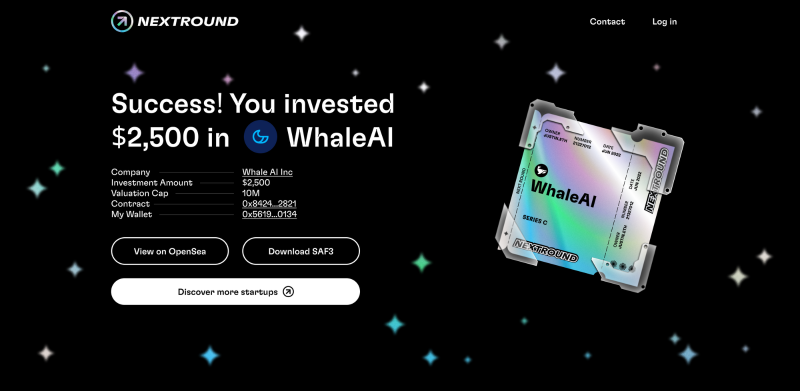
That’s it—you’re now an investor in the project. Just make sure to securely store your NFT.
NextRound has partnered with two top-tier law firms to ensure that SAF3 is legally equivalent to traditional SAFE. This means NFT holders retain full legal rights to protect their interests—for instance, if a founder refuses to deliver returns, investors can take legal action. The smart contract also stipulates that if one investor sues the founder, all investors are entitled to compensation; if any single investor must be paid, the founder must pay everyone.
Additionally, SAF3 establishes a strict framework for future token distribution, effectively eliminating the need for separate warrants or SAFTs. It guarantees that investors will receive tokens at the lowest price offered to any team member—including the founder—and tokens will be distributed to those holding the NFT at the time of token launch.
Moreover, SAF3 sets clear guidelines for future token issuance, ensuring investors receive token allocations at fair prices.
Furthermore, once NextRound launches its "trading marketplace," investors will be able to sell their SAF3 NFTs or use them as collateral. Transfers are subject to dual approval—meaning founders must approve any new investor prior to sale.
Overall, SAF3 functions as a Web2.5 tool applicable to both Web2 and Web3 equity investments.
On another note, secondary trading volume in private equity has grown exponentially—in 2021 alone, it exceeded $100 billion—and with companies delaying IPOs, this trend is set to continue. NextRound’s ultimate ambition is to build a Web3-powered private equity secondary market.
Join TechFlow official community to stay tuned
Telegram:https://t.me/TechFlowDaily
X (Twitter):https://x.com/TechFlowPost
X (Twitter) EN:https://x.com/BlockFlow_News






