








How does Cosmos' native token ATOM capture value?
TechFlow Selected TechFlow Selected
How does Cosmos' native token ATOM capture value?
Where does Atom's value come from?
 Navigating Web3 tides with focused insights
Author: Curious J
Translation: TechFlow
To demonstrate $ATOM's value capture, the most critical issue is solving the narrative problem. The narrative was the main driver behind the 2017 altcoin boom—people believed these tokens and blockchains would become revolutionary technologies that could change the world.
What gave $XRP and $ADA such high valuations in 2017? Their narratives. As Evanss6 put it: L1s themselves have no inherent value; they only gain value when:
1) They serve a monetary function
2) They generate revenue from blockspace demand and/or MEV
What is the narrative logic of Cosmos Hub?
$ATOM is the flagship token of IBC, the $BTC of Cosmos, and the central piece of interoperability, app chains, Cosmos SDK, and Tendermint. When people think of Cosmos, $ATOM represents it. These narratives constitute $ATOM’s greatest potential.

Why is $ATOM at the center of all this?
This relates to Interchain Accounts (IA). IA enables composability and interoperability for smart contracts across different blockchains. With interchain accounts, you can directly access all IBC-enabled Cosmos chains from your Cosmos Hub account.

Interchain Accounts and IBC are game-changers for Cosmos DeFi. Cosmos IBC chains can access applications on other chains and execute any operation available there. For example, Sommelier ($SOOM chain) can trade on Osmosis and maximize your investment returns through it.
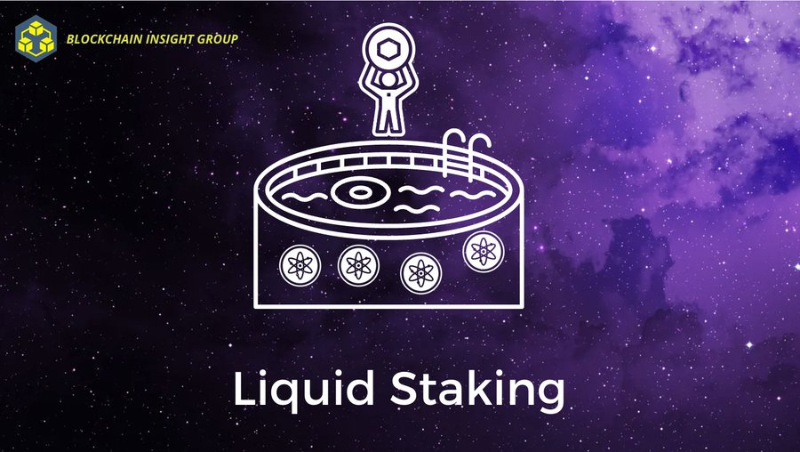
Liquid staking allows users to stake $ATOM tokens while receiving liquid representative tokens in return. This means you no longer need to worry about being unable to sell your $ATOM due to a 21-day lock-up period. Staked tokens enhance Hub security while enabling lending, swapping, and other DeFi functionalities.
Interchain Security may be Cosmos Hub’s most sought-after feature, as consumer chains can leverage Cosmos Hub’s security to protect their own chains.

While final details haven't been released yet, consumer chains seeking Cosmos Hub’s security will continuously provide airdrop rewards to $ATOM stakers. If this isn’t value capture, I don’t know what is.
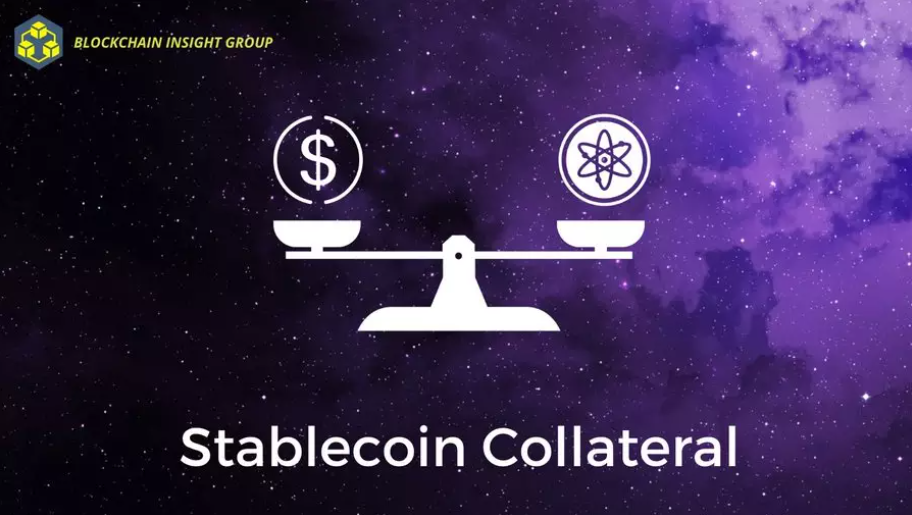
$ATOM is already being used as collateral for Kujira’s $USK stablecoin, and Agoric has announced plans to use $ATOM as collateral for its $IST stablecoin. Upcoming stablecoin projects are highly likely to include $ATOM in their collateral baskets, locking more $ATOM tokens within these protocols and thereby increasing demand for $ATOM.
Speaking solely about Cosmos’ development might seem too abstract, but it is constantly iterating
Today, the entire ecosystem comprises around 50 IBC-connected chains—and growing... The Cosmos ecosystem evolves almost daily, making it hard for those not closely following to keep pace. We can use MapOfZones to monitor IBC activity.
The community includes everyone in Cosmos:
1. Developers;
2. Validators;
3. $ATOM and other Cosmos ecosystem token holders;
4. Governance participants.
They all play equally important roles in this ecosystem. It must be said, the Cosmos community is one of the most active in the entire cryptocurrency space, bull or bear.

About $ATOM Tokenomics
Currently, $ATOM has an inflation floor of 7% and a ceiling of 20%. If staking rates fall below 66%, inflation rises toward 20%; conversely, if staking rates significantly exceed 66%, inflation drops down to 7%.
Inflation helped during the early stages of network growth, but $ATOM has now passed that phase. A new design is likely coming—perhaps introducing a supply cap for Cosmos Verse? A token burn mechanism? Either way, it will benefit $ATOM’s tokenomics.
Conclusion
$ATOM’s value does not rely on a single factor, but rather accumulates through multiple categories working together. VanEck hypothesizes that Cosmos chains will account for 33% of all future blockchains and estimates that Cosmos Hub will secure 50% of Cosmos blockchains.
I don't like talking about price potential because nobody truly knows, but this is the second-largest ecosystem after $ETH, and I believe it will eventually rank among the top 10 by market cap. If the economy recovers, my target for next year is $50–100, which seems reasonable.

Join TechFlow official community to stay tuned
Telegram:https://t.me/TechFlowDaily
X (Twitter):https://x.com/TechFlowPost
X (Twitter) EN:https://x.com/BlockFlow_News


