








How do session keys enable seamless blockchain experiences for on-chain users?
2022.08.25
Share Share to X (Twitter) Navigating Web3 tides with focused insights
Share to WeChat
Share to WeiboShare to WeChat
Share by Link
Share by Image
TechFlow Selected TechFlow Selected
How do session keys enable seamless blockchain experiences for on-chain users?
Under current conditions, interacting with blockchain is not intuitive for new users. From using wallets to swapping tokens on decentralized exchanges (DEXs) and purchasing NFTs, these processes are not user-friendly and present a certain level of difficulty for newcomers.
2022.08.25 - 07:14:26
会话密钥钱包
Navigating Web3 tides with focused insightsUnder current conditions, interacting with blockchain is not intuitive for new users. From using wallets to swapping tokens on decentralized exchanges (DEXs) and purchasing NFTs, these processes are not user-friendly and present a certain level of difficulty for newcomers.
Written by: Matchbox DAO
Translated by: TechFlow
Introduction
In its current form, interacting with blockchains is not intuitive for new users. From using wallets to swapping tokens on decentralized exchanges (DEXs) and purchasing NFTs, these processes are unfriendly to newcomers and come with a steep learning curve.
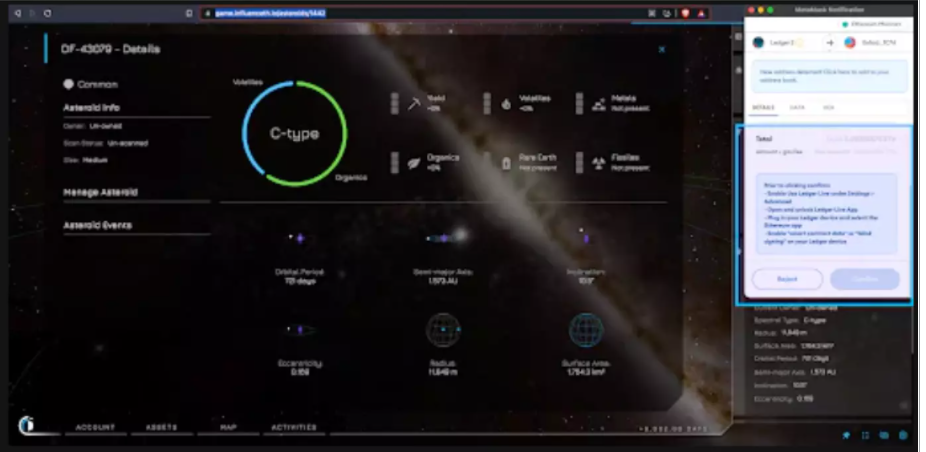
Moreover, even after learning how to interact with blockchains, another challenge remains: the constant need to confirm transactions. Whether it's a trade on a DEX or playing a blockchain game, every action prompts your wallet to pop up and ask, "Do you want to confirm this transaction?"—accompanied by text that most people can't understand. This often leads to mistakes, confusion, and even loss of funds.
This is a poor user experience—one that native blockchain users have merely grown accustomed to, but don't actually enjoy.
Is there a solution that could offer wallet users a better experience; make transaction content easier to read; and allow one-click confirmation to improve usability?
The answer is: session keys.
What Are Session Keys?
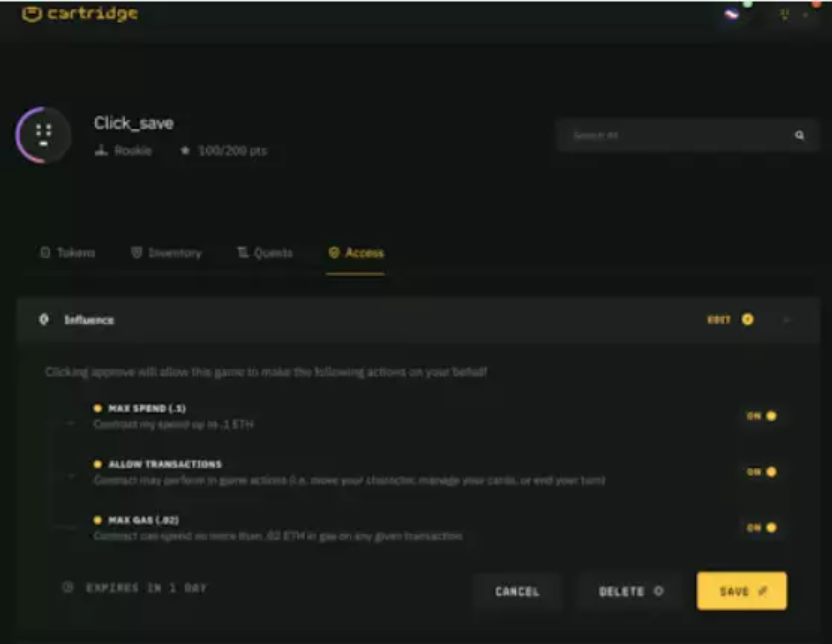
Session keys represent a major leap forward in blockchain user experience. They allow users to pre-approve an application’s transactions based on a set of parameters: a specific duration, maximum gas fee, maximum amount for a particular token, or access to specific functions within a given contract.
For example, when playing an on-chain game, you can simply pre-approve your session with basic terms, click start, and play—without being constantly bombarded by wallet pop-ups asking you to "confirm this transaction."
But that’s just the tip of the iceberg! Session keys can protect the assets in your wallet and restrict what can and cannot be approved during a session. This means you can play games like Influence without endless confirmations, while knowing your most valuable wallet assets remain secure.
Session keys give users more granular control over permissions, making their on-chain gaming experience significantly smoother.
What Are the Use Cases for Session Keys?
There are many use cases for session keys—and likely many more yet to be discovered. Here are several notable ones:
-
User-friendly, uninterrupted gameplay;
-
Ability to set up multiple DeFi positions before confirming;
-
Filling out multi-step forms without needing to confirm at each stage;
-
Non-custodial, self-directed IRAs that let you transfer funds within a single session;
-
Reorganizing assets in your wallet or inventory without confirming every change.
How Do Session Keys Work Technically?
A session wallet is essentially a smart contract. Smart contracts are agreements between two parties written in code, running on blockchains with data stored in an immutable public database. When transactions occur within a smart contract, they are processed directly by the blockchain, enabling transactions to be sent without third-party approval.
A session wallet is an account that allows specific transactions to be pre-approved by having the authorized user sign a token, which is then verified during transaction execution. The token’s permissions can be parameterized—such as valid for a certain duration, limited in value transfer, or restricted to specific contracts and functions.
Who Are the Pioneers Behind This Technology?
The idea of session wallets may have circulated in Ethereum circles for some time. However, it began taking shape after discussions between Chris Lexmond, founder of Influence, and Loaf from Loot Realms. Later, Loaf teamed up with members from Briqs, Realms, and Topology to build a prototype during the StarkNet hackathon—and ultimately won the event. After the hackathon, Argent stepped in to further develop and refine the session wallet concept for implementation on their platform.
Today, teams from Argent, Ledger, and Cartridge are actively working to bring this technology to market. Argent was the first to implement a plugin-based account architecture and plans to support session key plugins as an experimental feature. The Ledger team has been focused on efficient on-chain token permission verification using Merkle trees, while Cartridge is streamlining the issuance and management of session tokens.
The future of on-chain gaming depends on breaking down barriers to entry and delivering seamless experiences. Infrastructure like session wallets pushes us toward making blockchains operate quietly in the background—much like the internet, whose inner workings most people don’t understand, yet enables them to seamlessly explore rich online content. Blockchain still has a long way to go before achieving full seamlessness, but session wallets represent a significant leap forward—especially for gaming—transforming the experience from clunky and slow to fast and fluid.
It's hard to predict how deeply blockchain will integrate into everyday life, but it must become abstracted enough that people can use it without understanding all the underlying technical complexity.
Session wallets have countless applications—from gaming and improved user experiences to self-managed IRAs and enabling fund transfers within defined timeframes and limits.
They are foundational components in lowering the barrier to blockchain adoption and helping bridge the gap to mainstream usage. As Bill Gates once said: "The advance of technology is to make it invisible, so it's woven into everyday life"—and that's exactly what session wallets aim to achieve.
In summary, teams and DAOs like Influence, Loot Realms, Briqs, Topology, Cartridge, Argent, MatchboxDAO, and Ledger are driving the development of next-generation, user-friendly tools and features that accelerate the adoption of fully decentralized blockchain technology.
Original link
Join TechFlow official community to stay tuned
Telegram:https://t.me/TechFlowDaily
X (Twitter):https://x.com/TechFlowPost
X (Twitter) EN:https://x.com/BlockFlow_News
Add to Favorites
Share to Social Media
AuthorMatchbox DAO






