








Cosmos Explained: How to View Cosmos and ATOM's Value Capture?
TechFlow Selected TechFlow Selected
Cosmos Explained: How to View Cosmos and ATOM's Value Capture?
How does Cosmos work? Why are Dapps moving to Cosmos? How secure is its cross-chain functionality? What are the concerns about ATOM?
 Navigating Web3 tides with focused insights
Author: Ridam
Translation: TechFlow intern
How does Cosmos work? Why would Dapps move to Cosmos? How secure is its cross-chain functionality? What are the concerns about ATOM? We’ll find out in this article.
What is Cosmos?
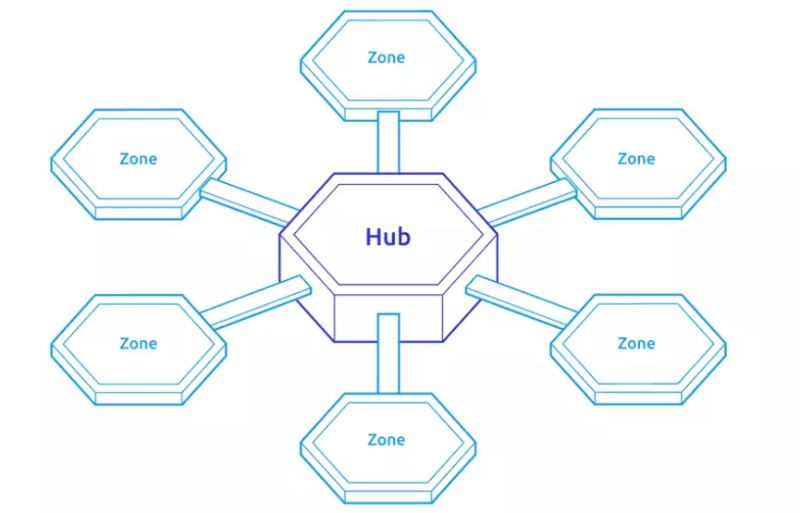
Cosmos is an ecosystem of independent blockchains that can scale and communicate with each other. Cosmos is not a single blockchain; it’s a blueprint for designing application-specific blockchains called Zones. The Cosmos ecosystem consists of Hubs and Zones, and creating Hubs and Zones is permissionless.
Hub
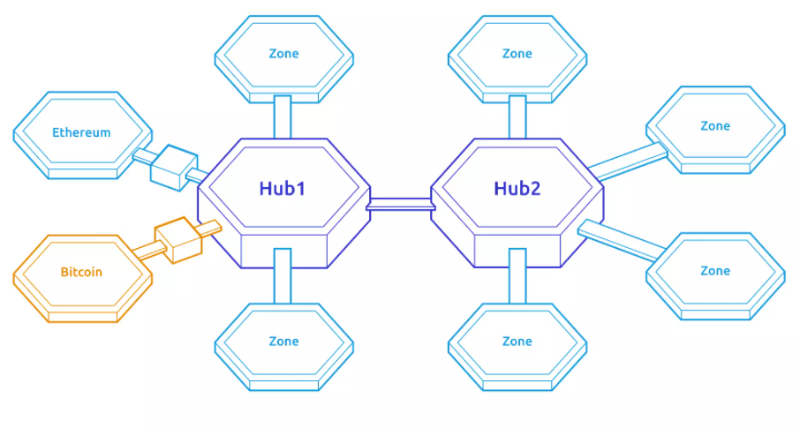
The Hub in the Cosmos network is the first blockchain and acts as the central point. $ATOM is the utility token of the Cosmos Hub. The Cosmos Hub is designed to be minimalistic and does not support smart contracts. As of now, there are two Hubs in the Cosmos network: the Cosmos Hub and the IRIS Hub.
Why is the Hub designed this way?
It doesn't support smart contracts because introducing them also brings exploitable risks. The Hub is designed to create an operable and scalable economy, allowing thousands of Zones to interconnect.
Functions of the Hub
-
Connects via IBC to many Zones;
-
Enables data transfer across these Zones;
-
Tracks the total number of tokens on each sidechain.
Zones can be related to anything—games, content, payments, etc.—and the Hub doesn’t care. The Hub only cares about who is responsible for signing and the state of validators.
What is a Zone?
A Zone is a blockchain connected to the Hub, with its own token and validator set. As of now, there are 49 Zones in the Cosmos ecosystem.
Each Zone is powered by a consensus algorithm with fast finality, such as Tendermint. This means any blockchain with fast finality can connect to the Hub and use IBC.
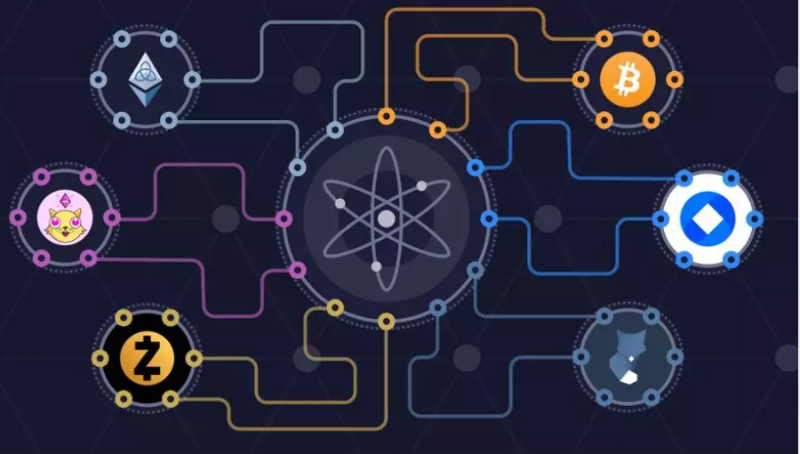
Proof-of-Work blockchains like Ethereum or Bitcoin can also connect to the Hub.
What is Tendermint?
Tendermint is both a consensus engine and an algorithm. To explain Tendermint through analogy:
Tendermint is like an operating system—such as Windows or Linux—within Cosmos, a global computer network capable of running various operating systems.
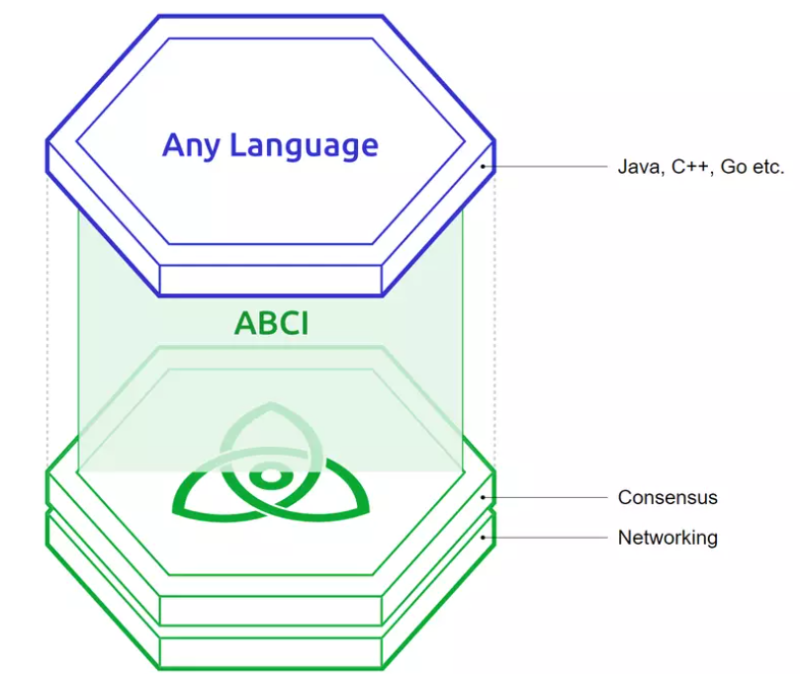
It’s also a solution that packages the blockchain’s consensus and networking layers into a single general-purpose engine, allowing developers to focus solely on building the application layer without worrying about complex consensus mechanisms—a feature that alone saves years of development time.
The TBFT engine connects to the application layer via ABCI (Application Blockchain Interface). This layer can be wrapped in any programming language, giving developers flexibility in language choice.
What is the Cosmos SDK?
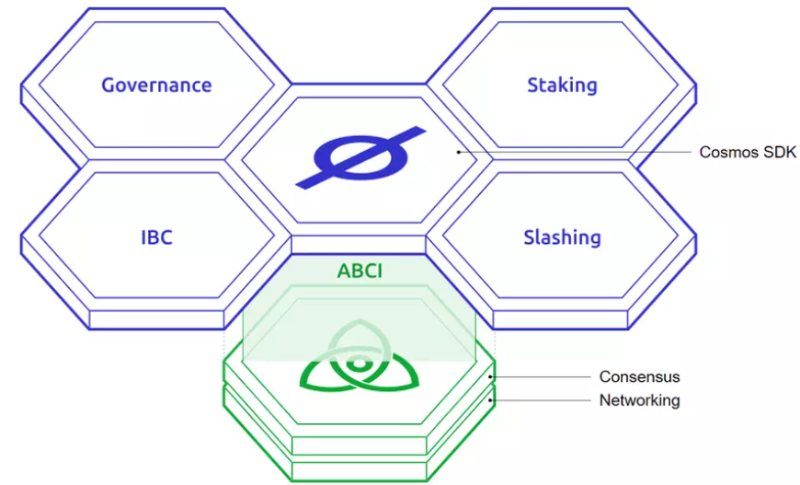
The Cosmos SDK is a development framework that helps create blockchains for any use case. It is modular, so developers can customize parts of the blockchain to meet their needs—a key reason why many Dapps choose to build on Cosmos.
The Cosmos SDK includes pre-built modules such as IBC, staking, governance fees, and bank modules to help manage multi-asset issues. Developers can use these modules instead of building everything from scratch.
Here are some protocols built using the Cosmos SDK:
-
BNBCHAIN;
-
THORChain;
-
Cronos;
-
Terra;
-
OasisProtocol;
-
JunoNetwork;
-
Crypto.com;
-
OKCNetwork;
-
Scrt;
-
EvmosOrg;
-
Axelar;
How does Cosmos elevate interoperability to a new level?
In Cosmos, connections between blockchains are achieved via Inter-Blockchain Communication (IBC). IBC is not just a bridge—it’s a universal messaging protocol.
Let’s understand IBC through an analogy: IBC is like a mail delivery system—when you send a package to someone, the postal service collects it and delivers it to the recipient’s mailbox. The postal service doesn’t care about the contents of the package. Similarly, IBC can transmit any kind of information.
How does IBC work?
IBC leverages Tendermint’s instant finality, though it can work with any blockchain that has fast finality. In essence, IBC functions like TCP/IP.
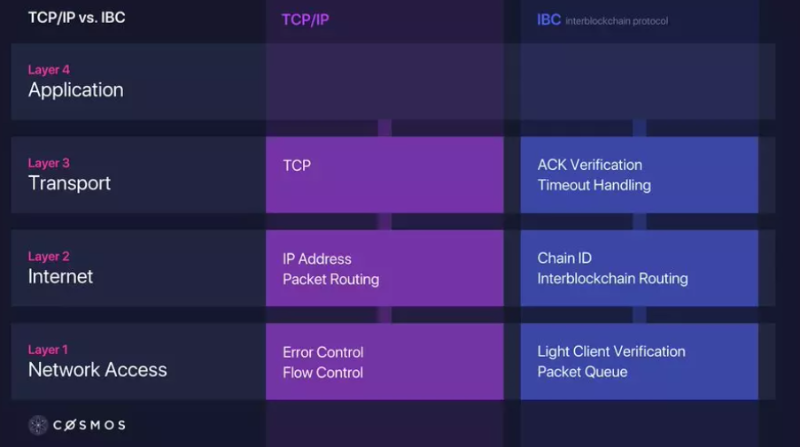
IBC uses Light Clients as cross-chain bridges, meaning if you trust two specific chains, no additional trust assumptions are required.
Interchain Security
Interchain Security allows a parent chain (such as the Cosmos Hub) to produce blocks for consumer chains.
Why choose Interchain Security?
To secure a PoS chain, it must be backed by a decentralized validator set and a valuable staking token—meaning the chain’s security is directly tied to the market cap of its staking token. With Interchain Security, consumer chains are secured by the Cosmos Hub’s validator set (directly linked to the $ATOM market cap).
How does it work?
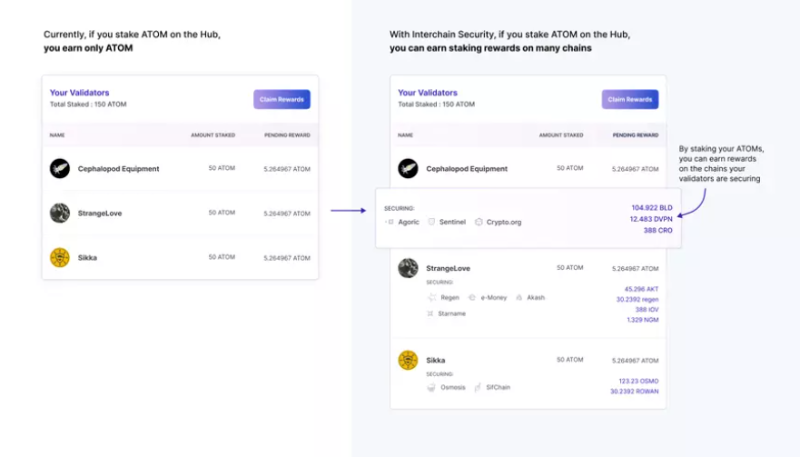
It works by sharing the parent chain’s validators responsible for block production. Participating validators run two nodes and earn fees and rewards on both chains:
-
One for the Cosmos Hub;
-
One for the consumer chain.
$ATOM Tokenomics
$ATOM undergoes annual inflation (currently at 12%), which reduces its appeal to speculators. While it can be used to pay transaction fees and stake on the Cosmos Hub, that’s not its primary purpose. Let’s understand $ATOM through Jaekwon’s analogy:
$ATOM can be thought of as ASIC miners for Bitcoin—anyone can use Bitcoin’s blockchain, but not everyone wants to mine Bitcoin or own an ASIC miner. But with Interchain Security, ASIC miners—who previously could only mine $BTC—can now mine all other PoW chains. Similarly, users can now use $ATOM to secure not only the Cosmos Hub but also consumer chains, earning rewards in both $ATOM and the native tokens of the consumer chains.
Concerns
-
So far, the Cosmos ecosystem still lacks support for a native stablecoin;
-
Few protocols launch mainnets without native stablecoin support;
-
Some protocols are overly reliant on cross-chain bridges.
Some interesting Cosmos-based projects
• Gnoland: Extends smart contracts by leveraging Gnolang (a fork of Golang);
• Agoric: An L1 where developers can deploy smart contracts in Javascript;
• dYdX: A decentralized perpetual exchange from Starkware;
• Kujira: A community-curated L1 platform creating real value;
•......
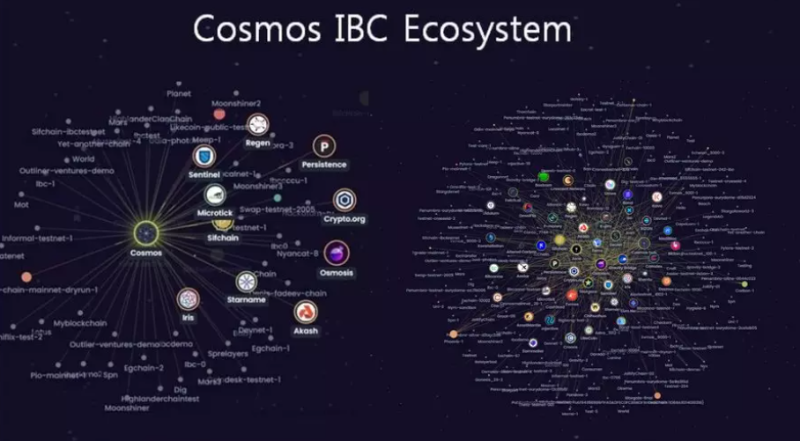
So far, the Cosmos ecosystem is growing exponentially. Below are panoramic views of the Cosmos ecosystem two years apart: September 20, 2020 vs July 23, 2022:
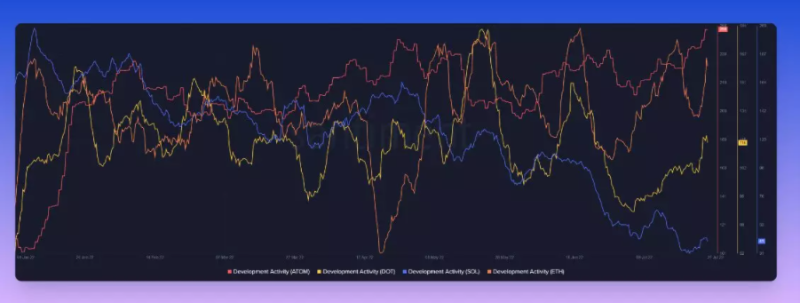
Compared to Solana, Ethereum, and Polkadot, Cosmos had higher developer activity in 2022.
Conclusion
Currently, $ATOM accumulates value through staking rewards and airdrops. If you only count airdrops received by $ATOM stakers, that alone is already worth thousands of dollars. But with the implementation of Interchain Security, $ATOM’s value accrual mechanism will grow exponentially.
Join TechFlow official community to stay tuned
Telegram:https://t.me/TechFlowDaily
X (Twitter):https://x.com/TechFlowPost
X (Twitter) EN:https://x.com/BlockFlow_News


