How GBTC Profited from Both Success and Failure, Trapping Institutions Like Three Arrows Capital and BlockFi
TechFlow Selected TechFlow Selected
How GBTC Profited from Both Success and Failure, Trapping Institutions Like Three Arrows Capital and BlockFi
Success and failure both stem from arbitrage—those who danced on leverage eventually fell because of it.
 Navigating Web3 tides with focused insights
Written by: Morty, TechFlow
A bear market is the pause in the symphony of liquidity.
Famed investor Charlie Munger once said: "There are three ways to make a smart man go broke: liquor, ladies, and leverage."
For someone like Charlie Munger, who has witnessed multiple market cycles, the power of leverage is no mystery. Yet in the crypto markets, newcomers like BlockFi and Three Arrows Capital (3AC) experienced unchecked expansion during bull runs fueled by abundant liquidity—only to eventually face their own downfall.
Looking back at the "great crypto collapses," whether it's the former top-tier VC firm Three Arrows Capital or BlockFi, once valued at $3 billion, both fell into the same trap: Grayscale’s Bitcoin Trust Fund, GBTC.
Once hailed as an engine for bull markets, GBTC has now become the explosive keg behind numerous institutional blowups. How did this happen?
GBTC: The Bull Market Arbitrage Machine
GBTC stands for Grayscale Bitcoin Trust, launched by Grayscale—a digital asset management company established in 2013 under Digital Currency Group (DCG).
The goal of GBTC was to allow high-net-worth U.S. investors to gain exposure to Bitcoin within legal frameworks, much like buying a mutual fund. However, in reality, Grayscale Bitcoin Trust functions more like a crippled “quasi-ETF.”
Under normal logic, investors could exchange BTC for GBTC shares on the primary market, or redeem BTC from GBTC. However, since October 28, 2014, Grayscale suspended its redemption mechanism for Bitcoin Trust.
Additionally, after issuance in the primary market, GBTC shares are locked up for six months before becoming tradable on the secondary market.
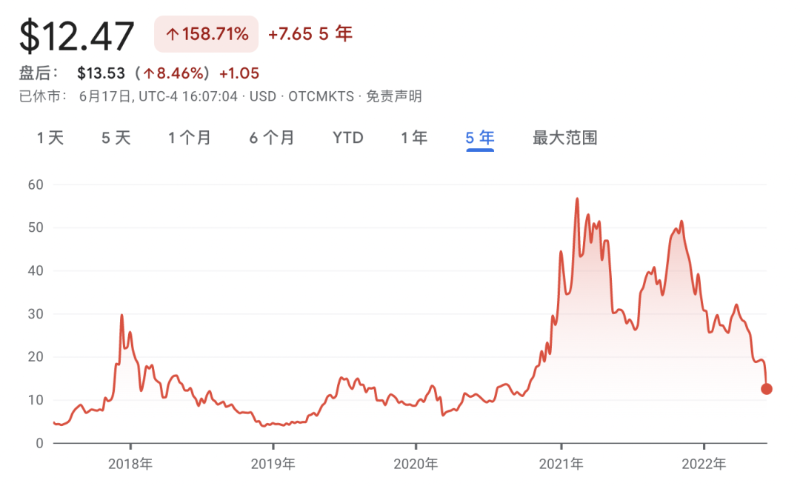
Amid the macro backdrop of pandemic-era monetary stimulus, crypto became highly attractive to institutional players. Given strong expectations for future Bitcoin price appreciation, GBTC traded at a persistent premium throughout much of 2020–2021. This meant that purchasing 1,000 shares of GBTC representing one BTC cost more than directly buying one BTC itself.
Why would investors choose to buy overpriced GBTC instead of holding BTC directly?
In the secondary market, GBTC is primarily held by accredited individual and institutional investors. Most retail investors can purchase GBTC directly through retirement accounts such as 401(k)s without triggering capital gains taxes. As long as the premium stays within an acceptable range, investors profit from tax arbitrage.
Moreover, some traditional financial institutions cannot legally hold cryptocurrencies due to regulatory constraints, so they use GBTC as a workaround to gain indirect exposure to crypto assets.
Some speculate that Grayscale intentionally fostered the positive premium to attract more investment. Much like the classic scene in *The Wolf of Wall Street*, if you want consumers to buy your pen, creating demand is the best strategy. The premium represents this "demand"—investors’ pursuit of profit.
For crypto-native institutions, this premium offered a stable arbitrage opportunity—buy BTC, deposit it into Grayscale, then sell the unlocked GBTC shares at a higher price to retail and institutional buyers on the secondary market.
This very mechanism was one of the key drivers behind Bitcoin’s rally in late 2020. As spot supply dwindled in the open market, BTC prices rose naturally, further incentivizing U.S. investors to pour money into GBTC—perpetuating the cycle of sustained premiums.
GBTC and Its Victims
When it comes to GBTC arbitrage, BlockFi and Three Arrows Capital were well-versed practitioners.
According to previously disclosed SEC Form 13F filings by Grayscale, BlockFi and Three Arrows Capital together accounted for up to 11% of total GBTC holdings (with institutional ownership making up less than 20% of total circulation).
This was one of the new entrants’ key leverage plays—using client funds to engage in arbitrage, locking BTC into Grayscale, a one-way "pi xiu" (mythical creature that eats but doesn’t excrete).
For example, BlockFi previously attracted BTC deposits from users offering 5% interest. Under normal business models, it would need to lend those BTC out at even higher rates. But real lending demand for Bitcoin was low, leading to poor capital utilization.
So BlockFi took what seemed like a safer path—converting BTC into GBTC, sacrificing liquidity for arbitrage profits.
Through this method, BlockFi briefly became the largest institutional holder of GBTC—until it was overtaken by another victim: Three Arrows Capital (3AC).
Public data shows that by the end of 2020, 3AC held 6.1% of all GBTC shares, maintaining the top position for months when BTC traded around $27,000 and GBTC carried a 20% premium, putting 3AC’s holdings above $1 billion.

News about being the “largest GBTC holder” quickly made 3AC a star in the industry. But many wondered: How could 3AC afford so much BTC? Where did these coins come from?
Now we know the answer—they borrowed them.
TechFlow learned that 3AC had been borrowing BTC at ultra-low, unsecured rates, converting them into GBTC, then pledging the GBTC as collateral with Genesis—the DCG-affiliated lending platform—to access liquidity.
During the bull market, everything worked smoothly: BTC kept rising, and GBTC maintained its premium.
But good times didn’t last. After three Canadian Bitcoin ETFs launched, demand for GBTC declined sharply, causing its premium to vanish—and by March 2021, GBTC began trading at a discount.
Not only was 3AC nervous—Grayscale was too. In April 2021, Grayscale announced plans to convert GBTC into a full-fledged ETF.
The content and frequency of tweets from 3AC’s two co-founders largely reflected the firm’s health. From June to July 2021, they went silent on Twitter, shifting focus to TradFi topics and risk-hedging strategies, barely mentioning crypto for weeks.
It wasn't until a new wave of altcoin rallies driven by emerging Layer 1 blockchains boosted 3AC’s balance sheet that the founders regained their former enthusiasm online.
Furthermore, while 3AC primarily lent from institutions and faced little immediate redemption pressure, BlockFi raised BTC from retail investors, facing greater withdrawal demands. Thus, despite the growing discount, BlockFi had to keep selling GBTC and gradually reduced its position throughout Q1 2021.
Even though BlockFi reported losses of over $63.9 million in 2020 and $221.5 million in 2021, according to a source at a crypto lending firm, its losses related to GBTC approached $700 million.
While 3AC didn’t face immediate BTC redemptions, its pledged GBTC positions remained vulnerable to liquidation, with risks cascading back to DCG.
On June 18, Bloomberg Terminal temporarily wiped out 3AC’s entire GBTC holding data. Bloomberg explained that since January 4, 2021, 3AC had failed to file updated 13G/A forms, leaving no verifiable evidence that Three Arrows still held $GBTC, so the data was removed as outdated.
Less than a day later, the data reappeared. Bloomberg clarified: “We won’t confirm they’ve exited unless we see definitive filing updates via 13G/A.”
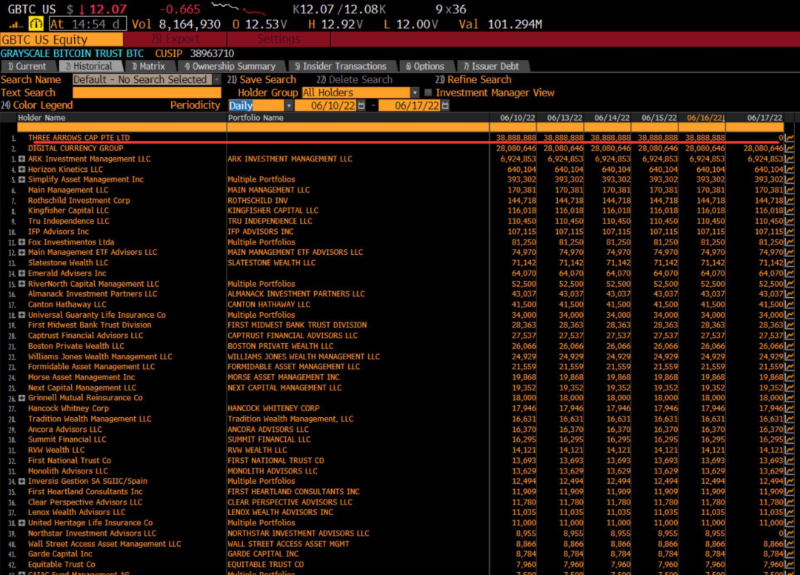
As of early June, it’s confirmed that 3AC still held substantial GBTC positions, pinning hopes on GBTC to rescue the firm.
According to The Block, starting June 7, TPS Capital—one of 3AC’s OTC trading arms—aggressively marketed GBTC arbitrage products, offering clients a 12-month lock-up of Bitcoin with repayment upon maturity, issuing promissory notes in exchange for BTC and charging a 20% management fee.
One crypto institution told TechFlow that 3AC contacted them around June 8 to pitch the product, claiming investors could earn 40% returns within 40 days, with a minimum investment of $5 million.
Theoretically, even deeply discounted GBTC still offers arbitrage potential.
DCG is actively petitioning the U.S. SEC to convert GBTC into a spot Bitcoin ETF.
If approved, the ETF would track Bitcoin’s price more efficiently, eliminating discounts and premiums. In other words, the current ~35% discount would vanish—creating instant arbitrage upside.
Meanwhile, DCG has promised to reduce GBTC’s management fees and upgrade its listing from OTCQX to NYSE Arca, a venue with far greater liquidity.
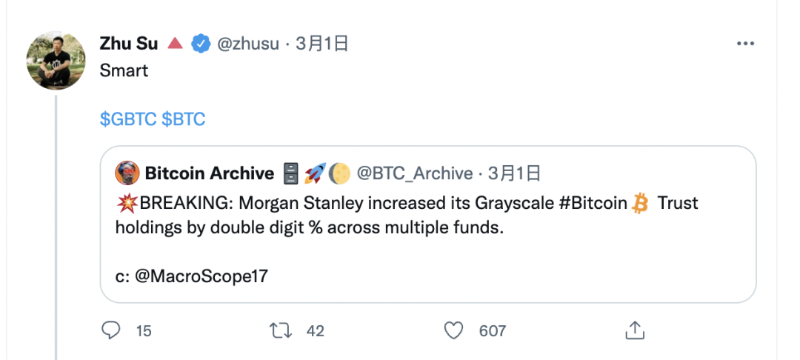
As the largest holder of GBTC, Zhu Su had long hoped for GBTC’s transformation from trust to ETF—such a shift would instantly boost his portfolio value by over 40%.
In October 2021, Grayscale submitted an application to the SEC to convert GBTC into a spot Bitcoin ETF. The SEC’s decision deadline was July 6, which explains why 3AC claimed to institutions that 40%+ returns could be achieved in just 40 days—it was essentially a bet on SEC approval.
However, regarding this arbitrage product, Bloomberg ETF analyst James Seyffart commented:
“In traditional finance, this structure would be called a structured note. Regardless, they take full ownership of your Bitcoin and profit from it. They get your BTC and extract returns from investors in any scenario—whether GBTC converts to ETF or not. Even if 3AC/TPS remains solvent, this deal is absolutely terrible for any investor.”
Reportedly, 3AC failed to raise significant external capital through this product. What awaited 3AC was likely a brutal liquidation.
On June 18, Genesis CEO Michael Moro tweeted that the firm had liquidated collateral from a “large counterparty” who failed to meet margin calls, adding that Genesis would aggressively pursue recovery of any potential residual losses, though exposures were limited and the firm had already de-risked.
Although Moro didn’t name 3AC directly, given market developments and Bloomberg’s timing in wiping 3AC’s GBTC data that same day, the market widely believed this “large counterparty” was almost certainly Three Arrows Capital.
Success and failure through arbitrage—stars who danced on leverage ultimately fell because of it.
As Zweig once wrote,perhaps we were too young then to realize that every gift from fate has already been priced in the shadows. Amid liquidity crises, no one escapes unscathed. An institutional bull market, propelled by firms buying BTC, ultimately collapsed under the weight of leveraged asset liquidations.
Their names will fade into history, but BTC remains BTC.
Join TechFlow official community to stay tuned
Telegram:https://t.me/TechFlowDaily
X (Twitter):https://x.com/TechFlowPost
X (Twitter) EN:https://x.com/BlockFlow_News