Huobi Growth Academy | In-depth Report on Web3 Leveraged Trading: The Convergence Path of Traditional Finance Experience and Decentralized Innovation
TechFlow Selected TechFlow Selected
Huobi Growth Academy | In-depth Report on Web3 Leveraged Trading: The Convergence Path of Traditional Finance Experience and Decentralized Innovation
Web3 leveraged trading is standing at a tipping point of "breakthrough and expansion," with its future trajectory depending not only on technological evolution but also on the combined forces of market dynamics and regulatory support.
 Navigating Web3 tides with focused insights
Executive Summary
While traditional platforms are mature in "compliance + user experience + coverage," they face constraints from centralized custody, lack of transparency, settlement latency, and regional barriers. Web3 enters by offering self-custody, on-chain verifiability, and global accessibility, enhancing capital efficiency through oracles, partial liquidations, unified collateral, and capital reuse. The landscape is multipolar: dYdX (order book), GMX (GLP pool), Hyperliquid (high-performance matching), Avantis (multi-asset synthetics/RWA). Web3 leveraged trading combines CEX-level low-latency experience, institutional-grade risk control and compliance, and integrated multi-asset capabilities. It is expected to grow into a multibillion-dollar infrastructure by 2030.
I. Industry Status and Overview
In the development of global capital markets, leveraged trading has long been a key tool for boosting liquidity and pricing efficiency. From IG Group pioneering contracts for difference (CFDs) in the 1970s to the rise of internet platforms like Robinhood and Plus500 in the 21st century, leveraged trading has gradually shifted from institutional dominance to mass adoption. Using financial derivatives such as margin, options, and futures, investors can gain large market exposure with relatively small capital, amplifying both returns and risks. Over the past 50 years, traditional financial leveraged trading platforms have accumulated rich experience in product coverage, user experience, and compliance, forming a highly mature business model. However, against the backdrop of rapid digital finance and blockchain technology evolution, the system's deep-rooted limitations are becoming increasingly apparent—Web3 emerges precisely to address these shortcomings. Reviewing the evolution of traditional finance, its success lies in standardized product design, broad coverage, continuous UX improvement, and regulatory backing. IG Group offers over 19,000 tradable instruments across stocks, forex, and commodities, reflecting a “comprehensive coverage” strategy; Plus500 rapidly built its user base through over 2,800 CFD instruments and its compliant listing on the London Stock Exchange; Robinhood attracted many Gen-Z investors with its “zero-commission” model and mobile-friendly experience, popularizing leveraged trading. These platforms hold multiple regulatory licenses globally, ensuring investor trust and laying the foundation for the entire industry.
Yet, this model’s structural flaws are amplified in the digital finance era. First is centralization risk. All traditional platforms operate on a custodial and centralized clearing architecture, requiring users to entrust funds to the platform. During the 2021 GME event, Robinhood restricted buying due to settlement pressure, directly affecting trading freedom and exposing the risk that centralized platforms can unilaterally change rules. The 2011 collapse of MF Global further highlighted counterparty risk—when platforms use customer margin to maintain liquidity, investors suffer massive losses. Second is lack of transparency. Traditional platforms lack public mechanisms in order matching, risk hedging, and price discovery, leaving investors unable to verify whether platforms engage in “betting against clients,” forcing them to rely passively on disclosed information. This black-box operation exacerbates information asymmetry and undermines market fairness. Moreover, custodial arrangements mean investors lack asset autonomy. In cases of platform bankruptcy, hacks, or regulatory freezes, user funds are often unrecoverable. When crude oil futures turned negative in 2020, some platforms experienced widespread margin calls due to settlement delays, causing mutual losses—revealing structural fragility in centralized clearing during extreme conditions. Regulatory barriers are another major limitation. Different regions impose varying leverage restrictions—e.g., Europe caps retail forex leverage at 30x, while some emerging markets are more lenient—preventing equal access to financial services. High compliance costs are ultimately passed to users via wider spreads, higher fees, and minimum deposit requirements, further limiting mass participation.
These structural limitations create an opening for Web3. Unlike traditional models, Web3 reshapes the foundational logic of leveraged trading using blockchain and smart contracts. First, self-custody eliminates centralization risk—users trade directly via wallets without relying on platform credit. Second, all matching and clearing logic is publicly verifiable on-chain, reducing information asymmetry and enabling real-time auditing of trading rules. Third, assets remain under user control rather than being held by platforms, minimizing bankruptcy and settlement risks. Geographic barriers are significantly reduced—anyone with a crypto wallet and internet access can participate in global financial services. Compliance costs may also be addressed in Web3, for example through DAO governance and protocol-level modular compliance compatible with regional regulations. For liquidity crises, decentralized protocols enhance system resilience via risk-pooling, partial liquidation, and insurance funds. Thus, the relationship between traditional and Web3 platforms is not one of replacement but of complementarity and evolution. The former validates sustained market demand for leveraged trading and establishes user habits; the latter complements and reshapes the model through technological innovation. In the future, the two may converge into a new hybrid financial system: traditional platforms could adopt blockchain to improve transparency and resilience, while Web3 platforms incorporate traditional finance’s strengths in compliance and UX to scale broadly.
In summary, the past 50 years of traditional leveraged trading platforms have established a triad model of “compliance + user experience + product coverage,” validating the market value of financial leverage. Yet, their centralization risk, opacity, custodial constraints, regulatory fragmentation, and settlement vulnerabilities have become insurmountable bottlenecks. The rise of blockchain and DeFi directly targets these structural issues, proposing new solutions such as self-custody, on-chain verifiability, global access, and dynamic clearing. The future evolution of leveraged trading will likely transcend a binary opposition between old and new, instead progressing toward a transformative fusion—advancing financial markets in risk control, transparency, and inclusivity.
The value of Web3 leveraged trading is not merely about “moving traditional leverage on-chain,” but about redefining the operational logic and industrial division of derivative markets through decentralized transparency and capital efficiency. The end-state will feature dual drivers: “traditional finance’s polished experience × decentralized transparency and efficiency.” One side delivers seamless, CEX-like interaction and deep liquidity for professional users; the other reconstructs trust and compliance boundaries through verifiable smart contract rules, self-custody, and global accessibility. To reach this state, platforms must excel across five dimensions. First, user experience: matching must be sub-second, gas costs negligible, mobile-first design standard, with account abstraction and one-click cross-chain functionality hiding complexity—enabling both retail and institutional users to enter leveraged markets with minimal cognitive load. Second, multi-asset integration: truly unify crypto and RWA on a single trading canvas—BTC/ETH alongside equities, forex, gold managed under a unified margin framework, with positions transferable and netted across markets, enabling risk engines and margin models to achieve superior capital efficiency. Third, capital reuse: unified collateral, multi-market reuse, and circular utilization of staked assets and stablecoins allow the same collateral to roll across lending, staking, and perpetual contracts, amplifying efficiency. Combined with partial liquidation, tiered maintenance margins, and incentive-based hedging, this enhances system resilience and reduces liquidity noise during extreme events. Fourth, clear compliance pathways: through licensing, regulatory sandboxes, and modular KYC/AML, provide auditable entry and exit routes for institutions and high-net-worth capital—achieving “open and inclusive front-end, optional compliant back-end”—and reduce institutional friction via a “protocol-layer neutrality, access-layer compliance” architectural design across jurisdictions. Fifth, community and ecosystem: DAO governance and tokenomics should go beyond “airdrop-driven growth,” linking fee sharing, market-making incentives, risk funds, and protocol revenues to drive positive-sum games among LPs, market makers, and strategists. Open APIs, oracles, and cross-chain infrastructure connect lending, stablecoins, RWA, and liquidation networks, creating compounding ecosystem momentum. According to Grand View Research, the DeFi market will surpass $231 billion by 2030; if leveraged trading accounts for 20–25%, that translates to a $50–60 billion niche. With multi-asset and RWA expansion, the actual serviceable market retains upside potential. Returning to the present, Web3 leveraged trading stands at a “breakthrough and expansion” inflection point: traditional finance’s product engineering and risk frameworks offer blueprints for on-chain replication and improvement; decentralized transparency, self-custody, and global access fundamentally mitigate centralized counterparty risk, geographic barriers, and opacity; and the integration of synthetic assets and RWA determines platform differentiation and ceiling. The winner profile is clear: deliver CEX-level performance and mobile experience to capture professional liquidity; maximize capital efficiency via unified collateral and cross-market netting; build institutional-grade compliance fences through licenses and sandboxes; and bind LPs, traders, and developers in long-term collaboration through tokenized risk-reward loops. As technology and compliance curves converge in the coming years, Web3 leveraged trading will not be just an online proxy for traditional derivatives, but the “price and liquidity engine” of a next-generation global multi-asset infrastructure—a systemic reconstruction of trust paradigms and capital turnover efficiency, and the core battleground for DeFi and TradFi convergence.
II. Web3 Leveraged Trading Sector Analysis
Amid the rapid expansion of decentralized finance, leveraged trading—one of the most attractive yet risky financial tools—is undergoing a new phase of structural transformation. In the past, centralized exchanges nearly monopolized the derivatives market, but with improvements in Ethereum and various public chain performances, high-frequency trading and leveraged speculation previously reliant on centralized platforms are now migrating toward DeFi. Today, decentralized leveraged trading has formed several major camps, represented respectively by dYdX’s order book model, GMX’s liquidity pool model, Hyperliquid’s high-performance matching model, and Avantis’s multi-asset synthetic model. The rise of these platforms has not only driven the prosperity of the DeFi derivatives market but also revealed diverse technical paths and competitive logics, setting the stage for future evolution.
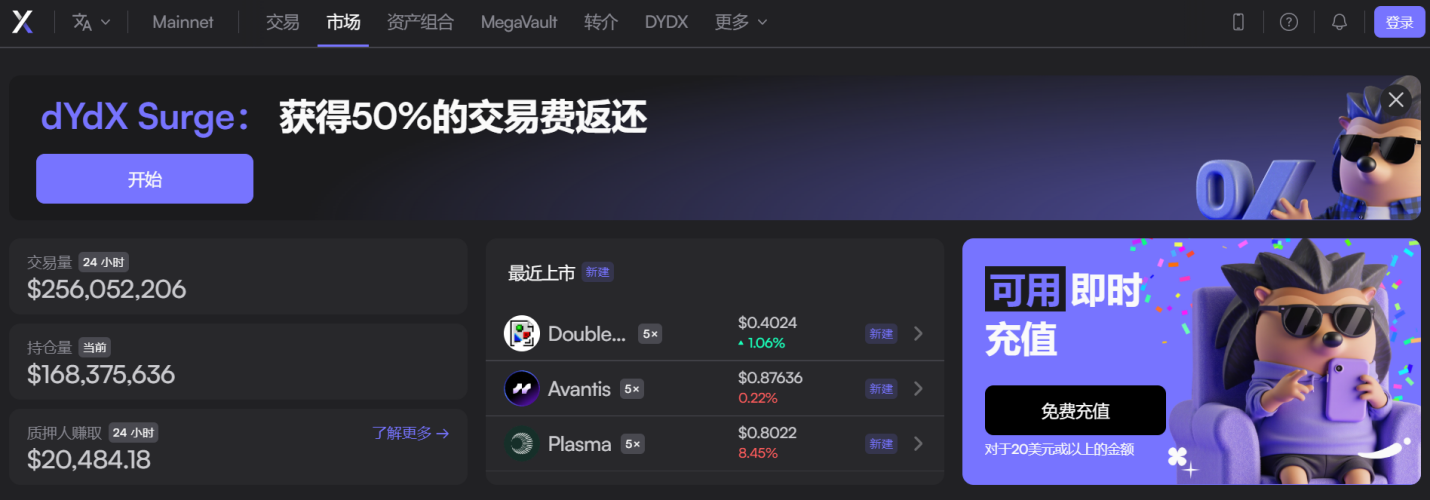
dYdX is the “pioneer” in this space, almost redefining the possibilities of decentralized leveraged trading to match centralized exchange standards. Supporting over 200 markets with up to 50x leverage, its cumulative trading volume has surpassed $200 billion. After upgrading to version V4 in 2024, dYdX migrated its core matching engine to a Cosmos-based independent chain, achieving a fully decentralized order book architecture—a milestone transition. Unlike automated market maker (AMM) models, dYdX’s order book design provides professional and institutional users with deeper liquidity and lower transaction costs. Its tiered fee structure balances zero-barrier access for small traders with discount incentives for large-volume participants. For users relying on high-frequency trading and precise hedging, dYdX offers a CEX-like experience while preserving on-chain transparency and self-custody. However, this model faces challenges. Order book matching demands extremely high chain performance; even on a dedicated Cosmos chain, its speed and stability still lag behind top CEXs like Binance and Bybit. Additionally, the complexity of order book trading raises the learning curve for retail users compared to the intuitive AMM model. Thus, dYdX’s strategic direction is to maintain professional liquidity while strengthening community governance and user education to solidify its positioning as a “professional derivatives exchange on-chain.”
In contrast, GMX has taken a completely different path. As a representative of DeFi perpetual contracts, GMX’s core innovation is the GLP liquidity pool mechanism. Users trade against the liquidity pool, which acts as the market maker. Traders open positions whose profits and losses are directly linked to the pool. Supported assets include BTC, ETH, AVAX, and others, with leverage up to 100x. To date, GMX’s cumulative trading volume exceeds $235 billion, with over 669,000 users. GLP holders earn trading fees and funding rate shares by assuming counterparty risk, maintaining annualized returns of 10–15%, making it highly attractive. The innovation lies in reducing reliance on external liquidity—liquidity providers naturally function as market makers—and distributing risk across a multi-asset pool. However, the model has structural fragility: under extreme market conditions, the liquidity pool may incur massive losses, exposing LPs to capital loss. While GMX offers decent liquidity depth, price impact and slippage remain notable during volatility. GMX’s long-term potential rests on its community-driven tokenomics—GMX and GLP holders not only share revenue but also co-govern the platform. This “trader-LP symbiosis” strengthens user stickiness and drives ongoing ecosystem expansion.
If dYdX represents the professional “order book faction” and GMX the innovative “liquidity pool faction,” then Hyperliquid is the “new dominant force” centered on speed and performance. Hyperliquid has captured over 80% of the decentralized perpetual market share in a short time, effectively reshaping the industry landscape. Supporting over 150 assets with up to 50x leverage, it achieves sub-second trading speeds—performance rivaling or even exceeding mainstream CEXs. This high-performance matching engine attracts numerous high-frequency traders and quant funds, positioning it as the ideal venue for decentralized markets. Hyperliquid succeeds by directly addressing the performance gap between CEXs and DEXs—offering on-chain transparency and self-custody while matching traditional exchanges in execution speed. Yet, it has clear weaknesses: its product suite lacks diversity, focusing almost entirely on perpetuals without options or structured derivatives. Moreover, its risk controls have yet to be fully stress-tested in extreme conditions—how it balances liquidation efficiency and user safety during severe volatility remains uncertain. Despite this, Hyperliquid has become the leading “speed faction” in DeFi derivatives. Its future direction may involve expanding synthetic assets and improving cross-chain compatibility to break beyond single-product limits.
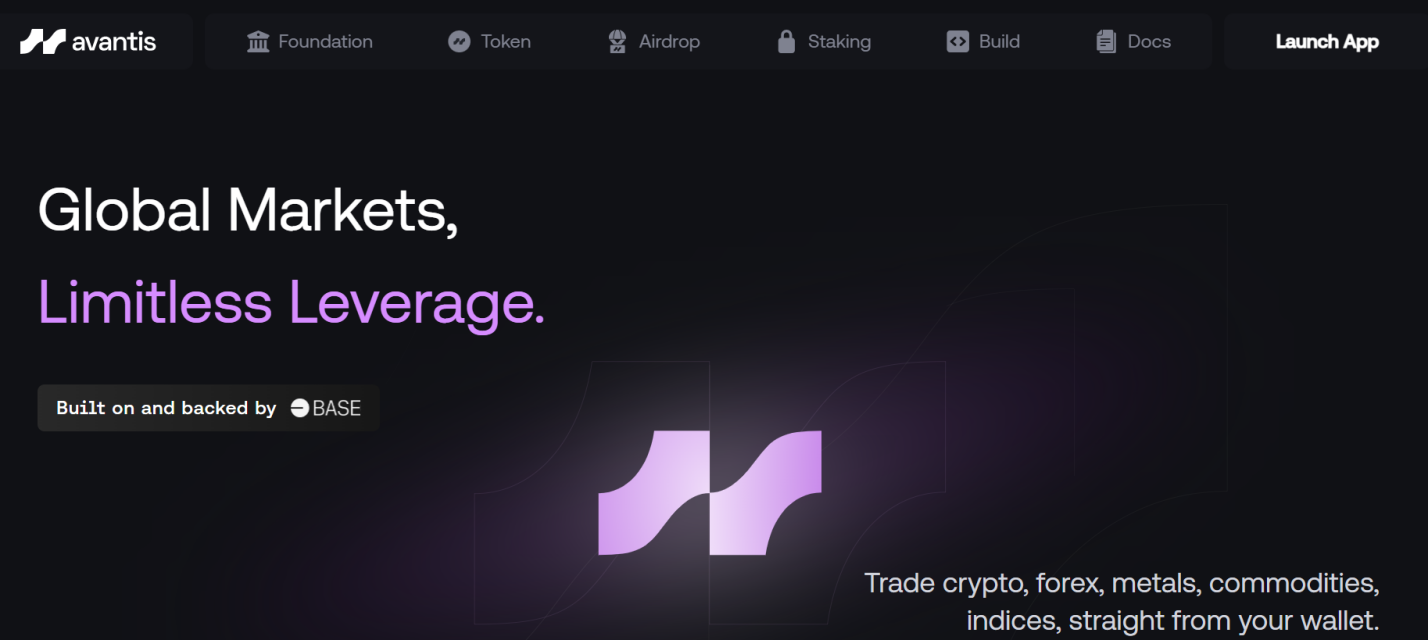
Finally, Avantis represents the “cross-border faction,” aiming to directly link DeFi with traditional financial markets as a pioneer in multi-asset synthetic trading. As the first decentralized leveraged platform supporting both crypto and real-world assets (RWA), Avantis uses USDC as unified collateral, enabling users to trade cryptocurrencies, forex, gold, oil, and more—all within a single platform, with leverage up to 500x. This model dramatically improves capital efficiency, allowing users to hedge and arbitrage across markets. For instance, users can go long BTC and short gold simultaneously, leveraging cross-asset correlations to build complex strategies. Avantis’ technical breakthroughs lie in oracle integration and dynamic liquidation mechanisms, featuring a “loss rebate mechanism” and “positive slippage” protection to balance interests between LPs and traders. By end-2024, the platform had attracted over 2,000 traders and exceeded $100 million in cumulative trading volume. Though small in scale, its strategic significance is profound—it advances DeFi innovation while bridging crypto and traditional finance. Challenges remain: Avantis heavily depends on oracles—any pricing deviation could trigger systemic risk. Moreover, offering derivatives on traditional assets like forex and commodities inevitably invites stricter regulatory scrutiny, requiring Avantis to delicately balance innovation and compliance.
Overall, the current landscape of mainstream Web3 leveraged trading platforms can be described as “multipolar.” dYdX represents professionalism and deep order book liquidity; GMX embodies model innovation and community-driven liquidity pools; Hyperliquid stands for peak performance and speed advantage; Avantis pioneers cross-domain innovation and multi-asset integration. Their emergence is not mutually exclusive but collectively expands the decentralized derivatives market. Their divergent technical paths reflect Web3’s diversified response to different user needs: professionals seek liquidity and efficiency; retail users prefer simplicity and incentives; quant funds prioritize performance; cross-market investors value asset integration. The future may see convergence among these models. If dYdX-style order book platforms further improve on-chain performance, they could compete and complement Hyperliquid’s high-speed model. GMX’s liquidity pool mechanism may be adopted by others, provided risk management tools continue evolving. Avantis’ cross-domain approach could inspire more platforms to explore the “crypto + traditional assets” narrative. Ultimately, whether decentralized leveraged trading platforms can challenge CEX dominance hinges on finding a new balance among performance, liquidity, security, and compliance. In short, the Web3 leveraged trading landscape is rapidly evolving—not driven solely by the vision of “decentralization,” but by differentiated responses to diverse trading demands, market gaps, and technical bottlenecks. From dYdX’s professionalism to GMX’s community focus, Hyperliquid’s speed, and Avantis’ cross-border ambition, the DeFi derivatives map is no longer about isolated breakthroughs but parallel advancement across multiple fronts. In the foreseeable future, these platforms may each dominate their niches—or, through technological and model convergence, propel the entire DeFi derivatives market to greater scale and maturity.
III. Innovative Mechanisms in Web3 Leveraged Trading
The innovative mechanisms of Web3 leveraged trading represent a fundamental reengineering of traditional financial derivatives logic. It is not simply moving leverage tools on-chain, but building a new trading and clearing infrastructure based on smart contracts, on-chain transparency, capital reuse, and multi-asset synthetic derivatives. This system addresses key bottlenecks of traditional platforms—custodial risk, settlement latency, fragmented cross-market capital, and lack of transparency—while unlocking greater capital efficiency and global accessibility. Its core innovations manifest in three dimensions. First, on-chain pricing and risk. Oracle networks like Chainlink and Pyth serve as the price backbone for the entire synthetic finance ecosystem, updating off-chain prices for forex, commodities, indices, and crypto assets at second or even millisecond intervals. Through multi-source aggregation, decentralized node signing, and outlier filtering, they significantly reduce manipulation and tail-risk exposure. The greatest value is enabling synthetic assets to securely and reliably mirror real-world markets on-chain—users gain price exposure without relying on opaque brokers or market makers. Second, innovation in clearing and risk management. Traditional finance uses “full forced liquidation,” prone to liquidity cascades and chain bankruptcies during extreme moves. Web3 platforms instead favor partial liquidation, dynamic margining, and incentive-based hedging. When a trader’s position helps balance overall platform risk, they receive fee rebates or positive slippage incentives. When risk becomes too concentrated, the system automatically increases funding rates or executes staged deleveraging to mitigate market shocks. Insurance funds and adaptive funding mechanisms act as safety valves, absorbing tail risks from black swan events. This “dynamic game theory + shared risk” model makes leveraged markets more resilient under stress. Third, a leap in capital efficiency. In traditional models, investors trading forex, gold, and stocks across separate platforms face fragmented margin accounts and inefficient capital usage. Web3’s unified collateral model allows users to post a single asset—USDC, ETH, or LST—and trade BTC perps, XAU synthetics, dollar index, or forex positions under one margin framework. Risk engines boost leverage through correlation adjustments and netting, increasing effective capital utilization two to three times over traditional models. Meanwhile, LP income structures have fundamentally changed—from relying solely on market-making spreads to a triple stream of “trading fees + funding fees + hedging incentives.” This results in better capital duration and income stability than traditional AMMs, attracting more institutional liquidity.
At the strategy level, synthetic leverage is inherently suited for cross-market arbitrage and macro hedging. Users can construct combinations like BTC long + gold short to hedge inflation risk, or dollar index long + risk asset short to navigate a strengthening USD environment—all within a single platform. Such strategies eliminate the need for cross-platform fund transfers and avoid additional counterparty credit risk, greatly reducing operational friction and time-value decay. As cross-chain communication protocols and Layer 2 scaling mature, this integrated experience will extend across multi-chain ecosystems, enabling secure transmission of pricing and clearing instructions across execution layers.
More importantly, the wave of RWA (real-world asset) tokenization is expanding synthetic leverage’s frontier. Boston Consulting Group forecasts that RWA on-chain could reach $16 trillion by 2030. Tokenizing U.S. Treasuries, gold, and commodities enables synthetic perpetuals and futures products to be created natively on-chain—without traditional custodians or brokerages—providing users with standardized leveraged tools. Take Avantis: using price feeds from Pyth and Chainlink, it brings forex, gold, and crude oil onto-chain as synthetic assets, backed by USDC collateral. Users execute cross-market trades within a single matching domain, with a “loss rebate + positive slippage” design dynamically balancing risk between traders and LPs. This caters not only to crypto-native users but also opens a pathway for traditional investors to enter on-chain derivatives. Demand segmentation is equally clear. Risk-averse capital prefers becoming LPs, earning stable 10–15% annualized returns while using hedging modules to reduce exposure. Risk-seeking capital uses high leverage and cross-market arbitrage to amplify gains. Platforms serve diverse user groups through tiered products, expanding total market capacity. In the long term, as account abstraction (AA) and gasless experiences become mainstream, retail entry barriers will fall further, accelerating user growth. Macroscopically, Web3 leveraged trading’s innovations are not just financial tool upgrades but a restructuring of global capital infrastructure. At the price discovery layer, oracles ensure tight coupling between on-chain and real-world markets. At the risk pricing layer, dynamic clearing and hedging incentives make the system more resilient. At the capital turnover layer, unified collateral and reuse dramatically boost efficiency. The convergence of these three elements enables Web3 leveraged platforms not only to compete with CEXs on trading experience but to leapfrog them in capital efficiency and risk resilience.
Thus, the ultimate form of Web3 leveraged trading will not be merely a “chain-based substitute” for traditional derivatives, but a multi-asset, multi-market, globally accessible infrastructure capable of serving both retail and institutional capital. Whoever leads in low-latency execution, robust risk controls, and compliant accessibility will capture market share and valuation premium in the coming years. This is not just a tech race, but part of financial system evolution—and the core battlefield for DeFi and TradFi convergence.
IV. Conclusion
Web3 leveraged trading stands at a critical juncture of “breakthrough and expansion,” with its trajectory shaped by both technological progress and the combined forces of market and regulation. Decades of traditional finance have established rich expertise in product design, risk models, and compliance systems—providing valuable reference frameworks for DeFi. Yet, the traditional model’s centralized custody, geographic barriers, and high compliance costs cannot meet the demands of global, trustless capital flows. Web3 platforms enter precisely by innovating with self-custody, full-chain transparency, and borderless access—reshaping leveraged trading, a high-frequency, high-capital-efficiency financial core.
Strategically, the on-chain integration of synthetic assets and RWA is opening a new market frontier. Bringing U.S. equities, forex, and commodities into the on-chain derivatives ecosystem not only meets the needs of professional cross-market arbitrageurs and hedge funds but also grants retail investors unprecedented global asset allocation opportunities. The platform that first achieves stable oracle mechanisms, capital-efficient unified collateral, and compliant-accessible architecture will have the potential to become the next Binance-scale leader.
The profile of future winners is becoming clear: they must deliver front-end interactions that match or exceed CEX smoothness while maintaining decentralized security and transparency in backend mechanisms; they must integrate multi-asset, multi-market capabilities while actively exploring regulatory pathways to provide credible on-ramps for institutional capital. As technology matures, user experience improves, and regulatory frameworks evolve, the market size and strategic importance of Web3 leveraged trading will rise rapidly. By 2030, this sector is poised to become a multibillion-dollar core growth engine—not just a financial derivatives revolution, but the pivotal battlefield for DeFi and TradFi convergence.
Join TechFlow official community to stay tuned
Telegram:https://t.me/TechFlowDaily
X (Twitter):https://x.com/TechFlowPost
X (Twitter) EN:https://x.com/BlockFlow_News
 @HTXAcademy