Understanding GuildFi: The Glue Between Gaming and the Metaverse
TechFlow Selected TechFlow Selected
Understanding GuildFi: The Glue Between Gaming and the Metaverse
GuildFi: One-stop shop for gaming/metaverse experiences.
 Navigating Web3 tides with focused insights
Author: LeftsideEmiri
TechFlow intern authorized to compile and publish the Chinese version
Playing games is inherently enjoyable. But as the gaming industry has grown, developers have begun exploiting players—making the cost of entry increasingly high. Because games are centralized, players don't truly own their in-game assets. Like most traditional industries, the gaming sector needs transformation.
GameFi leverages DeFi and NFTs to empower traditional gaming.
In blockchain games, players not only own their assets but can also earn income through play-to-earn (P2E) models.
Following Axie Infinity’s success, the GameFi ecosystem rapidly expanded, yet still faces two major challenges: 1. High player onboarding costs, 2. Difficult and costly strategy learning. For example, simply purchasing in-game items to start playing a popular game can be a significant barrier. GameFi guilds exist to solve these issues.
What Is a Guild?
A guild is an organization that offers "scholarship programs" to help people get started.
For instance, within specific games, a guild may own NFT characters that it lends to players—also known as “scholars.” In return, these scholars participate in a revenue-sharing model with the guild, splitting in-game profits. This creates a harmonious relationship between scholar players and guild participants: players avoid upfront costs while guilds generate passive income. Guilds attract thousands of scholars and communities to discuss game strategies.
Problems With Current Guilds
While current guilds address the issue of startup costs, they introduce new problems: scholarship funds are fragmented and often limited to just one game within a single guild. After joining a guild, players’ opportunities narrow—their achievements and rewards are usually confined to that particular guild or game. There's no interoperability (technically called “composability”) among guilds to create a smoother experience for scholars, limiting both existing and new players from discovering and accessing games outside their affiliated guild.
Therefore, guilds need improvement and must evolve into Guild 2.0.
GuildFi Solution
GuildFi is envisioned as a one-stop shop for gaming/metaverse experiences. Since today’s guild ecosystem resembles many disconnected puzzle pieces, GuildFi aims to provide the infrastructure that connects them.
Broadly speaking, its vision includes a scholarship aggregator, game curation and discovery tools, developer toolkits, service models, and new player reward systems.
GuildFi Products
To begin your GuildFi journey, you first create a GuildFi ID using an email account, then link this ID to your wallet—this becomes your passport into the metaverse. This ID tracks user performance, achievements, and rewards. Once created, users can interact with various products and services offered by the GuildFi platform, primarily divided into two categories: Game Hub and Zones.
Game Hub
The main purpose of the Game Hub is to serve users by improving the overall experience through better discovery and accessibility. The Game Hub features four key functions designed to enhance the metaverse gaming experience.
1. GuildFi ID — simplifies tracking player performance and activity across games. Guilds gain detailed insights into each scholar’s progress, while players can monitor their own stats and adjust strategies accordingly. This feature enhances competition by enabling accurate global rankings.
2. Game Discovery — a game-finding aggregator that recommends titles based on user activity. It helps players discover games they enjoy and assists creators in reaching the right audience, promoting organic adoption. A future feature will calculate hourly earnings per game.
3. Guild Discovery — an aggregator for finding scholarships. Currently, scholarship funding is scattered across the ecosystem, making it hard for new players to locate. GuildFi brings multiple types of scholarship programs onto one platform. These scholarships are funded by individual treasuries, partner guilds, or related NFT funds. Scholars can easily browse and access scholarships across different games and guilds via a single interface.
4. Proof-of-Play — an improved reward mechanism that tracks player activity across the ecosystem and awards GXP (experience points). As players earn more GXP, they unlock rewards such as NFT distributions, token airdrops, bonus yields, or enhanced token incentives when playing partnered games. This feature also supports the player ranking system.
Additionally, this function addresses two critical issues:
1) Some games integrate NFTs but lack earning potential. Proof-of-Play changes this by turning every game within the GuildFi ecosystem into a P2E experience—even if no native tokens are issued.
2) Another problem with P2E games is that players join solely to make quick money rather than for enjoyment. As a result, developers keep creating increasingly profitable—but potentially less fun—games. Players end up choosing between what they want to play and what they must play to earn. With Proof-of-Play, scholars can technically earn by playing any game.
An additional Game Hub feature allows users exclusive access to certain zone-specific functionalities—specifically, the Metadrop Launchpad and GameFi tools (discussed further below).
Zones
Zones are specialized engines serving distinct business activities within the ecosystem. GuildFi operates four distinct zones, each fulfilling unique purposes:
1. Guild Zone consists of three products tied to guild-specific activities—GuildFi Guilds, Guild Services, and Guild Network.
1) GuildFi Guilds follow the standard gaming guild model, currently boasting around 3.1k active scholars and 20k on the waitlist. GuildFi quickly became Thailand’s largest guild and continues expanding its scholar base daily.
2) Guild Services Model enables anyone to run their own guild. Individuals, new guilds, or existing ones contribute assets (digital, tokens, or NFTs), plug them into the GuildFi platform, and GuildFi handles the rest—including distributing scholarships. This allows users to earn profits from operating a guild without active management.
3) Guild Network is a tool connecting guilds together. It offers multiple benefits: lending NFT assets between guilds, borrowing NFTs from associated VCs and funds, and providing a simple method to recruit new scholars through a scholarship portal.
2. NFT Zone currently features one primary offering: MetaDrop Launchpad, accessible exclusively via the Game Hub. Two types of airdrops are available: NFTs and tokens.
Based on player engagement levels, users receive exclusive airdrops and early investment opportunities. Allocation is determined by combining GXP (Proof-of-Play system) with the amount of native GF tokens held and staked—rewarding genuine platform users. In the future, the NFT Zone will host an NFT marketplace and lending applications.
The NFT Zone also manages Initial Game Offerings (IGOs), allowing participants early access to in-game assets and beta testing opportunities. GuildFi hosted its first triple IGO for Cyball’s Genesis NFT (a football-based game), co-hosted across GuildFi, Binance NFT, and Cyball platforms.
3. Tools Zone provides information and utilities to support everyone within the GuildFi ecosystem.
Whether you’re a guild manager, scholar, or casual player, there’s a tool for you. The flagship product here is EzHUB—a scholarship management tool widely used by guilds and players. Let’s examine its features:
– “Scholar Overview” gives guild managers deep insight into individual scholar performance, including claimed tokens, holdings, monthly returns, completed adventures, and visualized progress comparisons.
– “Inventory Management” is a one-stop page for viewing and managing game asset inventories. Players and scholars can check their portfolio status, while guild managers can apply custom filters to group scholars by team or game. It also displays earnings in fiat terms.
– “Card Explorer” offers a simple interface to view all cards (or characters) in a specific game. Users can set custom filters by combining traits to quickly find desired cards.
For example, in Axie Infinity, if a user wants a card with Water breed, Ranged class, and Accelerated effect, they can input these criteria and instantly locate matching cards.
EzHUB makes integration easy—any website can embed this functionality, allowing guilds to bring it directly to their own sites. Currently available only for Axie Infinity, support for more games is planned. EzHUB’s ultimate goal is to become the central data hub for all GameFi.
4. Treasury, developed after the successful launch of the GF token, raised $146 million—all proceeds allocated to the treasury.
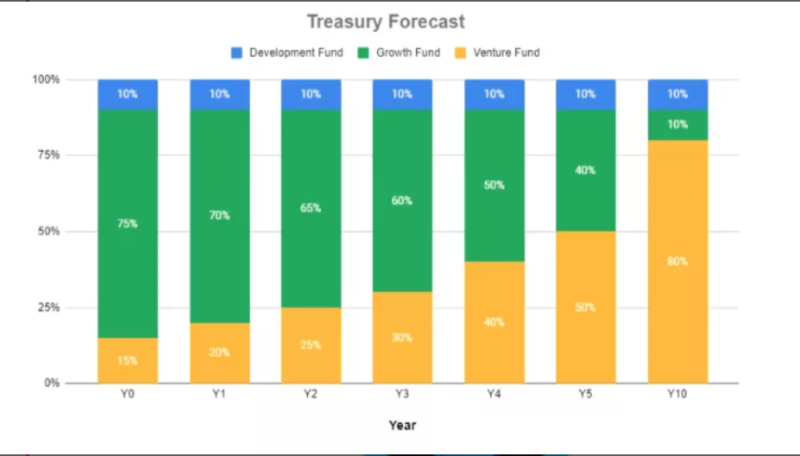
As the team states, the Treasury Zone serves as a “capital-efficient reserve asset fund.” To achieve this, it divides the treasury into three funds—Venture Fund, Growth Fund, and Development Fund. The Venture Fund acts as the treasury’s investment arm, functioning as a value-added venture capital fund focused primarily on GameFi and Metaverse investments.
As of January 31, the Venture Fund had invested $2.3 million in tokens, growing to $6.7 million. Similarly, a $1.7 million investment in NFTs generated $3.3 million in treasury gains.
The Growth Fund follows a capital preservation strategy—meaning it holds mostly stablecoins, participating in various yield-staking strategies. A portion also holds assets like Bitcoin and Ethereum.
The main benefit of the Growth Fund is ensuring GuildFi maintains substantial reserves even during bear markets, ready to deploy capital when strategic opportunities arise.
The Development Fund covers operational expenses such as salaries, office rent, and marketing campaigns—including AMAs, meme contests, and social media promotions. It also includes “community bounties” rewarding contributors who meaningfully advance GuildFi—they may opt to receive compensation via the Development Fund.
The chart below shows how treasury allocations are expected to shift over time.
Tokenomics
If GuildFi is the one-stop shop for metaverse experiences, then the GF token is the index capturing value from all activities and cash flows within the metaverse—its value is intrinsically linked to GuildFi’s operations and growth.
Specifically, value accrues from revenue-generating activities such as P2E games, P2E guilds, and scholarship programs. Sales of tokens, NFTs, and IGOs also contribute to value appreciation. Likewise, any activity within the Treasury Zone—such as successful returns from the Growth Fund—directly impacts the GF token’s value.
Staking
The GF staking mechanism works similarly to CRV and veCRV. For those unfamiliar, this model is known as vote-escrow (or time-locked staking). When token holders stake their GF tokens, the amount of sGF they receive depends on how long they lock their tokens.
For example, locking 1 GF token for 52 weeks grants 1 sGF, while locking it for 26 weeks yields 0.5 sGF. Voting power is proportional to the number of sGF tokens held. This mechanism distinguishes long-term believers from short-term speculators. However, sGF offers more than governance rights—it unlocks additional benefits.
Take the Metadrop Launchpad: as previously mentioned, IGOs are conducted here.
The more sGF you hold, the higher your chances of winning voting rights, which grants eligibility for rare NFTs and native token airdrops. Additionally, users with more sGF gain early access to new P2E games.
Ask any P2E scholar—they’ll tell you early participation is one of the biggest advantages. The number of tools and features accessible in the Tools Zone increases with the amount of sGF held. These sGF tokens also enable higher rewards via the Proof-of-Play system—users with more sGF earn more GXP while playing. Most importantly, the amount of sGF held appears on a player’s GuildFi ID, serving as recognition within the ecosystem and further fueling competitive rankings.
Token Distribution
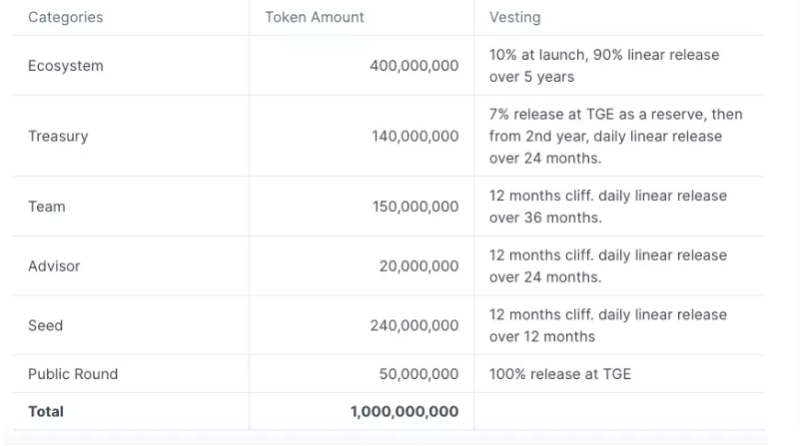
Total Supply: 1,000,000,000
Circulating Supply: 42,185,071
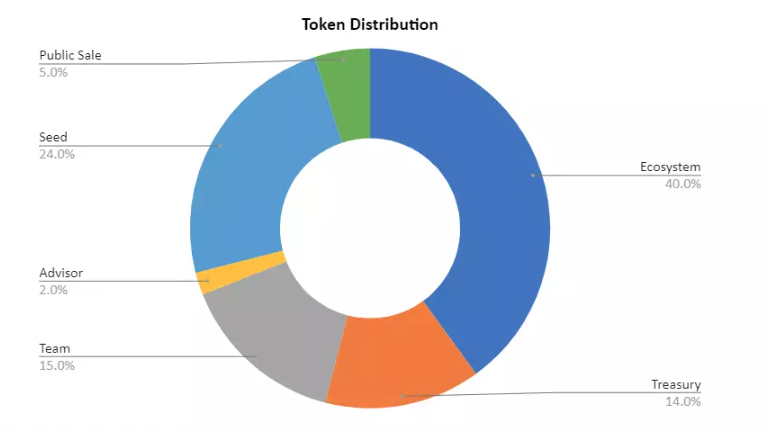
Token Release Schedule:
Below is a breakdown of allocation details and unlock periods.
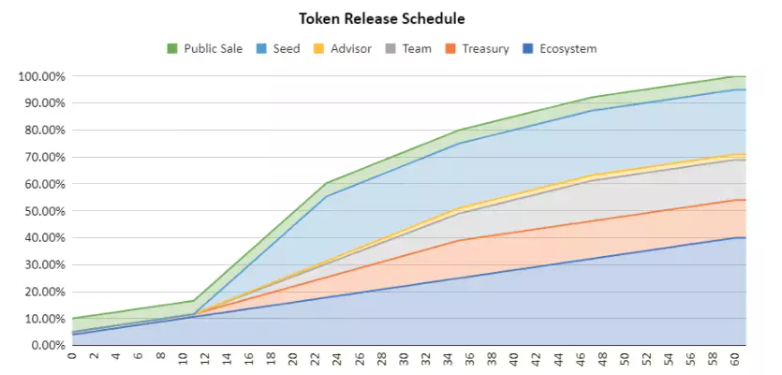
This chart illustrates the token release timeline.
Some Statistics
Within less than a year of launching, the GuildFi platform has already generated 120,000 unique GuildFi IDs. Their own guild boasts 3,100 scholars and over 50 coaches, with approximately 20,000 scholars on the waitlist. They currently maintain 18 partnerships with various games and investment funds, integrate with about 8 existing guilds, and are pursuing more collaborations. Their treasury has seen massive growth—the Venture Fund up 150%, and the Growth Fund delivering steady annual returns of 5–15%.
Most importantly, they recently announced their multi-chain initiative. While many projects are embracing a multi-chain future, for GuildFi it means not only deploying their platform and token across multiple chains, but also building cross-chain tools to enhance interoperability across the metaverse.
For a project so young, they’ve made impressive strides. Judging by how the team and community operate, progress appears unstoppable regardless of market conditions. Given their ambition to become core Web3 infrastructure, their decisions reflect strong potential to achieve this bold vision.
Team
The team comprises over 100 members, including some of the brightest and most dedicated minds in the space. Here are some key figures:
Jarindr Thitadilaka, better known as Ja, Co-founder and Project Lead, brings ten years of experience in blockchain and software development. He has worked with major blockchain firms like OmiseGo (OMG) and Bitfinex, contributing significantly to technical research—including tokenizing NFTs on L2 platforms and building the first proof-of-concept blockchain game on the Plasma protocol.
Gazinpoj Techahuasingh, known as Kit, is Co-founder and Head of Business Development. Previously, he co-founded Cryptomind Group, one of Thailand’s largest digital asset fund managers. Kit and his team have maintained strong influence in Thailand’s crypto scene.
Sirasith Sopasilapa, known as Petch, worked as a financial auditor at large traditional finance firms before transitioning into data science. Now, he serves as Senior Data Analyst and Researcher at GuildFi, combining his expertise with his passion for gaming.
Arnav Rawal, currently Head of Research, previously worked at Cryptomind, a reputable digital asset consultancy, leading research on popular metaverse/gaming projects such as The Sandbox, Jewel, and Crabada.
Lalita Phiphatyaokun, known as Por, leads GuildFi’s events and campaign marketing team. She brings extensive experience in online marketing campaigns across various industries, particularly esports organizations, adding immense value to her role.
Parawee Sukorawan, aka Earn, is GuildFi’s Marketing Director. She spent eight years running marketing for major companies like Mindshare Thailand and Osotspa Co before bringing her expertise to the crypto world to help drive its growth.
Of course, these are just some of the more prominent team members. The entire team works diligently, constantly seeking ways to deliver greater value to their community and the broader GameFi/metaverse ecosystem.
Community
We know how vital community is in crypto—but in gaming economies, it's even more crucial. The GuildFi community now numbers 57,000. They began by establishing a solid foundation in Thailand and have systematically expanded since. Everyone is approachable and eager to help newcomers. No question is too small—what matters is helping people succeed in the metaverse.
Conclusion & Thoughts
When I first learned about GuildFi, I was immediately impressed. It's rare to see a project offer so many unique products and solutions.
Uniqueness has become scarce in crypto, where copying existing products is easier—stealing users and liquidity from pioneers, trapping the ecosystem in a vicious cycle. GuildFi stands out by focusing on meaningful innovation to improve user experience, actively pushing the gaming space forward.
They’ve positioned themselves perfectly at the heart of the growing metaverse/gaming industry: while guilds may dominate gaming activity, GuildFi is the solution streamlining this space for both guilds and players. By targeting mass new user acquisition, forging more partnerships, and integrating with other projects, they're leveraging a snowball effect for sustainable growth.
If you’re bullish on gaming/metaverse, guilds like GuildFi are ideal gateways to everything happening in this space.
As noted, the project is still early; though launched less than a year ago, it shows great promise. We can already envision GuildFi’s bright future just a few years ahead.
Join TechFlow official community to stay tuned
Telegram:https://t.me/TechFlowDaily
X (Twitter):https://x.com/TechFlowPost
X (Twitter) EN:https://x.com/BlockFlow_News