








Why do institutions favor Stargate?
TechFlow Selected TechFlow Selected
Why do institutions favor Stargate?
Stargate: A bridge and DEX built on LayerZero.
 Navigating Web3 tides with focused insights
Author: Nico Deva
Translation: TechFlow intern
LayerZero is a protocol for transferring messages across blockchains. These messages can be transactions, such as token transfers or swaps. Stargate is a bridge and DEX built on top of LayerZero.
How does LayerZero work?
A transaction (tx) is mined on the source chain. Its payload is a message. Then, a relayer sends the message along with proof that the tx was mined (Merkle root + some header information) to the destination chain. On the destination chain, an independent Chainlink oracle pushes the hash of the source block header to the chain. The LayerZero endpoint verifies whether the proof is valid and linked to a known block—only then is the message accepted.
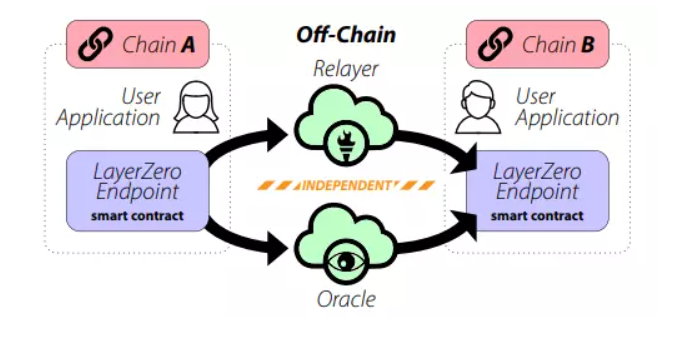
Unlike Cosmos, in LayerZero, block headers are submitted by an independent oracle, whereas in Cosmos, the main chain manages block headers. 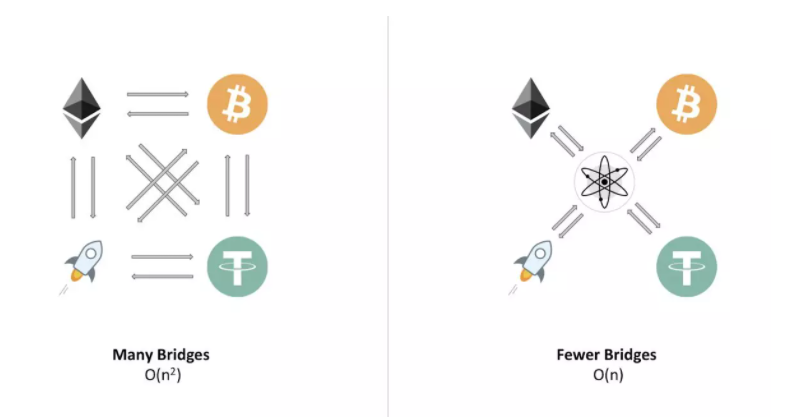
Application: DEX
The Stargate DEX/Bridge is the first application built on LayerZero. Current cross-chain bridges cannot achieve composability, native asset support, or unified liquidity—all part of the so-called "trilemma" of cross-chain bridging (pick two out of three):
-
Guaranteed finality
-
Unified liquidity
-
Native asset trading
Composability means being able to call a smart contract on the destination chain—such as swapping or depositing assets. However, current cross-chain bridges only allow token transfers, or at best simple swaps. Arbitrary message/transaction transmission is not supported.
Regarding finality and native assets, most bridges achieve finality by minting synthetic assets:
-
When a swap transaction is mined on the source chain, a minting transaction is signed and broadcasted to the destination chain.
-
There's no risk of insufficient assets on the destination chain → reversibility isn't needed
However, this is problematic because it leads to many different versions of synthetic USDT. For example, if you want to farm DFK and send USDT from BSC to Harmony, the USDT on BSC isn't compatible with Harmony. Moreover, slippage when exchanging between two synthetic assets is too high, forcing users to bridge back, send funds to Ethereum, and then bridge from Ethereum to Harmony.
Stargate Bridge introduces a mechanism that provides unified liquidity. Intuitively, it works by having contracts on each chain maintain balanced reserves of assets from other chains and track credit owed to destination chains. Unsettled credit information is periodically propagated across chains. Through this algorithmic system, it can be proven that sufficient assets exist on the destination chain:
-
→ No risk of reversal
-
→ Guaranteed finality
-
→ Regular assets in the pool can be used
-
→ Ensures native assets
Tokenomics
Early-stage high inflation, low circulating supply (<10%), and high FDV (currently $3 billion), which may seem unattractive at first glance. However, we must consider its potential value. Valuation should account for markets that Stargate could replace, such as:
-
Hub L1s like Cosmos and Polkadot
-
Cross-chain bridges: SYN, RUNE, ANY
-
And potentially capturing TVL share from other DEXs (Curve, Sushi, Uniswap)
This is why many—including Alameda and Redacted—support Stargate and STG, and why it attracted $2 billion in liquidity within days.
Join TechFlow official community to stay tuned
Telegram:https://t.me/TechFlowDaily
X (Twitter):https://x.com/TechFlowPost
X (Twitter) EN:https://x.com/BlockFlow_News






