Trump announces $500 billion AI infrastructure plan Stargate, cementing AI as this year's market main theme
TechFlow Selected TechFlow Selected
Trump announces $500 billion AI infrastructure plan Stargate, cementing AI as this year's market main theme
SoftBank, OpenAI, and Oracle will jointly establish a new AI company called Stargate, Trump said, calling it the largest AI infrastructure project in history.
 Navigating Web3 tides with focused insights
By Chloe, PANews
On January 21, on his first full day in office, Trump invited SoftBank CEO Masayoshi Son, OpenAI CEO Sam Altman, and Oracle co-founder Larry Ellison to the White House.
At the press conference, Trump announced that SoftBank, OpenAI, and Oracle will jointly establish a new AI company called Stargate. "This is the largest AI infrastructure project in history," Trump said.
The companies will initially invest $100 billion into this artificial intelligence initiative, aiming to scale it beyond $500 billion, including building data centers and physical campuses. Microsoft and NVIDIA are also expected to participate. Trump stated the project is expected to create 100,000 American jobs.
According to insiders, in December 2024, Son visited Trump's private residence in southern Florida, announcing an investment of $100 billion in the U.S. over Trump’s four-year administration. Most of the investment will be related to AI, and now it appears the first phase has begun. At the time, Trump even publicly praised Son as a "great leader and investor," then jokingly asked him: "Would you like to double your investment to $200 billion?"
Based on foreign media summaries, the initial equity backers of Stargate are SoftBank, OpenAI, Oracle, and MGX. Among them, SoftBank and OpenAI are the main partners—SoftBank taking financial responsibility with Son serving as chairman, while OpenAI assumes operational responsibilities. Oracle, along with Microsoft, Arm, and NVIDIA, are participating as technology partners.
Trump officially abandons energy policy, focusing火力 on AI infrastructure
In recent months, top AI tech CEOs have continuously warned the government that in the coming years they will need more data centers—and the chips, electricity, and water required to run them—to support their AI development.
Shortly after Trump's inauguration, he removed Biden-era AI safeguards and signed a series of measures promoting U.S. energy development to meet surging power demands from data centers. While the Biden administration spent the past two years attempting to address potential AI risks, President Trump’s new actions—such as revoking Biden’s AI executive order and supporting AI infrastructure—represent a complete reversal, sending a clear message: massive infrastructure development will be prioritized.
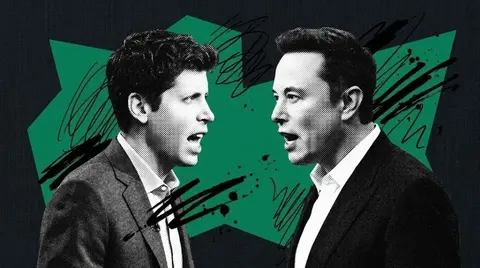
"I believe this will be the most important project of our time," Sam Altman said at the January 21 press conference. "We couldn’t do this without President Trump." Trump responded that he would use emergency declarations and executive actions to facilitate construction, including easier access to energy. During the press conference, Trump and executives emphasized AI’s potential applications in healthcare and other fields, which will drive overall U.S. economic growth.
Sam Altman previously revealed that OpenAI’s computing needs continue to grow as it trains increasingly complex AI models and delivers services. In addition to expanding its use of Microsoft Azure, cloud infrastructure providers like Amazon and Oracle are racing to build more data centers to boost computing capacity.
However, data center costs are substantial. According to McKinsey, capital expenditures for purchasing and installing mechanical and electrical systems for AI-driven data centers could exceed $250 billion over the next five years.
So where will funding for Stargate’s infrastructure come from? If Trump relies on government funds, Congress would need to approve hundreds of billions in budget spending—contradicting Trump’s own stance on reducing government expenditure?
OpenAI valuation insufficient—will SoftBank shoulder the funding?
Since no official announcement has been made, it remains unclear how much SoftBank, OpenAI, and Oracle will each contribute to the $500 billion AI infrastructure project, raising market questions about funding sources. Given OpenAI’s current valuation of $150 billion, it clearly cannot support Trump’s massive plan alone.
However, from initial press conference details, it can be inferred that OpenAI will guide operations, Oracle—as one of America’s largest data center operators—will provide technical resources, while SoftBank brings the strong financial muscle needed for AI infrastructure development.
Interestingly, SoftBank Group had already invested in OpenAI back in 2024. So far, OpenAI has relied on Microsoft Azure services through its partnership with Microsoft, but the market believes Microsoft’s computing capacity cannot keep up with OpenAI’s demand. If OpenAI expands its AI infrastructure collaboration with SoftBank and Oracle, it would be highly beneficial.
Sam Altman told Fox News last month that he believes Trump is “good at” attracting AI infrastructure investment to the U.S., and expressed he “looks forward to working with his administration in this area.” “U.S. infrastructure is crucial,” he added. “AI is different from other types of software because it requires massive infrastructure, power, computer chips, and data centers.”
He also estimated that currently around $175 billion in global capital is waiting to be invested in AI projects. “If the U.S. fails to attract these funds, they will flow to projects supported by other countries, weakening America’s global influence.”
Market capital gradually returning to AI projects
After the Stargate news broke, Oracle shares rose approximately 7%, Nvidia increased by 2.3%, and Arm stock climbed 4.1%. Wall Street analysts commented: “This is a significant opportunity for Oracle—it could become a key infrastructure provider in this large-scale investment.”
According to SoSoValue data today (January 22), the AI Agents sector benefited from Stargate, rising 10.47% within 24 hours. PIPPIN, ARC, and AI16Z surged 104.82%, 44.63%, and 30.17% respectively, while VIRTUAL increased by 11.95%.
Prior data from Dune Analytics showed that Virtual Protocol’s daily trading volume had been declining since peaking on January 2, with overall revenue dropping 99% in January. A key factor was the rise of TRUMP and MELANIA tokens—especially in the past week, when meme coins became the market’s focal point, draining liquidity from other sectors including the AI agent market, causing AI token market cap to fall 10% on January 20. Now, as meme trends cool down and Stargate unfolds, market capital is gradually flowing back into AI projects.
Join TechFlow official community to stay tuned
Telegram:https://t.me/TechFlowDaily
X (Twitter):https://x.com/TechFlowPost
X (Twitter) EN:https://x.com/BlockFlow_News
 PANews