Senior Analyst Interview: What Does Powell’s Departure and Wachter’s Appointment Mean for Crypto?
TechFlow Selected TechFlow Selected
Senior Analyst Interview: What Does Powell’s Departure and Wachter’s Appointment Mean for Crypto?
“Historically, market tops are often triggered by an exceptionally large IPO.”
 Navigating Web3 tides with focused insights
Compiled & Edited by TechFlow
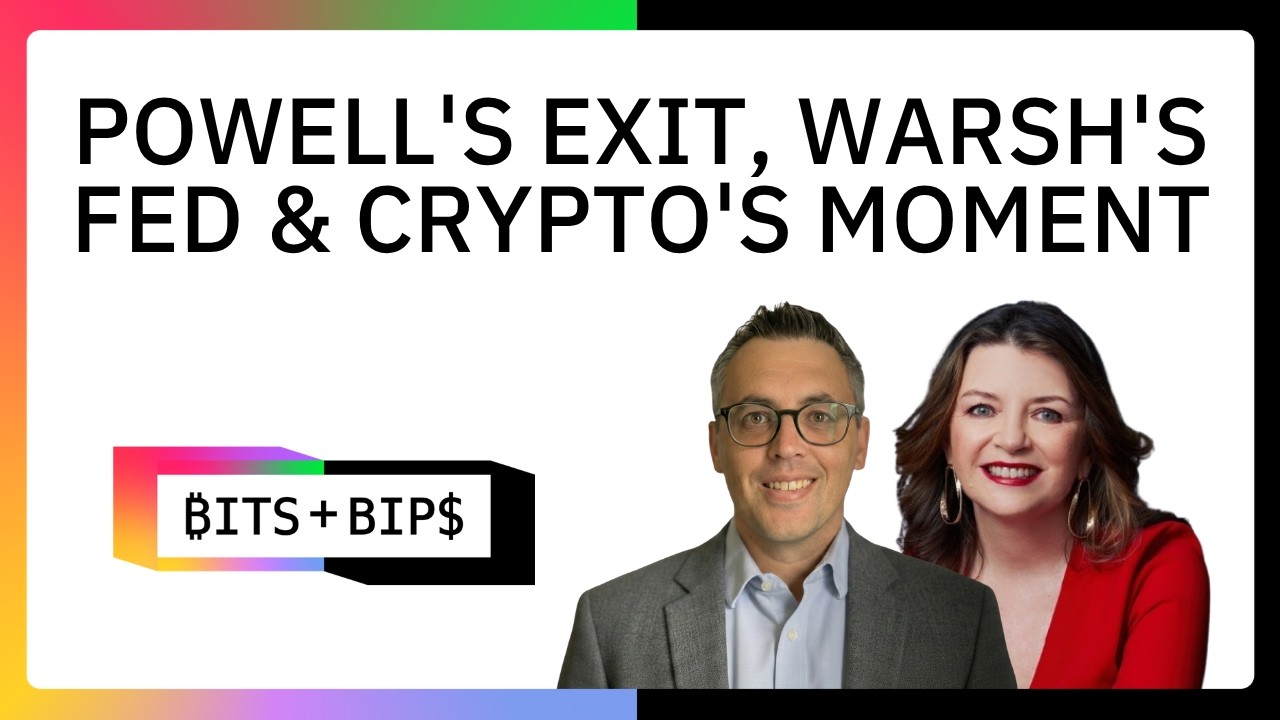
Guest: Noelle Acheson
Host: Steve Ehrlich
Podcast Source: Unchaind
Original Title: Powell Is Out, Warsh Is In: What It Means for Crypto
Air Date: May 22
Editor’s Note
Gita Gopinath, former IMF Chief Economist, recently proposed the “Bliss Trade” — a structural, cross-party, cross-regime fiscal backstop expectation — in the Financial Times. This concept is replacing the “Taco Trade” as the market’s foundational logic. It constitutes the true moat underpinning current risk-asset valuations and forms the core rationale behind currency-depreciation trades.
Noelle Acheson, author of the newsletter Crypto is Macro Now, offered three key insights on the podcast: First, equities and bonds are exhibiting extreme divergence — bond markets are pricing in global monetary tightening, while equity markets are being driven by AI hype, echoing the divergence between the S&P 500 equal-weighted and market-cap-weighted indices before the 1999 internet bubble. Second, while Powell deserves credit for defending the Fed’s independence, he also spearheaded Silvergate’s shutdown and the broader de-banking of crypto firms in 2023. Third, inflation will not recede quickly: even if the Strait of Hormuz crisis ends tomorrow, energy-price transmission and consumer expectations will take months to normalize — and rising inflation is a long-term trend driven by deglobalization, predating Trump’s tariffs.
Key Quotes
Equity-Bond Divergence, the “Bliss Trade,” and Systemic Fragility
- “Global bond yields are rising — this reflects global tightening, and it’s not good for markets. Equities, however, always march to a different drumbeat — that’s nothing new. What *is* new is the sheer scale of this divergence.”
- “Bond markets have traditionally been called ‘smart money’ because they focus solely on macro data, narratives, and trends; equities, by contrast, get swept up in speculative cycles. Today, equities follow the hype; bonds follow the macro — two entirely different stories, and they don’t need to align.”
- “The ‘Bliss Trade’ is structural — unlike the ‘Taco Trade,’ which was confined to Trump’s term. It means no government today would let its citizens suffer through market crashes, banking crises, or high oil prices without stepping in with fiscal support. This has nothing to do with party affiliation — or even whether the regime is democratic. We’ve seen it repeatedly south of the equator.”
- “‘Backstopping’ is now baked into the system — and that adds another layer of fragility. That’s one reason risk appetite remains so robust despite such uncertainty.”
- “Historically, market tops have often been triggered by an exceptionally large IPO.”
- “My top contrarian indicator right now is everyone cheering the S&P 500’s all-time highs while ignoring the widening gap between the S&P 500 and its equal-weighted counterpart. The last time this gap widened at this pace was in 1999. Any top-heavy structure, per the laws of physics, eventually collapses.”
Inflation Will Not Recede Quickly
- “I must challenge a widely held assumption: inflation hasn’t actually declined as much as many believe. Since 2024, core CPI has flatlined between 2.6% and 3% — there’s been no downward trend.”
- “The real driver of rising inflation is deglobalization — a trend that began under Biden, well before Trump. Trump merely accelerated and turbocharged it. Tariffs have swung back and forth, and the Hormuz crisis has added further fuel.”
- “Even if the Hormuz crisis ends tomorrow, energy prices will take time to fall — and their transmission into inflation indices and consumer expectations will take even longer. So regardless of how Hormuz plays out, this inflationary episode won’t end anytime soon.”
- “A 3% target rate would be far more reasonable — and many Fed officials privately agree. But they can’t change the target, because a huge part of the Fed’s job is managing trust. Changing the target signals to markets, ‘We can’t hit our original goal’ — undermining the entire credibility architecture of the Fed.”
Powell’s Record: Achievements and Failures
- “Powell looks like the kind of grandfatherly figure you’d happily grab a marshmallow latte with — but we must remember he was the architect behind crypto firms’ de-banking, Silvergate’s shutdown, and the March 2023 cascade of bank failures. He also completely misread inflation.”
- “The very notion of ‘independence’ deserves scrutiny. Yes, he pushed back when the U.S. Department of Justice issued subpoenas — commendable. But on shutting down crypto-related banking activity? There was zero independent judgment — only political influence. Does ‘independence’ mean evading accountability? Or ignoring subpoenas?”
- “He wants to shrink the balance sheet — but markets won’t let him. Period. The bond market is the boss here. The Fed cannot allow disorder in Treasury markets, because that would destabilize the dollar and price stability. So he can wish — but he won’t deliver. I wish I were a professional pianist too — but that won’t happen either.”
The Cost of Bitcoin’s Macro Assetification and the Clarity Act Outlook
- “Bitcoin is a hedge against currency depreciation. During the 2023 banking crisis, Bitcoin surged — everyone said, ‘It’s because people realized the banking system is corrupt and fragile.’ I argued otherwise: it surged because people expected central banks to flood markets with liquidity. Bitcoin priced *that* expectation.”
- “Bitcoin’s evolution into a macro asset is positive — but comes at a cost: it’s now just one among many macro assets. Investors seeking volatility will chase higher-volatility alternatives — and currently, Bitcoin isn’t one of them. There’s an endless supply of AI-themed narratives to trade, plus prediction markets — the playground is vast.”
- “Even if the Clarity Act passes this year, its impact on Bitcoin will be minimal — Bitcoin already enjoys regulatory clarity. ETH stands to benefit most — and when ETH rises, Bitcoin often follows, given their strong co-movement.”
- “What worries me is the detail around innovation exemptions. If third parties are allowed to tokenize company shares without the issuer’s knowledge or consent, we’ll have pure derivative speculation — not capital formation. That contradicts the fundamental purpose of markets and reinforces crypto’s existing ‘pure speculation’ stigma.”
Steve Ehrlich: Hello everyone, and welcome to Bits and Bips — where we explore the intersection of macro and crypto. I’m Steve Ehrlich, Head of Research at SharpLink and your host today. This is going to be an excellent episode. There’s a lot happening in the macro world: equities and bonds moving in opposite directions, with crypto caught in the middle. A new Fed chair takes office tomorrow — and there’s plenty more to unpack.
Let me now introduce our guest. She formerly served at Genesis, led research at CoinDesk, and now authors the highly influential newsletter Crypto is Macro Now: Noelle Acheson. Noelle, welcome.
Noelle Acheson: Hi Steve — great to be back with you.
Steve Ehrlich: How are you doing today?
Noelle Acheson: Still recovering from near-35°C heat in Philadelphia — and it’s only May.
Steve Ehrlich: Got it — sounds like you’ll need to get used to this weather. Like many watching live today, I’m also trying to make sense of what’s happening in markets. As mentioned earlier, equities remain strong.
Noelle Acheson: Yes — but warning signs are emerging.
Steve Ehrlich: Right — Nvidia just posted another stellar earnings report, yet the market reaction was muted. Meanwhile, bond markets are gripped by palpable fear: 10-year and 30-year yields are both rising — a key area you’ve closely tracked. Compounding matters, the first inflation print since the outbreak of war with Iran just dropped. Nobody knows what comes next. Powell steps down as Fed Chair on Thursday — though he’ll remain on the Board and retain voting rights, at least for the foreseeable future. Crypto is entangled too: Bitcoin recently spiked to $80,000–$83,000, and ETH briefly touched $2,400 — both have since pulled back.
So let’s go step by step. First question: how do you interpret the fear in bond markets? Yields are surging — 10-year and 30-year yields rising — all concerning signals, yet equities appear unfazed.
Equity-Bond Divergence and the “Smart Money” Narrative in Bonds
Noelle Acheson: You’re absolutely right — these are deeply concerning signals, and they’re global. Bond yields are rising worldwide — signaling global tightening, and that’s bad for markets. Equities, however, always march to a different drumbeat — not new, but the *scale* of this divergence is unprecedented.
You may recall the golden era of the 60/40 portfolio — the theory that equities and bonds move inversely. We’re seeing that inverse relationship — but the magnitude is staggering.
Equities are currently driven by internal, transient forces — chiefly AI enthusiasm, evident in chip stocks. Bond markets look ahead — at macro fundamentals and future trajectories. Traditionally dubbed “smart money,” bond investors focus purely on macro data, narratives, and trends; equities, meanwhile, get swept up in ever-faster speculative cycles.
So today, equities follow the hype — perhaps grounded, perhaps not (we’ll discuss later). Bonds follow macro indicators — and those indicators aren’t encouraging. Hence, two entirely different stories — and they needn’t converge.
Steve Ehrlich: Let’s talk about those macro indicators. Inflation is front and center — and PPI (Producer Price Index) is also picking up. What else are you seeing? How do you read these inflation signals? I won’t use the word “transitory,” but theoretically, if the Strait reopens or the Iran situation resolves, energy markets should at least revert to pre-February 28th levels — and things should calm down.
Noelle Acheson: Things will calm down — at least in oil prices. But that doesn’t mean inflation drops immediately — for two reasons. First, inflation transmission is slow. We’ve seen modest upticks in the Fed’s preferred core measures — because oil affects everything, but the lag is real.
Second, we’ll see heightened expectation volatility. This is fascinating — especially in the U.S., where gasoline prices heavily shape inflation expectations. Watching those numbers tick upward at the pump feels like money draining from your bank account. So even if gas prices don’t feed directly into core inflation, consumers *feel* inflation rising — shaping expectations, then behavior, then actual inflation.
Thus, even if the Hormuz crisis ends tomorrow, energy prices take time to fall — and their transmission into inflation indices and expectations takes even longer. In short, the inflation story won’t end soon — regardless of Hormuz — because this buildup predates the crisis.
Steve Ehrlich: Could you elaborate? I know you’re based in Spain — a European perspective; I’m American. Since the post-COVID inflation peak, the Fed has hiked aggressively to bring it down — not all the way to 2%, but clearly downward. What do you mean by “building up for a long time”?
Noelle Acheson: I must challenge that assumption — it hasn’t declined as much as you think. Look at the chart since 2024: core CPI has flatlined between 2.6% and 3% — no decline whatsoever.
A year — even 18 months ago — many declared, “Inflation’s over; disinflation is complete; we’ll plateau here before rising again.” Why expect further upside? Because deglobalization is a long-term trend — beginning under Biden, well before Trump. Trump simply accelerated and turbocharged it. Tariffs have swung wildly — tariff refunds remain uncertain — but prices have already risen; the Hormuz crisis added another spark. Yet if you examine the charts, inflation hasn’t meaningfully declined for a long time.
Steve Ehrlich: You’re right. There’s also been discussion about raising the Fed’s 2% target — recalibrating neutral rates.
Noelle Acheson: 3% is the rational target — widely debated, even privately endorsed by many Fed officials. But they can’t shift the target — because the Fed’s core challenge is credibility. Much of its work involves managing trust. Announcing, “We can’t hit 2%, so we’re changing the target,” directly undermines market confidence in the Fed’s ability to achieve its goals.
Steve Ehrlich: Understood. We’ll revisit the Fed and trust in about ten minutes.
From the Taco Trade to Structural Backstop Expectations
Steve Ehrlich: Let me press further on this “irresistible force vs. immovable object” — equities versus bonds. In your newsletter this week, you highlighted an insightful FT commentary by a former IMF Deputy Managing Director on the so-called “Bliss Trade” — possibly a more sustainable extension of the “Taco Trade,” belonging to the same family of Fed backstop expectations. I read a book recently on arbitrage trade emergence arguing that markets always expect backstops — and COVID turbocharged this, as central banks globally flooded economies to sustain them during lockdowns. Can you explain the Bliss Trade — and which side cracks first?
Noelle Acheson: The Bliss Trade originates from an intriguing FT commentary weeks ago by Gita Gopinath — former IMF Chief Economist and Deputy Managing Director, now a Harvard professor. Read it through her IMF lens — but her key insight is brilliant: market expectations of “backstops” and “safety nets” have evolved beyond the Taco Trade. Yes, the Taco Trade is part of it — Trump provided countless events reinforcing belief that “he’ll ultimately step back.” But her argument is broader.
The Taco Trade is temporary — confined to Trump’s term. Bliss Trade — shorthand for “big, large and lasting stimulus or support” — is structural. Her thesis: no modern government will let citizens suffer through market crashes, banking crises, or high oil prices without fiscal intervention. We saw it in 2020, again in 2022 amid energy spikes, and now across Europe amid Hormuz. Governments won’t be voted out for failing to spend.
This transcends party lines — even democracy itself. Coups south of the equator prove it. Crucially, this shapes currency-depreciation outlooks: where does stimulus funding come from? Solutions will be found — tools abound.
Longer term, this increases moral hazard and fuels bubbles on the speculative side of markets. Hence, robust risk appetite persists amid profound uncertainty. But it’s structural — “backstopping” is now systemic — adding another layer of fragility.
Steve Ehrlich: I wonder when this systemic fragility explodes. Shorting the “doom loop” always backfires — markets recover, typically in K-, V-, or other letter-shaped rebounds.
Before moving on, let’s discuss AI stocks. OpenAI reportedly plans a confidential IPO filing as early as tomorrow; Anthropic is rumored to go public later this year. These firms seek hundreds of billions to build infrastructure and buy Nvidia chips. Anthropic allegedly posted strong operating profits this quarter; OpenAI still burns cash heavily, financing its future via debt. Yet this dynamic is precisely what’s lifting equities. Your thoughts?
Noelle Acheson: Many reports insist current P/E and forward P/E ratios are reasonable. What frustrates me is the universal assumption that earnings forecasts will be met or exceeded. Historically, yes — but we shouldn’t assume it’s guaranteed. What underpins these forecasts? Often company guidance — or simple demand extrapolation. We assume massive demand for chips and AI infrastructure — but that’s unproven.
It may materialize — I’m no AI expert. But tech innovations historically follow hype cycles — expectations outpace reality, followed by correction. Could this be the first exception? Possibly — but betting everything on it is reckless. Markets are doing exactly that — a dangerously overlooked structural fragility.
You noted Nvidia’s stellar earnings yet muted stock reaction — indeed, for eight straight quarters, Nvidia’s stock has dipped post-earnings. Each time, people declare, “The AI story is over.” It’s not — it’s classic “靴子落地” (“shoe dropping”) — expectations peak pre-earnings, results confirm, traders exit. So I read little into this reaction — but your point stands: a crash is inevitable. One more note: historically, market tops are often triggered by a massive IPO.
Steve Ehrlich: That’s worth watching. Nvidia is fascinating — reportedly beating analyst estimates for 14 or 15 consecutive quarters. Yet analyst estimates should reflect reality — whereas Twitter’s hype machine extrapolates freely, feeding momentum traders.
What’s interesting is Huang and Nvidia themselves highlighting concerns about “inbreeding” among AI firms — tangled relationships between chipmakers and customers. They stress ~50% of customers aren’t major cloud providers — aiming to ease concentration fears.
Noelle Acheson: Customer concentration is real — and these customers face rising costs and higher debt rates. How confident can we be in their health sustaining the profit expectations sold to markets by cloud and chip firms? Fair enough — I may be wrong. I’ve predicted a market correction for some time — and been consistently early. So discount my view heavily.
Powell’s Departure: Legacy, Crypto De-banking, and Independence Controversy
Steve Ehrlich: Powell’s tenure as Fed Chair nearly spanned crypto’s entire evolution — from infancy to maturity. Bitcoin and crypto were designed explicitly as anti-Fed counterweights. What did his tenure mean for this industry?
Noelle Acheson: The cult of Powell’s personal charm is easy to succumb to. He truly is the kind of grandfatherly figure you’d happily share a marshmallow latte with. But we must not forget: he orchestrated crypto firms’ de-banking, drove Silvergate’s shutdown, and masterminded the March 2023 cascade (Silvergate, SVB, Signature Bank). He committed numerous acts damaging U.S. banking regulation’s reputation — and misread inflation entirely.
I acknowledge my personal fondness for him — I watch FOMC press conferences closely; his communication on Fed objectives and internal operations is exemplary. But many harmful actions were taken knowingly and with support — harming crypto and U.S. banking’s reputation broadly. Others occurred without his awareness — also his responsibility. And we haven’t even addressed the DOJ case’s credibility. His non-response to subpoenas suggests arrogance and non-cooperation. Even if you reject the White House’s underlying premise, precedent and procedure demand at least symbolic engagement. So overall, it’s a mixed assessment. He faced immense challenges — repo crises, pandemic, inflation.
Steve Ehrlich: Right — I’d forgotten he was Fed Chair during the 2019 repo crisis.
Noelle Acheson: Indeed, he had much on his plate. But fondness doesn’t equal exoneration.
Steve Ehrlich: I share that view. As an institutionalist — listeners know I previously worked in U.S. government and military — I hold strong beliefs in governmental institutions’ objectivity and non-partisanship. Powell’s defense of Fed independence is commendable — he clearly bore enormous pressure. And that pressure wasn’t solely from the White House; Congress has lately abdicated fiscal policy responsibility, forcing the Fed to step in. Kevin Warsh aims to reverse this — shrinking the balance sheet and refocusing the Fed on monetary policy. I understand that. But if Powell’s obituary opens with “He defended independence,” the second line must be “He misjudged inflation.” We grew weary of “transitory” in 2021–2022. Logically, COVID seemed a one-off tail event — markets should rebound and cool. But they didn’t — as you noted, deglobalization reshaped supply chains. His misjudgment fueled the highest inflation in decades — requiring aggressive reversal — triggering the banking crisis (some banks trapped holding Treasuries in this rate cycle) — and unprecedented bailouts. These two events are hard to reconcile.
Noelle Acheson: Even his reputation for “independence” warrants scrutiny. When DOJ subpoenas arrived, he pushed back — a stunning and necessary act. His role hinges on communicating institutional trust — and he excelled there. But on shutting down crypto-related banking? Zero independent judgment — pure political influence.
We must ask: does independence mean evading accountability for all decisions? Or ignoring subpoenas? What does “independence” truly mean? Did this Fed genuinely exhibit it? These questions merit debate — opening a fascinating topic: what do we *mean* by “central bank independence”? When does it become a liability rather than an asset?
Steve Ehrlich: To me, he resembles Paul Volcker (the 1970s–80s Fed Chair famed for crushing inflation with hikes), not Arthur Burns (the 1970s Chair criticized for yielding to political pressure). Yet independence has many definitions.
Kevin Warsh’s Ascension: Balance Sheet Reduction, Forward Guidance, and Rate-Cut Expectations
Steve Ehrlich: Let’s discuss his successor. Kevin Warsh himself evolved on the “dovish vs. hawkish” spectrum. In hearings, he explicitly stated the Fed should avoid fiscal policy — phrasing it as “fiscal policy picks winners and losers; monetary policy is more democratic, affecting the whole economy” — the proper Fed Chair’s domain. He also seeks new inflation metrics for greater precision and forward-looking accuracy. Powell offered abundant forward guidance; Warsh rejects it. What are your expectations?
Noelle Acheson: He can say he wants a smaller balance sheet — but markets won’t allow it. Period. The bond market is boss — tied directly to price stability. The Fed cannot permit disorder in Treasury markets — it would destabilize the dollar and price stability. So it’s a wish — I wish I were a professional pianist too — but it won’t happen.
As for forward guidance, fewer FOMC press conferences and dot plots wouldn’t surprise me. Debate will rage over whether this is beneficial. It connects to SEC initiatives — they’re discussing reducing annual disclosure frequency. Will markets accept less information — or will volatility rise? Does this force analysts to think critically instead of being fed data on a schedule? I don’t know. It’s a massive shift. We’re accustomed to a rhythm — to scheduled data feeds. Removing it could disrupt markets so severely he’d need to reinstate it — or foster a healthier transition, lowering costs and reintroducing original thought. I won’t be surprised if he tries — but whether markets let him succeed? Unclear. That’s likely all he can do. He certainly can’t alter inflation metrics — that’s outside his remit. He can influence what people focus on — but individuals decide what matters. And he certainly won’t cut rates.
Steve Ehrlich: On that point, yesterday’s Fed April meeting minutes revealed more hawkish voices than the final vote (to hold rates steady) suggested. That’s the environment he inherits — higher inflation, yet a President demanding lower rates, believing AI productivity will tame inflation. Warsh must also prove his “independence from the President.” What do you expect from upcoming Fed meetings?
Noelle Acheson: First, watch Trump’s statements. He publicly declared, “Warsh can do whatever he wants — I have full confidence in him.” Given Warsh’s entry conditions, that’s astonishing. We know Warsh can’t cut rates — he holds just one vote, and few would join him; nor can Trump appoint him then swiftly criticize him. So a truce is likely.
Markets are misreading one thing: rate-hike expectations. I’ve long said “no cuts” — and seeing consensus form brings relief; but now it’s swung to the opposite extreme: one hike this year. That’s overdone. He can’t cut — but few dare hike amid unresolved “transitory vs. persistent” inflation debates. So it’ll be “hold.” That pleases Trump — maybe not fully, but he’ll stay quiet. This buys the Fed breathing room — and gives Warsh time to build relationships. Ultimately, it depends on FOMC members’ trust in the Chair — whether they follow his recommendations — driving future policy.
Steve Ehrlich: I find that reassuring. Before last year’s dissent votes, decades passed without any. Dissents are healthy — with diverse backgrounds, regional mandates, and economic realities, differing views are natural — guarding against groupthink. I’d love SNL Season 52 to parody an FOMC meeting — these personalities are vivid and recognizable.
Noelle Acheson: Brilliant. Flip it: what if the next dissent comes from the Chair himself?
Steve Ehrlich: That’d be fascinating. I’m unsure if precedent exists.
Noelle Acheson: I doubt he’ll do it — his top priority is earning FOMC members’ trust.
Steve Ehrlich: True — not in his first meeting. But who knows after?
The Cost of Bitcoin’s Macro Assetification
Steve Ehrlich: We’ve covered ample macro — let’s turn to crypto. Bitcoin and ETH got swept up again last weekend: Sunday brought rumors of renewed Iranian strikes; Tuesday, Trump noted Gulf states requested more negotiation time — stalling developments. Yet crypto hasn’t recovered. Reports mention Chinese tankers transiting the Strait, paying some “fee” to Iran — unclear if this becomes a pattern. Crypto remains stuck — is it high-beta risk assets, or will currency-depreciation trades reassert Bitcoin/crypto dominance in a higher-inflation world — or will gold win again? Your take on mainstream crypto performance?
Noelle Acheson: All may hold true, honestly. I see no catalyst to push it out of its current range — at least no positive one. Negative risks persist: a stock-market crash drags major cryptos down — correlation may weaken short-term, but gravity prevails. Will equities truly crash? Uncertain.
The depreciation trade remains active. Bitcoin hedges currency depreciation — it performs best when depreciation fears rise. During the 2023 banking crisis, Bitcoin surged — everyone said, “Because people realized banks are corrupt and fragile.” I argued otherwise: it surged because people expected central banks to flood markets with liquidity. Bitcoin priced *that*. If markets truly deteriorate — or signals emerge for stimulus (our “Bliss Trade”) — crypto could awaken from slumber.
But current risk appetite leaves Bitcoin idle — because alternatives abound: endless AI themes, prediction markets — the playground is vast. That’s Bitcoin’s macro-assetification cost. I’ve tracked this for years. Bitcoin becoming a macro asset is positive — it’s gaining footing in macro portfolios. But the cost is becoming just one among many macro assets. Volatility-chasers seek higher-volatility options — and currently, Bitcoin isn’t one. So in sum: no catalyst pushes it out of range — until it breaks out organically, momentum takes over.
Steve Ehrlich: A potential future catalyst is the Clarity Act (Market Structure Act). We lack time to dive deep — but this topic is exhausted. Can you briefly address the Act itself — or its likelihood of becoming law?
Noelle Acheson: I hope the Clarity Act passes this year — but confidence is low; it may be wishful thinking. I don’t believe it will significantly impact Bitcoin — Bitcoin already enjoys regulatory clarity. ETH lacks clarity — and thus stands to benefit; ETH rallies often lift Bitcoin due to co-movement. Overall, regulatory clarity may make some investors more comfortable allocating to Bitcoin — but Bitcoin itself lacks no clarity today.
Steve Ehrlich: Agreed. I’ve tweeted that Bitcoin and ETH already possess substantial clarity. The SEC even issued guidance stating many staking activities aren’t securities — contradicting Gary Gensler-era positions. This could unlock DeFi — giving traditional finance firms greater certainty to participate; DAOs won’t be treated as general partnerships (avoiding massive liability risks); FinCEN and AML compliance boundaries will clarify. These are Clarity’s potential unlocks. But you’re right — Bitcoin, ETH, XRP, Solana — even without formal legislation declaring them commodities — enjoy ample precedent, not to mention SEC-approved ETFs under the ’33 Act, effectively packaging commodities into ETFs.
Noelle Acheson: It’s extremely complex — let me pose a question: Has the market already priced in the Clarity Act’s passage? In other words, if it fails, will crypto crash — or will markets shrug?
Steve Ehrlich: Hard to say — may depend on the asset. I lean toward “not fully priced,” given crypto’s prolonged slump. For momentum to drive passage within weeks, it must happen before early summer — otherwise, unlikely. Even if passed, Bitcoin won’t instantly surge to $140,000 or ETH to $5,000 — it’ll take longer. But I don’t think it’s fully priced — people recognize the hurdles: Senate versions must reconcile, then harmonize with the House version, incorporate ethics provisions acceptable to the White House, and finally be signed. Targeting July 4 leaves roughly six weeks — tight.
Noelle Acheson: The devil’s in the details. Legislation is one thing — rulemaking is another. But I’ve pondered: if it fails, is it crypto’s apocalypse? The SEC is onboard — most financial regulators are — they can keep rulemaking until Trump’s term ends. Even if an anti-crypto administration enters the White House in 2028, crypto may then be too entrenched to dismantle.
Steve Ehrlich: Agreed. Crypto has proven itself a formidable lobbying force and interest group. I believe any successor — even a Democrat — is unlikely to adopt Gensler-era hostility, as that stance yielded scant political gain.
Tokenization Innovation Exemption, Key Metrics, and Contrarian Views
Steve Ehrlich: One final small topic: the tokenization innovation exemption — your take on its interaction between crypto and traditional markets?
Noelle Acheson: Again, the devil’s in the details. My concern: rumors suggest it permits third-party issuance — i.e., anyone can tokenize a stock without any link to the company — even without its consent. That sounds insane.
To me, markets exist for capital formation. Derivatives support this by creating more liquid markets — offering investors protection when investing in stocks. But creating a purely speculative derivatives market — e.g., tokenized stocks — subverts markets’ foundational purpose. It also harms crypto — reinforcing the “purely speculative” label we’ve heard endlessly. Not you or I — but that narrative persists.
That’s my worry. But if details prove less extreme, the exemption is positive — encouraging experimentation. Regulators will proceed cautiously — no open-door policy, no unlimited scale. But it will empower entrepreneurs, market participants, and innovators to test novel market architectures. We know tokenization will be pivotal in markets over the next five to ten years. Regulators signaling, “You won’t be punished retroactively for experimenting with new asset forms,” is a major leap forward.
Steve Ehrlich: Final question — choose one: What single chart/metric will you watch most closely over the coming weeks or months? Or, what contrarian view do you want to share?
Noelle Acheson: I love your directness — you spotlight overlooked narratives. My metric: inflation. If we lose control, a dire script unfolds. Inflation drives bond markets, dictates monetary policy, and exerts massive global fiscal influence. So inflation is unavoidable — you can tweak index algorithms like the new Chair proposes, but it won’t disappear.
My contrarian view: Everyone celebrates the S&P 500’s record highs — ignoring the widening chasm between the S&P 500 and its equal-weighted index. We all watch the cap-weighted index — hitting new highs; the equal-weighted index isn’t. This gap grows rapidly — last seen at this pace in 1999.
Steve Ehrlich: Then came the dot-com bubble burst.
Noelle Acheson: Exactly. Any top-heavy structure, per physics, inevitably collapses.
Steve Ehrlich: Fully agree. Noelle, we’ll invite you back soon. Thanks, everyone, for watching.
Join TechFlow official community to stay tuned
Telegram:https://t.me/TechFlowDaily
X (Twitter):https://x.com/TechFlowPost
X (Twitter) EN:https://x.com/BlockFlow_News
 深潮TechFlow