The Richest Fed Chair in History, Blocked by an Absurd Political Farce
TechFlow Selected TechFlow Selected
The Richest Fed Chair in History, Blocked by an Absurd Political Farce
There are 30 days remaining until Powell’s term ends.
 Navigating Web3 tides with focused insights
By: Xiao Bing, TechFlow
Lead: Kevin Warsh—worth over $200 million and an investor in Polymarket—is just 30 days and one pivotal vote away from leading the Federal Reserve.
Next Monday, April 21, at 10 a.m., Washington, D.C.
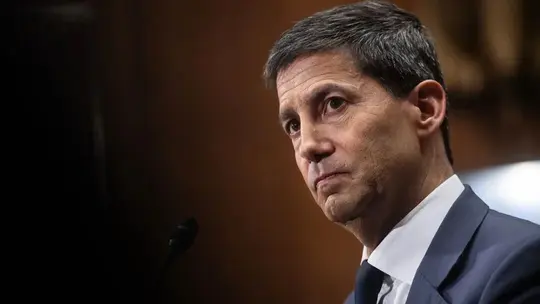
Kevin Warsh will sit before the Senate Banking Committee for his confirmation hearing. If all goes smoothly, he would become the first-ever Fed chair in history to have publicly invested in Polymarket, Solana, and Bitcoin Lightning Network startups.
But nothing will go smoothly.
Because in that hearing room, one of the 13 Republican committee members has already publicly declared he will vote “no”—regardless of what Warsh says. His name is Thom Tillis, Republican Senator from North Carolina.
His objection has nothing to do with Warsh personally. He opposes the nomination because the Department of Justice (DOJ) is still investigating current Fed Chair Jerome Powell.
The investigation began over the renovation costs of a single building.
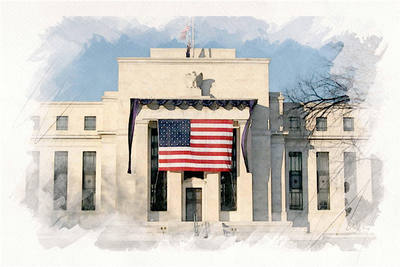
The $2.5 Billion Renovation Case: A Precision Strike Against the Fed’s Independence
The story begins in 2025.
The renovation of the Federal Reserve’s headquarters ballooned far beyond budget, ultimately costing approximately $2.5 billion. Powell testified about this before the Senate Banking Committee. Shortly thereafter, Washington, D.C. U.S. Attorney Jeanine Pirro launched a criminal investigation, alleging Powell may have made misleading statements to Congress—and issued a grand jury subpoena to the Fed.
Powell reacted unusually strongly. He publicly stated the real aim of the investigation wasn’t cost overruns—but rather, retaliation by Trump for Powell’s refusal to cut rates faster.
Tillis has sided with Powell. This Republican senator, who will retire in 2027 and thus faces no re-election pressure, delivered a blunt statement: “There is no room for negotiation on protecting the Fed’s independence from political interference or legal intimidation.”
His position is clear: He will not vote to confirm any Fed nominee—including Warsh—until the DOJ concludes its investigation into Powell.
The Republicans hold only a razor-thin 13–11 majority on the Senate Banking Committee. Without Tillis’s vote—and with Democrats almost certain to oppose en bloc—Warsh’s nomination cannot advance past the committee stage.
On the other side of the investigation, Prosecutor Pirro shows no sign of backing down. Federal Judge James Boasberg has already rejected her subpoena, ruling outright that “the government has submitted no evidence of fraud,” and suggesting the probe’s main purpose appears to be pressuring Powell. Pirro announced she will appeal—and publicly dismissed Tillis’s obstruction as “white noise.”
“I don’t know, and I don’t care. I’m proceeding through legal channels—I don’t care what they say.”
A three-way standoff. Warsh is caught squarely in the middle.
Who Will Sit in the Fed Chair’s Chair After May 15?
Powell’s term as chair expires on May 15—a hard deadline.
However, his term as a Fed governor runs until January 2028. That means he remains, legally, a member of the Federal Reserve Board even after his chairmanship ends.
Powell has made his position explicit: If Warsh is not confirmed by May 15, he will continue leading the Fed as “Acting Chair.” New York Fed President John Williams publicly endorsed this stance, stating the Federal Open Market Committee (FOMC) can “function normally” without further votes.
This creates an unprecedented scenario: Trump nominated a new chair—but the outgoing chair refuses to step aside, with both claiming rightful authority over that seat.
The White House clearly wants to avoid this. Treasury Secretary Scott Bessent told reporters last week: “We want Warsh confirmed as soon as possible.” National Economic Council Director Kevin Hassett expressed greater optimism, saying he is “highly confident” Warsh will be confirmed before Powell’s term ends. Senate Banking Committee Chairman Tim Scott predicted “the DOJ will wrap up its investigation in the coming weeks, and Tillis will ultimately vote ‘yes.’”
But these are hopes—not facts. The reality is: From the April 21 hearing to May 15, there are only 24 days. Within those 24 days, three steps must be completed: the hearing, the committee vote, and the full Senate vote. Under normal circumstances, this process takes weeks—or months.
And Tillis’s remarks to CNN today left zero ambiguity: “I won’t spend five minutes questioning Warsh about his qualifications—because he truly is qualified. I’ll spend five minutes talking about that false investigation—and until it ends, I will vote ‘no.’”
$192 Million Across 69 Pages: The Wealth Map of the Next Fed Chair
Amid this white-hot political battle, Warsh filed his 69-page OGE Form 278e financial disclosure on April 14. This document isn’t merely a procedural requirement—it’s a mirror, reflecting precisely who this potential next Fed chair really is.
First, scale. Warsh’s personal assets are valued between $131 million and $209 million; his wife Jane Lauder (a member of the Estée Lauder founding family, with a Forbes-estimated net worth of ~$1.9 billion) holds hundreds of millions more. If confirmed, he would become the wealthiest Fed chair in history—far surpassing Powell, previously considered the “richest Fed chair,” whose assets range from $19.7 million to $75 million. Core holdings include two separate investments of over $50 million each in Juggernaut Fund LP—linked to legendary hedge fund manager Stanley Druckenmiller’s Duquesne Family Office. Warsh received $10.2 million in consulting fees from Duquesne, $1.55 million from GoldenTree Asset Management, $750,000 from Cerberus Capital, and $750,000 from Brevan Howard—all institutions deeply engaged in crypto and macro trading.
Then comes the more intriguing part: Through DCM Investments 10 LLC and AVF series funds, Warsh holds equity stakes in a string of crypto and blockchain companies—including Blast (an Ethereum L2 network), Polymarket (a decentralized prediction market), Flashnet (a Bitcoin Lightning Network payments company), Tenderly (an Ethereum developer platform), SkyLink (a DeFi investment platform), Arena and DeSo (blockchain social networks), and Polychain (a crypto-focused investment firm). He previously invested in Bitwise, which manages a spot Bitcoin ETF.
Per OGE rules, these unvalued positions indicate each is worth less than $1,000—small in size, but highly significant in signal.
This is not someone who passively bought a spot Bitcoin ETF through a brokerage account. His holdings actively span the entire crypto ecosystem—from Layer 1 to Layer 2, from DeFi to prediction markets, from payment infrastructure to developer tooling—systematically positioning across a dozen frontier projects. Every sector he’s touched happens to fall squarely within the domains most directly impacted by the Fed’s regulatory and monetary policy decisions.
Warsh has pledged to divest all assets presenting potential conflicts of interest upon confirmation. OGE Certifying Officer Heather Jones confirmed he will comply with the Ethics in Government Act once those divestitures are complete.
Yet the question isn’t whether he’ll sell these positions. The question is: What does it mean for someone with such deep, hands-on knowledge of crypto infrastructure to occupy the Fed chair?
Two Paths, Two Worlds
The market now confronts a classic binary scenario.
Path A: Pirro withdraws the investigation, Tillis switches to “yes,” and Warsh assumes office by mid-May.
This is the scenario the White House is betting on. Scott Bessent publicly said, “Let the new chair, Warsh, lead the next rate-cutting cycle”—implying Warsh may move quickly to cut rates upon taking office. Though historically a hawk (he warned of inflation risks during the 2008 financial crisis—even amid recession), Warsh’s recent signals suggest he favors rate cuts. For crypto markets, a Fed chair who simultaneously understands the crypto ecosystem and leans toward looser liquidity represents the most favorable combination imaginable.
Path B: Pirro presses ahead with her appeal, Tillis holds firm, and Powell continues presiding as Acting Chair.
This scenario brims with uncertainty. Powell has explicitly stated he will not leave the Fed Board before the investigation concludes. If he continues chairing FOMC meetings and setting interest-rate policy in an acting capacity, Trump will face a Fed chair who is “nominally out of office but still wielding real power.” This constitutional-level dispute over the Fed’s independence could end up before the Supreme Court—which has yet to rule on Trump’s authority to fire Fed Governor Lisa Cook.
For markets, Path B means sustained uncertainty. Monetary policy direction will hinge on the outcome of a legal tug-of-war—and no one can predict its timeline.
What Does This Have to Do With Bitcoin? Everything.
On the surface, this is a Washington-style palace drama over Fed personnel. But for crypto market participants, every variable maps directly to asset prices.
Rate trajectory. Warsh’s confirmation would lift expectations for rate cuts. Bessent has already publicly signaled, “Let Warsh lead the next cycle.” Rate cuts are unequivocally bullish for risk assets. If Powell remains as Acting Chair, he will likely maintain a “pause” stance amid inflation risks stemming from the U.S.-Iran conflict—pushing rate cuts to late summer or even later.
Regulatory signaling. A Fed chair who invested in Polymarket, Tenderly, and Polychain—and one who once said “if I were the government, I’d shut down cryptocurrency”—represent worlds apart in terms of crypto regulatory outlook. Warsh has called Bitcoin “a good cop for policymakers,” arguing its price tells policymakers when they’re getting things right—or wrong. This cognitive framework makes hostile regulation of the crypto industry highly unlikely.
Stablecoin legislation. Warsh’s confirmation timeline overlaps tightly with Congress’s ongoing push for stablecoin legislation. A crypto-friendly Fed chair could significantly accelerate that process.
At next Monday’s hearing, Tillis will almost certainly use his five-minute questioning window not to ask Warsh a single question about monetary policy—but instead devote the full time to attacking Pirro’s investigation. That moment alone will dominate global financial headlines.
The real suspense lies not in the hearing—but in whether Pirro will drop the investigation before May 15, what Tillis’s true bottom line is, and—if neither side yields—whether Trump will intervene directly at the DOJ.
Thirty days remain until Powell’s term ends. Thirty days from now, whoever sits in the Fed chair’s seat will redefine the rules of global capital markets for the second half of 2026.
For crypto markets, these 30 days may weigh more heavily than any single FOMC meeting.
Join TechFlow official community to stay tuned
Telegram:https://t.me/TechFlowDaily
X (Twitter):https://x.com/TechFlowPost
X (Twitter) EN:https://x.com/BlockFlow_News
 深潮TechFlow