
Xiaomi fait son entrée, la percée des lunettes intelligentes chinoises avec IA est en marche
TechFlow SélectionTechFlow Sélection
Xiaomi fait son entrée, la percée des lunettes intelligentes chinoises avec IA est en marche
La sortie imminente des lunettes intelligentes Xiaomi déclenche une frénésie sur le marché, provoquée par un « ancien compte ».
 Dédié à des analyses Web3 approfondies
Image source : generated by Wujie AI
After the Xiaomi SU7, Lei Jun's next big hit of the era — Xiaomi's AI glasses — is about to arrive.
2024 was a year almost entirely dominated by Ray-Ban Meta in the AI glasses market. However, with Chinese manufacturers collectively ramping up efforts and entering the space en masse, 2025 will mark the phase of concentrated product explosions for AI glasses.
Among these Chinese players, "Xiaomi" stands out most prominently — whether considering its brand positioning, vast user base, well-established market channels, or its practical experience in AI + hardware integration. Indeed, the launch of Xiaomi's AI glasses is expected to elevate China's AI glasses market to a new level.
Xiaomi’s AI Glasses Imminent: A “Legacy Account” Sparks Market Frenzy
Xiaomi’s AI glasses are on the verge of launch, sparking continuous market speculation.
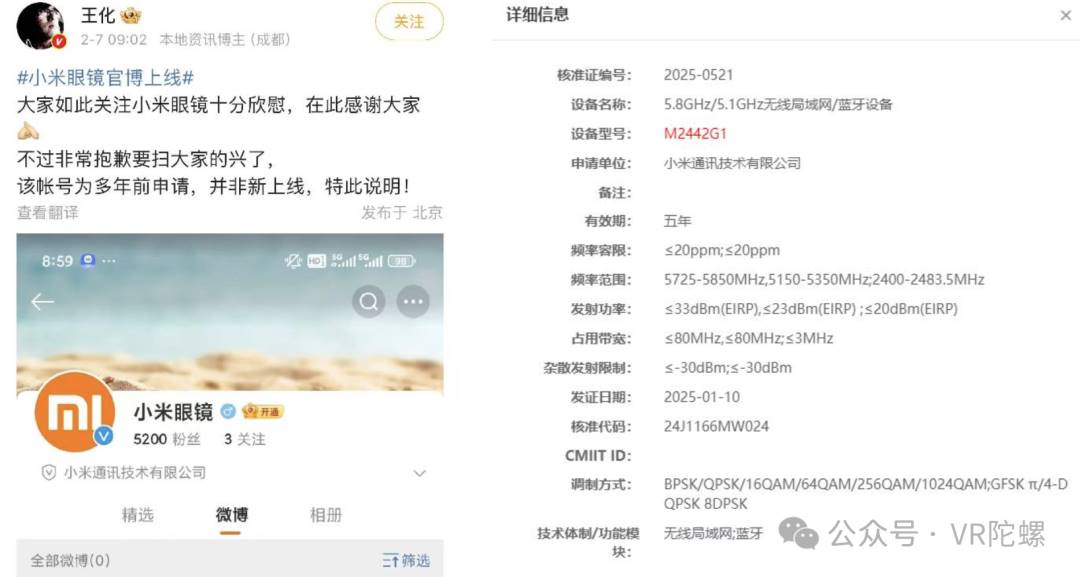
Although Wang Hua, General Manager of Xiaomi Group’s Public Relations Department, recently issued an urgent denial stating that “the official Weibo account for Xiaomi glasses was registered years ago and is not newly launched,” this response has instead left even greater room for imagination. From his highly formal phrasing, it's clear that Wang did not directly deny the possibility of a product launch — only emphasizing the account wasn't newly created — subtly implying related developments may still be underway.
In addition, rumors have widely circulated during this period that Xiaomi’s AI glasses have passed MIIT network access certification (model number M2442G1). Yet Wang Hua made no comment on this, seemingly confirming everything silently.
In fact, as early as November 2024, industry insiders reported that Xiaomi was collaborating with Goertek to develop a new generation of AI glasses, scheduled for release during the Mi Fan Festival in Q2 2025, with Lei Jun projecting annual sales exceeding 300,000 units.
Last year, Tuoluo learned from supply chain sources that Xiaomi’s AI glasses might come in two versions: one equipped with a camera module, and another basic audio-only interaction version (possibly an early test model), both targeting the mass market.
Additionally, there will be some innovative design elements aimed at enhancing battery life. This strategy aligns closely with Xiaomi’s established DNA of “extreme cost-performance” in consumer electronics, while also directly positioning the product against Ray-Ban Meta in terms of capabilities.
Why Are AI Glasses Xiaomi’s Next Growth Opportunity?
Xiaomi is entering the AI glasses arena to seek new market growth.
Starting as an internet-driven smartphone company, Xiaomi has grown rapidly since its founding in 2010. The latest data shows its market capitalization has surpassed one trillion yuan, officially elevating it from the “youngest Fortune Global 500 company” into the ranks of the global top 100 enterprises, surpassing giants such as Huawei, Panasonic, and LG.
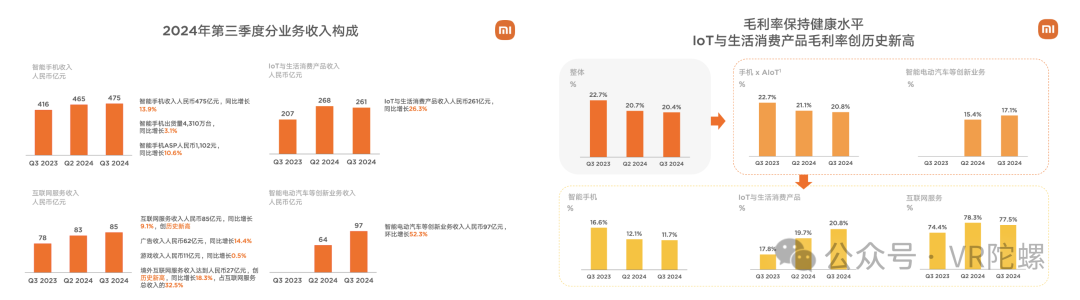
Beneath Xiaomi Group’s continuous growth lies not only substantial R&D investment centered around smartphones and ecosystem technologies but also its famed “Xiaomi variety store.” This diverse range of IoT and lifestyle consumer products plays a crucial role in Xiaomi’s revenue structure, as evidenced by the financial results from Q3 2024.
Xiaomi Group’s Q3 2024 financial report reveals that revenue from IoT and lifestyle consumer products reached 26.1 billion yuan, up 26.3% year-on-year, with a gross margin of 20.8%, increasing 3.5 percentage points. In contrast, smartphone revenue reached 47.5 billion yuan, but gross margin dropped to 11.7%, down 4.9 percentage points year-on-year. Meanwhile, the emerging smart electric vehicle business also stood out, generating 9.7 billion yuan in revenue, a quarter-on-quarter increase of 52.3%.
Therefore, in today’s context where the smartphone market has plateaued and margins continue to shrink, continuously expanding the “Xiaomi variety store” centered around its ecosystem to boost revenue and profitability has become essential for sustained growth.
Within the lineup of Xiaomi’s “variety store,” past consumer electronics logic has largely revolved around smartphones and Xiaoai speakers as central hubs, radiating outward into ecosystems. Given rising consumer demand for smart wearables and the deepening application of AI technology in portable devices, AI glasses represent a natural strategic fit.
AI glasses meet Xiaomi’s strategic need for business expansion and scenario extension beyond the smartphone core. On one hand, glasses are among the wearable devices closest to human senses, offering inherent advantages in first-person perspective data capture and AI-powered voice interaction. Leveraging smartphone computing power and cloud-based AI, they can enable real-time translation, image recognition, intelligent search, personal assistants, and many other diversified AI applications.
On the other hand, Ray-Ban Meta sold over a million units in 2024, validating market potential for “lightweight AI glasses.” Currently, China’s AI glasses market remains in its infancy, leaving significant room for growth. Research firm IDC forecasts global AI glasses shipments will reach 12.8 million units in 2025, a 26% year-on-year increase. Among them, China’s market is projected to ship 2.8 million units in 2025, surging 107% year-on-year.
From “AR Explorer Edition” to AI Glasses: Xiaomi Has Been Preparing for Years
In fact, like Meta, Xiaomi has long been investing in AR technology as the next-generation computing platform (excluding products within the Mi Ecosystem chain). As early as 2021, Xiaomi unveiled an AR glasses concept product based on Micro-LED and diffractive waveguides; in 2023, Xiaomi officially announced the Xiaomi Wireless AR Glasses Explorer Edition using Micro-OLED and freeform optics.
In terms of technical maturity, Xiaomi’s earlier AR glasses already demonstrated strong feasibility, comparable to similar offerings from various startups available on the market. However, Xiaomi refrained from rushing into commercialization — for major companies, entering a sector before a breakout product emerges carries high opportunity costs.
It wasn’t until the rise of AIGC and the success of Ray-Ban Meta that Xiaomi became more confident in this category. Although the AI glasses launching in 2025 could be seen as a streamlined version of previous AR models, powered by generative AI, they can already deliver numerous practical use cases via voice and camera sensors. More importantly, Xiaomi views AI glasses as a commercially viable end-consumer product.
For Xiaomi, AI glasses serve a role similar to Meta’s approach to smart glasses — acting as a transitional product toward future AR glasses. From a market trend perspective, current consumer electronics demand lightweight, portable, and efficient AI devices. AI glasses, through initial exploration in voice interaction and first-person vision, perfectly align with this direction, laying the groundwork in user awareness and technological application for advancing into more advanced, feature-rich AR glasses markets.
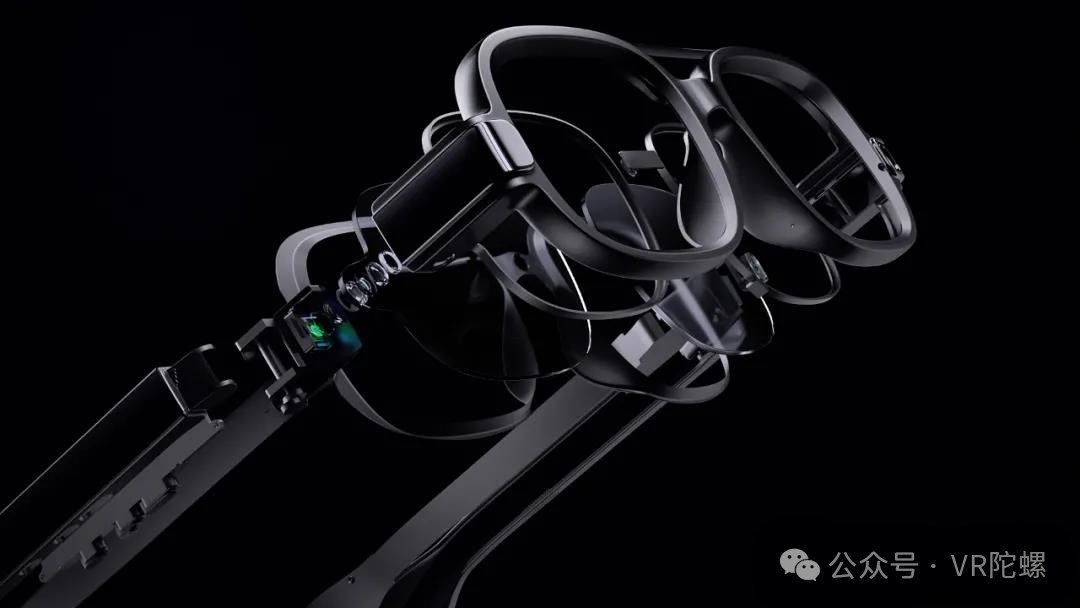
Xiaomi monocular AR glasses
Moreover, it's worth noting that compared to ordinary startups, smartphone makers genuinely possess certain technical advantages when developing AI glasses. In last year’s article “AI Glasses | Easy Supply Chain Access, Hard-to-Find High-Quality Products”, Tuoluo emphasized that for Ray-Ban Meta-style AI glasses, “audio” and “imaging” are the two most critical and technically challenging components.
A simple “voice interaction” function requires integration of multiple external microphones, noise-cancelling audio capture, and complex audio algorithms with hardware. “Image capture” directly affects public perception and market performance, making it critically important. Without manual focus like smartphones, AI glasses must achieve auto-focus, automatic color adjustment, and optimized sensitivity settings — a non-trivial challenge for startups. Furthermore, chip selection and cost trade-offs are equally vital.
However, noise reduction algorithms, sound pickup algorithms, imaging algorithms, and AI voice interaction systems are areas where large smartphone manufacturers like Xiaomi have already accumulated extensive technical expertise through TWS earbuds, smart speakers, and smartphones. Compared to startups, they require far fewer adjustments and benefit from system-level software ecosystem permissions, enabling seamless integration with the broader smartphone ecosystem — giving them a clear technical edge. All of this makes us even more eager to see how Xiaomi’s AI glasses will differentiate themselves technologically.
Xiaomi’s AI Glasses: The Catalyst for Breaking Through China’s AI Eyewear Market?
In 2025, the AI glasses sector is crowded with giants: Meta plans to launch six AI wearable devices this year, while Samsung, Huawei, OPPO, Thunderbird Innovations, Starry Night Meizu, Baidu, Rokid, and others are all watching closely. Amid this global “battle of a hundred glasses,” Xiaomi’s entry could spark a disruptive “mackerel effect” in China’s market.
Looking at the current landscape, China’s AI glasses sales remain far below overseas levels, yet industry enthusiasm is high. From a marketing standpoint, the domestic market lacks a viral hit like Ray-Ban Meta to strengthen consumer awareness and stimulate purchase intent.
Xiaomi’s brand strength cannot be underestimated. Over the years, Xiaomi has built legendary status through high-value products and a rich ecosystem, creating fertile ground for promoting its AI glasses thanks to its massive user base.
Against this backdrop, Xiaomi’s entry into the AI glasses market will undoubtedly expand the overall size of China’s domestic AI eyewear industry, opening up a much larger incremental market.
Bienvenue dans la communauté officielle TechFlow
Groupe Telegram :https://t.me/TechFlowDaily
Compte Twitter officiel :https://x.com/TechFlowPost
Compte Twitter anglais :https://x.com/BlockFlow_News