








Web1, Web2, Web3: What Are the Differences?
TechFlow Selected TechFlow Selected
Web1, Web2, Web3: What Are the Differences?
The next stage of internet development is characterized by its speed, security, and transparency in preserving the financial value of digital media.
 Navigating Web3 tides with focused insights
By Suzytu
The next stage of internet development is known for its speed, security, and transparency in preserving the financial value of digital media.
The term Web 3.0 was originally coined by Dr. Gavin Wood in a blog post describing breakthroughs enabled by a decentralized internet. Given that governments and tech giants continue to overstep privacy and trust boundaries granted to them, developers are attempting to replicate cloud-based centralized models to reduce privacy risks and enhance resilience against DDoS cyberattacks.
Web3 is a set of protocols providing building blocks for decentralized application (dApp) developers. These building blocks replace traditional web technologies like HTTP and MySQL, offering new ways to create web applications. Web3 provides secure and verifiable assurances regarding users' information reception, data sharing, and economic transactions—ensuring personal sovereignty. By empowering users with greater online autonomy, Web3 minimizes data-related single points of failure (SPoF), censorship, and breaches of trust.
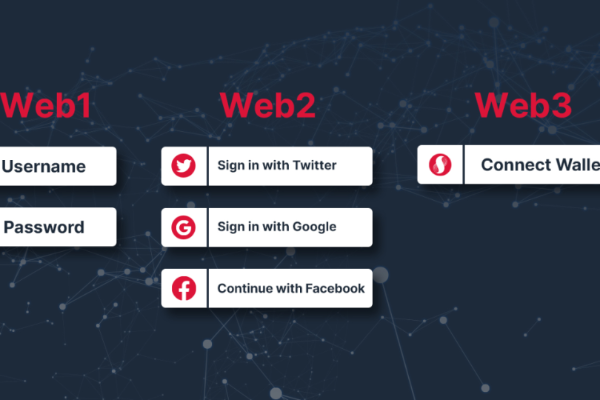
Readers may wonder how previous versions of the web could be defined, thus requiring a brief historical overview. As we know today, Web1 was the first generation of the internet—a collection of static HTML pages with little to boast about in terms of user experience.
Moreover, payments were not possible on Web1—because the infrastructure had not yet been developed.
In fact, it was common for some time to speak with an operator and read out credit card details over the phone. The first era of the internet can be said to have ended in the mid-2000s with the rise of mobile phones and apps.
Therefore, social media, search engines, financial transactions, music and video sharing, and mobile apps are all representative of Web2.
Fundamentally, Web2 is about interactivity, file sharing, and financial connectivity. Additionally, as hardware and software continued improving—becoming faster and smaller—the user experience became clearer and more intuitive.
However, these experiences were all filtered through internet service providers, directing users toward third-party platforms that collect and store personal data, often selling it without users’ knowledge or consent until afterward. Thus, lack of privacy, data centralization, risks of management or outright censorship, and absence of digital ownership infrastructure motivated developers to address these issues—leading to the birth of Web3 following the release of the Bitcoin whitepaper.

What makes Web3 unique is that users interact with dApps via digital wallets, which serve as their unique identifiers and provide access to digital assets on blockchain networks.
Unlike relying on trusted third parties to protect our personal data and financial assets, Web3 is characterized by cryptographic protection of financial scarcity, individual sovereignty over personal data, and elimination of single points of failure through decentralized and distributed networks.
Since digital scarcity can now be preserved and verified on blockchains, robust and complex financial interactions are now possible online—increasing global liquidity and opening possibilities for new forms of economic activity and collaboration. Ultimately, Web3 makes the internet more similar to the real world, where users aren’t trapped in data silos or at risk of censorship due to gatekeeper behavior.
The Web3 Stack: Blockchains, Cryptographic Assets, dApps, and Oracles
First, blockchains are secure, decentralized networks with shared financial ledgers that allow people to store and exchange value without needing a third-party host. Blockchain networks form the foundation of the Web3 stack, providing a secure settlement layer for cryptographic assets and decentralized applications (dApps).
Cryptocurrencies act as economic incentive systems that govern blockchains and ensure accountability among stakeholders. These assets and their ownership are cryptographically secured and verifiable on transparent ledgers shared among network participants, offering tamper-proof mediums of exchange and digital stores of value. Other cryptographic assets can be programmable and even useful when utilizing protocol functions (e.g., indexing on The Graph).
Stablecoins are also highly useful as cryptographic assets, allowing users to trade more volatile cryptocurrencies without leaving the Web3 ecosystem. Non-fungible tokens (NFTs) are another wonderful invention of Web3. Because blockchains, digital assets, and smart contracts are immutable and transparent, they protect digital property in such a way that the internet can arguably better safeguard and transfer value than anything we've experienced before.
Decentralized applications differ from the mobile and desktop apps most people are already familiar with. Instead of a single entity maintaining data as a separate task, dApps are supported by decentralized infrastructure composed of network participants, each holding their own copy of the blockchain ledger along with associated activity history.
Although seemingly harmless, the decentralization trend in Web3 is promoting the proliferation of automated peer-to-peer (P2P) financial services such as decentralized exchanges, NFTs, smart contracts, blockchain games, metaverses, tokenization and financialization of assets, and more.
Despite optimistic prospects, challenges remain in fully leveraging Web3’s potential. To unlock its full capabilities, blockchains and their dApps require accurate data from sources outside the blockchain network—otherwise, blockchains would be limited to data stored only within their own ledger histories. Therefore, oracles are needed to connect blockchains to external data, making their security crucial for building strong, interoperable Web3 networks.

Decentralized oracles remain key to Web3 interoperability and the security of digital assets both on and across blockchain networks.
Thus, oracles retrieve and verify financial data for blockchains and DeFi applications, but they can also provide secure off-chain computation, such as verifiable randomness to enable dynamic NFTs and automated dApps or DAOs. Moreover, SupraOracles are inherently interoperable, meaning our oracle network will help ensure compatibility among various blockchains and Layer-2 scaling solutions for secure transactions, amplifying their network effects through synergy.
Oracles will serve as backend enablers of composability between Web2 and Web3, acting as an interoperability layer and guardian of data security as information flows back and forth between blockchains and their dApps. Essentially, oracles extend cryptographic guarantees beyond just blockchains, dApps, and cryptographic assets—exponentially increasing Web3’s composability and economic potential.
Web3 Banking, Cryptocurrency Exchanges, and Money Markets
With Web3’s decentralized model and permissionless P2P infrastructure, advocates aim to create a fairer, more transparent internet. Fundamentally, this technology enables individuals to participate in complex global financial arrangements with unprecedented levels of security, transparency, and equitable access. Web3 dApps leveraging the aforementioned technology stack have already unlocked disruptive use cases in finance, gaming, real estate, insurance, education, healthcare, and other fields.
In contrast to centralized, trusted entities in traditional finance, Web3-based DeFi protocols leverage distributed networks and data sovereignty to disrupt banking and asset trading through trustless, decentralized algorithms. Apps like MetaMask and Uniswap allow users to hold cryptographic assets and trade them in purely peer-to-peer markets. Furthermore, companies like Celsius essentially offer high-yield savings accounts and lending services for cryptographic assets, providing interest rates even more attractive than those offered by the most generous fiat financial institutions.
Beyond DeFi exchanges and wallets, lending markets like Aave enable users to access non-custodial lending products. Users deposit crypto collateral at varying interest rates based on the loan-to-value ratio of borrowers’ collateral and borrow other crypto assets, such as fiat-backed stablecoins. Web3 lending products typically require users to overcollateralize before borrowing, unlike banks that only hold a fraction of lent funds.
Crypto lending might not seem like technology “for the people,” but healthy, collateralized money markets encourage investment and proper resource allocation—since money must be repaid to avoid significant losses, unlike penalties tied to personal credit scores. Peer-to-peer money markets like Aave incentivize dormant assets to become liquid and offer fairer access to capital, especially for those excluded from traditional loan underwriting criteria.
Web3 Gaming and Non-Fungible Tokens
While fintech products and services are the most obvious use cases, Web3 goes beyond DeFi and lending protocols. From gaming to private internet browsers, to minting and trading NFTs, Web3 is entering nearly every aspect of online experiences and interactions.
First, play-to-earn games like Axie Infinity are leading a massive shift in how gaming communities perceive cryptographic assets. Players mint their characters as NFTs and “train” them to improve their abilities throughout the game.
These NFT characters can then be sold on secondary markets to new players who want to experience advanced-level gameplay without spending time training their own avatars. As a result, entire economies emerge within gaming communities, with some players earning enough income from games to support themselves economically—especially in low-income regions.
NFTs are, by nature, unique items that can be verified on a blockchain. They can be as simple as digital art with unique identifiers—like Bored Ape Yacht Club NFTs—but can also grant owners interesting privileges, such as access to live events. Their immutability and proven ownership on blockchains give them demonstrable rarity—even stronger than what might be found in the physical world.

The Bored Ape Yacht Club series is a favorite among the wealthy and celebrities, with participation requiring substantial amounts of Ethereum.
By minting unique tokens on a blockchain, one cryptographic asset can be distinguished from another—just as a genuine Apple iPhone can be differentiated from a cheap counterfeit made by a manufacturer. With NFTs, such verification can be easily conducted, recorded, and maintained even after ownership has transferred thousands of times. For brands frequently counterfeited, this authentication application should be obvious.
The impact on artists and creatives cannot be overstated. Indeed, the innovation of non-fungible tokens could spark a kind of renaissance, as creators can now effectively monetize their content. Major players in the video game industry are also planning to adopt cryptographic assets like NFTs. Microsoft announced plans to acquire gaming giant Activision Blizzard, and undoubtedly, NFTs and the metaverse will continue rising in the foreseeable future.
Is It Time for Web3 FOMO?
Web3 is already transforming how users interact online—from how we invest and exchange value, to the games we play, to artistic and creative expression on social media, or whatever comes next. We are witnessing the implementation of cryptographic assurances into mainstream awareness and industrial operations, adding a layer of accountability to the internet.
An increasing number of users and institutions worldwide are seeking the power of Web3’s trustless, immutable, and verifiable financial protocols; however, most people still don’t know what a blockchain is. Since we know we’re still early on the Web3 timeline, this should be inspiring—but on the other hand, most people won’t need to fully understand it, and we won’t either.
Just as the underlying technologies powering Web1 and Web2 did, the next generation of the digital realm will increasingly hide much of its complexity beneath stunning and intuitive interfaces. While Web3 is still in its infancy, history may look back on this period as humanity reaching a significant global threshold and discovering fair, transparent financial markets for the first time.
Join TechFlow official community to stay tuned
Telegram:https://t.me/TechFlowDaily
X (Twitter):https://x.com/TechFlowPost
X (Twitter) EN:https://x.com/BlockFlow_News






