








Deconstructing Web3 Infrastructure Alchemy: A $3.5 Billion Valuation, the AWS of the Web3 World
TechFlow Selected TechFlow Selected
Deconstructing Web3 Infrastructure Alchemy: A $3.5 Billion Valuation, the AWS of the Web3 World
Web2.0 saw the rise of browsers and mobile operating systems, with Apple and Google dominating the market. If Web3 truly arrives, Alchemy—a key infrastructure player in the crypto ecosystem—will be a company worth studying.
 Navigating Web3 tides with focused insights
By Alpha Rabbit
In the Web1.0 era, IBM underestimated the personal PC market, while Microsoft quickly entered this space through Windows. In Web2.0, browsers and mobile operating systems flourished, with Apple and Google dominating the market. If Web3 is truly coming, then Alchemy—a key infrastructure player in the crypto ecosystem—is a company worth studying.
Founded by serial entrepreneurs with Stanford undergraduate and graduate degrees, Alchemy’s valuation surged from $100 million to $3.5 billion within a year. Its investors include celebrities like Jay Z and Will Smith, and its users include OpenSea.
What is the story behind Alchemy's founding and growth? What insights does its development offer us? How do investors perceive this company? And what potential challenges might such companies face? These are the questions this article aims to explore.
Note: This account provides no investment advice nor accepts any PR requests. This article does not constitute any investment recommendations.
Article Structure
1. Company Overview
Founder Background
Funding History
Alchemy Users
2. Summary and Business Model
Business Model: Alchemy — The AWS of the Crypto Industry
What Needs Does It Fulfill?
3. Alchemy’s Development Journey
It’s All About User Experience
Why Launch Alchemy Notify? What Market Pain Points Exist?
A Set of Data
Current Issues in Blockchain Development Environments
Alchemy’s Applications in DeFi
User Feedback
4. Investor Perspectives
A16Z
5. Other Evaluations
Potential Challenges Facing Alchemy
6. Founders’ Vision
I. Company Overview
Alchemy's goal is to become the AWS (Amazon Web Services) of the Web3 world — Alchemy
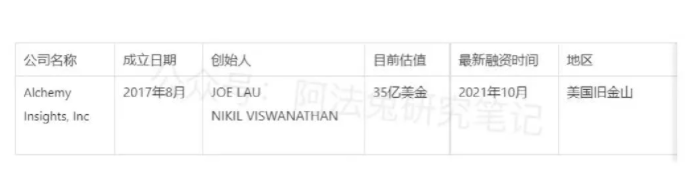
Founded in 2017, Alchemy is a blockchain infrastructure company primarily focused on providing blockchain development platform services for developers to enhance user experience. Currently operating across 197 countries worldwide, it serves millions of users.
By building developer tools and computing infrastructure, Alchemy aims to enable a MultiChain future. Developers and engineers can use Alchemy’s tools and computational infrastructure to build applications across various blockchains. In 2021, Alchemy supported over $45 billion in Web3 transactions globally through cross-chain operations, serving tens of millions of users.
1) Founder Background
Co-founder & CEO
Nikil Viswanathan, CEO
Serial entrepreneur, holds bachelor’s and master’s degrees in computer science from Stanford University, and was also co-founder of the popular social app Down To Lunch. Nikil previously worked in product roles at Google, Microsoft, and Facebook.
Co-founder & CTO
Joe Lau, CTO
Joe Lau graduated from Stanford University with bachelor’s and master’s degrees in computer science. He is Alchemy’s CTO and co-founder, a serial entrepreneur who previously worked as an engineer at Pinterest, Google, and LinkedIn.
Both founders were creators of the social platform Down to Lunch. They are known for their boldness and frugality. Once, when tens of thousands of text messages flooded into Down to Lunch, Nikil’s iMessage crashed. He boldly emailed Apple CEO Tim Cook saying, “You’re our only hope,” and Cook personally helped resolve the issue. These two entrepreneurs are well-known in startup circles for their cost-conscious approach—Joe Lau once stayed in the office continuously for six days, and many employees at their previous company used cardboard boxes as desks.
2) Funding History
April 2019: Alchemy secured its first round of funding;
December 2019: Series A raised $15 million led by Aditya Agarwal and other institutions;
April 28, 2021: Series B raised $80 million at a $500 million valuation;
October 28, 2021: Series C raised $250 million, pushing the valuation to $3.5 billion;
Investors include former Citigroup CEO Vikram Pandit, DoorDash CEO Tony Xu, Morgan Stanley President Vikram Pandit, Alphabet Chairman John Hennessy, Coinbase, as well as entertainment figures including actor Will Smith and renowned musician Jay Z.
3) Alchemy Users
Key clients of Alchemy:

Users
Enterprise-level users of Alchemy include Binance Wallet, OpenSea, CryptoKitties, Kyber, 0x, Gods Unchained, Opera, Maker, and others. It is estimated that around 70% of top-tier blockchain applications will be using Alchemy’s developer tools, which could represent significant progress in terms of application quality and time-to-market.
II. Summary and Business Model
1) Business Model: Alchemy — The AWS of the Crypto Space
Alchemy’s goal is to become the AWS (Amazon Web Services) of the Web3 world. Founder Nikil believes that the Web3 ecosystem includes various types of applications and software programs running on blockchains. In the Web2.0 era, Amazon expanded beyond e-commerce into AWS, now accounting for two-thirds of Amazon’s profits and valued at over a trillion dollars. Alchemy is a similar concept but tailored for the blockchain industry as a development platform. Today, Alchemy supports nearly all NFTs (engines) globally.
More specifically, Alchemy functions like a B2B software development stack, enabling developers to easily build blockchain-based applications. Blockchains and DApps need ways to interact—Alchemy offers out-of-the-box solutions so developers can focus on building user-facing applications rather than managing backend complexities.
2) What Needs Does It Address?
In the blockchain industry, companies typically spend tens of thousands of dollars setting up and maintaining nodes to read and write data on blockchains. Common issues include slow speeds, high costs, and excessive engineering resource consumption. Worse still, node architectures often fail to support large-scale applications or load balancing across servers. When nodes return inconsistent block numbers due to synchronization errors, serious problems arise. If blockchain applications run slowly, contain bugs, or crash entirely, engineers end up spending most of their time firefighting.

Alchemy employs a completely different decentralized architecture, separating different types of data into specialized storage systems to improve speed and reliability. This allows developers to build on-chain applications with fewer engineering resources—much like how AWS operates.
III. Alchemy’s Development Journey
“Push notifications are an essential part of fulfilling user needs and critical to the flourishing of the entire DApp ecosystem. User experience is absolutely vital—users expect blockchain products to be at least as good as traditional web and mobile products, if not better.”
When Alchemy first started, the market size was only about $5 million—they entered the space relatively early. In 2018, Alchemy joined Google’s Launchpad Studio accelerator program.
1) 2020: It Was All About User Experience
In 2020, Alchemy launched a new feature: Alchemy Notify, push notifications designed for developers. This feature aims to replace enterprise-run blockchain read/write nodes with convenient, scalable infrastructure. Designed to coexist with developer platforms, it provides tools for monitoring, alerts, and debugging cryptocurrency software.
2) Why Launch Alchemy Notify? What Are the Market Pain Points?Where Is the Market Hurting?
User experience in the crypto space has long been criticized, mainly because transactions are relatively complex for average users. Critics argue that due to this complexity—for example, finalizing transactions on many blockchain protocols takes considerable time—cryptocurrencies remain far from mainstream adoption.
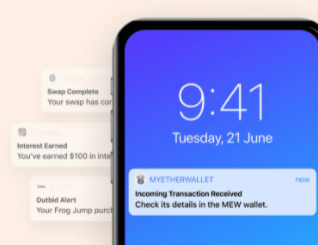
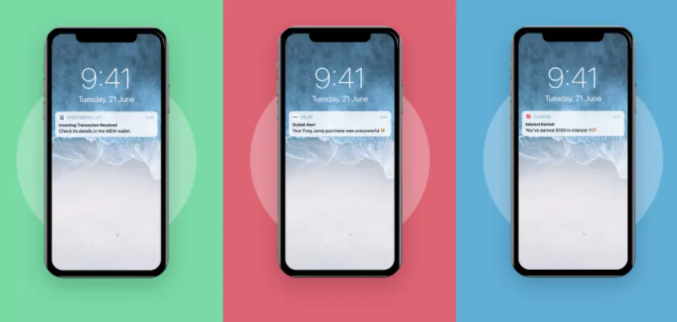
The notification feature greatly enhances developer interaction with blockchain programs. Users can stay informed in real-time about events related to their blockchain activities—such as interest earned, missing tokens, live bids on their NFTs, transaction status—and save substantial time.
According to Alchemy’s CEO, solving user pain points must always come first. “For the blockchain industry to succeed, we must create simple, accessible products for everyday users. Alchemy focuses on equipping developers with the capabilities needed to deliver these intuitive user experiences.”
3) A Set of Data
Research firm Airship analyzed data from 63 million app users, finding that users who received notifications within the first 90 days after installation were approximately 300% more likely to continue using the app, with retention rates improving by 820%.
In productivity-type apps, users receiving push notifications had retention rates 460% higher than those who didn’t.
This indicates that users in the crypto ecosystem need greater engagement with dApps and applications. To address this pain point, the Alchemy Notify team surveyed hundreds of developers and identified major UX shortcomings in the crypto space.
According to Alchemy CTO Joe Lau, Alchemy Notify was introduced to make blockchain products as simple and easy to use as traditional web/mobile applications. By referencing the transformative impact push notifications had on the mobile app ecosystem during the Web2.0 era, one can appreciate the significance of Notify.
Diagram of Alchemy Notify Functionality
In July 2020, Alchemy announced plans to launch Alchemy Build, aiming to revolutionize current issues in blockchain development with new tooling designed to be more developer-friendly.
4) Current Problems in the Blockchain Development Environment
Internal research at Alchemy shows blockchain engineers spend up to 12 hours per week on debugging, customer issues, and release cycles—high time costs that stifle innovation.
Alchemy Build is an out-of-the-box solution requiring no configuration. The toolkit includes Explorer, which allows searching historical requests, identifying errors, and optimization opportunities; Mempool Visualizer, enabling developers to view real-time transaction statuses on-chain; Composer for prototyping and modeling; and Debug Toolkit, offering real-time code inspection via visualizations.
For the blockchain industry—where decentralized finance, enterprise operations, public chains, and other critical areas are involved—deployment reliability is paramount. Some blockchain firms offer bug bounties to white-hat hackers who find vulnerabilities in their code, while others delay project launches upon discovering exploitable bugs.
In the future, adopting developer tools like Alchemy Build could help solve some of these problems. “Many blockchain developers keep reinventing the wheel on the same issues. With Alchemy Build, development steps can be simplified.”
“Web2.0 has industry-standard tools like DataDog that improved prototyping and debugging efficiency. But in blockchain, we’re still asking people to perform basic tasks like decoding hexadecimal instead of focusing on creating the next breakthrough application.”
In August 2020, Alchemy publicly released its official version.
“Alchemy’s mission is to make blockchain accessible to all developers and bring the magic of blockchain to everyone worldwide—our ongoing commitment is empowering blockchain developers.”
5) Alchemy’s Applications in DeFi
In DeFi, Alchemy provides solutions for MakerDAO, 0x, and other DeFi projects. In August 2020, CEO Nikil stated that over 70% of prominent Ethereum applications—with more than $2.8 billion in assets deployed in DeFi—use Alchemy to access blockchain data.
Roham Gharegozlou, CEO of Dapper Labs and an Alchemy user, said startups leverage Alchemy to “manage infrastructure” along with “enterprise-grade developer tools and support,” boosting efficiency. By paying fees to startups like Alchemy, developers gain access to infrastructure and hardware tools, simplifying blockchain data usage and allowing blockchain startups to focus more effectively on end users.
6) From the Users’ Perspective
From April 2021 to August 2021, Alchemy’s revenue grew tenfold, with clients including OpenSea, Nifty Gateway, UNICEF, and the Big Four accounting firms.
Kent Barton, Head of R&D at ShapeShift, noted: “Using Alchemy Build’s suite of developer tools gave us greater convenience in developing Web3 infrastructure. When launching our blockchain product Microtick, being able to concentrate on core development was crucial.”
Sid Sethi, senior engineer at Audius, said: “With Alchemy Build, our monthly listeners grew to over 200,000. These developer tools saved us countless sleepless nights debugging code.”
In April 2021, Alchemy raised $80 million in Series B funding, reaching a $500 million valuation.
In October 2021, Alchemy raised $250 million in Series C funding, achieving a $3.5 billion valuation.
In 2022, Alchemy’s CEO stated that the Series C funds would be used to further consolidate existing market share and expand into the crypto ecosystem and adjacent business areas.
Blockchain applications are becoming increasingly widespread. More users are joining the crypto space, using blockchain apps to buy and sell assets, play games, store data, and more. All these activities must run securely, resiliently, and efficiently on software. With Alchemy, developers can build applications on blockchains—making it one of the cornerstones of the cryptocurrency ecosystem.
As crypto adoption grows, company valuations are expected to rise accordingly. By the end of 2021, applications built on Alchemy facilitated nearly $30 billion in transactions, serving around ten million users. Most NFT companies worldwide now use Alchemy.
IV. Investor Perspectives
Ali Yahya from A16Z
Modern blockchains are programmable—like personal computers or smartphones, they can be seen as a new type of computer with unique capabilities: allowing programmers to write code that makes enforceable promises. For example, Bitcoin’s promise that there will only ever be 21 million bitcoins.
Every new type of computer requires its own operating system, platform, and set of tools to make it easy for developers to build new things. Personal computers were driven by Mac OS and Windows; smartphones by iOS and Android. For cloud computing, we use AWS, Azure, and Google Cloud. Apple, Google, Amazon, and Microsoft became among the most influential and valuable companies in human history by building these platforms.
Just as Apple and Amazon created platforms for developers on PCs, smartphones, and the cloud, Alchemy is building the operating system and developer platform for the upcoming Web3 era. Alchemy is establishing a platform company that empowers developers in the modern blockchain ecosystem.
The founders are focused and mission-driven, with grand vision and strong execution ability. They possess excellent team-building skills and quickly assembled a world-class entrepreneurial team.
From a business metrics standpoint, Alchemy’s growth over the past year has been remarkable, rapidly outpacing its competitors. The Alchemy platform currently supports most leading companies and protocols in the Web3 space—including Aave, Axie Infinity, Dapper Labs, Flow, and OpenSea—all of whom are Alchemy users. Annually, over $45 billion in Web3 transactions occur on Alchemy’s infrastructure, and this number continues to grow rapidly.
V. Other Evaluations
What Potential Challenges Does Alchemy Face?
The biggest threat facing the company is how quickly the crypto sector will grow into a massive market. Although Alchemy has made substantial revenue selling toolkits and service packages priced in tens of thousands of dollars, true breakthrough success lies in spinning the flywheel of blockchain developers and delivering services to mainstream users at scale.
As a company focused heavily on development and engineering, shifting toward sales—convincing enterprises to outsource critical parts of their infrastructure to Alchemy—remains challenging. Alchemy only recently hired its first dedicated salesperson to pitch to corporate giants interested in blockchain. However, since Alchemy genuinely solves industry problems and meets real needs, performance has remained solid.
VI. Founders’ Vision for Alchemy
“In the coming years, we truly aim to empower the growth of the entire blockchain industry and work hard to bring this technology to everyone on Earth. The blockchain industry still faces numerous challenges.”
“In Silicon Valley, there are two somewhat inflated metrics for startups: how much money you’ve raised and how large your team is. But in reality, we prefer to minimize both while achieving success.”
“Technological paradigm shifts usually happen every 20 to 30 years. If we’re facing a large-scale technological shift, we have the opportunity to build a true infrastructure company in this field. That’s our vision—it’s about more than just money.”
What do you think about Alchemy’s future? Will it become the ‘AWS’ of the blockchain ecosystem?
Join TechFlow official community to stay tuned
Telegram:https://t.me/TechFlowDaily
X (Twitter):https://x.com/TechFlowPost
X (Twitter) EN:https://x.com/BlockFlow_News


![Axe Compute [NASDAQ: AGPU] completes corporate restructuring (formerly POAI), enterprise-grade decentralized GPU computing power Aethir officially enters the mainstream market](https://upload.techflowpost.com/upload/images/20251212/2025121221124297058230.png?x-oss-process=image/resize,p_50/quality,q_80)






