EIP-1559 Deep Dive | ChainBreaker Podcast Episode 4 Recap
TechFlow Selected TechFlow Selected
EIP-1559 Deep Dive | ChainBreaker Podcast Episode 4 Recap
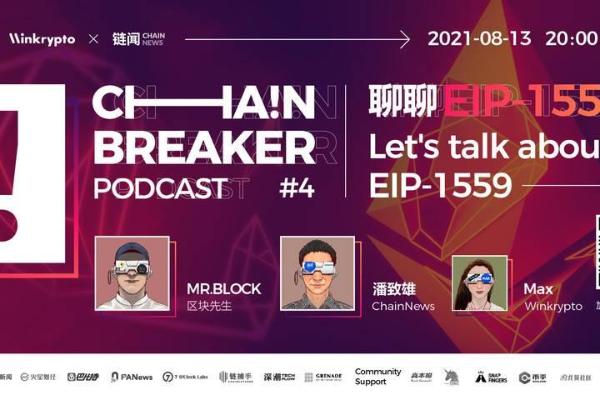
In this episode, ChainNews Research Director Pan ZhiXiong was joined by Mr. Block (Chris) and Winkrypto's Max for an in-depth discussion on the hot topic "Let's Talk About EIP-1559."
 Navigating Web3 tides with focused insights
Below is a summary of key insights from this live session.
Background
At 20:33 Beijing time on August 5, the highly anticipated Ethereum London upgrade was completed. The upgrade included multiple proposals, with EIP-1559 being the most prominent. This episode of "Discussing EIP-1559" focused on the impact of EIP-1559 on token economics, miner income, and user experience.
Chris from Mr.Block
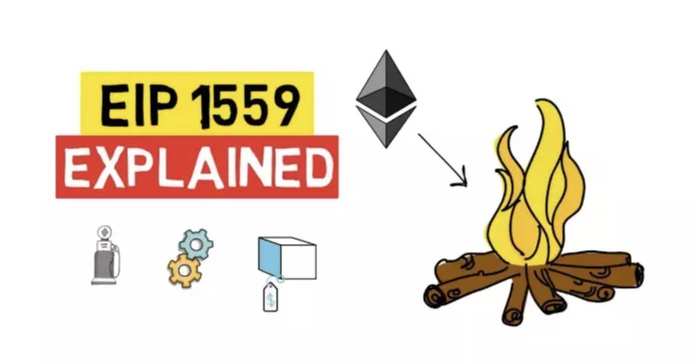
The core idea of EIP-1559 is to shift Ethereum from an inflationary state to a deflationary one by burning part of the gas fees. To date, more than $100 million worth of ETH has already been burned, marking a positive turning point in the token's economic model.
OpenSea's current trading volume is about 1.5 to 2 times that of Uniswap.
Lock-up amounts for MakerDAO, Liquity, and Ethereum 2.0 have increased significantly, with nearly 10% of all ETH now locked. These lock-up volumes continue to grow daily, especially with Ethereum 2.0. With so much supply moving into staking and gas fees being burned, Ethereum may now have favorable conditions across timing, infrastructure, and community support.
NFTs are currently experiencing a significant bubble—investors should be cautious, and those who don't understand the space should avoid participation.
Miners' earnings have been decent recently, but they largely come from OpenSea and Axie Infinity, both of which are seeing extremely high transaction volumes, new user inflows, and trading activity. Once the bubble bursts, miner revenues will likely decline.
Miner exodus could impact the entire network, affecting stability, gas fees, and the overall Ethereum ecosystem.
Zhixiong Pan, ChainNews
Users without wallets compatible with EIP-1559 may end up paying higher gas fees compared to those using updated wallets.
Previously, Ethereum’s transaction costs were entirely market-driven: as long as you paid above-average gas fees, your transaction would be prioritized in the next block. Under EIP-1559, gas fees are split into two components: a Base fee (same for everyone) and a Tip (optional extra). The Base fee, regardless of amount, is permanently burned, contributing to deflation.
The basic logic of EIP-1559: Ethereum previously had a fixed block gas limit of 15 million. After the upgrade, the block capacity can now scale up to twice that—30 million gas. However, if usage exceeds 15 million, the Base fee for the next block increases. Thus, as demand rises, so does the Base fee.
Currently, around 3 ETH are being burned per minute. Each block still rewards approximately 2 ETH. At this rate, Ethereum remains inflationary—though at a reduced pace—since issuance still outpaces burn rates.
Ethereum would need Base fees between 130–150 gwei to reach a neutral monetary state—neither inflationary nor deflationary. At such levels, a simple ETH transfer could cost close to $10, while other transactions might range from tens to over a hundred dollars.
Before transitioning to PoS, it will remain very difficult for Ethereum to become a fully deflationary network.
EIP-1559 was first proposed two or three years ago but only implemented now. Two main factors likely contributed: last year’s DeFi boom caused sustained high gas fees, and during Ethereum’s transition from PoW to PoS, developers sought to gradually reduce miners’ revenue and influence within the ecosystem through 1559.
EIP-1559 doesn’t lower gas fees—it only restructures them. Block capacity and average transaction throughput remain roughly constant long-term. Whenever demand increases, gas prices will rise accordingly.
However, EIP-1559 improves predictability. Users submitting transactions can better estimate confirmation likelihood and volatility, which is less extreme than before. This helps moderate spikes in gas fees. From a UX perspective, it’s slightly improved.
Still, EIP-1559 adds complexity. Previously, users set just one parameter; now they must consider both Base and Tip. Most users simply want to know what price ensures timely execution—e.g., completing a transaction within 30 seconds—or whether lowering the fee will delay confirmation. Wallets like MetaMask are abstracting this complexity by offering low, medium, and high fee presets (defaulting to medium), where medium typically confirms in 30 seconds to one minute.
Ultimately, Layer 2 solutions and future scaling technologies will have the greatest impact on Ethereum’s value proposition. Ethereum’s success depends heavily on the applications it enables and its platform characteristics. To attract 10x more users, much greater capacity is essential. Scalability solutions that inherit Ethereum’s security—like Rollups—are critical to expanding the ecosystem. These allow broader access to Ethereum-based apps with lower fees. Sidechains, however, are less promising in the long run. Rollups leverage Ethereum’s security while increasing capacity and adoption.
Q&A
1. Will EIP-1559 reduce transaction fees? What impact will it have on sidechains?
Zhixiong Pan, ChainNews: EIP-1559 won’t reduce transaction fees. Sidechains still serve a purpose—they enable certain transactions at very low costs. Therefore, sidechains will continue to have niche use cases and applications offering ultra-low-cost services.
About ChainBreaker
The "ChainBreaker" livestream series is initiated by Winkrypto, a global blockchain marketing agency, co-presented by Mr.Block, a popular YouTube influencer with over 10,000 subscribers, and ChainNews, the leading Chinese-language content platform for blockchain. ChainBreaker aims to listen, engage, and connect crypto communities worldwide. Every Friday at 8 PM, ChainBreaker invites global industry leaders to discuss trending topics in crypto, share insights on technological developments, and reveal behind-the-scenes stories from the crypto world. Active participants in the Q&A sessions may receive exclusive perks such as "ChainBreaker Podcast" NFT Tickets via airdrop.
Follow us and revisit past episodes:
Join TechFlow official community to stay tuned
Telegram:https://t.me/TechFlowDaily
X (Twitter):https://x.com/TechFlowPost
X (Twitter) EN:https://x.com/BlockFlow_News