A Comprehensive Guide to Polkadot Parachains: Allocation, Auctions, and Governance
TechFlow Selected TechFlow Selected
A Comprehensive Guide to Polkadot Parachains: Allocation, Auctions, and Governance
Parachain slots are provided through a permissionless candle auction, a mechanism that has been modified to ensure fairness and security on the blockchain.
 Navigating Web3 tides with focused insights
Previously, the Web3 Foundation received many questions about parachains: the initial allocation of parachain slots and the steps for projects to become a parachain. Below is a documentation draft describing a fair parachain allocation plan at Polkadot launch, as well as an explanation of how Polkadot will manage additional available parachain slots in the future.
We have already shared early versions of this document with numerous projects building on Polkadot, and now we are making it available to the broader Polkadot community, seeking feedback from other parachain builders and token holders.
The parachain leasing mechanism is still under research, testing, and development. We hope projects can contribute during this process. Many aspects of this system may still change, but what we can guarantee today is:
The number of parachain slots is limited—starting small at genesis and increasing over time;
Slot leasing will be permissionless and market-driven. To ensure fair allocation, we have decided to use auctions. Anyone can participate, using a blockchain-adapted version of the candle auction with a retroactively determined random end time;
Whoever (individual or smart contract) wins an auction does not need anyone’s permission to deploy their parachain;
Parachain slots have a finite lifetime;
A small number of slots will be reserved temporarily for special "common good" parachains managed by the Web3 Foundation;
These fundamental points are unlikely to change before "genesis," though precisely estimating the number and cost of parachain slots at this stage remains extremely difficult.
Polkadot's Parachains
A “parachain” is our term for external systems (usually blockchains, but not necessarily) that form part of Polkadot. Blockchains can interact with Polkadot in two main ways: native parachains and bridged parachains. To deploy as a native parachain, teams can use the Substrate-based Cumulus framework (http://wiki.polkadot.network/) to build either from scratch or using one of the upcoming parachain development kits. Native parachains benefit from faster cross-chain messaging and shared security provided by Polkadot.
This means you don’t need to rely on monetary inflation to incentivize miners or stakers to secure your network. Alternatively, if a blockchain has traditional design choices that make it difficult to operate within Polkadot’s architecture, it can retain its own consensus and finality mechanisms and connect via a bridge located on a parachain, becoming a “bridged chain.” For a bridged chain to communicate securely with the Polkadot network, it must first finalize its state before messages can be safely relayed. It’s likely that multiple blockchains could share a single bridge parachain, reducing per-project slot costs.
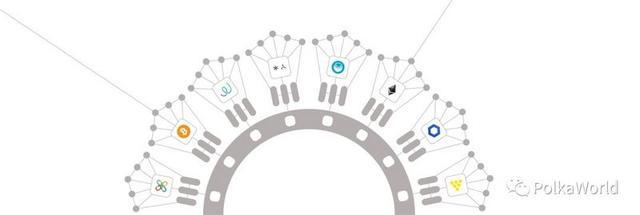
Various potential parachains connected to the relay chain
Why Is the Number of Parachains Limited?
Parachains consume resources to maintain security and availability. Since resources in the Polkadot network are finite, the number of parachain slots is limited—similar to other networks that face computational throughput constraints and introduce fees or management measures. While the exact number of parachains supported by Polkadot “version 1” is unclear, early genesis will naturally support only a small number due to unoptimized system components. As noted in the original Polkadot whitepaper, Polkadot “version 1” has key scalability limitations, particularly quadratic overhead in message queues, which imposes a natural upper bound. DOT tokens must be bonded to acquire a parachain slot, giving them value in staking; running an unused chain would thus be very expensive.
Goals for Parachain Rollout
We currently expect Polkadot to launch with several parachain slots. Over the first one to two years of operation, as implementations are optimized, the number of parachain slots will increase from around five to between 50 and 200. In order of priority, the goals of this rollout plan are:
Ensure the security of the Polkadot relay chain. Prioritize projects that add the most value to Polkadot. Maintain a balanced supply and demand for parachain slots to provide appropriate economic incentives for validators. Allow increased experimentation and innovation as the network scales. This rollout includes “genesis parachains” launching at genesis, while successfully auctioned parachains will become available after genesis. The following sections explain this further.
Genesis Parachains
During the genesis period, it is unlikely that many parachains will exist. Where there are parachain operators, slot allocations will be determined by the Web3 Foundation through two methods:
The Web3 Foundation sponsors certain common-good chains (infrastructure chains), including bridge chains and a basic smart contract chain. If ready at genesis, these will be included. The Web3 Foundation will run one or more off-chain auctions similar in format to the on-chain, post-genesis auctions described below, allowing teams to lease slots in exchange for larger DOT deposits. Common-good chains include those deemed strategically important by the Web3 Foundation or already committed to development. These include:
Ethereum-Polkadot Bridge
Bitcoin-Polkadot Bridge
Critical infrastructure projects such as DEXs or stablecoins
For the latest version of this document, visit the Polkadot Wiki:
http://wiki.polkadot.network/
Parachain Auctions
The vast majority of slots will be sold through public auctions open to all participants.
There will be a continuously available parachain auction system, ensuring sufficient opportunities for your project to bid for and obtain a slot if desired. As demand grows, governance mechanisms may introduce new slots. Conversely, if too many parachains exist at any point, the total number of slots could be reduced.
Parachain slots are offered through permissionless candle auctions, modified to ensure fairness and security on a blockchain. This mechanism makes it difficult for participants to game the system or harm honest bidders through front-running or auction sniping.
Candle Auction:
https://en.wikipedia.org/
Bidders may be existing parachains seeking to renew or extend their leases, or new participants wishing to deploy a parachain. In the latter case, bidders can be regular Polkadot accounts (holding funds directly on the relay chain), or they may originate from a parachain itself, potentially enabling smart contracts to place bids. This even allows a community to pool funds via a smart contract to help a project secure a parachain slot and possibly offer rewards to supporters.
Process for Acquiring a Parachain Slot
As mentioned, a permanently available structure ensures there are always parachain slots up for auction.
Unlike typical auctions, these are not true sales—bidders simply deposit DOT tokens into a time-locked account. Thus, the effective cost of leasing is merely the opportunity cost, modeled as depreciation due to inflation. At the end of the lease period, the deposit is returned.
Parachain slot durations are divided into six-month “lease periods.” All slots begin and end their lease periods simultaneously, so for any given lease period, only identical slots are available.
An auction grants the right to occupy a parachain slot across four consecutive lease periods, covering a total of two years. These four six-month periods may all belong to the same bidder (securing a continuous two-year lease), or to four separate bidders, or some combination.
This structure supports diverse use cases: a new project might “test” being a parachain for six months by bidding on just the first period. Alternatively, a project could bid on all four phases to secure two full years of operation. Or, by bidding on the last two phases, a project could gain 12 months of guaranteed runtime within a 12-month window. Existing parachains might maintain renewal by consistently winning the final position, keeping their remaining lease duration between 18 and 24 months at all times.
The goal of the auction mechanism is to maximize the total amount of DOT bonded over the entire two-year period, meaning the highest single bidder in any given period may not always “win.”
The example scenarios below and Figure 1 illustrate how the auction mechanism works. Assume only one parachain slot is available (as in all initial auctions):
Charlie bids 75 DOT for all four periods.
Dave bids 100 DOT but only for the last two periods (he doesn't care about the first two).
Emily bids 40 DOT but only for the first two periods (she doesn't want the last two).
We now try to determine the optimal allocation among these bids so that one or more bidders get their desired slots. There are four possible allocation outcomes:
Charlie wins; Dave and Emily lose. In this case, 75 DOT are locked for four periods, averaging 75 DOT per period.
Dave wins; Charlie and Emily lose. Here, 100 DOT are locked for two periods, averaging (100 × 2) / 4 = 50 DOT per period—an inferior outcome.
Emily wins; Charlie and Dave lose. Here, 40 DOT are locked for two periods, averaging (40 × 2) / 4 = 20 DOT per period—also worse.
Finally, both Dave and Emily win, while Charlie loses. In this case, 100 DOT are locked for two periods and 40 DOT for the other two, yielding an average of (100 × 2 + 40 × 2) / 4 = 70 DOT across all four periods. This is acceptable, but still less than allocating solely to Charlie.
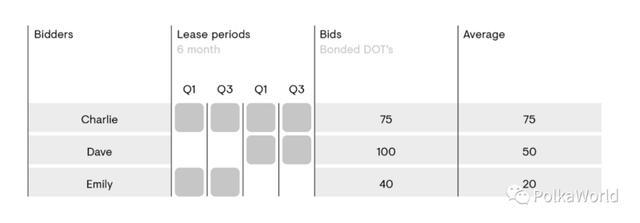
Figure 1: The auction mechanism aims to maximize the total amount of DOT bonded over the two-year period
Therefore, although Dave placed the highest individual bid, because he only bid on two lease periods, he would need to share the slot with Emily, who bid much lower on the other two. The combined bonding value of Dave and Emily across all four periods is less than Charlie’s consistent four-period bid, so Charlie receives the slot.
Participating in Auctions
All parachain slot auctions will be conducted in DOT. Projects wishing to deploy a parachain can obtain DOT through various means, including:
Issuing their own parachain token and exchanging it for DOT on public markets;
Purchasing DOT on public markets using existing capital;
Conducting crowdfunding campaigns to raise DOT;
Applying for grants from the Web3 Foundation.
In addition, groups of projects may aggregate into a single chain to share the cost of a parachain slot. For instance, multiple bridges could reasonably share one parachain slot.
Cost of a Parachain
In absolute terms, parachain slots are free: operating a slot requires only depositing DOT, which is fully refundable at the end of the lease period. For projects with idle capital (especially crypto capital) already optimistic about exposure to the Polkadot network, this “price” approaches zero.
For projects not yet invested in Polkadot or lacking pre-existing capital reserves, the effective “cost” of leasing a slot is simply the opportunity cost of holding DOT instead of other assets. Two points are worth noting: First, a successful parachain project must enhance Polkadot’s utility, strengthening its value proposition and expanding its user base. Due to network effects, the economic impact of such growth should be super-linear. Therefore, it is reasonable to expect that parachain projects would wish to hold part of their portfolio in DOT during their tenure to capture the value of their own success.
Second, DOT is required for four activities in the Polkadot network: governance, parachain leasing, transaction fees, and staking. DOT deposited for a parachain lease cannot be used for three of these (though governance participation remains possible). Thus, the real cost is the opportunity cost of not being able to transact, lease other slots, or stake. While the value of the first two uses is uncertain, the latter is tangible, as staked DOT earns inflation rewards and serves as a hedge against inflation.
At Polkadot genesis, staking rewards are expected to reach up to 20% proportionally, funded by an annual issuance increase of around 10%. (This is significantly lower than Ethereum’s ~30% initial inflation rate, thanks to the efficiency of the BABE/GRANDPA mechanism compared to Ethereum’s PoW.) Therefore, the real cost of not staking is missing out on returns—especially notable since staking carries no risk and requires no active work. Depending on risk preferences, expertise, labor costs, staking efficiency, and DOT valuation, the 20% figure should be seen as a theoretical maximum—the actual opportunity cost may be much lower.
By comparison, securing major chains like Cosmos, Tezos, and EOS costs millions of dollars annually, while Ethereum and Bitcoin require billions. Thus, Polkadot’s security cost is reduced by three to five orders of magnitude, while also enabling fast, arbitrary, trustless message passing between host chains—an revolutionary improvement.
The top 300 cryptocurrencies all have market caps exceeding $10 million, and nearly all have daily trading volumes above $100,000. Assuming a conservative annual inflation rate of 2% for mining, staking, or transaction costs, even the most modest crypto projects spend over $200,000 annually on security. Most such projects could achieve better economics by leasing a Polkadot parachain slot rather than relying on costly, isolated, and often insecure inflation-based consensus models.
Further research and modeling will help clarify the approximate cost of acquiring a slot on Polkadot.
We recognize that connecting as a parachain to the Polkadot network represents a significant cost. As we scale the network by increasing the number of parachain slots and developing more bridges and lightweight bridges, overall costs should decrease. Overall, shared security on Polkadot offers a far cheaper and more secure alternative for network security compared to networks that must issue tokens to incentivize miners or validators.
Governance
Polkadot has no explicit governance mechanism to block or remove a parachain. That said, Polkadot is fundamentally an upgradeable system, meaning governance mechanisms can evolve and modify the blockchain into whatever form is collectively decided. Controversial or harmful changes are possible, but given that they require coordination among multiple stakeholder groups—including the council, validators, and long-term token holders—we estimate the practical likelihood of such events to be similar to malicious hard forks occurring on other major networks. Governance in blockchains is novel: admittedly, Polkadot is an experiment involving many cutting-edge technologies. While we aim to reduce risks through audits, modeling, and testing, we cannot predict every outcome. If experiments go wrong, a hard fork will inevitably serve as a last resort.
Just as a parachain cannot access the DOT deposited for its slot, the lease rights belong exclusively to the holder, who may use the slot as they see fit. Defective Polkadot parachains (e.g., those whose state transition function permits infinite loops, memory bombs, or message spam) will be identified and disabled by network validators. Just as independent chains adopt Polkadot’s consensus when connecting, parachains leaving the network will forfeit Polkadot’s consensus. These former parachains become standalone chains, responsible for their own survival and security.
Join TechFlow official community to stay tuned
Telegram:https://t.me/TechFlowDaily
X (Twitter):https://x.com/TechFlowPost
X (Twitter) EN:https://x.com/BlockFlow_News