US Stock Trend (July 20): Apple Hits Record High Against Trend, Overtakes NVIDIA, Chip Bear Market Tests Google Earnings
TechFlow Selected TechFlow Selected
US Stock Trend (July 20): Apple Hits Record High Against Trend, Overtakes NVIDIA, Chip Bear Market Tests Google Earnings
This week's focus shifts to earnings reports from tech giants such as Alphabet, where guidance on AI capital expenditure will directly determine whether this sell-off can find a bottom.
 Navigating Web3 tides with focused insights
By: TechFlow Research

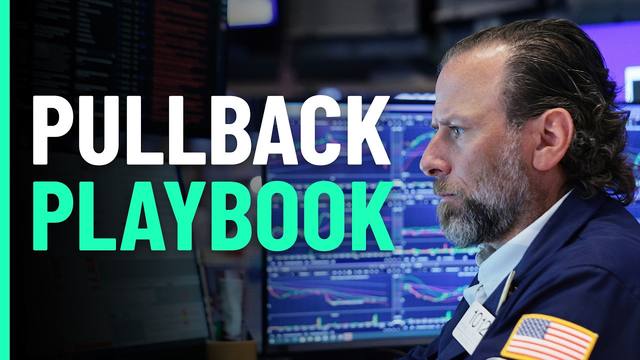
Last Friday, chip stocks plummeted collectively, the semiconductor index officially fell into a bear market, and the three major stock indices fell for two consecutive days, wiping out all gains since July. Apple was the only exception among the Magnificent Seven, hitting new highs for three consecutive days, and briefly surpassed Nvidia during trading to reclaim the top spot in individual market cap. Over the weekend, US airstrikes on Iran escalated into the eighth night, commercial traffic in the Strait of Hormuz reportedly dropped to zero, and crude oil surged nearly 16% for the week. This week's focus shifts to earnings reports from tech giants like Alphabet; guidance on AI capital expenditure will directly determine whether this sell-off can find a bottom.
Market Performance
The S&P 500 closed down 1.01% at 7,457.69 points, down 1.55% for the week. The Dow closed down 0.77% at 52,146.42 points, down 0.93% for the week. The Nasdaq closed down 1.40% at 25,520.244 points, down 2.90% for the week.
The Semiconductor Index closed down 1.6%, down nearly 10% for the week, officially entering a technical bear market, with a cumulative drawdown of over 20% from the highs at the end of June. Nvidia closed down over 2%, and its market cap was briefly surpassed by Apple during trading. Apple was the only gainer among the Magnificent Seven, hitting new highs for three days, up nearly 6% for the week.
SpaceX closed down 5.43%, with a corresponding market cap of $1.63 trillion, having evaporated over $1 trillion from the listing peak of $2.64 trillion in mid-June; the Starship V3 test was forced to abort due to engine ignition failure. Netflix fell over 7%, as the market worries its sales growth rate will slow for two consecutive quarters.
WTI crude oil closed up 4.48% at $82.49/barrel, up 15.52% for the week. Brent crude closed up 4.59% at $88.10/barrel, up 15.91% for the week. Spot gold closed up 0.68% at $4,012.7/ounce, but still down 2.23% for the week. Spot silver closed up 0.25% at $56.038/ounce, down 6.31% for the week. Bitcoin fell below $63,000 during trading, down nearly 3% from the daily high.
The 10-year US Treasury yield was at 4.55%, down about 1 basis point for the week. The 2-year US Treasury yield was at 4.18%, down about 3 basis points for the week. The US Dollar Index turned higher in the short term.
Macro and Outlook
There was no sign of cooling in the geopolitical situation over the weekend; instead, it became increasingly stalemate. US military strikes on Iran have continued for eight full nights; US bases stationed in Jordan were attacked four times in five days, resulting in the death of two US service members. Iran's stance has also hardened; the Supreme Leader directly declared the previously signed memorandum of understanding void, and the military issued harsh words promising a "devastating" counterattack on the US side. More troublesome is the Strait of Hormuz; according to Iran, commercial traffic on this waterway has completely dropped to zero. As soon as the Asia-Pacific market opened on Monday, international crude oil futures gap up 2%, indicating the market is continuing to price in escalating conflict.
The most significant market event this week is Alphabet's earnings report released after hours on Wednesday. The company's weight lies not only in its own advertising and cloud businesses but also in its AI infrastructure funding scale, which is among the top in the entire industry. Therefore, what the market really cares about is how management discusses how much money will be spent next; how much was earned this quarter is secondary. Some fund managers reminded that if Google's wording reveals even a hint of wanting to shrink the budget, the entire AI industry chain could fall along with this signal. However, looking at the current industry competition landscape, OpenAI, Anthropic, and Meta have none stopped spending money; for Google to actively hit the brakes at this critical juncture is itself unrealistic. Besides Google, Intel, Texas Instruments, and Tesla will also release their results this week. Over 80 companies in the S&P 500 will disclose Q2 performance; analysts expect overall earnings year-over-year growth to reach around 26%.
Recently, the earnings figures from both Samsung Electronics and TSMC were quite impressive, yet their stock prices reacted little. This conveys a signal: market expectations for the semiconductor sector have been raised too high; good numbers alone are no longer enough. Investors want solid proof that this high prosperity can continue. This logic applied to Alphabet and Intel this week will likely follow the same script.
On the Fed side, the market basically believes there will be no action at the end-of-July meeting; traders have bet on the next rate hike in December, and the previously worried September rate hike is basically ruled out. However, voices within the Fed are not unified; Cleveland Fed President Hammack's statement last week was noticeably hawkish; she believes inflation levels remain high, and the labor market is close to full employment. The bond market acted faster; the yield curve has started to steepen. In a sense, the bond market itself did part of the tightening work in advance, forcing the Fed not to be so eager to act.
TechFlow Perspective
Behind this round of chip stock sell-off is a very direct logic: overly crowded positions combined with concentrated leverage make it easy to turn into a stampede at the slightest disturbance; this has little to do with the deterioration of fundamentals themselves. Most institutions judge that this deleveraging process is nearing the end, but there is still a lack of a catalyst that can truly regroup market confidence in the short term.
This week's Alphabet earnings report is likely to be this catalyst, or the last straw that breaks the camel's back. The market's tolerance for AI hardware stocks is now very low; Samsung and TSMC's "beat expectations but stock price didn't rise" has already set a precedent. If Google's capital expenditure guidance shows even a hint of ambiguity, the market will likely interpret this as a signal that the entire industry is starting to contract, and the sell-off may spread from semiconductors to broader cloud computing and AI software stocks.
Apple's counter-trend performance in recent days is worth noting; while funds are withdrawing from hardware narratives like storage and chips, they are re-embracing targets like Apple with determined cash flow and relatively restrained valuations. How long this defensive rotation can last also depends on whether this week's earnings season can give the market a clear direction. Neither the Middle East situation nor the Fed policy path is likely to have decisive changes in the short term; what truly determines this week's market sentiment is still the report card delivered by the companies themselves.
Join TechFlow official community to stay tuned
Telegram:https://t.me/TechFlowDaily
X (Twitter):https://x.com/TechFlowPost
X (Twitter) EN:https://x.com/BlockFlow_News
 @chaoxiangooo