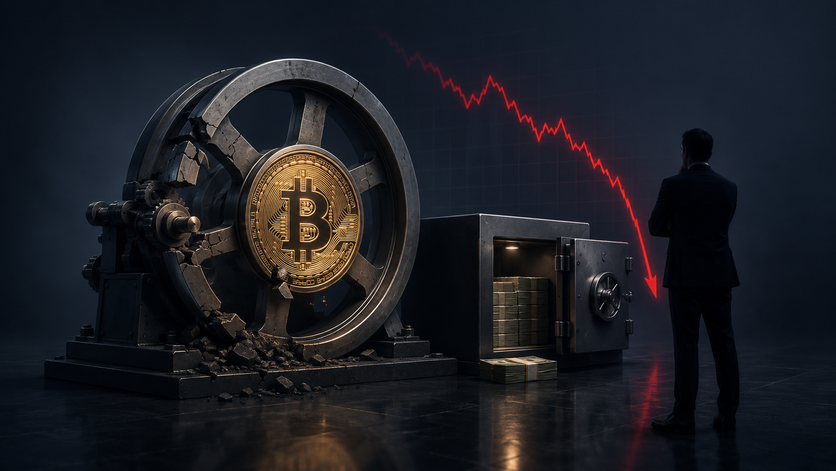
US Stock Trend (June 30): Tech Stocks Stage Dramatic Comeback, Nasdaq Ends Five-Day Losing Streak
TechFlow Selected TechFlow Selected
US Stock Trend (June 30): Tech Stocks Stage Dramatic Comeback, Nasdaq Ends Five-Day Losing Streak
Market confidence in the AI investment cycle, though shaken, has not collapsed.
 Navigating Web3 tides with focused insights
By: TechFlow Research

US tech stocks rebounded collectively on Monday. The underlying drive of this rebound was not some new catalyst, but a correction of the excessive pessimism from the previous five trading days. Weighted stocks such as Tesla, Google, and Nvidia rose simultaneously, pushing all three major indices to close higher, indicating that although market confidence in the AI investment cycle has shaken, it has not collapsed.
Market Performance
The S&P 500 rose 1.18% to 7440.43 points, the Nasdaq led gains with 2.07% to 25820.144 points, and the Dow Jones rose 0.59% to close at 52182.74 points, hitting a new high. The VIX fear index fell 4.13% to 17.65. The rebound magnitude was reasonable, with no signs of excessive euphoria.
Tesla rose 8.5%, the largest gain, Google (officially included in the Dow Jones on Monday) rose nearly 5%, and Nvidia rose over 1% after reversing five consecutive days of declines. SpaceX rose over 7%; although it will not be included in the Nasdaq 100 until next week, this already reflects that market appetite for growth stocks is recovering. This indicates that the market has not abandoned confidence in large-cap tech stocks, but merely made reasonable adjustments at previous highs.
The PHLX Semiconductor Sector Index rose 3.83% to 13709.66 points. TSMC ADR rose 5.24%, AMD rose 3.43%, Marvell rose over 4%, and Western Digital had the fiercest gain reaching 10%. However, Super Micro Computer bucked the trend to fall over 8%, indicating that not all semiconductor stocks are treated equally. The information technology sector overall rose 1.7%, showing that the rebound was mainly in large-cap stocks rather than a broad-based rise.
Oil prices rebounded to $70.75/barrel (up 2.20%), and Brent to $73.15/barrel (up 1.661%). However, gold fell 1.77% to $4016.36/ounce, and silver fell 1.20% to $58.2841/ounce. This not only reflects a short-term easing of US-Iran conflicts but also reflects a real decline in market demand for safe-haven assets. Bitcoin surged back above $60,000 during the session, moving highly in tandem with tech stocks; crypto assets have become an accessory to tech stock sentiment.
The US Dollar Index fell 0.24%, and the Japanese Yen hit a nearly 40-year low to 161.94. The 10-year US Treasury yield fell 0.20 basis points to 4.3666%, and the 2-year rose 0.62 basis points to 4.0983%. The curve steepened slightly, implying that market expectations for long-term growth have somewhat recovered.
Macro and Outlook
After mutual attacks over the weekend, both US and Iran claimed a ceasefire; Trump said talks would be held in Doha on Tuesday, which Iran immediately denied. The Israeli Defense Minister warned that conflicts could reignite at any time. This script of mutual denial has been seen too many times in the Middle East. From a supply fundamentals perspective, ships in the Persian Gulf continue to depart, Iranian cargo oil is still finding buyers, and Ukraine's strikes on Russian refining facilities have actually increased crude available for export. The oil price rebound is hard to sustain unless a large-scale conflict truly erupts.
The Supreme Court ruled that Cook can temporarily remain as a Federal Reserve Governor, and the bond market was almost unmoved. The market has already priced in this uncertainty. More noteworthy is JPMorgan's view: the current 10-year US Treasury yield is 27 basis points lower than model valuation, the largest deviation since March 2023. In other words, the bond market may be overvalued. If Thursday's employment report is strong again, it will directly push up tightening expectations, which is unfavorable for bond prices.
Goldman Sachs expects Q2 S&P 500 earnings to rise 22% year-over-year, with AI infrastructure-related stocks contributing nearly 60%. But this expectation is already high; the market's focus has shifted from "whether cloud providers will invest in AI" to "how enterprises will actually invest in AI and what the return on investment is". The answer to this question will determine the direction of tech stocks for the next two quarters.
TechFlow Perspective
Monday's rebound indicates that market confidence in tech has not disintegrated, but merely adjusted at previous highs. However, the rebound momentum is insufficient to support new highs; it is more of a repair from extreme pessimism to normal pessimism.
For bulls, the fundamental basis of the AI investment cycle has not changed, corporate pursuit of productivity will not stop, the probability of US-Iran conflicts escalating into full-scale war is low, and the 10-year US Treasury is indeed cheaper. But the problem is, the speed at which tech stocks rebounded from five consecutive days of declines to nearly hitting new highs was too fast. This kind of repair is often a short-term rebound rather than a true bottom. Semiconductor inventory issues have not been resolved, and there is no answer yet to corporate AI return on investment issues. Although 0-DTE option traders were forced to close positions on Monday, they will heavily short again next week if the stock market rises further.
This week's earnings calls will be landmines. Chip stocks such as Nvidia, Super Micro, and Micron will detail customers' AI procurement willingness in detail. If major clients indicate during the calls that AI spending will slow down or be delayed, tech stocks will plunge again; this is the real risk. Chasing highs is not recommended in the short term; wait for earnings guidance before next Monday.
Join TechFlow official community to stay tuned
Telegram:https://t.me/TechFlowDaily
X (Twitter):https://x.com/TechFlowPost
X (Twitter) EN:https://x.com/BlockFlow_News
 @chaoxiangooo