








Exclusive Interview with Robinhood’s Head of Crypto: Tokenization Is Paving the Way for Global Market Integration—Securitizing U.S. Equities Is Just the First Step
TechFlow Selected TechFlow Selected
Exclusive Interview with Robinhood’s Head of Crypto: Tokenization Is Paving the Way for Global Market Integration—Securitizing U.S. Equities Is Just the First Step
“Tokenization is the next stage of technological evolution—adapt or be left behind; no one wants to return to the old system.”
 Navigating Web3 tides with focused insights
Compiled & Translated by TechFlow
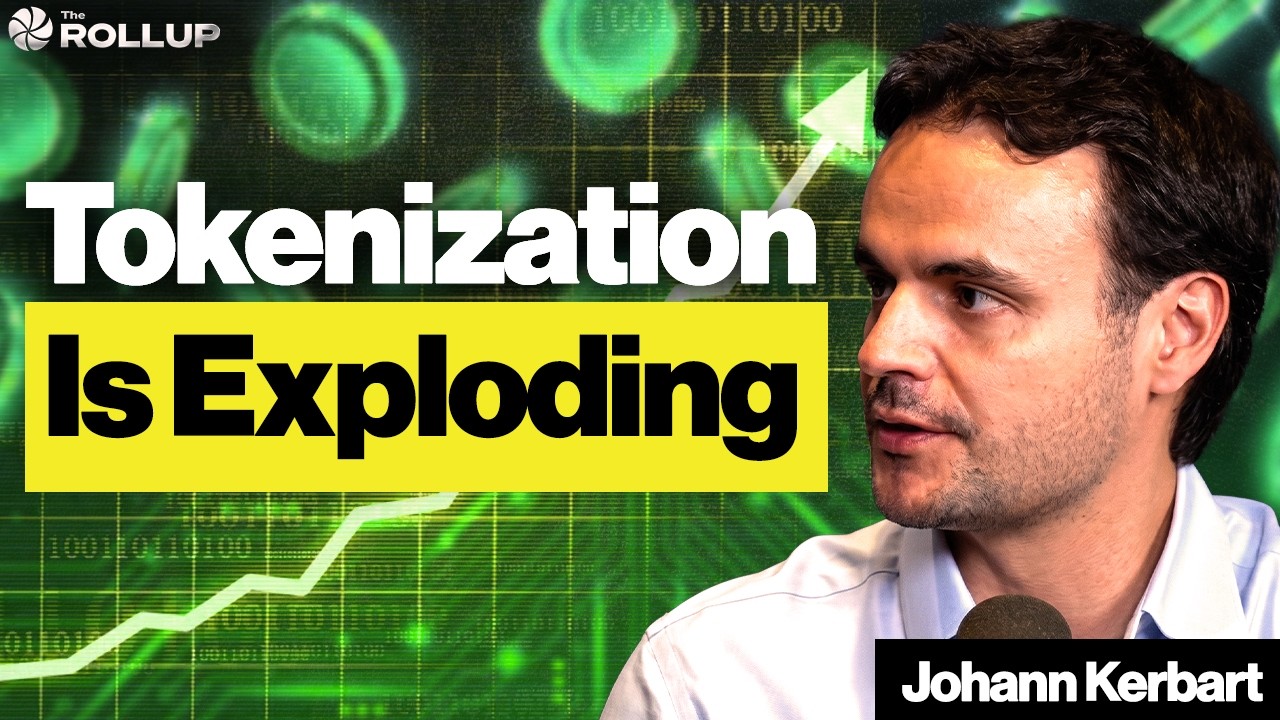
Guest: Johann Kerbrat (SVP & General Manager, Crypto Business, Robinhood)
Podcast Source: The Rollup
Original Title: Is Robinhood About to Become the World's Financial Super App?
Air Date: May 6, 2026
Editor’s Note
This episode features an exclusive interview with Johann Kerbrat, SVP & General Manager of Robinhood’s crypto business. He states that perpetual futures have already launched successfully in Europe and that tokenization will be the next major breakout—encompassing U.S. equities, private equity, and commodities—all brought on-chain. Johann also directly addresses comparisons between Robinhood and Hyperliquid, calling them “licensed centralized” versus “fully decentralized” businesses—fundamentally incomparable. Yet, Hyperliquid’s native token HYPE is already available for purchase on Robinhood.
Key Quotes
The Explosion of Prediction Markets
- “This is an entirely new way to invest. Historically, ordinary people had no way to hedge against Federal Reserve interest rate decisions, AI’s future trajectory, or which company will build the best model. Prediction markets and event contracts let you truly hedge your portfolio across these dimensions.”
- “If you want to bet on AI, instead of picking one stock among NVIDIA, AMD, or Microsoft, you can buy an AI-themed event contract outright—a strategy previously inaccessible to retail investors and reserved exclusively for select institutions.”
- “We view exchanges essentially as commodities. We integrate every product—including crypto, equities, and prediction markets—with multiple exchanges.”
Perpetual Futures and Regulation
- “Perpetuals are simpler in many ways—you don’t manage expiry dates or worry about specific funding mechanisms; settlement happens continuously.”
- “We’ve launched around 12 perpetuals in Europe, offering up to 10x leverage. We’re actively engaged in dialogue with the CFTC—the Chairman has repeatedly cited this as one of their top regulatory priorities. Once the U.S. regulatory framework crystallizes, we’re ready to launch immediately.”
- “Our position has always been clear: rewards from stablecoins are not equivalent to FDIC-insured bank or savings accounts. At the same time, we don’t want to penalize users who hold stablecoins solely for fast transfers between wallets and platforms.”
Tokenization
- “Tokenization will be the next major breakout. It’s still difficult for ordinary users to buy international equities—and for international users to buy U.S. stocks. Cross-continental access is even more complex, burdened by tax complications and scarce safe-yield channels.”
- “We see people across many countries buying USDC and USDT purely for a safe dollar exposure. What’s possible today with stablecoins will soon extend to commodities, equities, and private equity.”
- “Most everyday Americans wanting to invest in private equity either fail the accredited investor test entirely—or lack access to high-quality allocation channels. Tokenization levels the playing field.”
- “Tokenization is simply the next stage of technological evolution—adapt or get left behind. No one wants to return to the old system.”
Robinhood’s Product Logic
- “We aim to gradually replace legacy backend systems using crypto rails. In Europe, we’ve already launched 2,000 tokenized U.S. equities and ETFs, delivering all the benefits of tokenized assets—24/7 trading, fractional shares, and instant settlement—to our customers.”
- “Interacting with DeFi protocols for the first time carries friction for many users—cross-chain bridging, gas fee management, etc. In Robinhood Wallet, those complexities are abstracted into the background; users need not handle them manually.”
On Hyperliquid
- “One side is licensed and regulated; the other is fully decentralized—these aren’t directly comparable. What we do is centralized: if something goes wrong, you can sue Robinhood or file a complaint with regulators. That’s a fundamentally different world.”
- “We don’t treat each other as ‘never-speak-again’ competitors. You can already buy Hyperliquid’s token HYPE on Robinhood today.”
Robinhood’s Super App Vision
Host: Robinhood’s crypto business evolved from an experimental initiative a few years ago into a full-fledged market. How has it been building this business at Robinhood over the past two years?
Johann Kerbrat: It’s been pretty cool. We started back in 2018—during the crypto winter—when many asked, “Why bother launching BTC and ETH?” Our thinking was simple: we want users to access every financial product they care about—and crypto is one of them. Since then, we’ve added numerous assets, enabled staking in most U.S. states, introduced transfer functionality, launched our self-custodial Robinhood Wallet, and expanded into Europe. Last year alone, crypto generated over $1 billion in revenue. Now that the market has settled somewhat, we’re refining new features users will rely on during the next bull cycle.
Host: You mention the market has quieted down—but prediction markets are surging. I have data showing a 320% increase on Robinhood. Why such explosive growth?
Johann Kerbrat: I think it’s a completely new investment paradigm. Ordinary people previously couldn’t hedge against Fed rate decisions, AI’s trajectory, or which firm would develop the best model. Prediction markets and event contracts let you hedge portfolios across precisely these dimensions. For example, betting on AI used to mean choosing among NVIDIA, AMD, or Microsoft—but now you can buy an AI-themed event contract outright. This was once off-limits to retail investors and accessible only to select institutions. It’s also one of Robinhood’s fastest-growing businesses—and underscores the value of our super app: everything in one place, no inter-platform transfers required—whether buying stocks, crypto, or event contracts.
Robinhood’s Product Logic
Host: One follow-up on prediction markets: given how successful this product has become—and aligned with Robinhood’s super-app philosophy—will you deepen vertical integration here? Right now, Robinhood handles substantial order flow, yet final settlement for some contracts still occurs on external exchanges. Will Robinhood internalize execution too?
Johann Kerbrat: To us, exchanges are commodities—we integrate every product with multiple exchanges, whether crypto or equities, and work with multiple market makers. Prediction markets follow the same logic: beyond Kalshi, we’ve integrated ForecastEx and announced a joint venture with CBOE to build a dedicated exchange for the event contracts we prioritize. This is critical—it ensures every product we want to offer has a viable outlet.
Host: Regarding integrating these underlying products: could Robinhood be seen as an aggregator of crypto protocols and products? Competitors like Coinbase have already done so—using Morpho for Bitcoin-collateralized lending (a chain-based lending product co-developed with the Morpho protocol), letting users deposit BTC and borrow stablecoins. I hear you’ve either already integrated or are integrating Lighter—a decentralized perpetuals exchange—for perpetuals. How do you view building a crypto business across diverse product lines while directly leveraging on-chain protocols? Will Robinhood’s crypto business ultimately become just a frontend aggregating all on-chain protocols, routing order flow to them?
Johann Kerbrat: That’s exactly what we’re doing—which is why we launched Robinhood Wallet, our self-custodial wallet option. Its purpose is to enable users already familiar with Robinhood’s UX to seamlessly access chains and engage with DeFi. You’re right: interacting with DeFi protocols for the first time carries friction—cross-chain bridging, gas fee management, etc. In Robinhood Wallet, those complexities are handled in the background; users don’t need to manage them. But we can go further: our investment in Lighter hasn’t yet been integrated, but we’ve already invested—and plan to build upon it.
We also aim to replace parts of our legacy backend infrastructure with crypto rails. In Europe, we’ve already launched 2,000 tokenized U.S. equities and ETFs, delivering all tokenized-asset advantages—24/7 trading, fractional shares, instant settlement—to customers. This matters deeply: progressively replacing traditional systems with crypto rails—and bringing those benefits to users. For instance, European users miss U.S. market hours due to time zones—but tokenized equities trade anytime.
The Path to Perpetuals in the U.S.
Host: Options are one of Robinhood’s largest businesses—I see figures around $4 billion annually, both as counterparty and liquidity provider. Many in crypto believe perpetuals are superior to options. Do you agree? If so many users are effectively trading zero-day options, why not adopt perpetuals? How do perpetuals compare to short-dated options—and how will they enter Robinhood’s product suite?
Johann Kerbrat: We’re already selling perpetuals in Europe, where regulation is clear. We currently offer roughly 12 contracts, with up to 10x leverage. Perpetuals are indeed simpler in many respects—you don’t juggle expiry dates or specific funding mechanisms, and settlement is continuous. That’s a major differentiator, explaining their strong performance globally. Another reason is their versatility: Singapore-based decentralized exchanges, for instance, run robust commodity perpetuals because the world doesn’t stop on weekends—people need hedging and investment tools when Middle East tensions flare.
We view perpetuals as an excellent product—and have maintained ongoing dialogue with the CFTC about reintroducing them domestically. Clarity on regulation is essential. The Chairman has repeatedly named this among their top priorities, so we remain optimistic: once the framework is clear, we’ll launch immediately.
Clarity on Stablecoin Yield
Host: On regulation: your CEO Vlad has been vocal on Twitter about “unlocking stablecoin yield”—referring to provisions in the Clarity Act. Last weekend brought significant progress: regulators clarified the distinction between “rewards” and “interest,” effectively assigning interest treatment to banks—meaning idle stablecoins can’t generate interest automatically. Users must actively opt in—e.g., click a button to allocate funds into a yield-bearing opportunity. How will Robinhood reflect this in product design? As a stablecoin holder, under last weekend’s guidance, will I see options like “Earn with Robinhood Gold” or “Earn Interest on Robinhood Stablecoins”—requiring active selection rather than default accrual?
Johann Kerbrat: Final wording depends on implementation—and until legislation passes, we’ll remain cautious. But a reasonable compromise seems achievable. Our stance has always been unambiguous: stablecoin rewards differ fundamentally from FDIC-insured bank or savings accounts. We’ve never sought to blur that distinction. Yet—as Vlad noted—we also don’t want to penalize users holding stablecoins purely for rapid transfers between wallets and platforms. So we hope they still earn rewards while holding. Current developments suggest room exists to pass some rewards through to users.
If the full Clarity Act passes, it’s a massive win for users: we’d finally build unified products for the entire U.S. market—not fragmented state-by-state offerings with divergent rules and features. Passage would let us standardize everything nationwide.
Bold Prediction: Tokenization Will Unlock Global Markets
Host: A broader question: amid the Clarity Act, stablecoins, prediction markets, perpetuals, and DeFi—everyone’s watching for the next breakout. What’s your boldest prediction? What will explode on Robinhood—or across the ecosystem—over the next year?
Johann Kerbrat: Tokenization will be the next big breakout. Buying international equities remains hard for ordinary users—and vice versa for international users accessing U.S. stocks. It’s relatively easier within the Northern Hemisphere, but cross-continental access is far more complex: tax hurdles, limited safe-yield channels. Stablecoins exemplify this: people worldwide buy USDC and USDT for secure dollar exposure. We believe this extends beyond currency—to commodities, equities, and private equity. Users won’t just hold these assets in portfolios; they’ll borrow against them, use them as collateral—even mortgage them.
Some of this is possible today in the U.S. for large portfolios—but average Americans seeking private equity face barriers: either failing the accredited investor test or lacking access to quality allocations. Tokenization democratizes access—opening doors for everyone.
Host: I’m especially curious about cases like Korea’s surging stock market—exciting, yet unavailable on-chain. Or newly accessible pre-IPO shares of U.S. AI firms—while pre-IPO stakes in Chinese AI companies remain out of reach. How quickly can you advance this? With tokenization gaining momentum, how fast can Robinhood launch tokenized assets and expand across jurisdictions? What’s the actual friction involved in listing a new tokenized asset on the frontend?
Johann Kerbrat: It depends on the asset—and on regulation. But overall, we’ve built robust technical infrastructure over the past decade. Personally, I consider our engineering team among Silicon Valley’s strongest. So once regulators greenlight, we move fast. For example, Robinhood may be among the most AI-integrated brokerages: open any coin or stock detail page, and you’ll see a market summary—a top user-requested feature. When users receive price alerts, they want context. We’ve also built Cortex, an assistant enabling strategy discussions and improvement suggestions. These examples prove Robinhood executes swiftly when committed.
Host: On tokenization: DTCC (Depository Trust & Clearing Corporation) recently announced its own tokenization service—with over 50 initial participants, including Robinhood, targeting a Q4 2026 launch. What does DTCC’s tokenization service mean for Robinhood?
Johann Kerbrat: Partnering with institutions like DTCC has always mattered to us. We’ve long advocated for faster settlement—T+1 is too slow; 24/7 trading is essential. So we support any initiative pushing in that direction. Ultimately, tokenization is simply the next phase of technological evolution—adapt or become obsolete. No one wants to revert to outdated systems. All players must respond by building products atop this new tech stack.
Robinhood vs. Hyperliquid
Host: Many on Twitter love comparing Robinhood and Hyperliquid—revenue, valuation, user count, scale, etc. How do you view Hyperliquid’s rise as a purely on-chain perpetuals stack? They aim to become the on-chain price discovery hub—bringing vast off-chain prices onto-chain. What does that imply? Is Hyperliquid a future competitor to Robinhood’s crypto ambitions—or do you pay it little mind?
Johann Kerbrat: In our view, these are fundamentally different businesses—one licensed and regulated, the other fully decentralized—so direct comparison isn’t meaningful. One thing I appreciate is how Hyperliquid exposes many users to novel assets like perpetuals—a priority for us too. But our approach differs: we’re centralized—if issues arise, you can sue Robinhood or file regulator complaints. That’s a different world. That said, you can already buy HYPE on Robinhood. We don’t see each other as bitter rivals. We admire their team—and wish them success.
Host: So—do you endorse or oppose them?
Johann Kerbrat: Not necessarily endorsement or opposition—but you can buy.
Join TechFlow official community to stay tuned
Telegram:https://t.me/TechFlowDaily
X (Twitter):https://x.com/TechFlowPost
X (Twitter) EN:https://x.com/BlockFlow_News
 深潮TechFlow


