








IOSG On-Site Report: Trump Crypto Luncheon and “Young America”
TechFlow Selected TechFlow Selected
IOSG On-Site Report: Trump Crypto Luncheon and “Young America”
Youth also has its advantages—it’s willing to redo everything from scratch.
 Navigating Web3 tides with focused insights
Author: Turbo Guo @TurboGuo | IOSG Ventures
Acknowledgments: Special thanks to Meggie for her insights into this article’s content—particularly its central thesis.
What does a young person look like?
They might be bold, imaginative, eager for rapid success—and equally fearful of missing out, radical, and fervent. For a nation, 250 years of history qualifies as youth.
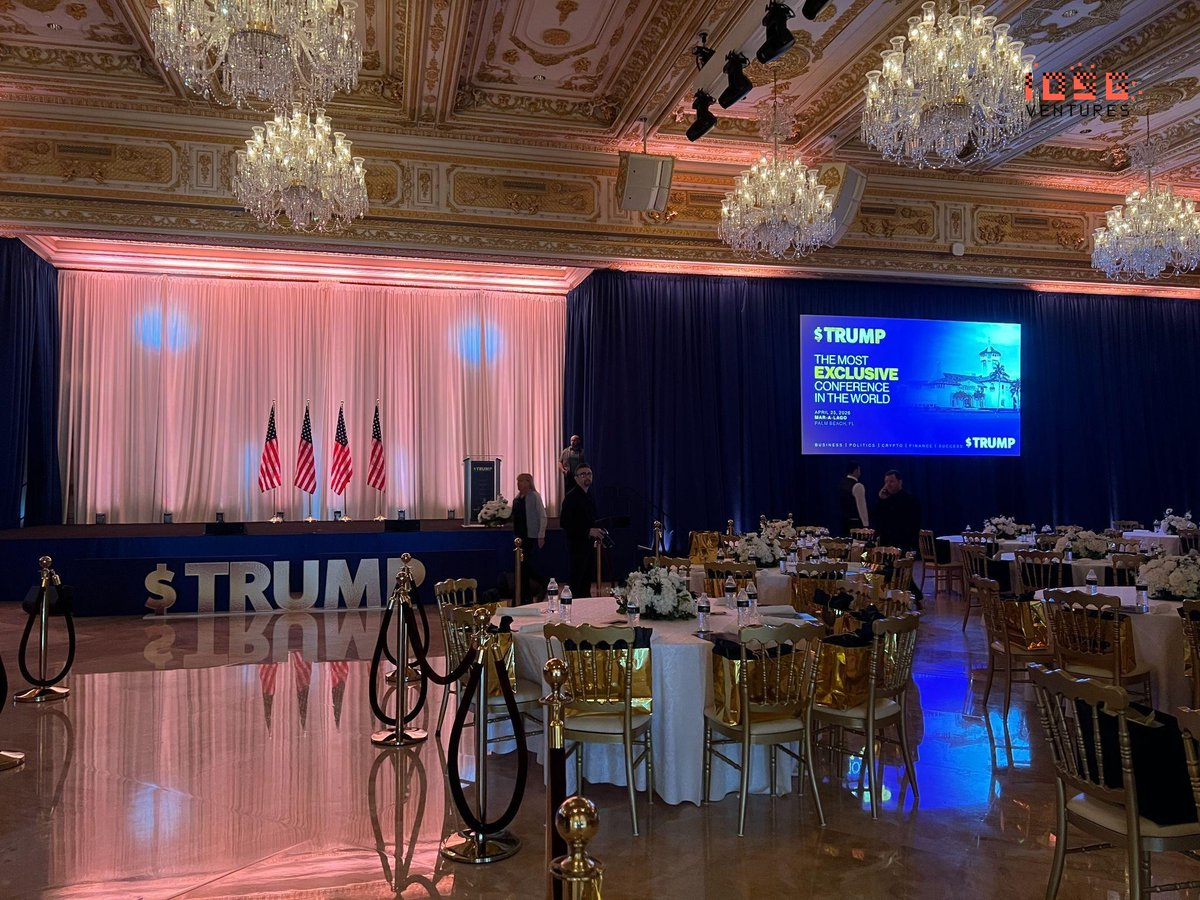
This impression struck me during my attendance at the closed-door Trump Crypto Conference & Gala Luncheon held at Mar-a-Lago—the former U.S. President’s private residence and winter White House, as well as an exclusive social club. The venue itself imbued the event with a distinct character: akin to attending a party at the home of a wealthy, flamboyant friend who’s still in his twenties—where even the chairs are gilded.
A Thirty-Six-Month Countdown
The most readily exposed trait of youth is radicalism. Tony Robbins—one of the speakers—exemplified this. A renowned motivational speaker and bestselling author, he stood onstage repeating a single phrase: “thirty-six months.” He claimed robots would displace vast numbers of jobs within thirty-six months; quantum computing would reverse-engineer legacy encryption algorithms within thirty-six months; autonomous vehicles would disrupt eight million driver jobs within thirty-six months. He packaged this number as a countdown: “The thirty-six-month countdown has begun.” Thirty-six months sounds alarmingly short—but he made no effort to soften or moderate it.
Nikil, founder of Alchemy, offered another brand of radicalism. He declared outright: “Within five years, AI agents will move more money than all humans combined—and not a single dollar will pass through a bank account.” Onstage, he demonstrated his agent “Dave the Minion,” which booked him Uber rides, controlled twenty smart devices in his home, bought flowers for his girlfriend, and monitored his body fat percentage increase in Costa Rica.
Later, offstage, I spoke further with Nikil. His team mentioned they’d soon launch “agent cards”—likely white-label solutions enabling other projects to issue branded agent payment cards. This product logic aligns precisely with Nikil’s onstage claim: “Within five years, zero dollars of transactions will flow through the banking system.”
Cathie Wood echoed similar views. She noted that AI training costs fall 75% annually, while inference costs drop 98% yearly—the most deflationary technology in history. She stated AI-generated writing surpassed human output for the first time in 2025 and predicted it would exceed the cumulative total of all human writing within ten years. I was fortunate to exchange a few words with her; her overall assessment of the industry is broadly bullish—with no notable conservatism.
Hearing these predictions together emits a shared scent: each speaker is certain the world will be reshaped—within three to five years—along the exact trajectory they describe. It’s a distinctly American, distinctly youthful mode of expression.
American Wealth-Building: Positioning Oneself as the Intermediary Layer
If radical prophecy reveals youth’s “mindset,” resource integration reveals its “behavior.” A common American path to wealth involves bridging disparate circles—building influence by becoming a node for information and resources.
Tony Robbins embodies this path at its extreme.
He stepped down from the stage and moved among small round tables—passing within half a meter of me. He discussed AI, crypto, robotics, and more. In his speech, he name-dropped Salesforce’s Marc Benioff, Figure AI’s Brett Adcock, the three 22-year-old college dropouts behind Mercor, and IBM Vice Chairman Gary Cohn—using these names to bolster his credibility. Frankly, his grasp of crypto isn’t especially deep, nor are his judgments necessarily sharper than those of any founder in attendance—but he knows each field one layer deeper than the average person, yet one layer shallower than domain experts. That precise position maximizes communicative impact.
Many Fortune 500 CEOs may no longer conduct frontline research themselves—so they sit and listen to Robbins. Robbins converses with domain experts across industries, synthesizes insights, delivers them to CEOs, and packages them for mass consumption in bestselling books. He masterfully layers multiple identities: bestselling author, resource integrator, elite speaker. He demonstrates the ultimate American execution of “doing business = integrating resources.”
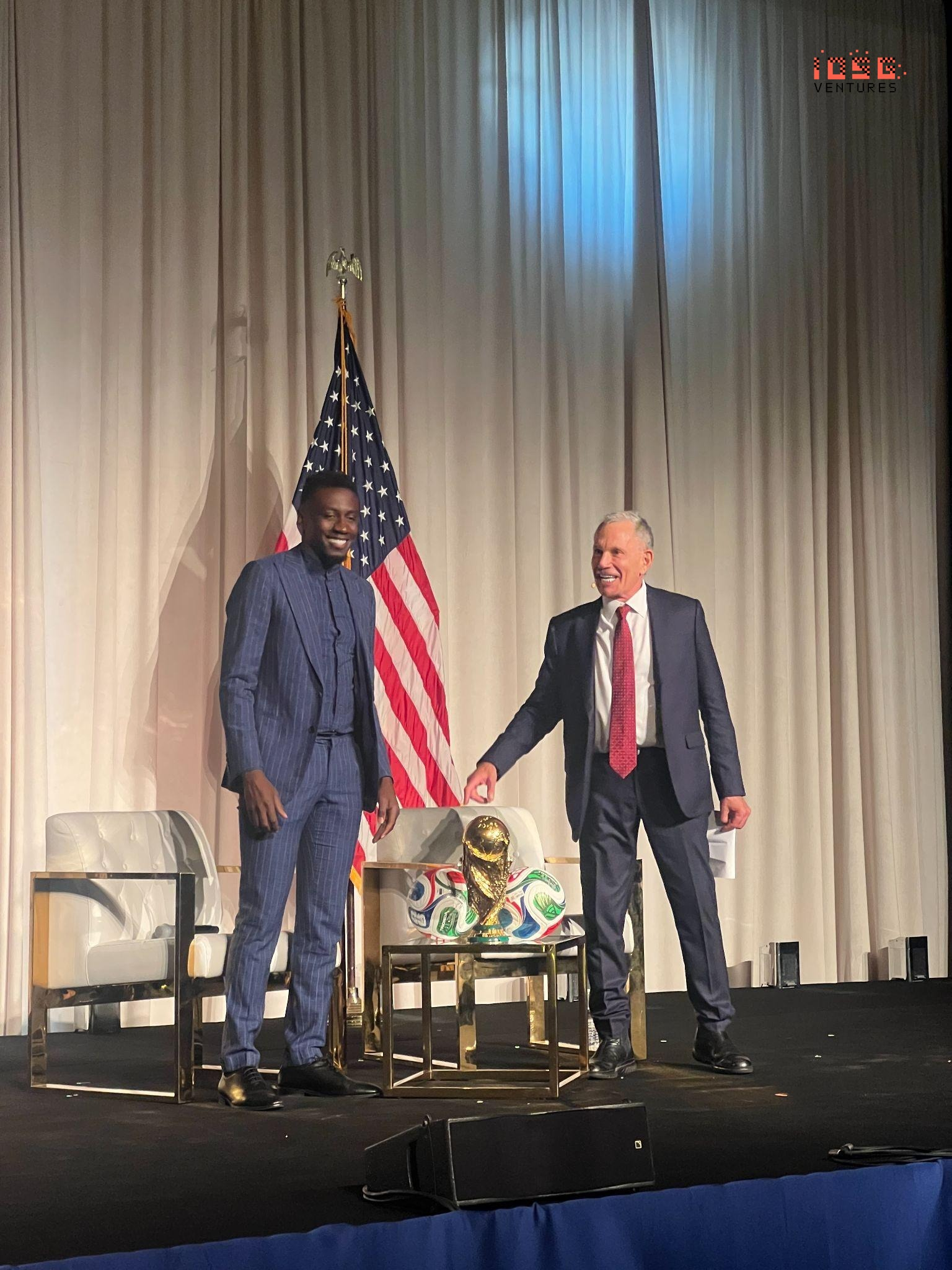
Note: French national football team
This same logic echoes elsewhere in the room. Andrea from Trendex introduced me to “Superstar coin”—a tokenization model centered on French national football team members, F1 drivers, and other sports stars. Holders gain exclusive fan perks upon reaching specific token thresholds. Longtime crypto veterans won’t find this novel—but few possess the clout to secure so many such deals. Intriguingly, they brought the FIFA World Cup trophy to the event—the first time I’d ever seen it up close. At its core, this project is about distribution: you’re not selling technology—you’re monetizing the pre-existing influence of celebrities.
Another key insight on influence emerged from my conversation with Arianna Simpson, former a16z General Partner: if all future startups rely on identical AI development tools and ship with comparable speed, technical differentiation will converge—making distribution channels and user acquisition capabilities the decisive competitive advantages. This is a purely investor-centric judgment—not a technologist’s.
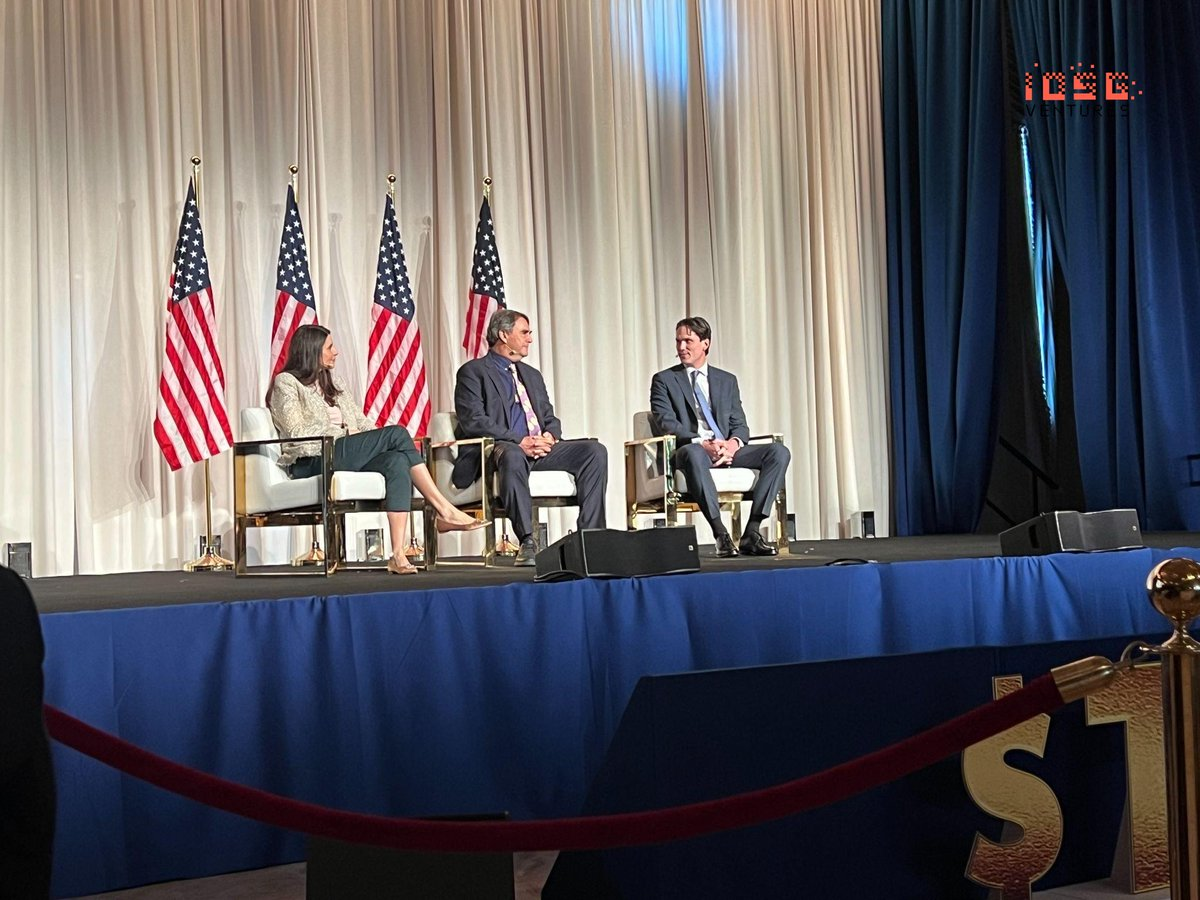
Note: Former a16z GP Arianna Simpson, billionaire Tim Draper, Luke from Delphi Digital
The Enthusiastic Audience
If you only observe the stage, this youthfulness remains abstract. But shift your gaze to the audience—and it becomes vividly tangible.
The most revealing moment? Photo-taking. As soon as speakers step offstage, they’re instantly surrounded—forming tight, eager circles. This radical energy isn’t reserved for speakers alone; it pulses identically through the audience. Attendees want proof: evidence they were physically present in that room, that they exchanged words with that person, that they seized that precise moment.
Speakers forecast the future in terms of “36 months” or “5 years.” The audience anchors the present through photos. Both sides share the same mindset: fear of missing out (FOMO). It’s a striking mirror.
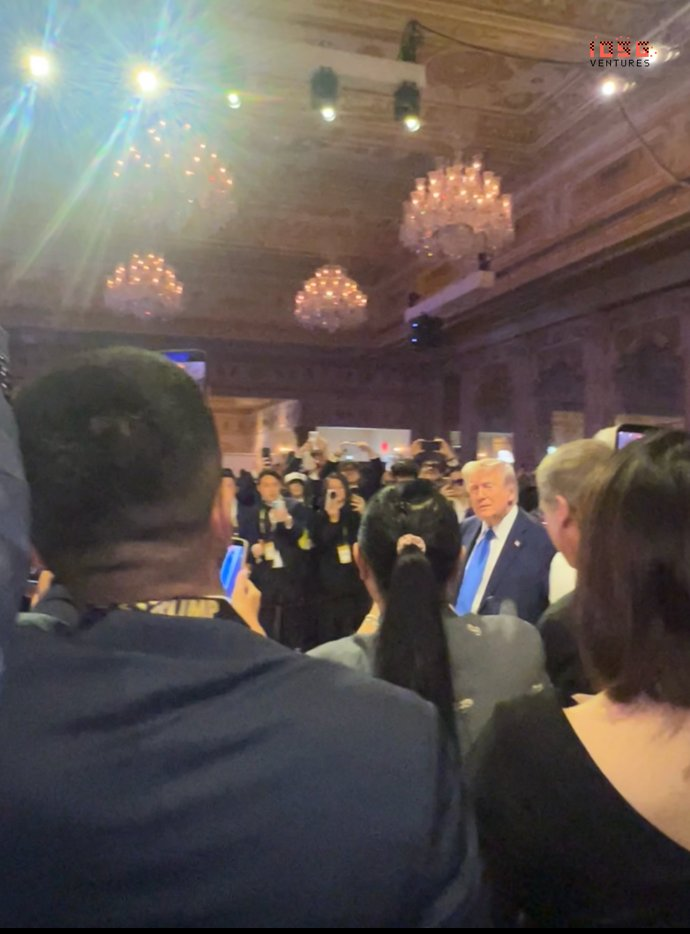
Note: Trump amid the crowd
Those Already in the Room Need No Proof
Yet another group attended the event entirely differently. They entered the venue, exchanged brief pleasantries, sat down to listen—and showed no particular excitement. They didn’t jostle for photos, didn’t rush toward speakers, and didn’t applaud every statistic.
Perhaps true belonging manifests not as exhilaration—but as quiet confidence.
This group included veteran institutional representatives with over a decade of presence here, their close confidants, and regular attendees treating the event like a casual social gathering. For them, Mar-a-Lago isn’t a status symbol—it’s routine. They occupy the same physical space as the photo-hunting crowd—but operate on entirely different frequencies.
Placing both groups side-by-side captures the conference in its entirety.
A Young America
This nation—at least the cohort present at that event—did not radiate seasoned, mature composure. Instead, it projected the energy of an ambitious, self-proving, loud-voiced youth. The crypto industry itself mirrors this temperament: newly recognized by regulators, recently granted favorable policy signals, and witnessing softening SEC posture—leaving it simultaneously elated and anxious, desperate to seize every “36-month window,” yet terrified of missing a single photo opportunity.
Speakers lock in the future through prophecy; listeners lock in the present through photos; entrepreneurs lock in their positions through resource integration. Only that small cohort—longtime insiders—sat quietly in the corner, observing the next generation’s vigorous declaration of existence.
This state carries limitations. Youth often overpromises. Every prophecy risks being slowed by reality’s friction in execution; young nations also conflate “volume” with “capability.” More dangerously, such prophecies and volume translate with unsettling authenticity into stock prices.
Yet youth holds advantages too. It’s willing to rebuild everything from scratch—to cram traditionally slow-evolving domains—traditional finance, AI, robotics, quantum computing, stablecoins—into a three-year window. It accepts overpromise risk because it believes it has time.

Note: Outdoor pool and bar area, photographed in the morning before the bar and mini-burger station were set up
As the event wound down, everyone gathered beside the pool—chatting, eating, drinking. My friends and I exchanged light, meandering banter. Honestly, Mar-a-Lago is stunning: immaculately manicured lawns, exceptional food and drinks, brilliant sunshine. Sitting there evokes a sensation of standing atop the world—a powerful confidence boost. Such experiences foster greater ease when later engaging with people far more accomplished than oneself. Yet whether this truly transforms anything depends entirely on the individual—much like enjoying a classmate’s party: everyone seems to be having fun, but eventually, we all return home—to our own separate anxieties.
Author’s note: This article is based on the author’s firsthand notes and conversations during the Trump Crypto Conference & Gala Luncheon held at Mar-a-Lago, Palm Beach, in April 2026. Project information and market views herein are for reference only and do not constitute investment advice.
Join TechFlow official community to stay tuned
Telegram:https://t.me/TechFlowDaily
X (Twitter):https://x.com/TechFlowPost
X (Twitter) EN:https://x.com/BlockFlow_News
 IOSG Ventures


