The Patron of "Wankeyun" Flees Overseas: The $200 Million Corruption Mystery of Former Xunlei CEO Chen Lei
TechFlow Selected TechFlow Selected
The Patron of "Wankeyun" Flees Overseas: The $200 Million Corruption Mystery of Former Xunlei CEO Chen Lei
From Stock Savior to Alleged Embezzlement of 200 Million: The Rise and Fall of Former Xunlei CEO Chen Lei
 Navigating Web3 tides with focused insights
Author: Maosike | TechFlow
January 15, 2026, Shenzhen.
A civil lawsuit was filed in court, seeking damages of up to 200 million yuan. The name on the defendant's bench felt like a relic from another era—Chen Lei, former CEO of Xunlei, once the man who had sent Xunlei’s stock price soaring fivefold in just one month, now stood accused of “corruption and siphoning off company assets.”
Suspected of misappropriating tens of millions of company funds to trade cryptocurrencies, arranging for relatives to fabricate internal contracts to extract company money—the allegations against Chen Lei are described by Xunlei as “endless crimes.”
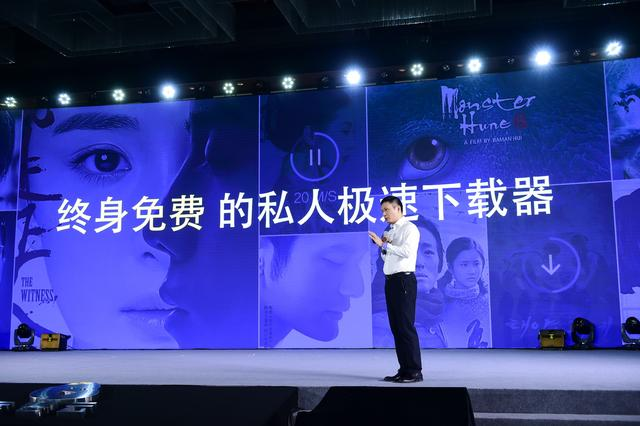
Rewind to October 31, 2017, also in Shenzhen, at Wangxin Technology’s launch event, where lights shone brightly. Standing on stage wearing his signature white shirt, Chen Lei, in his distinctive engineer’s tone, announced: “Xunlei will go all-in on blockchain,” prompting thunderous applause from the audience below.
From deification to downfall—this transformation took only a few short years.
This is the story of a fallen golden boy.
The Arrival of a Genius
“I met Lei Jun in September 2014. He invited me to join Xunlei, and we talked until two or three in the morning,” Chen Lei later recalled that fateful night which changed his life.
At the time, Chen Lei was a star executive at Tencent Cloud, a seasoned professional with years of experience in cloud computing. Xunlei, on the other hand, was a dominant download tool giant showing signs of fatigue in the mobile internet era, desperately needing someone technically savvy and bold enough to lead its transformation.
Lei Jun convinced him with two irresistible questions: “You've done well at Tencent—but is it because you're good or because Tencent is good? Could you achieve similar success outside Tencent?” And the second: “Do you want to run a company where you have real control?”
“I was deeply moved by Lei Jun’s offer. I felt he truly understood me, voiced what I longed to say. At that moment, I greatly admired Lei Jun.”
Xunlei founder邹胜龙 (Zou Shenglong) offered a highly sincere deal: serve as Xunlei’s CTO while also becoming CEO of the newly established Wangxin Technology. The founding of Wangxin Tech and Chen Lei’s joining happened almost simultaneously, meaning he would have a relatively independent entrepreneurial platform.
Chen Lei’s ambition went far beyond building an ordinary cloud computing company. With the rise of the sharing economy model in 2014, Chen Lei敏锐ly realized that restructuring the overall cloud computing architecture through sharing economy principles could innovate CDN technology—especially addressing the industry’s long-standing problems of being “expensive, chaotic, and low-quality.”
“Wangxin Technology’s core value lies in creating a shared-economy IDC—using the sharing model to reduce societal computing costs,” said Chen Lei, explaining that through the smart hardware device “Money Pot,” ordinary users could share their idle bandwidth to earn income, while Wangxin aggregated these resources into CDN services.
The speed at which ideas turned into reality was astonishing.
In June 2015, Wangxin launched Xingyu CDN, priced at just one-quarter of mainstream market rates, quickly forming partnerships with top-tier companies such as Xiaomi, iQiyi, and Zhanqi.
By the end of 2015, Chen Lei won the “Internet Industry Niu Er Outstanding Figure Award” for leading Wangxin to revolutionize CDN technology.
By 2017, Wangxin’s shared computing network boasted over 1.5 million online nodes, with approximately 30T of reserved bandwidth and 1,500PB of storage capacity—an unprecedented distributed computing network. Chen Lei successfully connected millions of households into a single cloud computing grid.
Technological idealism perfectly merged with commercial success—he seemed to have found the right way to change the world.
In July 2017, Chen Lei officially became CEO of Xunlei.
But beneath the glow of success, complex forces were gathering. “Old Zou (Zou Shenglong) wanted to do an MBO (management buyout), but clashed with major shareholders. The conflict became irreconcilable, so they pushed me forward as CEO. At the time, I was actually afraid—I sensed this position might not be easy,” Chen Lei later recalled.
But history would soon prove this was merely the calm before the storm. A greater opportunity—or temptation—was beckoning.
The Temptation of Token Issuance
In 2017, if you missed Bitcoin, you missed an entire era.
Across the Pacific, Silicon Valley saw the rise of cryptocurrency ICOs starting around March–April 2017. Bitcoin resumed its upward trend, surging from $968 at the start of the year to $3,000—a tripling in price. Ethereum jumped from $8.3 to $200, more than a 20-fold increase.
ICO after ICO emerged. The booming crypto market inspired Chen Lei to explore blockchain.
“Xunlei is essentially a decentralized internet company born from P2P technology. Genetically, Xunlei has a better chance than others in shared computing,” Chen Lei once said. Unlike other companies’ B2C paths, Xunlei aimed to leverage blockchain to forge a unique C2B path.
Under Chen Lei’s leadership, the blockchain version of Xunlei’s Money Pot—“Wanke Cloud”—emerged.
Wankekou borrowed Bitcoin’s PoW algorithm, allowing users to “mine” digital assets called Wanke Coins. Total supply capped at 1.5 billion, halving every 365 days, with annual mining output decreasing by half each year.
The design was near-perfect: it had physical hardware as a carrier, tied to actual computing services. Wanke Coin was a native blockchain-based digital asset within the Wanke Cloud shared computing ecosystem, strongly linked to Wanke Cloud hardware and shared CDN economic applications.
Chen Lei marketed the project as a “shared computing + blockchain” technological innovation rather than a simple virtual currency issuance—avoiding ICO policy risks while still capitalizing on blockchain’s market hype.
On October 31, 2017, Wanke Cloud was officially launched.
Chen Lei announced the opening of shared computing services to all individual users, launching “cloud mining” and the Wanke Rewards Program. Wanke Coins could be used across the Xunlei ecosystem to redeem over 200 premium services, including expanded storage space and Xunlei VIP memberships.
Market reaction exceeded all expectations. With blockchain fever at its peak, Wanke Coin prices skyrocketed. On some trading platforms, the coin surged from an unofficial issue price of 0.1 yuan to 9 yuan—an increase of 90 times.
Wanke Cloud was seen as a mining rig, with each unit’s price inflating from 338 yuan to a high of 3,240 yuan. Wanke Cloud also drove Xunlei’s stock price up fivefold within a month—from $4.28 in October 2017 to $24.91, peaking briefly at $27.
“Wanke Cloud, 599 per unit—snatch it and profit 1,500 instantly.”
According to players, early participants in Wanke Cloud’s Taobao crowdfunding campaign—using bot software or hiring interns to hoard inventory—earned their first fortune in 2017. Some individual users participating in the rewards program mined over ten Wanke Coins daily, recouping their investment in just a few days.
“It was Xunlei’s Wanke Cloud that introduced me to Bitcoin and blockchain, opening the door to a new world,” said Jack, a Hong Kong-based crypto practitioner, speaking to TechFlow.
This was the pinnacle of Chen Lei’s career—and the most glorious chapter in Xunlei’s history.
The technological idealist had successfully transformed a traditional download tool company into a trendy blockchain概念股, multiplying its market cap several times over.
But beneath the shiny surface, crisis was brewing.
Wanke Coin’s frenzy had strayed far from Chen Lei’s original vision, evolving from technological innovation into pure speculative mania.
Crisis Arrives
Crises often begin from within.
On November 28, 2017, Shenzhen Xunlei Big Data Information Services publicly accused Xunlei CEO Chen Lei of conducting illegal Wanke Cloud activities, claiming no real blockchain technology was used and accusing him of operating an unauthorized exchange for disguised ICOs.
This seemingly bizarre case of “self-reporting” was in fact a direct clash between old and new power factions within Xunlei.
“The internal conflict at Xunlei in October 2017 was actually initiated by Yu Fei (former senior VP of Xunlei), whose core goal was to oust me,” Chen Lei later recalled.
On November 3, the central bank, believing Wanke Coin belonged to Xunlei’s financial division, summoned Hu Jie, the responsible executive. After clarification, they learned it was Wangxin’s business. Hu Jie then submitted an email to Xunlei’s senior management, pointing out that Wanke Coin wasn’t based on genuine blockchain technology, carried risks of disguised ICO, potentially encouraged trading, and posed risks of mass incidents.
On December 9, 2017, Wanke Coin was renamed “LinkToken.”
Before internal conflicts were resolved, external regulatory crackdowns arrived.
In January 2018, the China Internet Finance Association issued a risk warning, stating that virtual digital assets like LinkToken issued via IMO models were essentially financing activities—disguised ICOs.
On the night of the association’s public naming, Xunlei’s stock plunged 27.38% at market open, and LinkToken’s price immediately crashed.
On January 16 and 17, 2018, Xunlei posted consecutive official announcements stating that LinkToken would fully revert to being an internal积分within the Xunlei ecosystem. Starting January 31, users would only be allowed to use LinkToken within Xunlei and its partner applications—to cleanse itself of ICO suspicions.
Following the announcement, LinkToken dropped from 4 yuan to 2.5 yuan—a 37.5% decline.
Due to regulatory scrutiny, searching for “Wankekou” on Xianyu or similar platforms returned messages indicating violations, forcing sellers to refer to the hardware cloud drives as “wky” or “mother chicken.”
On September 17, 2018, Xunlei announced it would sell its blockchain businesses—including LinkToken, LinkToken Mall, and LinkToken Wallet—to a tech group.
By the end of 2018, the official price of Wanke Cloud was 599 yuan, but on secondhand platforms, many units were resold for as low as 40 yuan. The massive gap between official and resale prices signaled the collapse of the Wanke Cloud model.
Investors erupted in anger. “Wanke Cloud is the worst purchase I’ve made in five years.” Some users even launched public维权campaigns—once hailed as gold-laying mining machines, they overnight turned into piles of scrap metal.
The once-celebrated star CEO became a target of widespread criticism. Media outlets that once praised him began questioning his motives and competence.
The myth of deification had shattered—but the story of destruction was far from over.
The Fall
After the Wanke Coin frenzy subsided, a company named “Xing Ronghe” quietly surfaced. Founded in 2018, Xing Ronghe appeared on the surface to be a bandwidth supplier for Xunlei—but was in fact controlled by Chen Lei himself.
Chen Lei offered his own explanation: “In February 2017, MIIT issued regulations cleaning up non-compliant market transactions, explicitly stating that bandwidth could only be purchased from licensed enterprises. We shifted from buying directly from home users to purchasing from miners. To mitigate Wangxin’s risks, we acquired the shell company Xing Ronghe, which buys hardware from Wangxin and sells it to miners—this way isolating Wangxin’s exposure.”
Chen Lei emphasized that Xing Ronghe’s business and cash flows were inseparable from Xunlei—all actions were in Xunlei’s interest.
But according to Xunlei’s investigation, the reality was far more complicated. From January 2019 to early 2020, Wangxin paid Xing Ronghe approximately 170 million yuan in resource node procurement fees.
The most dramatic episode occurred between March 31 and April 1, 2020. Using his final approval authority as CEO of both Xunlei and Wangxin, Chen Lei authorized multiple payments totaling over 20 million yuan to Xing Ronghe within just two days.
Some of these payments were made before their scheduled dates, following an unusually fast “same-day submission, same-day approval, same-day disbursement” process lacking normal acceptance and settlement procedures.
Twenty-four hours later, on April 2, Xunlei’s board officially issued a statement removing Chen Lei as CEO.
Chen Lei has a clear memory of his removal: “On April 2, around 10:00 AM, I was at home with a fever, not at the office. But colleagues told me a group of white-clad security guards stormed in, ordering everyone to stop working immediately. This happened without any prior communication with me. I knew nothing about it beforehand.”
Beyond fund transfers, Xunlei also accused Chen Lei of poaching staff before his removal.
In March 2020, Chen Lei arranged for Dong E and Liu Chao to interview 35 key employees, organizing their collective resignation and transfer to Xing Ronghe. This led Wangxin to pay over 9 million yuan in severance and stock option repurchase costs.
Even more bizarre was Xing Ronghe’s ownership structure: legal representative Zhao Yuqin is Liu Chao’s mother; Hong’en Tech’s shareholder Tian Weihong is Dong E’s mother; legal person Xu Yanling is both a relative of Dong E and the mother of Chen Lei’s driver Yao Bingwen; Chen Lei and Dong E have a child together—forming a tightly knit利益community.
Shortly after his removal in April 2020, Chen Lei left China. On October 8 of the same year, Xunlei announced that former CEO Chen Lei was suspected of职务infringement and had been formally investigated by Shenzhen police, urging him to “return to China promptly to cooperate with the investigation.”
For six years, all of Xunlei’s recovery efforts faced severe evidence-gathering obstacles due to Chen Lei’s overseas status. In multiple notices related to five cases between Wangxin and Xing Ronghe, courts repeatedly cited “defendant whereabouts unknown” and adopted public notice service methods.
By the end of 2022, due to objective limitations, authorities withdrew the criminal case after failing to obtain sufficient evidence. Criminal prosecution temporarily ended—but the civil recovery battle had just begun.
On January 15, 2026—over five years later—Xunlei and its subsidiary Wangxin refiled a civil lawsuit, seeking up to 200 million yuan in damages. The case has now been accepted and registered by a Shenzhen court.
The defendant list is long: Chen Lei, Dong E, Liu Chao, Zhao Yuqin, and Xing Ronghe along with its affiliated shareholders. The 200 million yuan claim includes approximately 170 million yuan paid to Xing Ronghe for procurement and about 28 million yuan in additional discrepancies.
Epilogue
“I probably violated many taboos of professional managers—I indeed offended some people.”
“Too naive.”
“Do I regret leaving Tencent Cloud for Xunlei? How could I not regret it? I shouldn’t have taken the CEO role in 2017—that’s when I made enemies with the old team.”
Join TechFlow official community to stay tuned Telegram:https://t.me/TechFlowDaily X (Twitter):https://x.com/TechFlowPost X (Twitter) EN:https://x.com/BlockFlow_News
 深潮TechFlow