Circle 2025 Year in Review: Building a Full-Stack Cryptoeconomic Platform
TechFlow Selected TechFlow Selected
Circle 2025 Year in Review: Building a Full-Stack Cryptoeconomic Platform
Circle will complete its full-stack platform in 2025, integrating trusted digital assets, real-world applications, and the Arc blockchain as the economic operating system for the internet.
 Navigating Web3 tides with focused insights
By: Circle
Translation: Chopper, Foresight News
In 2025, stablecoins were the undisputed stars of the crypto world. As the year closed, Circle—one of the key drivers behind the stablecoin wave—released its annual review report. Circle detailed its full-stack platform development over the past year, covering regulatory breakthroughs, stablecoin market share growth, real-world applications, and exploration of Arc infrastructure, illustrating how programmable finance is integrating into the mainstream world. Below is a summary of the core content from that report.
TL;DR
-
Global regulatory frameworks such as the U.S. GENIUS Act and the EU's MiCA have been implemented, establishing fully reserved stablecoins as a recognized component of mainstream finance and laying the foundation for industry scale-up.
-
Circle completed its full-stack platform in 2025, combining trusted digital assets (USDC, EURC, USYC), real-world applications, and the Arc blockchain to serve as an economic operating system for the internet.
-
Breakthrough commercial partnerships were established with major institutions including Intercontinental Exchange, Deutsche Börse, Finastra, and FIS, spanning payments, clearing, and treasury management.
-
Practical utility of digital assets expanded—from cross-border remittances and global payroll to AI agent payments—with the public testnet launch of the Arc blockchain supporting next-generation finance.
Circle has always believed that global economic infrastructure should have the speed and scale of the internet, enabling value to flow as seamlessly as information. Since our founding, our mission has been to enhance global economic prosperity through frictionless value exchange, building open, programmable, vertically integrated financial technology solutions so that trusted digital currencies and financial applications can operate natively on the internet.
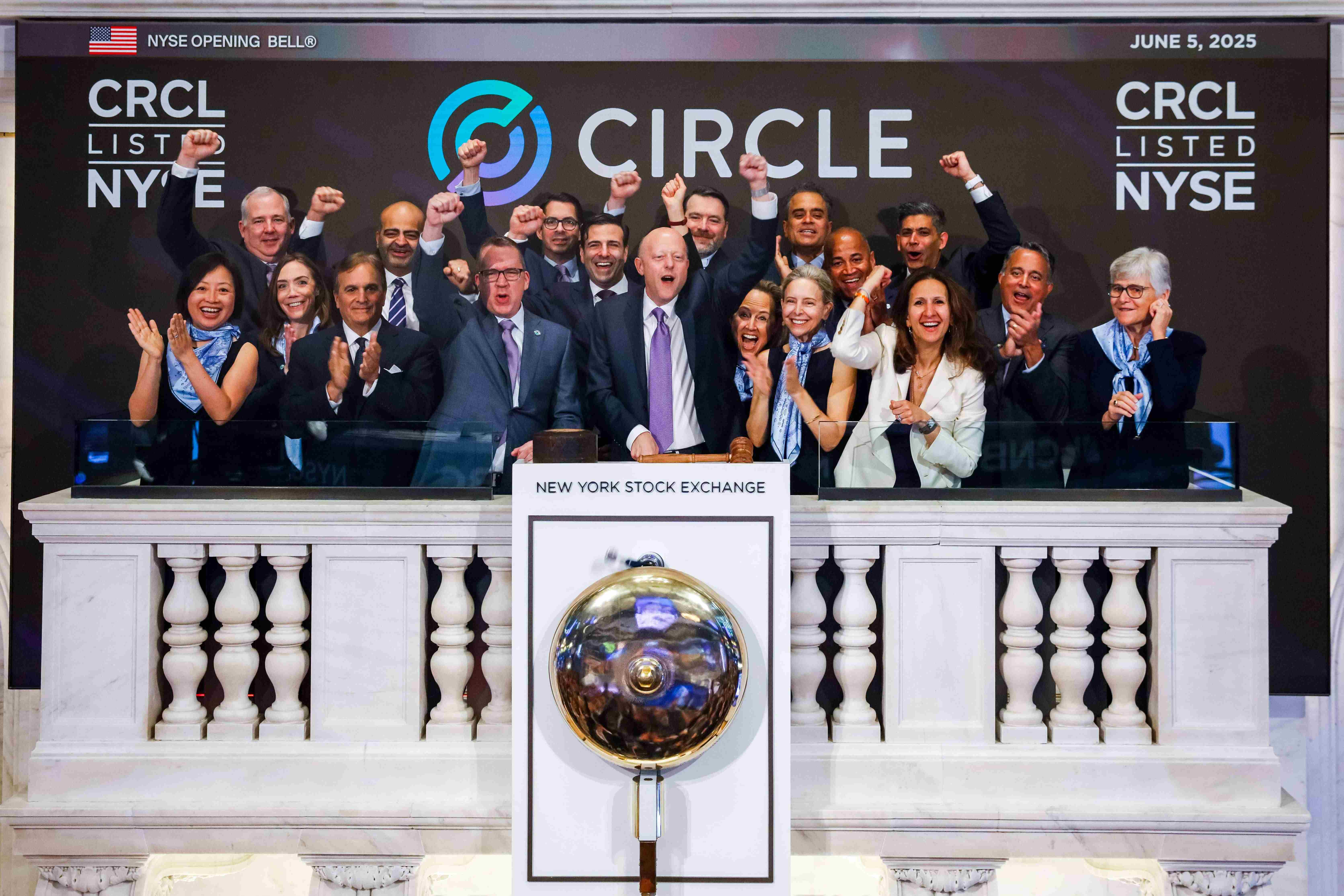
In 2025, this vision became increasingly clear. New regulatory frameworks were introduced or fully implemented across the U.S., Europe, Canada, Hong Kong, the UAE, and other regions, formally recognizing fully reserved, stable-value, on-chain settlement digital currencies as components of the global financial system. Against this backdrop, Circle’s IPO marked a milestone in solidifying our long-term commitment to transparency, sound governance, and rigorous risk management.
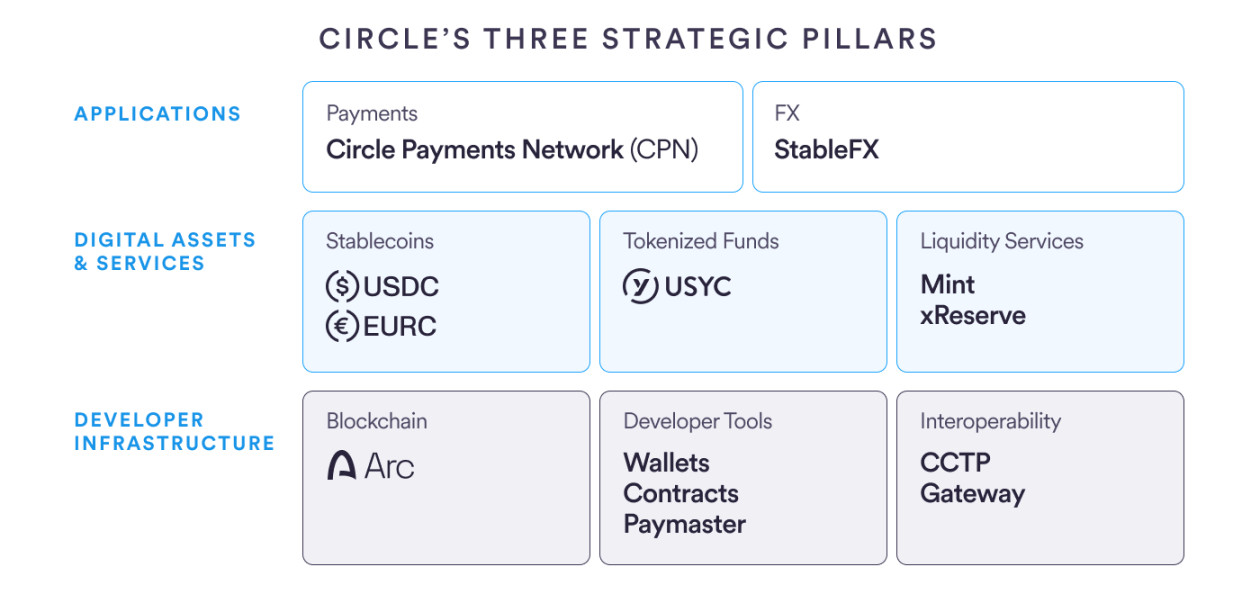
Our strategy continues to be built on three synergistic pillars advanced throughout 2025: fully reserved digital stablecoins (USDC, EURC, and USYC); an application services matrix (including Circle Payments Network and StableFX); and the launch of the Arc blockchain, which integrates programmable money with real-world economic activity to create neutral, institutional-grade infrastructure. Together, these form a full-stack technology platform driving programmable currencies and on-chain transactions into the mainstream of global finance.
Our efforts aim to generate tangible value: low-cost, fast remittances help families retain more income; efficient cross-border payments benefit small businesses; programmable funds empower financial institutions to manage liquidity in real time and enter new markets, accelerating the transformation of the financial system toward an open, inclusive, internet-native model. This annual report focuses on four core areas that defined 2025’s pivotal transition: regulatory milestones, digital asset growth, application expansion, and Arc infrastructure development.
Regulatory Clarity: Unlocking Industry Scale
In 2025, regulatory breakthroughs across multiple jurisdictions became a turning point for the industry. Key markets including the U.S., EU, Hong Kong, and the UAE introduced frameworks that recognize “fully reserved, stable-value, transparent, and traceable” on-chain settlement digital currencies as enduring components of the financial system, resolving previous policy uncertainty.
Progress in the U.S. market was critical. The GENIUS Act took effect in July, designating fully reserved payment stablecoins as core elements of modern financial infrastructure—terms closely aligned with Circle’s standards. Concurrently, Circle received conditional approval from the OCC to establish the “First National Digital Currency Bank,” which will strengthen USDC reserve security and regulatory transparency, bridging the gap between traditional finance and digital asset services.
Regulatory alignment went global. In the EU, Circle is the only major issuer with both MiCA-compliant USDC and EURC, covering all 27 EU member states. In the Middle East, DFSA listed USDC/EURC among the first compliant stablecoins, and Circle obtained a full Financial Services Permission (FSP) license in Abu Dhabi, expanding use cases across the UAE.
Compliance capability emerged as a core advantage. Circle joined the global Travel Rule network and deepened collaboration with the TRUST network, embedding compliance features directly into products like CPN and Gateway, reducing customer onboarding costs.
Meanwhile, industry players continued assessing deeper integration of USDC into their offerings, while broader regulatory tailwinds also boosted demand for EURC and USYC. These developments signal a structural shift in the financial system, treating digital assets as scalable, mainstream, and resilient cash equivalents.
Commercial Expansion: Institutional Partnerships Penetrate Core Financial Scenarios
Regulatory clarity catalyzed explosive institutional growth in 2025, with global market infrastructure providers, fintech firms, and exchanges partnering with Circle to validate the efficiency gains and risk reduction offered by digital assets.

Top-tier market infrastructure providers signaled strong adoption. Intercontinental Exchange (ICE) announced plans to introduce USDC/USYC into capital markets trading and clearing processes. Deutsche Börse committed to integrating USDC/EURC across its entire workflow to reduce settlement risk.
Fintech giants accelerated integration. Finastra plans to embed USDC settlement into its Global PAYplus platform, which processes trillions in cross-border flows daily. FIS is incorporating USDC into its “funds movement hub,” benefiting a vast network of bank clients. Intuit signed a multi-year strategic partnership to deploy stablecoin infrastructure for small business treasury management.
Cross-border payments and regional markets saw breakthroughs. In Brazil, Circle partnered with Matera to enable low-cost global payments for enterprises. Across Asia-Pacific, collaborations with LianLian Global optimized cross-border receivables for SMEs. In Europe, Bissen Bank’s subsidiary launched USDC/EURC deposit and exchange services. On the card networks front, Visa rolled out USDC real-time settlement in the U.S., while Mastercard extended its service to EMEA.
Exchange ecosystem cooperation deepened. Binance adopted USYC as derivatives collateral and expanded USDC access to 240 million users. Bybit, Kraken, and OKX enhanced liquidity, accelerated integration, and launched bidirectional conversion services. On the infrastructure side, Circle acquired Interop to accelerate Arc and CCTP development; acquired Hashnote to bring USYC into Circle’s full-stack platform; partnered with Safe to build multi-sig smart accounts; and began shaping standards for AI agent payments.
Digital Assets: Building Core Value Carriers for Global Finance
In 2025, Circle’s three core digital assets—USDC, EURC, and USYC—achieved dual improvements in scale and quality, serving diverse use cases in payments, foreign exchange, and treasury management.
USDC: The Global Stablecoin Benchmark
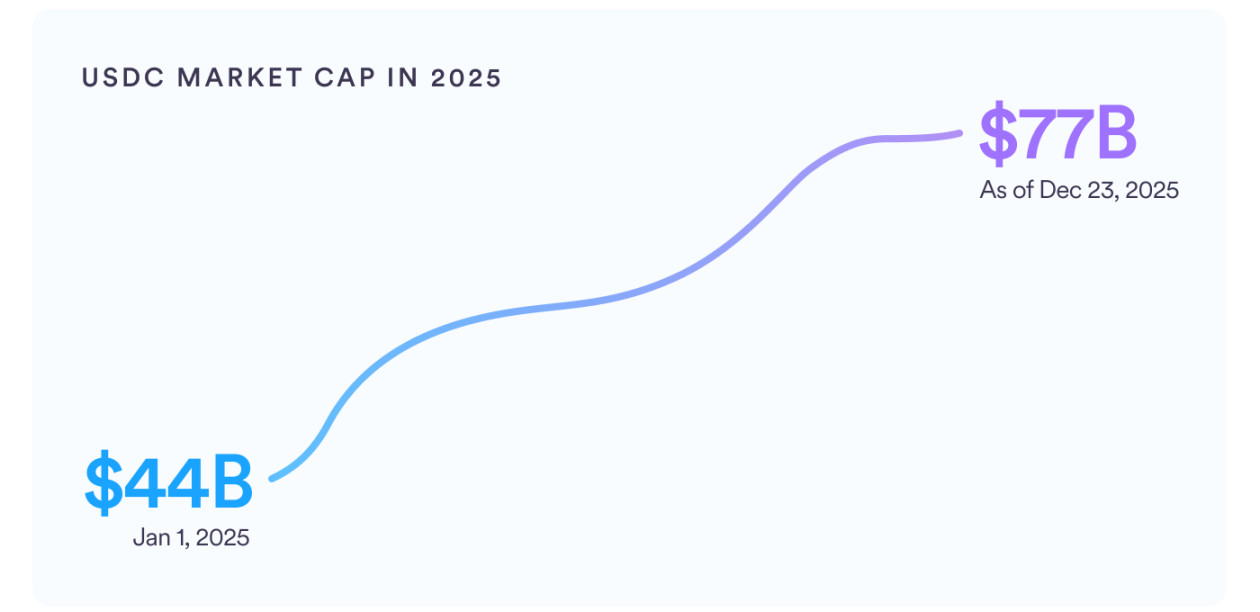
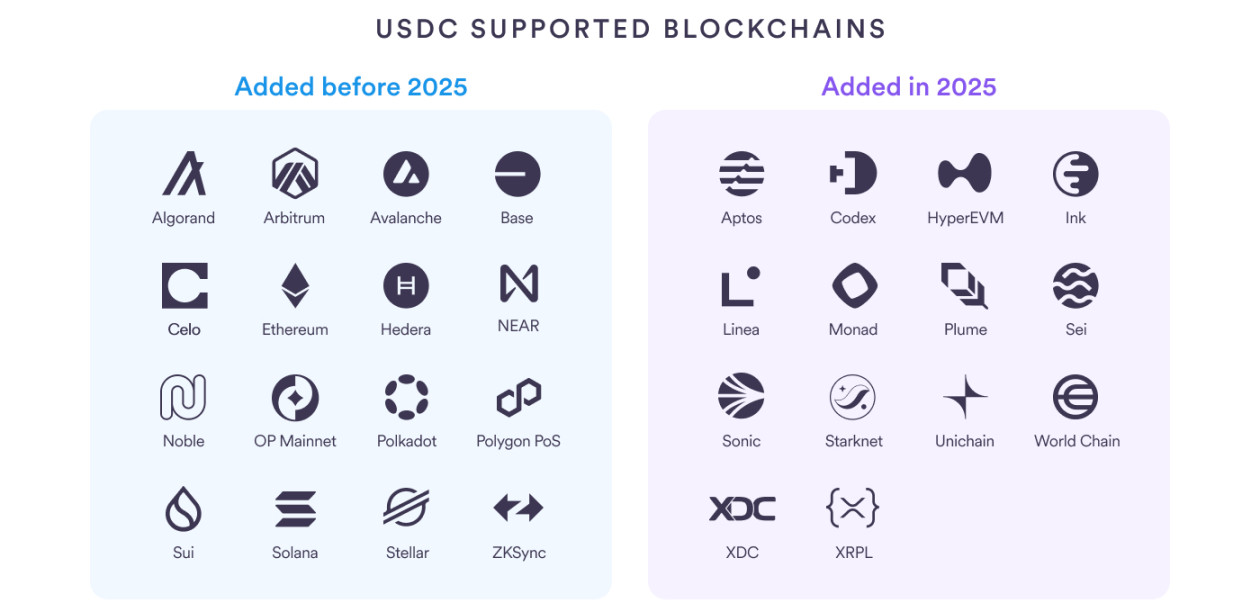
As of December 23, 2025, USDC’s market cap grew from $44 billion to $77 billion—a 75% increase. Its chain coverage expanded to 30 blockchains, adding 14 new public chains including the XRP Ledger. After the CCTP protocol upgrade, cross-chain transfers are now supported across 17 chains, with cumulative transaction volume exceeding $126 billion and over 6 million transfers processed.
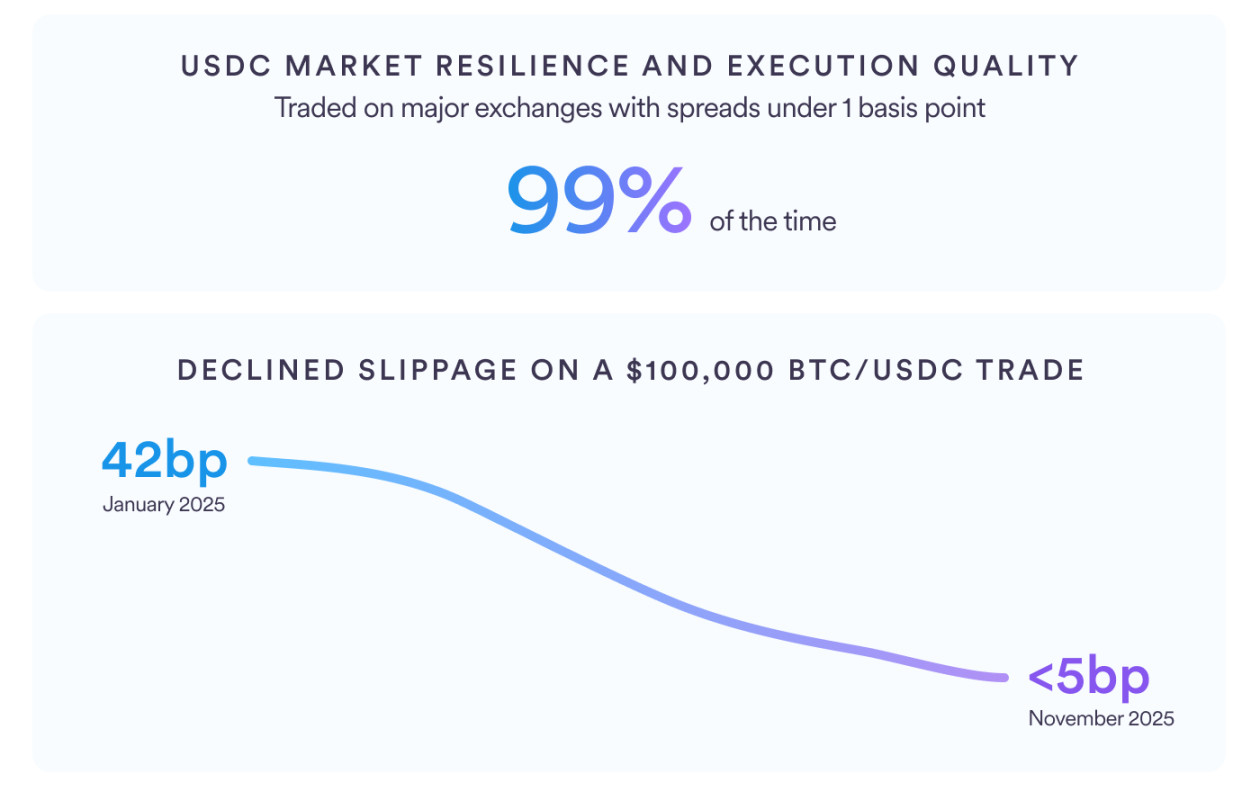
Liquidity improved significantly over the year. Spot liquidity for BTC/USDC on Binance rose 227%, while perpetual contract depth increased over 200%. Trading metrics improved: spreads were below 1 basis point 99% of the time, and slippage for $100,000 trades dropped from 42 to under 5 basis points, narrowing the gap with USDT and establishing USDC as a high-credibility liquidity vehicle.
EURC: Leading the EU-Compliant Market
2025 was also pivotal for EURC. Driven by MiCA implementation, EURC experienced explosive growth, increasing from €70 million to over €300 million in market cap by December 23—a 328% rise—solidifying its position as the leading euro-denominated stablecoin.
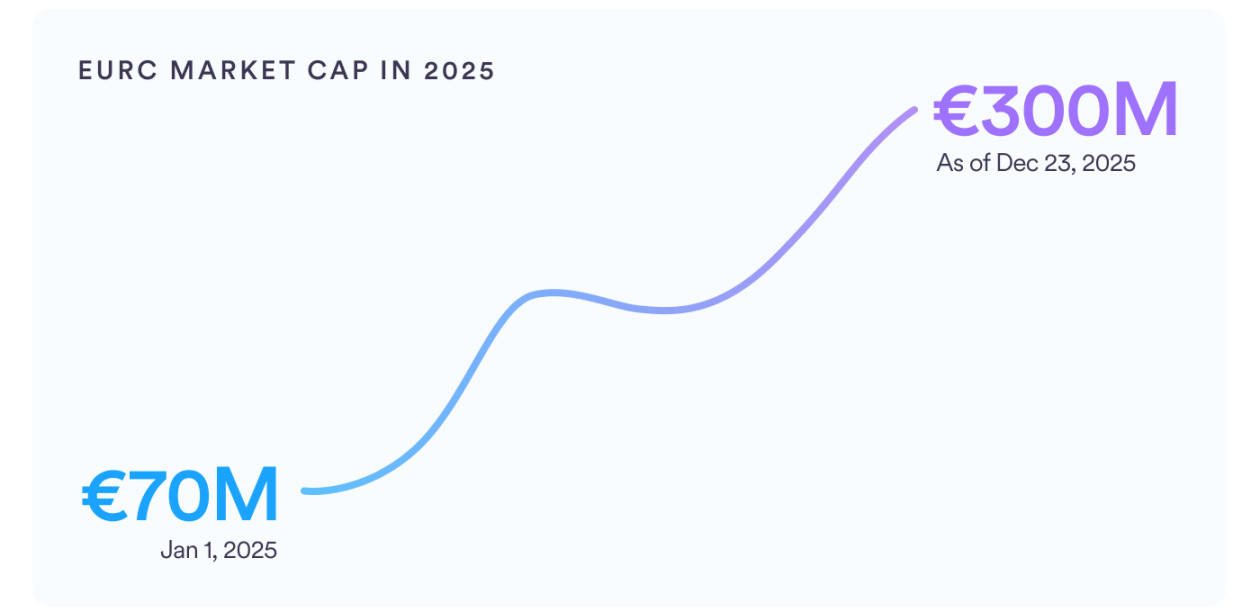
EURC’s growth was fueled by its expansion on World Chain, bringing EURC to over 37 million World App users, enabling everyday buying, selling, and transferring of euros.
The “regulatory compliance + institutional on/off-ramps + consumer-grade distribution” model created a regional liquidity network complementary to USDC, validating Circle’s regionalization strategy.
USYC: Core Choice for Institutional Yield-Bearing Assets
Like USDC and EURC, Circle’s TMMF (tokenized money market fund) USYC continued to grow. From November 1 to December 23, 2025, USYC’s assets under management increased by approximately $592 million, rising from $948 million to $1.54 billion, making it the second-largest TMMF globally.
USYC successfully launched on BNB Chain and Solana, leveraging their high throughput and low latency to reach more institutional clients. Its core value proposition combines “traditional asset yields with on-chain flexible settlement,” supporting 24/7 redemption into USDC to meet institutional liquidity needs.
Applications & Services: Bridging the Last Mile to Adoption
With regulated digital assets growing in strength, the focus in 2025 shifted to making these assets more usable within real-world financial workflows. Circle’s CPN (Circle Payments Network), CCTP (Cross-Chain Transfer Protocol), Gateway, Circle xReserve, Mint, StableFX, Circle Wallets, and other supporting apps and services have become essential bridges connecting digital assets to everyday financial infrastructure.
CPN: Accelerating Global Capital Flows
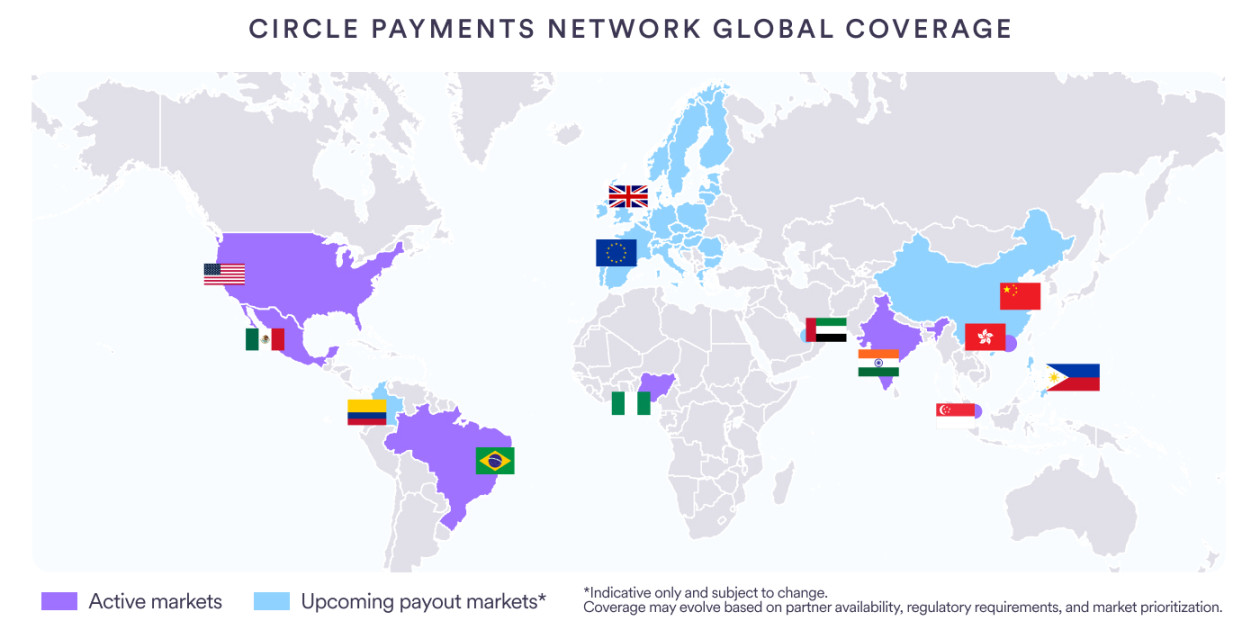
Addressing pain points in traditional cross-border payments—T+2 to T+5 delays and 3%-5% fees—Circle launched CPN, a stablecoin payment network, in early 2025. CPN provides a coordination platform for licensed financial institutions to enable real-time payments. Key advantages include: a “one-to-many” integration model that reduces setup costs; a programmable risk control framework enabling real-time policy enforcement; and native compliance capabilities offering “compliance-as-a-service.”
The CPN Console self-service interface shortened onboarding time, reaching over 25 design partners by year-end. For example, Brazil’s Alfred achieved instant cross-border payments with a 20% reduction in FX costs; Asia-Pacific’s Tazapay solved SME receivables challenges.
Liquidity & Interoperability Tools
As real-world usage of digital assets continued to grow in 2025, Circle expanded the liquidity and interoperability infrastructure needed to support that growth.
Mint, Gateway, and xReserve work together to build a multi-chain liquidity ecosystem. Mint improved fee structures and account management, adding 24/7 USDC/EURC exchange; Gateway supports 11 core chains, enabling real-time USDC transfers and consolidating fragmented liquidity; xReserve enables issuance of reserve-backed stablecoins on non-native chains, reducing cross-chain trust risks.
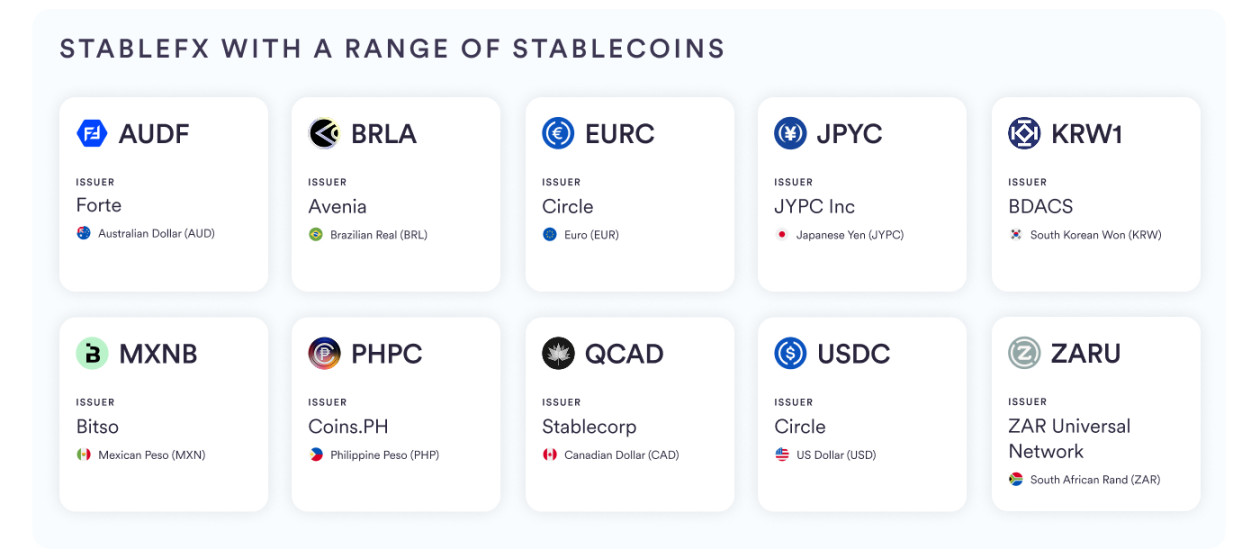
StableFX: Redefining Institutional FX Trading
While Mint, CPN, CCTP, Gateway, and xReserve focus on payments, liquidity, and interoperability, StableFX and Circle Partner Stablecoins target another critical aspect of cross-border finance: foreign exchange.
To address traditional FX pain points like T+1 settlement and pre-paid margin requirements, Circle launched the StableFX engine in November, combining RFQ models with on-chain settlement to enable real-time settlement without margin deposits. StableFX is now live on the Arc public testnet.
Wallets & Self-Custody Payments: Expanding into AI Use Cases
Wallets are the gateway for users to interact with the on-chain world—an essential infrastructure that unifies end-user experience, developer workflows, and emerging agent-based use cases.
Circle’s wallet-as-a-service platform, Circle Wallets, launched modular solutions, with Gas Station and Paymaster features lowering user barriers. Circle also extended wallet infrastructure into a new domain: autonomous machine-to-machine payments. Through partnerships with Coinbase’s x402 protocol and OpenMind, Circle integrated developer-controlled wallets with x402, enabling AI agents to autonomously pay for API access, data, compute, and content using USDC.
Real-World Applications: From Pilots to Scalable Deployment
The true measure of progress in 2025 wasn’t the breadth of Circle’s product portfolio or the global spread of clearer regulations—but what developers and customers achieved because of them. In 2025, Circle’s digital asset applications moved from pilot projects to large-scale deployment, covering retail banking, cross-border remittances, and global payroll, solving longstanding financial inefficiencies.
CAP Program: Alliance Ecosystem Driving Innovation
By December, the Circle Alliance Program (CAP) reached 1,065 members, including banks and tech companies. The core value lies in ecosystem synergy—Circle provides technical support while members innovate based on local needs: Southeast Asian members reduced cross-border remittance times to minutes and cut fees by 50%; Latin American members integrated stablecoins into agricultural supply chain finance, serving smallholder farmers.
Mainstream Financial Channel Penetration: Reaching Billions of Users
Circle partnered with Latin American neobank Nubank to offer low-barrier USDC savings to 127 million users in Brazil, Mexico, and Colombia. Users no longer need overseas accounts—simply using their existing app allows them to exchange and hold stable value. By integrating USDC into its platform, Nubank began providing tens of millions of Brazilians with a convenient way to access and hold digital dollars within the Nubank app.
Cross-Border Payments & Remittances: From T+2 to 24/7
Global payment network Thunes replaced multi-currency pre-funding with USDC, reducing working capital needs by 30% and improving reconciliation efficiency by 60%, while expanding coverage into more emerging markets. Meanwhile, Lipaworld, a new stablecoin-native bank, combined USDC with digital vouchers to provide low-cost remittance services for migrants, cutting fees by 40–60% and reducing transfer times to minutes, addressing the lack of physical branches in underserved regions.
Payroll: Adapting to Remote Work
Through partnerships with Rise and others, Circle launched USDC payroll solutions. Enterprises can now pay employees globally via a single platform, avoiding multi-currency conversion costs, with payout times shrinking from 3–5 days to instant. Over a thousand companies benefited, spanning tech and creative industries, improving income predictability for freelancers and reducing operational costs for businesses.
Social Responsibility: Institutionalizing Financial Inclusion
While expanding commercial and institutional operations in 2025, Circle also formalized its long-standing commitment to financial inclusion and resilience.
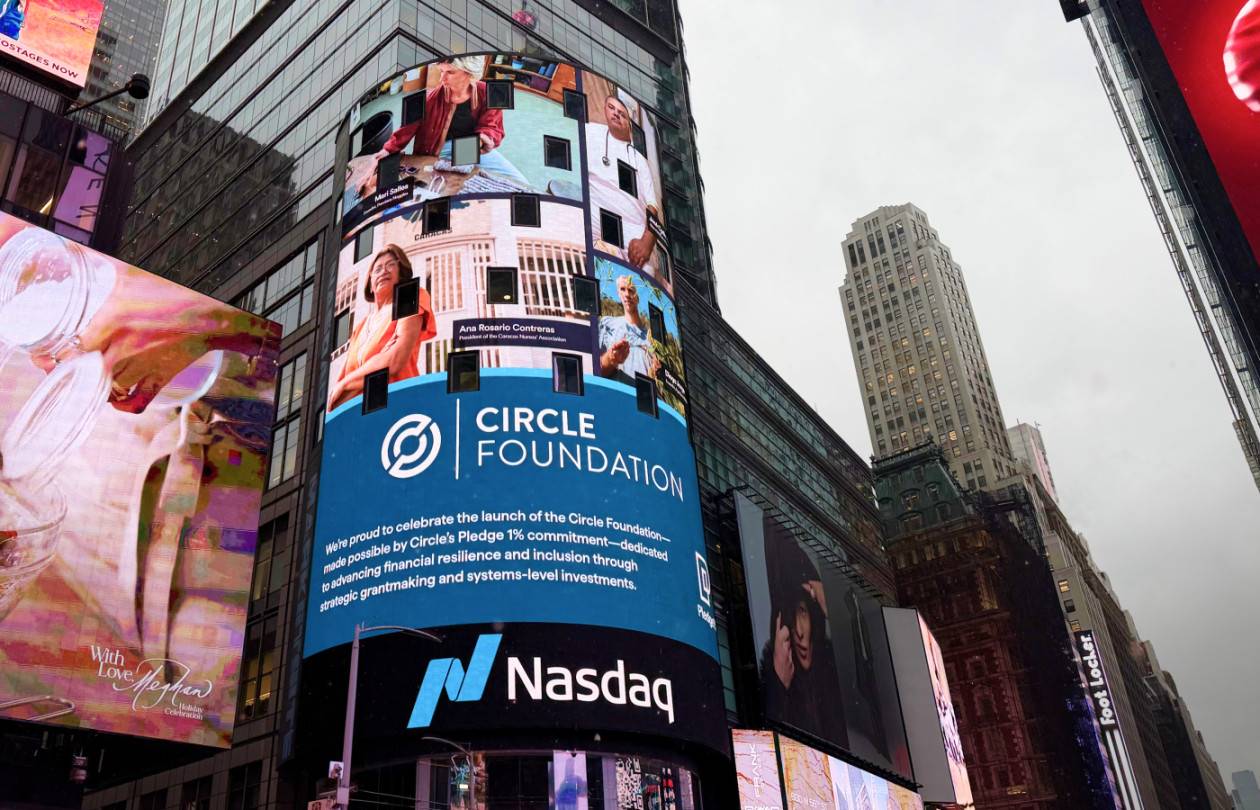
Through the “Donate 1%” initiative, Circle Foundation was established to fund projects promoting mobile payments in Africa, enabling SME payment access in Southeast Asia, and providing financial education for migrants in Latin America. Inclusion was embedded into infrastructure design—expanding CPN’s reach into emerging markets and offering low-barrier APIs to reduce costs for small businesses.
Arc Blockchain: Launching the Internet Economic Operating System
In 2025, Circle launched Arc, an EVM-compatible Layer 1 public blockchain positioned as the “economic operating system for the internet,” purpose-built for real-world financial activities. The acquisition of Informal Systems brought in the Malachite consensus engine, delivering sub-second finality, high throughput, and low energy consumption.
The Arc public testnet launched in October, attracting over 100 institutional participants, including BlackRock, Goldman Sachs, AWS, and Coinbase. Arc’s core features include sub-second finality, predictable transaction fees priced in USDC, and configurable privacy tools.

Exploration in AI use cases yielded significant results. Hackathons spurred developer innovation, with the “AI Disaster Relief Platform” emerging as a standout example—using Arc and USDC for automated fund disbursement, with zero-knowledge proofs ensuring compliance and transparency. By December, Arc’s Discord community exceeded 20,000 members, and a developer grant program was launched to fund projects building compliant components and liquidity tools, accelerating ecosystem growth.
Future Outlook: Building an Open Internet Financial System Together
The progress we made in 2025 is just the beginning. The world remains in the early stages of transitioning from decades-old financial infrastructure to an internet-native financial system—one where value exists natively online and moves at unprecedented speed. Clearer regulation in key markets, growing and diversifying trusted digital assets, expanding real-world applications, and early momentum in blockchain infrastructure designed for real economic activity—all indicate that programmable on-chain finance will play a foundational role in the global economy.
Going forward, as a neutral, trusted digital currency issuer, builder of institutional-grade infrastructure, and partner to next-generation financial application developers, we remain committed to playing a constructive role in shaping this future.
Join TechFlow official community to stay tuned
Telegram:https://t.me/TechFlowDaily
X (Twitter):https://x.com/TechFlowPost
X (Twitter) EN:https://x.com/BlockFlow_News
 @circle