ERC-8021 Proposal Explained: Can Ethereum Replicate Hyperliquid's Developer Wealth Creation Myth?
TechFlow Selected TechFlow Selected
ERC-8021 Proposal Explained: Can Ethereum Replicate Hyperliquid's Developer Wealth Creation Myth?
Platforms serve as the foundation, enabling thousands of applications to be built and monetized.
 Navigating Web3 tides with focused insights
Author: Jarrod Watts
Compiled by: TechFlow
App developers are quietly earning millions by building applications on platforms like Hyperliquid and Polymarket, leveraging a new revenue attribution system known as "builder codes."
This is a Roblox model for crypto: platforms act as foundations enabling thousands of apps to build and monetize—by attributing activity through unique codes and distributing revenue accordingly.
In this article, I'll break down what builder codes are, how apps earn millions from them, and how ERC-8021 proposes to natively bring this system to Ethereum.
What Are Builder Codes?
Builder codes are essentially referral codes designed for app developers—apps can generate trading volume for another platform (e.g., Hyperliquid) and earn revenue in return.
This creates an on-chain attribution system that allows third-party apps—such as trading bots, AI agents, and wallet interfaces—to earn fees for the activity they generate on other platforms.
The system is mutually beneficial for all parties involved:
-
Platforms gain more trading volume;
-
App developers earn revenue from the volume they generate;
-
Users enjoy easier ways to interact with the platform.
Let’s use an example to better understand—Phantom.
Phantom's Perpetuals Revenue "Money Printer"
In July this year, Phantom added support for perpetuals trading using Hyperliquid’s builder codes, a decision that now generates around $100,000 in daily revenue for them.
The mechanism works by allowing users to deposit funds into a separate perpetuals account, enabling long and short positions directly within the mobile app.
For every order, Phantom attaches their builder code and collects a 0.05% fee from users—these fees are recorded via an on-chain attribution system and can be claimed in USDC.
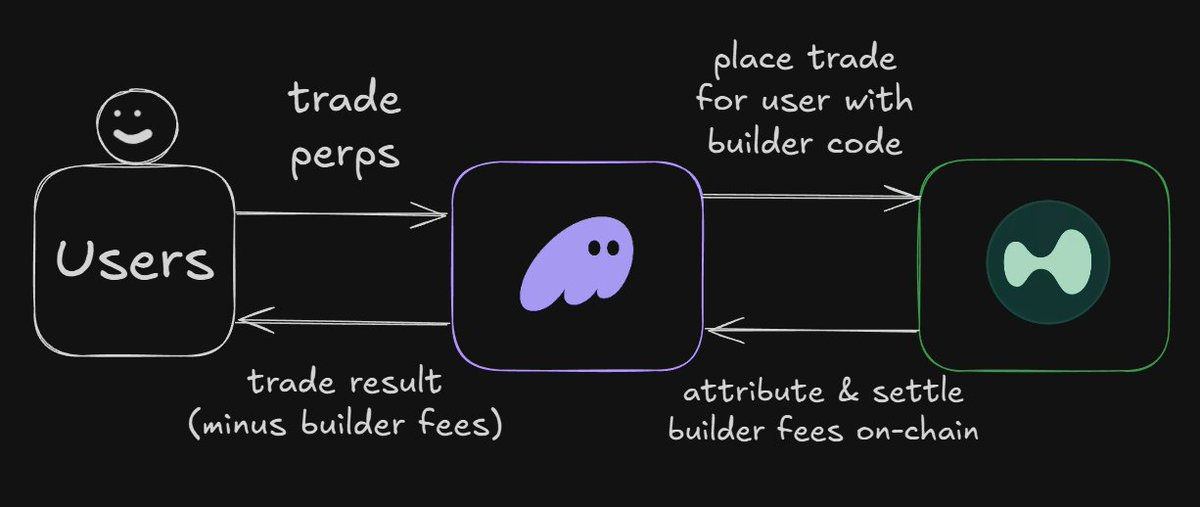
Figure: Phantom "tags" user orders from the Phantom wallet app with builder codes to earn these fees
Notably, all of this relies on external APIs provided by Hyperliquid, making development extremely easy and far cheaper than building such complex functionality from scratch.
Phantom’s perpetuals business has already demonstrated remarkable ROI—since its launch in July, Phantom has generated nearly $20 billion in perpetuals trading volume and earned close to $10 million in revenue in under six months.
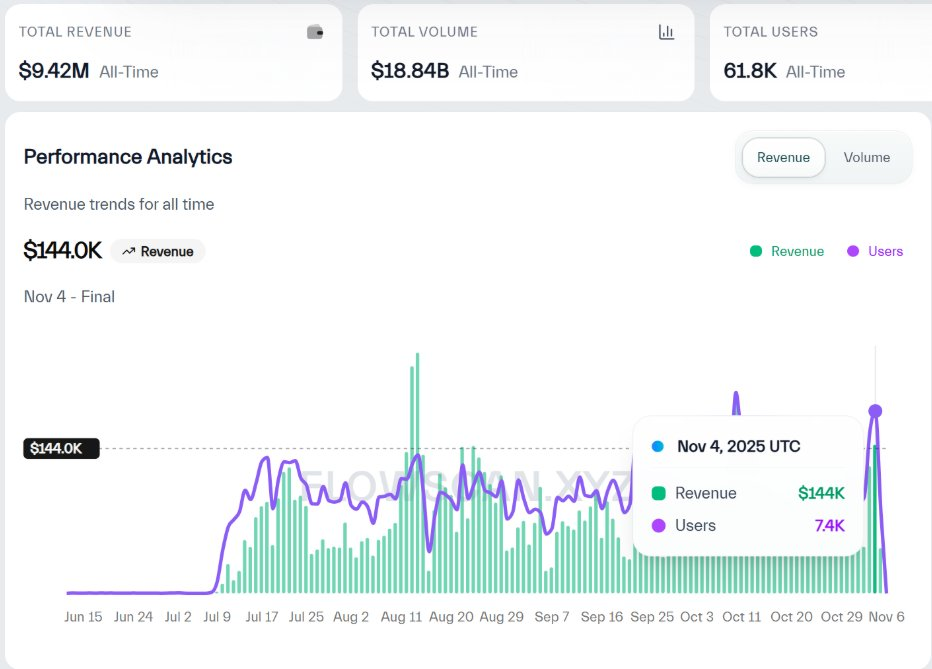
Figure: Just yesterday, Phantom earned nearly $150,000 from its perpetuals business
Interestingly, Phantom’s top perpetuals user has performed extremely poorly:
-
Lost 99% of their ~$2 million perpetuals portfolio;
-
Has a net PnL of -$1.8 million;
-
Paid Phantom approximately $191,000 in fees via builder codes. Currently, the user only holds a 25x leveraged long position in ETH (interpret that as you will).
Unless everyone loses their funds like this user, Hyperliquid will continue generating massive earnings for developers like Phantom who bring trading volume to its platform.
To date, Hyperliquid’s builder codes have achieved:
-
Nearly $40 million in revenue for app developers;
-
Diverse, improved user interfaces for perpetuals trading;
-
Over $100 billion in additional perpetuals trading volume for Hyperliquid!
The success of this model has been rapidly validated, attracting many top-tier app developers to build high-quality apps on Hyperliquid.
Polymarket Follows Suit
This week, Polymarket announced a similarly designed Builders Program aimed at rewarding app developers for bringing trading volume to its prediction markets.
To incentivize integration of builder codes, Polymarket launched a weekly USDC rewards program based on integrated trading volume.
While trading volume from third-party Polymarket apps is currently far below that of Hyperliquid, its builder codes have already attracted teams to develop user interfaces offering unique ways to predict outcomes.
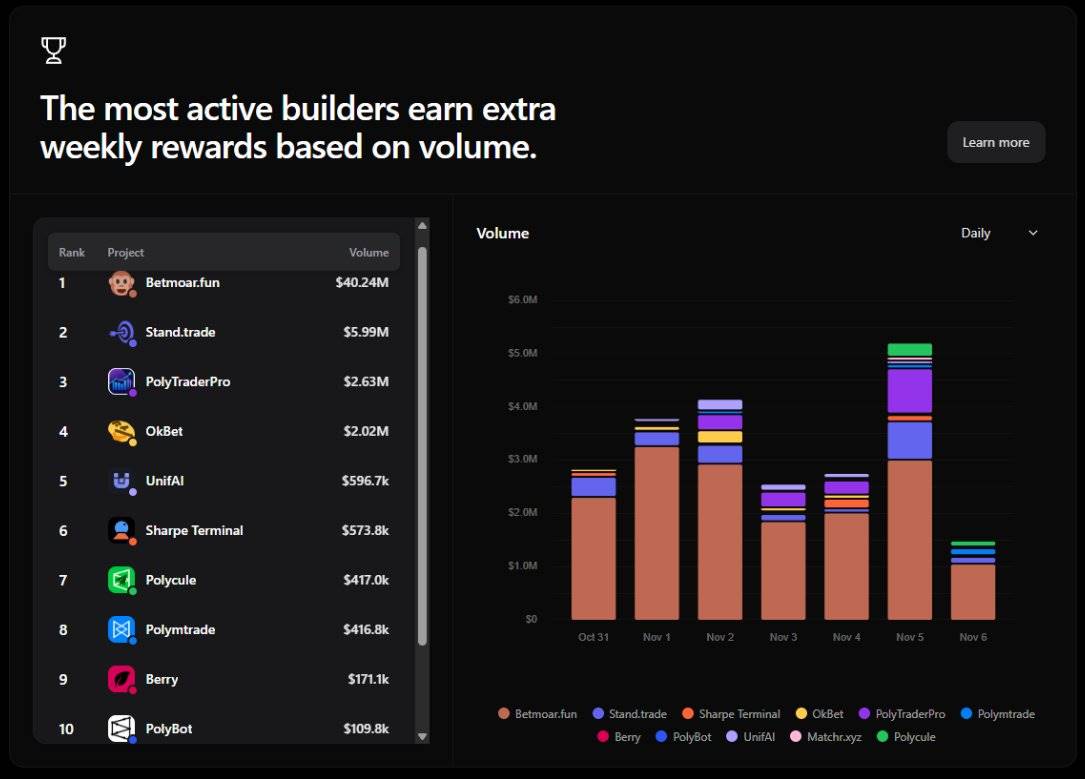
Figure: Over $50 million in betting volume completed via third-party Polymarket apps
Polymarket appears to be expanding the scope of builder apps—from trading terminals to AI assistants—and has created a dashboard similar to Hyperliquid’s to showcase top builders and their rewards.
Other prediction markets are expected to roll out similar programs to compete, and broader application ecosystems may emulate the success of this referral model.
However, Ethereum has the opportunity to elevate this model further, encouraging high-quality app developers to build innovative user interfaces on its mature and reliable platform.
ERC-8021 and Ethereum’s Opportunity
Ethereum now has the chance to natively integrate builder codes into L2 and L1 layers, and a recent proposal suggests an interesting implementation.
ERC-8021 proposes embedding builder codes directly into transactions, along with a registry where developers can link their codes to wallet addresses to receive payouts.
Implementing this proposal would standardize how builder codes are added to any transaction and define a common mechanism for platforms to reward developers for generated volume.
ERC-8021 includes two core components:
-
New transaction suffix: Developers can append small data at the end of a transaction to include their builder code, such as "phantom", "my-app", or "jarrod".
-
Code registry: A smart contract where developers map their builder codes to wallet addresses to receive platform payouts.
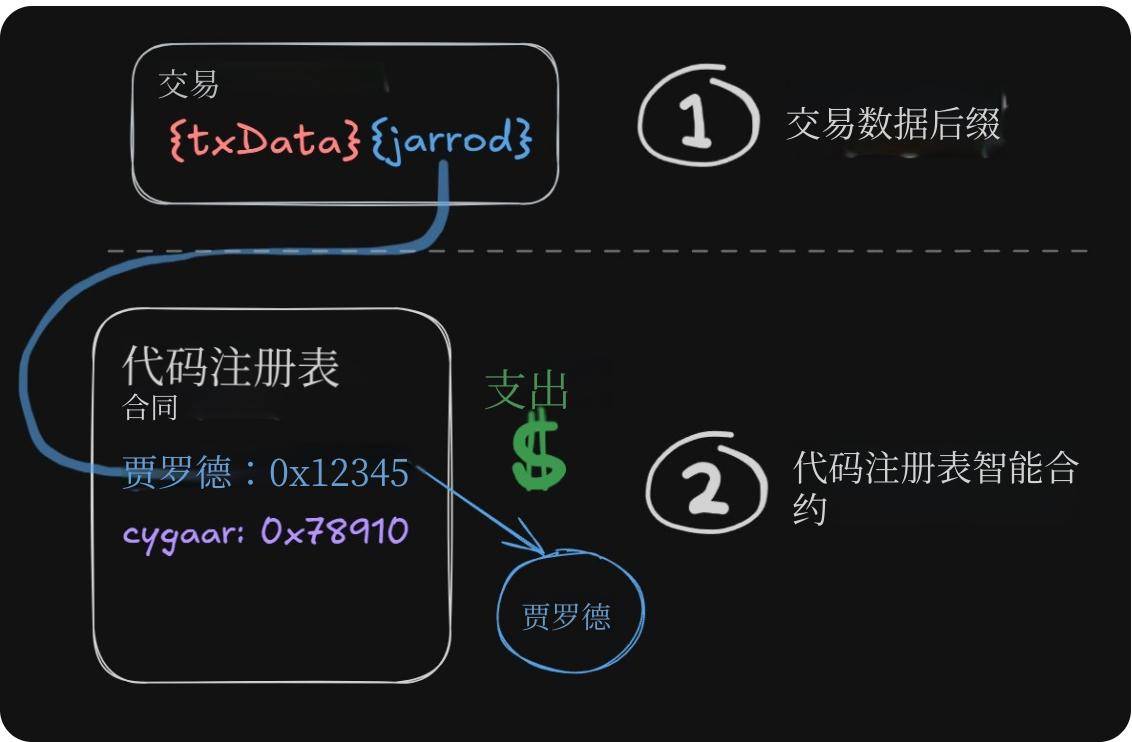
Builder codes can be appended to the end of transaction data and optionally mapped to a wallet address for payout receipt.
This would enable any platform to attribute on-chain activity back to its originating app and distribute revenue directly to those developers in a transparent and programmable way.
Conclusion
Hyperliquid users may already be familiar with builder codes, but upon closer inspection, their rapid and widespread adoption in such a short time is truly astonishing.
The reason for their success is clear: builders are rewarded for creating high-quality consumer apps built atop powerful crypto primitives.
Ethereum has a vast pool of existing high-quality platforms that could integrate into a standardized builder code system, driving a new wave of consumer-facing applications.
Builder codes unlock new revenue streams for high-quality app developers—one that doesn’t depend on funding from conference parties, but rather on the value they deliver to users.
Join TechFlow official community to stay tuned
Telegram:https://t.me/TechFlowDaily
X (Twitter):https://x.com/TechFlowPost
X (Twitter) EN:https://x.com/BlockFlow_News
 @jarrodWattsDev