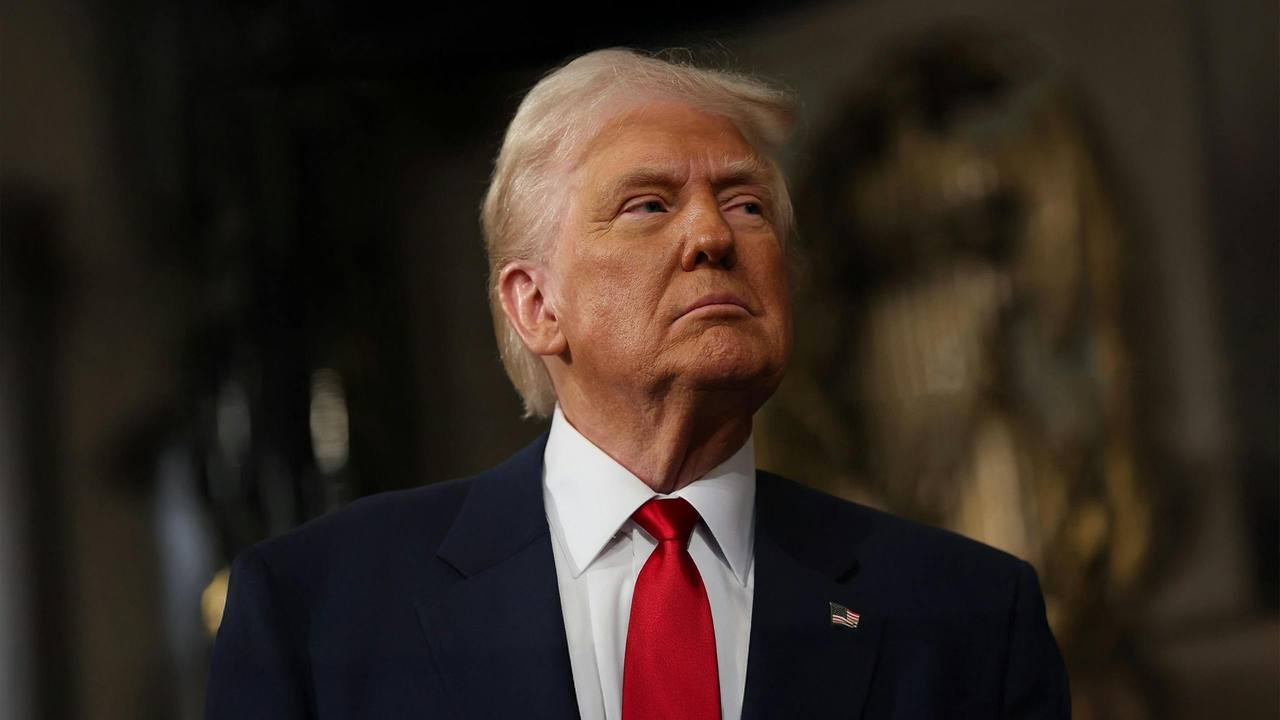
Meet Trump's "shadow prime minister," the mastermind behind the plan to reshape America
TechFlow Selected TechFlow Selected
Meet Trump's "shadow prime minister," the mastermind behind the plan to reshape America
Miller is the only senior aide who maintained a close relationship with Trump after his first term and followed him back to the Oval Office in January this year.
 Navigating Web3 tides with focused insights
By Dong Jing, Wall Street Horizon
Within the power structure of Trump's second term, one name is drawing increasing attention in Washington—Stephen Miller. As deputy chief of staff and homeland security advisor to Trump, Miller has become the chief architect behind reshaping America.
On September 29, according to the Financial Times, Stephen Miller, whom former White House chief strategist Steve Bannon dubbed the "shadow prime minister," has become the most powerful unelected bureaucrat in the United States within Trump’s political landscape upon his return to the White House. Miller is the only senior aide who maintained a close relationship with Trump after his first term and followed him back into the Oval Office in January this year.

(Photo: Bannon (left) interviews Miller, then a senior Trump adviser, on his podcast in February 2016)
Bannon said Miller is involved in nearly all domestic policy-making, except for certain national security, fiscal, and financial functions. From mass arrests of undocumented immigrants, attempts to abolish birthright citizenship, to deploying armed National Guard troops on the streets of Los Angeles—these controversial policies bear his mark.
Additionally, insiders revealed that Miller not only leads on immigration and security policies but also deeply participates in Trump’s attacks on universities, law firms, cultural institutions, and the media. A person familiar with Trump’s thinking said: "Stephen is orchestrating all of this—he’s involved in every single thing."
His influence is manifesting in unprecedented ways. According to former White House national security official Olivia Troye, "It’s completely Stephen Miller’s moment now," because internally at the White House, "there’s no one left to check him." This has led to the rollout of more extreme policies, raising market concerns over policy disruption and legal stability.
Critics worry that Miller is using his influence to push a more radical policy agenda. He once labeled Democrats as a "domestic extremist organization" and discussed suspending habeas corpus—the constitutional right to due process. Supporters, however, argue he represents a government fully exercising presidential authority to implement policies backed by a majority of Americans.
From Outsider to Core Decision-Maker
In 2016, Miller officially joined Trump’s first presidential campaign as a speechwriter.
Bannon recalled: "Stephen and the president immediately clicked—it was a meeting of minds. After Miller joined, the quality of Trump’s speeches clearly improved, becoming weightier and more substantive."
"Charisma can only get you so far. Ultimately, you need well-thought-out policies, and Stephen is the one who delivers that."
During Trump’s first administration, Miller quickly made his mark on immigration policy. He was one of the principal authors of the so-called "Muslim travel ban," which restricted entry for citizens from several predominantly Muslim countries.
He also formulated the "zero tolerance" policy, which led to family separations at the U.S.-Mexico border in 2018.
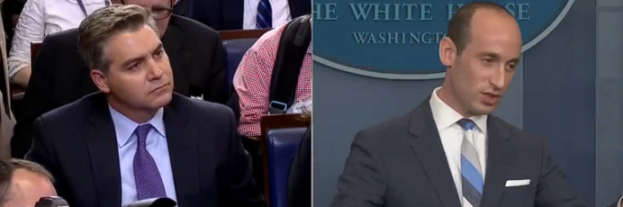
(Miller debates CNN reporter on U.S. immigration issues in 2017, source: video screenshot)
The "Shadow Prime Minister" Returns to Power
After Trump lost the 2020 election, Miller remained loyal, spending four years researching policies that could be implemented upon returning to power.
Despite lacking formal legal training, he unearthed obscure legal statutes to justify his harsh policy proposals. In 2023, he explained on a conservative podcast how the Alien Enemies Act of 1798 could be used to carry out mass deportations without due process.
After Trump’s victory, Miller was appointed deputy chief of staff and quickly demonstrated broad authority to bypass bureaucratic resistance.
White House press secretary Karoline Leavitt described Miller in a statement as "one of President Trump’s longest-serving and most trusted advisers over the past decade," adding that Trump has "the greatest confidence in him and his proven leadership ability."
Miller’s return and consolidation of power did not surprise many former colleagues. Former national security official Olivia Troye said:
"I always knew that if Trump returned to the White House, it would be Stephen Miller’s show." She believes that due to the lack of checks and balances, many "more extreme things" are now happening.
In May this year, he and Homeland Security Secretary Kristi Noem summoned senior immigration enforcement officials to Washington to reprimand them for their "poor performance" in arresting undocumented immigrants.
At the meeting, Miller set a daily arrest quota of 3,000 people—triple the average rate during the early months of Trump’s second term. Subsequently, videos went viral online showing immigration agents arresting asylum seekers at court hearings and raiding Mexican day laborers at Home Depot parking lots.
When protests erupted in Los Angeles over immigration enforcement, Miller declared on social media platform X that the city had become "occupied territory," stating, "We’ve been saying for years this is a battle to save civilization. Now anyone with eyes can see it."
Earlier this month, at a memorial event for conservative activist Charlie Kirk, Miller issued a stern warning to what he believed were the leftist forces behind an assassination attempt: "You don’t know the dragon you’ve awakened."
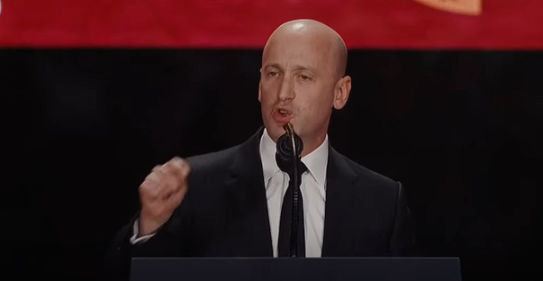
(Miller speaks at Charlie Kirk’s memorial event, photo source: video screenshot)
Analysts believe this statement was not an isolated remark but the latest signal of his push for a radical agenda.
Legal Controversies Over Radical Policies
Critics view Miller as a divisive figure who spearheaded the most legally contentious policies of the Trump administration.
But some former colleagues say many of the policies he champions—including cracking down on illegal immigration and attacking "woke" culture and elite universities—are more popular than his opponents realize.
A former White House colleague from Trump’s first term said:
"He has an uncanny ability to read the room and understand how broader American voters will respond. Things like attacks on elite institutions actually poll quite well across party lines."
Moreover, Miller is known for his results-driven approach, often circumventing normal policymaking processes.
A former official who worked with him during Trump’s first term said Miller routinely bypasses standard procedures involving lawyers and stakeholders to review proposals for legality and compliance.
"Stephen is bolder—he doesn’t want to wait for those things. He’ll say, 'No, we’re doing it now.' That’s still how he operates today."
However, this approach has also brought him numerous legal challenges. Skye Perryman, head of the nonprofit Democracy Forward, pointed out:
"The extremism and overreach we’re seeing—including suggestions that the government need not obey court orders or weaponizing people’s constitutional rights against them—bear strong traces of Stephen Miller."
Data from the nonpartisan Congressional Research Service shows that during the first 100 days of Trump’s second term, federal courts issued 25 nationwide injunctions against the federal government, compared to just four during the Biden administration. Perryman said:
"It’s no surprise the Trump administration keeps losing in court—they appear to have a non-lawyer running their legal strategy."
Join TechFlow official community to stay tuned
Telegram:https://t.me/TechFlowDaily
X (Twitter):https://x.com/TechFlowPost
X (Twitter) EN:https://x.com/BlockFlow_News