Interview with Ondo Finance CEO: When Stocks Become Part of DeFi, the On-Chain Investment Era Has Arrived
TechFlow Selected TechFlow Selected
Interview with Ondo Finance CEO: When Stocks Become Part of DeFi, the On-Chain Investment Era Has Arrived
The true way to bring liquidity from traditional finance on-chain is to ensure that anyone wanting to buy on-chain can immediately access traditional financial liquidity, which is exactly Ondo's core objective.
 Navigating Web3 tides with focused insights
Editing & Translation: TechFlow
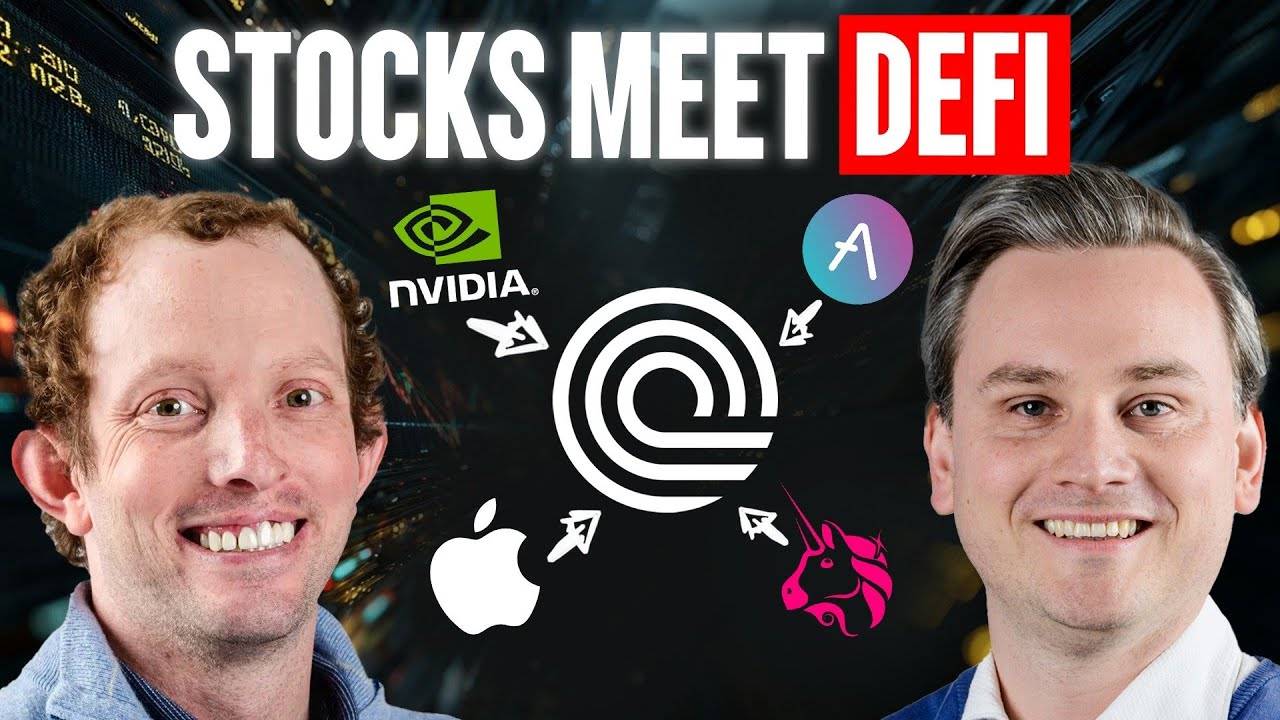
Guests: Nathan Allman, CEO of Ondo Finance; Ian De Bode, Chief Strategy Officer of Ondo Finance
Hosts: Ryan & David
Podcast Source: Bankless
Original Title: Tokenized Stocks: The $100 Trillion Onchain Shift
Release Date: September 11, 2025
Key Takeaways
Ryan and David dive deep with Nathan Allman and Ian De Bode from Ondo Finance into the evolution from stablecoins to tokenized Treasuries, and now to tokenized stocks. They analyze why Ondo Finance’s unique wrapped model is positioned to lead the industry, and how blockchain enables round-the-clock market access—24/5 for primary markets and 24/7 for secondary markets. They also explore how DeFi composability enhances liquidity and ensures fair asset pricing.
Ethereum and Ondo Finance are driving a potential $100 trillion shift of real-world assets (RWAs) onchain—an unstoppable trend in finance.
Highlights Summary
-
Stablecoins are essentially tokenized cash. But the efficiency gains and user experience improvements from tokenizing assets like stocks, ETFs, and Treasuries far exceed those of cash alone.
-
Tokenized Treasuries as an asset class have gained adoption much faster than stablecoins. Now, Ondo aims to apply this same model to stocks and ETFs, expecting another acceleration in growth.
-
The real way to bring traditional finance liquidity onchain is to ensure anyone wanting to buy onchain can instantly tap into traditional financial liquidity—that’s exactly what Ondo is built to do.
-
Major traditional financial market makers see tokenizing stocks and ETFs as a critical step toward 24/7 markets. Now, stocks become “financial Legos” that DeFi developers can use. This is what we’ve always wanted.
-
If I want to invest in a defense ETF but add Palantir stock, asking a fund manager to create such a product is nearly impossible. But if these are all onchain, I believe someone will build a ChatGPT-like interface to automatically generate and dynamically adjust portfolios based on demand. Personalized investing becomes possible.
-
Our system supports minting and redeeming 24 hours a day, 5 days a week. This means U.S. markets are already capable of offering 24-hour trading. Many Robinhood users are already used to this experience. Our platform taps into the same liquidity sources as Robinhood.
-
One advantage of our model is that adding new assets onchain is simple—we don’t need to recreate liquidity, we just plug directly into traditional financial markets.
-
Ondo has never aimed to replace banks or traditional finance, but rather to enhance existing systems through technological innovation, making them more efficient, open, and globally accessible, enabling innovation at previously unattainable scale.
-
Ondo Chain’s goal is to help issuers easily support multi-chain distribution while connecting their assets to broader public blockchain ecosystems like Ethereum, Solana, and BNB Chain.
-
By 2030, many first-time investors will choose to trade on blockchain, holding stocks or other asset classes onchain.
Is the business booming?
Ryan:
Currently, onchain real-world assets total around $300 billion, which seems impressive. From your perspective, is the business truly booming? Are we achieving our goals? Are RWAs really migrating onchain?
Ian:
I think yes. While $300 billion is substantial, it's still small compared to the overall size of traditional finance. However, the growth rate is significant. I joined Ondo about 18 months ago, when tokenized Treasuries were maybe $1 billion—now they're over $7 billion and growing fast. That trajectory is very encouraging.
Nathan:
Absolutely, I believe our business is moving quickly. From a product adoption standpoint, stablecoins have seen massive success—they've overcome early hurdles and entered the mainstream. Many large tech companies are deeply integrating stablecoin technology, representing most of the $300 billion in onchain assets.
Of course, we're just getting started. I see tokenized Treasuries and private credit products as the next key areas for onchain assets, and we’re already seeing strong momentum there. Recently, we launched tokenized stock products with very positive market feedback. Interest from asset managers, major institutions, and regulators shows growing recognition of the long-term potential of tokenized securities. While much work happens behind the scenes, I believe this will drive expansion beyond stablecoins into more asset types—very promising ahead.
Are RWAs inevitable?
David:
Nathan, you said onboarding real-world assets (RWAs) onto chain is “inevitable.” Can you elaborate? As crypto practitioners, we widely believe blockchain technology is the future—this view is deeply ingrained. Why do we believe RWAs will eventually move onchain?
Nathan:
Stablecoins have clearly demonstrated the potential of onchain assets—they offer a global solution for permissionless, peer-to-peer transfers anytime, anywhere. Even outside traditional finance, people are recognizing these advantages. In securities, current settlement processes are full of pain points: fragmented geography, cumbersome operations, and slow speeds. Every region has its own Central Securities Depository (CSD)—like DTC in the U.S., Euroclear in Europe, and similar entities in Asia. Transferring securities between CSDs often takes days or weeks. Capital flows face similar friction. We’re excited to extend the benefits of stablecoins into securities to solve these issues.
Ian:
Stablecoins are essentially tokenized cash. Traditional cash sits in bank accounts and, while transferable, remains bound by time and geography. Stablecoins changed that—they’re usable globally 24/7 and can interact via smart contracts with stocks, ETFs, Treasuries, etc. This flexibility is unmatched by traditional finance. While institutions can move funds, the process is far more complex.
As Nathan said, the efficiency gains and UX improvements from tokenizing stocks,ETFs, and Treasuries vastly exceed those from cash. Even though stablecoins are exciting today, I believe the onchain migration of other assets will be even more transformative.
Ryan:
Many people don’t realize how inefficient traditional finance is until they experience it firsthand. Most crypto natives discovered finance through crypto. When we see progress in crypto, we complain about UX—but going back to TradFi reveals even worse problems.
Traditional finance feels like stepping back in time. You can't directly exchange one security for another—you must first convert to cash and wait for settlement.
Tokenization Roadmap
David:
The crypto industry is rapidly replicating the historical development of money and finance. I believe we're building the financial tech stack similarly: starting with base dollars, like federal deposits—the foundation. Then repo markets, short-term Treasuries, long-term Treasuries. Then we move to stocks, corporate debt, and eventually higher-tier equity markets. That’s my vision.
Does this layered logic align with traditional finance structure, and explain how crypto builds its parallel version? Am I understanding this correctly?
Ian:
I think your point makes sense. Nathan, would you explain why the progression from cash to Treasuries to stocks is logical? And why we chose these asset classes first? Many people think of private credit, real estate, or private equity when discussing tokenization. But I joined Ondo because Nathan had a clear vision: tokenization evolves from stablecoins to Treasuries to stocks. There’s good reasoning behind this. Clarifying this is crucial to understanding tokenization’s logic.
Nathan:
I fully agree. We’re rebuilding financial infrastructure with distinct advantages traditional finance didn’t have at inception. Looking back at commercial banking history, it’s a legacy system—banks handle payments, savings, and lending simultaneously. Money is created through loans and settled via checks. That was the original payment system. Now, with technology—especially Bitcoin—we can store value digitally and scarce-ly, allowing us to separate savings, payments, and lending. This trend isn’t limited to crypto—it’s been happening in TradFi too. For example, shadow banking allows specialized non-banks to take over commercial lending. Crypto accelerates this further.
We’ve seen this play out in stablecoins, and it’s expanding into other securities. As Ian said, we started with Treasuries because in early 2023, there was a clear market gap: over $150 billion in stablecoins offered no yield. So tokenized Treasuries had a compelling value proposition: they meet global investor demand and provide yield. In contrast, tokenized equities’ value proposition in the U.S. is more complex since American investors already have direct access. It requires a full ecosystem—financial apps for lending, repos, trading, derivatives, and collateral acceptance. That’s what we’re building. As Ian mentioned, we launched Flux Finance as a proof-of-concept showing how tokenized securities can serve as collateral in DeFi-like frameworks.
Nathan:
As we build this ecosystem, the U.S. value proposition will become clearer. But currently, we’re excited about making highly liquid U.S. public securities more accessible to global investors—especially in Turkey, Latin America, Southeast Asia, where most lack U.S. brokerage accounts. These are small-scale investors, typical of early stablecoin adopters. We’ve always seen tokenized Treasuries as a gateway to broader tokenized securities capabilities. This space has become highly competitive, almost commoditized. We see strong synergy between tokenized Treasuries and our wider business. We can discuss these synergies further when talking about global markets.
Tokenized Treasuries
Ryan:
When discussing RWAs, I’d like to briefly define the concept for less familiar listeners. First, we must mention stablecoins. Stablecoins are the most mature onchain RWAs today—even gaining legislative support. The U.S. government explicitly backs stablecoins—for example, the Treasury Secretary stated: “We want $3 trillion in onchain stablecoins.” This shows full U.S. government endorsement. This recent legislation is crucial.
Thus, stablecoins are naturally the most mature category of onchain assets. Today’s stablecoin market is about $270 billion. Beyond that, we can explore other assets. I know you recently launched exciting products in tokenized stocks, but starting from stablecoins, the next major asset class appears to beU.S. Treasuries.
I understand Ondo has products in tokenized U.S. Treasuries. In fact, I saw someone from your team notify me that Fidelity recently launched a money market account on Ethereum—just last week. Though I don’t know details, this is a major milestone.
For context, Fidelity’s money market accounts hold ~$1.3 trillion—one of the world’s largest. A money market account is essentially Treasuries—a yield-bearing stablecoin paying ~4%. That’s the purpose of money markets. Compared to holding dollars, investors prefer money market assets in investment accounts to avoid banks capturing the yield. That’s the core logic.
Now Fidelity has tokenized money market assets and deployed them onchain—a huge milestone. The traditional money market totals ~$7 trillion, which explains why you laughed earlier about $300 billion onchain seeming tiny—money markets alone are $7 trillion.
Currently, onchain tokenized Treasuries are ~$7.4 billion. How big is the opportunity? What work have you done in this space?
Ian:
Fidelity launching a money market account on Ethereum is indeed significant. Money market funds or tokenized Treasuries have long been popular in TradFi. As you said, instead of leaving cash in a bank account, investors put it into money market funds to earn yield. Ondo’s motivation for tokenizing Treasuries follows this logic. We see stablecoins as great products with clear demand, but they’re not perfect. New legislation solved some issues, but not all stablecoins meet these standards. Also, a major drawback of stablecoins is they offer no yield. Thus, tokenized Treasuries became the ideal solution. Users gain better investor protection and daily yield.
Ondo launched its tokenized Treasury product in 2023. The initial OUSG was a major innovation—first allowing peer-to-peer transfer of tokenized Treasury funds. Blackrock later copied this model with BUIDL. Its advantage lies in smart contract integration, enhancing flexibility. Ondo also launched Flux Finance, enabling users to use OUSG as collateral for repo market use cases. In TradFi, liquidity often relies on Treasuries and overnight repo financing. This is our starting point—migrating these TradFi applications onchain to deliver better products with solid investor protection and yield payments.
Recently, we expanded this mission to focus on tokenizing stocks and ETFs. Currently, tokenized Treasuries total ~$7.5 billion. Notably, it took two years to reach this size—longer than stablecoins took to hit $7 billion. This suggests stablecoins built massive liquidity and capital pools first. As people realize stablecoins are just tokenized cash, more investors turn to Treasuries for yield. Tokenized Treasuries as an asset class are being adopted faster than stablecoins. Next, we aim to apply this model to stocks and ETFs, expecting another surge in growth.
Ryan:
You mentioned the repo market. I’m unfamiliar with how it works in TradFi. You said it’s important. How are Treasuries used in repo markets? Can you briefly explain?
Ian:
The repo market is complex but vital. Simply put, banks hold assets in Treasuries, stored with custodians. When banks need liquidity or want to earn yield on excess cash, they can swap cash for Treasuries, and vice versa. Treasuries are the most liquid collateral—can be pledged overnight, even traded directly at the Fed. This makes Treasuries and cash key liquidity tools in TradFi, supporting the entire financial ecosystem.
Types of Tokenized Treasuries
Ryan:
Stablecoins are simple to use—you trade them on exchanges or hold in crypto wallets. But U.S. Treasuries, onchain Treasuries, and what you discuss at Ondo or BUIDL are securities. Their operation isn’t as simple as using a crypto wallet or exchange. You can’t freely swap them like stablecoins. I’ve used Ondo’s platform—it’s great. For crypto-native users, the basic flow is: connect wallet, use stablecoins.
Suppose you have USDC in your wallet. You complete some paperwork steps—these are compliance requirements, as Treasuries are securities needing extra checks. But you can complete everything onchain and mint Treasuries with USDC.
All steps happen onchain—you then hold Treasury assets. Why choose Treasuries over stablecoins? Mainly for yield. So you minted Treasury assets. If you want to switch back to USDC later, you can—but it goes through platform approval.
This process involves compliance. It’s an early example of putting securities onchain—very interesting. But it’s not as freeform as stablecoins or DeFi. Is my description accurate?
Ian:
It depends. Simply, there are two main types of tokenized Treasury products. First is OUSG, similar to BUIDL and other new launches—operates largely as described. Users must onboard with us; only after onboarding can they hold these assets, as they operate within restricted lists. You can transfer to other listed addresses, but transfers to unlisted ones get blocked.
The second type is USDY—it works more like a stablecoin. To mint or redeem USDY directly with us, you still go through onboarding for compliance—similar to Circle’s USDC minting requiring a Circle Mint account. But USDY is a permissionless asset on secondary markets. Once you hold USDY and pass the compliance period, you can freely use it. You can send it across wallets or to exchanges supporting USDY—all while earning daily yield. These assets are issued only to non-U.S. investors in major markets.
David:
Compared to BlackRock’s BUIDL fund, users must complete KYC and be whitelisted in the fund contract. So BUIDL assets can’t be freely transferred like permissionless assets—this is its key distinction.
Ian:
BUIDL and our OUSG funds are both strictly limited on issuance networks. USDY differs—it’s permissionless, but only issued to non-U.S. investors in major markets.
David:
But I heard USDY’s contract address is permissionless, right?
Ian:
After the compliance period, users can freely transfer assets.
David:
So if I find someone holding USDY, even if I’m not whitelisted, they can still transfer it to me, correct?
Ian:
You’re describing peer-to-peer transfers—which are allowed. The biggest advantage of permissionless assets is their ability to integrate into DeFi ecosystems. Frankly, building DeFi with restricted assets is extremely difficult. I completely agree. Making these assets permissionless allows them to embed and root themselves in DeFi like stablecoins—something restricted assets cannot achieve.
David:
So when you say “major markets,” I understand that when Ondo gives tokens to the first holder, that holder must be non-U.S. Any subsequent transfers are outside your oversight, right?
Nathan:
Exactly. U.S. persons may not hold USDY. This involves many legal and regulatory details. These products aren’t issued in registered form, so investors don’t need to directly interface with issuers or be known by them. Regulatory oversight is limited on secondary markets. It’s somewhat like old bearer securities—issuers mailed paper certificates to non-U.S. investors. To redeem coupons or principal, investors return the paper.
Crypto lets us digitize paper documents—boosting efficiency and bringing compliance advantages like freezing and blacklisting, similar to mechanisms used by stablecoin issuers. We actively monitor inflows to the U.S. and avoid sales or marketing there. But since these aren’t registered products, they offer accessibility and operational advantages over registered ones. As Ryan noted, registered processes are typically very cumbersome.
What’s holding back the U.S.?
Ryan:
We all want freer access to tokenized securities—this also applies to tokenized stocks we might discuss later. But since we’re talking tokenized Treasuries and securities, let me share my experience. When I tried accessing these, as a U.S. citizen, I faced geographic restrictions. The system told me: “Sorry Ryan, you’re a U.S. citizen—you can’t access your own country’s capital markets onchain.”
The same applies to tokenized Treasuries. Why does this happen? I know some reasons—U.S. regulation wasn’t friendly to crypto in 2023–2024. Gary Gensler is a key figure—he’s very hostile toward crypto.
Yet, the SEC has formed a dedicated crypto task force to study “crypto projects.” We know Hester Peirce seems eager to modernize U.S. capital markets with crypto, pushing 21st-century financial tech. That’s a great signal—an opportunity we’ve never had before. Why can’t U.S. citizens own tokenized Treasuries or stocks onchain? Why are these opportunities always for Europe and elsewhere, excluding us?
Nathan:
I don’t think this will last long. These issues take time to resolve. Given the complexity of regulatory actions and approvals, the SEC has publicly stated willingness to work with issuers on various tokenization models. We’re involved in these discussions and hope to see new solutions soon.
Ryan:
Do we need active congressional action to drive these changes? Can this be resolved within existing regulatory frameworks? Could this happen in six months or a year?
Nathan:
Usually, we don’t need direct congressional action. Note: the U.S. already has tokenized securities. For example, our permissioned tokenized Treasury product USG is available in the U.S.—but only to accredited investors.
Also, some U.S. tokenized securities are open to retail investors—like WisdomTree and Franklin Templeton’s tokenized funds. These are accessible to average U.S. investors. Early versions weren’t attractive—just simple ownership proofs with no functionality. But asset managers are improving utility—now users can self-custody and transfer between approved wallets, changing ownership. These are exciting advances—some achieved under past SEC frameworks. Still, broader rollout needs exemptive relief for clearer legal backing.
To further advance tokenized securities in the U.S., clear regulations would help, but solving distribution is more critical—defining distributors or brokers, and whether wallets or DEX frontends qualify. These issues slow U.S. progress. Frankly, the value proposition for retail markets isn’t yet clear—we need time to refine the ecosystem and address regulatory uncertainty. But changes are underway.
If you just want to buy and hold long-term—not compare margin rates or use assets as collateral for derivatives—existing solutions like Robinhood already meet basic investment needs. But to unlock the full potential of tokenized securities, we need a fuller ecosystem—and that’s where clearer regulatory support is essential.
Tokenized Stocks
Ryan:
Speaking of Robinhood, they’re now trying to bring some stocks onchain. They still have ~$150–160 billion in off-chain stocks—so the potential is huge. These stocks will likely go onchain via Ethereum L2s. Meanwhile, Ondo just launched tokenized stock products. Unfortunately, they’re currently limited to non-U.S. users—some restrictions remain. But as Nate and Ian noted, they’re confident U.S. users will join soon.
Let’s examine the tokenized stock market. Onchain tokenized stocks are relatively small—around $400 million. Compared to stablecoins (~$270B) and tokenized Treasuries (~$10B), this market is nascent. Some projects are experimental—some merely map stocks onchain with little added value. Others try bringing traditional brokerage functions onchain. Now, Ondo offers over 100 tokenized stock assets—let’s discuss the state of tokenized stocks and Ondo’s innovations.
Ian:
We’re thrilled to have officially launched Global Markets last week. But as you noted, it’s not the first attempt. Xstocks launched June 30, showing strong market interest in tokenized stocks and ETFs. We welcome this—we’ve been working in this space for a while.
Two key factors matter when discussing tokenized stocks. First, is it a permissionless tool or a closed ecosystem? This distinction is crucial. Second, what’s the liquidity like? Can users trade large amounts at fair prices? These directly impact usability.
Global Markets breaks ground on both fronts. It supports permissionless trading and allows large trades at prices comparable to traditional brokerage accounts—a major innovation. In contrast, Robinhood’s tokenized stocks allow large trades but exist in a closed ecosystem—only usable by Robinhood users, with no cross-platform transfers.
Another example: Xstocks, the best-known permissionless tokenized stock project. These assets trade freely on secondary markets, but Xstocks has issues—it relies on onchain inventory pools, and DEX liquidity and pricing mechanisms are flawed. Many users may buy Tesla X stock at wrong prices—misaligned with real markets. Plus, low liquidity causes high slippage on large trades. So while permissionless stocks are exciting, current implementations need improvement in pricing and liquidity.
Liquidity of Tokenized Stocks
David:
I’d like to discuss two aspects: permissionlessness and liquidity. Both are important, but I think liquidity is less concerning—so let’s start there. For emerging markets, low liquidity is common. In TradFi, market makers provide liquidity. In early days of tokenized securities—day one, week one, year one—low liquidity is expected. As more buyers, sellers, and market makers join, liquidity improves.
How do you solve liquidity? What’s the mechanism?
Nathan:
Tokenized securities markets are still early—liquidity will grow over time. But our model on Global Markets fundamentally differs from Xstocks—leading to vastly different liquidity creation costs. Xstocks is rebranded Backed Finance, launched with Kraken. Backed has existed for years, relying on pre-funded liquidity pools so secondary market investors can access liquidity. This is how most crypto assets trade today—trading and settlement happen together, requiring upfront capital. Simply put: assets sit passively in pools, waiting for buyers—unsuitable for hundreds or thousands of securities. Expecting market makers to hold inventory on every chain, waiting for buyers and sellers, isn’t practical.
TradFi trading and settlement differ completely from onchain. In TradFi, trades settle across venues or brokers, taking days. By supporting instant redemption, we shorten settlement to seconds or less. This lets us bring TradFi liquidity directly onchain—without requiring market makers to hold inventory. We only mint tokens—and buy underlying stocks to back them—when users try purchasing on our platform or secondary markets.
David:
So when tokens circulate outside your platform—on Uniswap or elsewhere—this liquidity isn’t under your direct management. Your focus is linking TradFi liquidity to cross-platform liquidity, correct?
Nathan:
They’re closely related. We don’t provide liquidity on secondary markets, but others’ ability to do so depends on their access to liquidity. Many participants mint these tokenized securities from us in real time—only reselling after a purchase request elsewhere.
Ian:
To clarify: if you want to launch 1,000 stocks onchain using DEX liquidity pools—as some companies do—it demands massive capital. Suppose you need at least $1M per asset for meaningful liquidity—supporting 1,000 stocks could require $100B. Multi-chain adds more. This isn’t scalable—it tries to replicate TradFi liquidity at enormous cost, especially for market makers. Most won’t lock capital onchain. That’s why in Backed Finance’s model, as Xstocks grows, liquidity thins—assets frequently depeg, prices deviate. Someone buys Tesla X stock at a wrong price—say 10% off—it’s like buying a stablecoin at $1.10, immediately losing value.
The real way to bring TradFi liquidity onchain is ensuring anyone wanting to buy onchain can instantly access TradFi liquidity. That’s the core goal of our platform.
David:
Legally speaking, are these tokens IOUs (I Owe You) of securities? Are they real securities or wrappers?
Nathan:
They’re actually debt securities, backed by underlying stocks, delivering returns corresponding to the underlying. We reinvest dividends into more underlying stocks—making it a “total return tracker.”
David:
So if I hold a dividend-paying stock, I don’t receive dividends directly, but they’re reflected in the token’s value, correct?
Nathan:
Exactly. We reinvest dividends into more underlying stocks—better integrating with DeFi, as dividend payouts could disrupt many onchain mechanisms. Investors have senior secured claims over the underlying stocks. We also have a third-party collateral agent checking collateral adequacy daily. If we breach collateral or other debt terms, the agent can intervene, seize assets, and liquidate.
Interestingly, these investor protections were introduced when we launched USDY. We found them common in TradFi but nearly absent in stablecoins. Wrapping securities into new structures adds structural, operational, legal, and counterparty risks. But TradFi is mature here—especially in securitization. Best practices in bankruptcy protection, issuer independence, etc., ensure these tokens aren’t affected if a hypothetical financial firm goes bankrupt. We also set up independent boards and service agreements to minimize risk. These are crucial in tokenization.
Property Rights
Ryan:
We discussed liquidity and permissionlessness, but another key dimension—property rights—remains unexplored. Your tokenized securities seem different from stocks held at traditional brokerages. For example, holding stocks at a brokerage grants dividend rights and shareholder governance—like voting. But in your onchain tokenized securities, these rights seem absent. This differs from Galaxy Digital’s Galaxy Tokenize launched last week, issuing shares on Galaxy Chain—more like native assets. What property rights do these tokenized assets have? What category do they belong to?
Nathan:
About voting rights—I think there’s some misunderstanding. We can grant voting rights to token holders if there’s market demand. But currently, it’s not a feature users truly need—so we haven’t focused on it.
If you hold securities in a Charles Schwab brokerage account—specifically a margin account (which most people have)—you can buy another stock before selling the first, without waiting for cash settlement.
Essentially, you hold an IOU from the broker. This is how most Americans hold securities. In contrast, with our tokenized securities, you hold a senior debt obligation backed 1:1 by actual stocks. These stocks reside in a special-purpose vehicle (SPV) designed to hold stocks and issue tokens, with a collateral agent protecting your interests. Risk-wise, this is safer than traditional brokerage holdings in many ways.
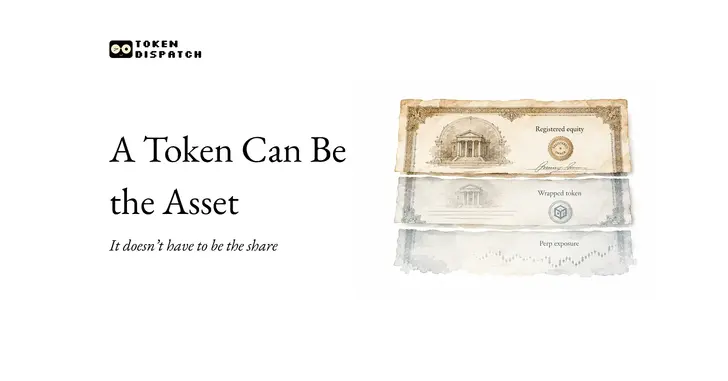
Of course, this differs from holding shares directly on the issuer’s books. That’s called native tokenization—supported by some in the industry. But I believe it introduces additional risks. Native tokenization requires issuers or their transfer agents to track separation between tokenized and non-tokenized shares. Whether relying on DTC, brokers, or custodians—someone must track these changes. In contrast, the wrapper model is more mature. Public companies issue all shares, held in DTC. Custodians hold a portion, place them in an SPV to issue tokens. When users mint or redeem tokens, stocks transfer based on SPV inventory. Custodians and DTC are experienced in these legal ownership transfers. Native tokenization requires a new system tracking onchain vs. offchain assets—introducing technical and legal risks.
Ian:
There’s much debate around wrapper models—we basically use wrappers for tokenized stocks. While some insist on native tokenization, they overlook that stablecoins are essentially wrappers too. Though stablecoins’ legal rights differ from bank cash, it hasn’t hindered adoption. As Nate said, our wrapper model introduces many investor protections—nearly absent in stablecoins. Frankly, our protections may even surpass those of traditional brokerage margin accounts.
Nathan:
Additionally, this approach is highly flexible. We can tokenize any investable asset—avoiding limitations faced by native tokenization advocates. Typically, issuers unable to raise funds traditionally try selling assets onchain to crypto users or stablecoin holders. This caused failures in many onchain lending projects and past RWA cycles.
Can permissionless tokenization exist?
David:
I’d like to pause and discuss our current topic—especially the concept of “native tokenization.” My understanding is native tokenization means tokens are fully equivalent to real assets—e.g., Apple stock tokenization. Such tokens aren’t just IOUs of Apple stock—they’re the actual stock itself. But this faces many issues, including incompatibility between blockchain tech and national regulatory systems.
In my view, native tokenization weakens some core advantages of tokenization—like full transferability among participants and permissionless free transfer. Without this, tokens struggle to integrate into DeFi, or can’t at all. While I wish the SEC provided clear guidance on native tokenization—allowing Nasdaq-like trading on Ethereum—I know the SEC will never permit permissionless, non-whitelisted ERC20 tokens to be true 1:1 securities. Native tokenization inherently requires KYC—permissionless operation is nearly impossible. So I believe native tokenization of securities won’t become mainstream—wrapper models may prevail. Wrapper models allow free transfer among all participants without KYC, while integrating into DeFi. You seem to support this non-native path—what are your thoughts on native tokenization’s challenges and theincompatibility between blockchains and regulatory systems?
Ian:
I don’t fully agree, but history offers clues. Stablecoins, as wrappers, integrated into DeFi permissionlessly and rapidly adapted to market needs. Today, many global users see stablecoins as an easy way to access dollars—they’ve become the liquidity layer of onchain economies.
If stablecoins were originally issued as native cash in bank accounts, I doubt they’d have scaled to today’s size. Stablecoins’ importance keeps rising—Treasury Secretary even predicted this market could reach $3 trillion. Recently, Congress passed a bill explicitly recognizing stablecoin legality, treating them as fiat. I believe stablecoins’ growth and structure offer valuable lessons. Stablecoins are wrappers—I wouldn’t be surprised if future onchain U.S. capital market assets follow a similar path.
David:
If I send money to your PayPal account, you need to register and complete KYC—otherwise, transaction fails. But stablecoins changed that. I can send funds directly to your Ethereum address—no account needed. Stablecoins enabled cash to flow in a completely new way—never possible before.
Stablecoins’ rapid growth carved out regulatory space. As someone who values freedom and privacy, I believe the existence of permissionless technology is beautiful. Maybe tokenized securities will follow a similar path. As the industry evolves fast, new user rights and property rights may become normal—wrapper models align better with blockchain logic. This trend might even influence regulation, advancing personal autonomy and freedom.
Ian:
I agree—our current model combines investor protection with onchain innovation. From the SEC or U.S. government perspective, they don’t oppose innovation—they want U.S. capital markets to innovate responsibly. Ondo’s wrapper model offers many advantages: investor protection, design of tokenized debt instruments, third-party collateral agent support—while maintaining permissionless features. This model enables onchain innovation without disrupting existing systems. I believe this added value might even make U.S. regulators recognize its potential.
Nathan:
Our current model can actually extend to native tokenization. For example, operating companies can issue securities directly from their entity—like our Global Market securities under Reg S. Tokens issued by our Global Market entity are somewhat native—except the SPV’s business is holding other securities and issuing these tokens.
We chose the wrapper model mainly not for its permissionless nature—though it has that advantage—but because it scales to all listed securities without requiring each issuer’s permission. This lets us offer investors a broader range of assets—not just specific ones.
24/7 Markets?
Ryan:
So you use an “instant minting” model—when I buy $100K of Tesla stock, it’s not pre-funded; you mint it in real time. This reduces capital costs. I know you use Ethereum’s infrastructure, which plays a key role. Listeners familiar with this will understand how you leverage the tech.
But I have a broader question. Traditional stock markets aren’t open 24/7, while crypto markets run 24 hours. Do your markets follow banking hours? Or if I want to buy/sell Tesla stock Saturday night, can your system support real-time minting/redemption?
Ian:
Our system supports minting and redemption 24 hours a day, 5 days a week. This means U.S. markets have evolved to offer 24-hour trading capability—from Sunday 8 PM ET to Friday 8 PM ET. Many Robinhood users are already used to this 24-hour trading experience. Our platform taps into the same liquidity sources as Robinhood.
Ryan:
So during off-hours, like weekends, do these asset prices change? Suppose markets become 7-day, not 5-day.
Ian:
Generally, when markets are closed, asset prices are fixed at the day’s closing price. In TradFi, no extra trading occurs after close. So stock prices usually stay flat until reopening.
David:
But even with markets closed, I can still sell these tokens on Uniswap or other platforms, right?
Ian:
Anyone can create a permissionless liquidity pool for these assets. But on weekends, prices may deviate.
In fact, many centralized exchanges wanting to list these assets highly value 24/7 trading. Sometimes we tell them: if you have inventory on your platform and market makers willing to provide liquidity, you can enable 24/7 trading. Our system currently doesn’t support real-time minting/redemption on weekends. But as long as there’s onchain inventory and market maker support, 24/7 trading is fully achievable.
I think this hasn’t been emphasized enough. Major traditional financial market makers see tokenizing stocks and ETFs as a key step toward 24/7 markets. Once large centralized exchanges adopt these assets, their users—already used to 24/7 trading—will expect it. So market makers are preparing—setting up weekend desks, exploring 24/7 pricing mechanisms—anticipating crypto exchanges listing these assets.
Ondo Global Markets
Ryan:
One crypto market advantage is weekend price discovery. If crypto becomes the only effective weekend trading venue, more assets will be minted on weekdays to meet demand—expanding market size further, while enabling more price discovery and trading on weekends. This is a classic case of crypto leading TradFi—offering functions TradFi can’t, driving growth through this edge, right?
We discussed liquidity and property rights—you mentioned these assets can be freely used on exchanges. When you say “permissionless,” does that mean if I mint Tesla stock and put it in my wallet, I can use it freely? For example, if I mint these abroad, can I freely create a Uniswap liquidity pool or send them to anyone? Is thisfreedom the same as using USDC in a crypto wallet?
Ian:
This is indeed a unique advantage of blockchain enabling 24/7 operations.
On top of freedom, we still comply with certain restrictions—like OFAC sanctions and oracle requirements. So we retain the
Join TechFlow official community to stay tuned
Telegram:https://t.me/TechFlowDaily
X (Twitter):https://x.com/TechFlowPost
X (Twitter) EN:https://x.com/BlockFlow_News
 深潮TechFlow