A vulnerability has turned stablecoins into the focal point of a trillion-dollar battle
TechFlow Selected TechFlow Selected
A vulnerability has turned stablecoins into the focal point of a trillion-dollar battle
The GENIUS Act prohibits stablecoin issuers from paying interest, but allows cryptocurrency exchanges to offer rewards to users.
 Navigating Web3 tides with focused insights
Written by: Adam Willems, Wired Magazine
Compiled by: Saoirse, Foresight News
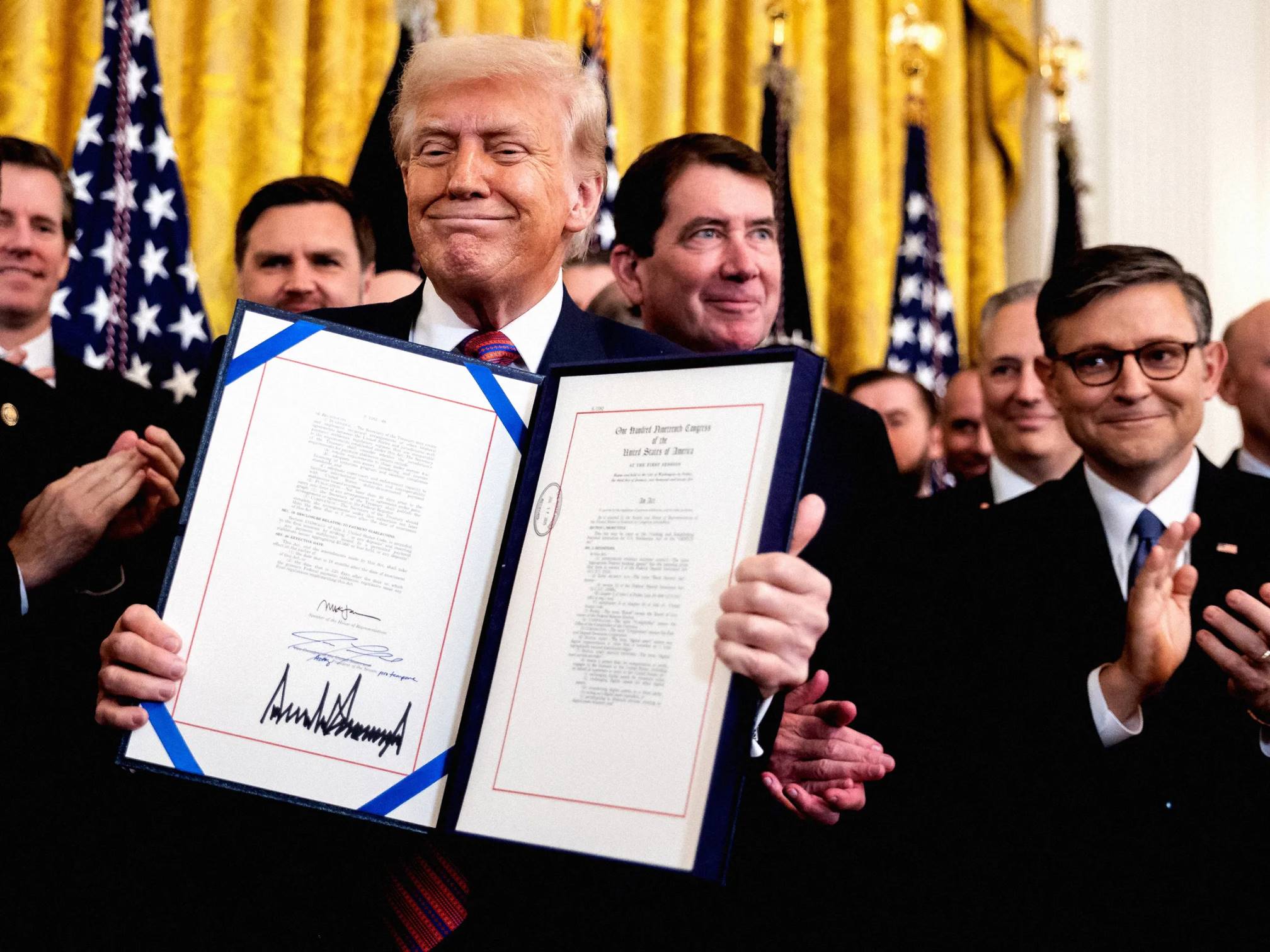
U.S. President Donald Trump displays the signed bill at the GENIUS Act signing ceremony held at the White House. Photo: Francis Chung; Source: Getty Images
On July 18th, after more than a decade of regulatory uncertainty facing the U.S. cryptocurrency industry, American lawmakers finally brought parts of the sector under a regulatory framework. The newly signed U.S. Stablecoin Innovation Guidance and Establishment Act (referred to as the GENIUS Act) imposes a series of requirements on stablecoin issuers: they must back tokens 100% with cash or short-term Treasury bonds, undergo audits, comply with anti-money laundering rules, among other things. A stablecoin is a type of cryptocurrency that claims its value is pegged to a more stable asset. Furthermore, to position stablecoins as "digital cash" rather than "store-of-value instruments," the Act also prohibits stablecoin issuers from paying interest.
The key, however, is that the Act does not prohibit cryptocurrency exchanges from offering rewards for users' stablecoin holdings — meaning stablecoin holders can still receive economic incentives highly similar to "interest." Currently, Coinbase users can earn an annual yield of up to 4.1% by holding a stablecoin called USDC on the platform, a return comparable to what one might expect from a high-yield savings account.
U.S. banking groups argue that this provision creates a significant regulatory loophole that could encourage people to move funds out of banks and into cryptocurrency exchanges, which are subject to far less stringent oversight. Some exchanges offer rewards even higher than high-yield savings accounts (which typically offer annualized yields around 4.25%, with rates varying by institution). For example, the exchange Kraken advertises an "annualized rate of up to 5.5% for USDC holding rewards."
Even without considering reward mechanisms, stablecoins still pose potential risks for consumers compared to bank deposits and cash. Unlike checking or savings accounts, cryptocurrencies are not protected by Federal Deposit Insurance Corporation (FDIC) insurance — meaning if a stablecoin issuer goes bankrupt, the U.S. government will not directly step in to cover consumers' losses.
Some regulators and cryptocurrency proponents believe the strict reserve requirements and bankruptcy protection clauses in the GENIUS Act are sufficient substitutes for FDIC insurance. However, stablecoins have experienced collapses before, and research from the Bank for International Settlements (BIS) shows that even the "least volatile" stablecoins, like those regulated under the GENIUS Act, "rarely trade exactly at their claimed peg." BIS researchers noted this phenomenon "calls into question their ability to serve as reliable payment instruments."
Research from the Federal Reserve Bank of Kansas City suggests that rising demand for stablecoins could have ripple effects on the economy. Stefan Jacewitz, an assistant vice president at the bank, stated: "If users purchase stablecoins with bank deposits, the funds available for banks to lend will necessarily decline." He also pointed out that incentives like rewards "could lead to faster and larger flows than would otherwise occur in the market."
In April of this year, a report released by the U.S. Treasury Department indicated that, influenced by the GENIUS Act, consumers could shift up to $6.6 trillion from bank deposits into stablecoins. Research by the American Bankers Association (ABA) noted that if this happens, the funds available for banks to lend would decrease, potentially raising borrowing costs for consumers and businesses in the long run.
The Game Behind the Compromise
The GENIUS Act took four years to advance and finally become law. During this period, a majority of members in the U.S. Congress agreed on the principle that "stablecoin issuers should not pay interest." "The drafters of the bill understood that stablecoins are a special tool — they are digital cash, digital dollars, not securities that generate yield," said Corey Then, Deputy General Counsel for Global Policy at Circle.
In March of this year, Coinbase CEO Brian Armstrong spoke out on this issue. On the X platform (formerly Twitter), he stated that users should be allowed to earn interest through stablecoins, likening the model to "a normal savings account, without the burdensome disclosure requirements and tax implications required by securities regulations."
Ron Hammond, a former senior lobbyist for the prominent cryptocurrency industry group Blockchain Association, revealed details of the subsequent negotiations: Ultimately, banking groups agreed to a deal that included their long-advocated clause "prohibiting stablecoin issuers from paying interest," but the clause still left room for cryptocurrency exchanges — allowing them to provide monetary incentives for users' stablecoin holdings. Hammond said some cryptocurrency companies initially hoped the bill would explicitly allow "interest," but mainstream cryptocurrency groups were ultimately willing to accept this compromise.
"At least the crypto industry successfully pushed for language in the bill that opened the door for them to offer 'yield' or 'yield-like' rewards," said former House Financial Services Committee Chairman McHenry. He now serves as Vice Chairman of the blockchain project Ondo.
Some cryptocurrency industry experts are dissatisfied with the current "alarmist attitude" of banking groups. Cody Carbone, CEO of the cryptocurrency advocacy and lobbying group Digital Chamber, said: "Raising concerns about stablecoin reward mechanisms at this stage is disingenuous and ignores the multiple rounds of in-depth discussions that shaped the GENIUS Act. Banking representatives participated throughout the legislative process, negotiating alongside crypto stakeholders, and the final language allowing exchanges and affiliated platforms to offer stablecoin-related rewards is a direct result of those discussions."
A Second Chance at the Game
Part of the reason the cryptocurrency industry was willing to compromise is that it did not want to expend too much political capital on this "experimental bill" — the industry views the GENIUS Act as a "litmus test" for broader cryptocurrency regulatory legislation. Hammond explained: "The concern in the crypto industry at the time was: 'If even the relatively simple stablecoin bill faces obstacles, then our chances of passing it drop significantly, and the probability of passing a market structure bill within the next two years becomes almost zero.'"
The "market structure bill" Hammond referred to is the CLARITY Act. This bill attempts to establish a regulatory framework for products and financial platforms on the blockchain, similar to the rules currently applied to traditional financial entities like stock markets, banks, and institutional investors. The CLARITY Act has already passed the House of Representatives, and a Senate version is expected to be introduced in September this year. Days after the GENIUS Act was signed, the drafters of the Senate CLARITY Act released a request for comment, posing a key question: should legislation restrict or prohibit mechanisms like stablecoin rewards.
The CLARITY Act provides a second opportunity for both the cryptocurrency industry and the banking sector — each can use it to push for provisions not included in the GENIUS Act. Paul Merski, Executive Vice President of Congressional Relations at the Independent Community Bankers of America (ICBA), the primary lobbying and advocacy group for U.S. community banks, stated that the association will oppose any provisions that "violate the core principle of 'no interest payments.'" He called this principle a key element established by the GENIUS Act. "We addressed this issue in the stablecoin-related bill, and we will also ensure that the market structure bill contains relevant provisions to avoid regulatory loopholes."
"The problem is that the two pieces of legislation are moving at different speeds: the losers from the previous round will come back, and the winners have to re-defend the provisions they already secured," McHenry noted. "Now we're in round two, and all the issues from the previous round are back on the table, making this second round much more difficult."
During the advancement of the CLARITY Act, U.S. banks have also been publicly positioning themselves in the stablecoin space. Citigroup and Bank of America have hinted at possibly issuing their own stablecoins; meanwhile, PNC Bank and JPMorgan Chase have established partnerships with Coinbase. Taking JPMorgan Chase as an example, its partnership plan will allow customers to directly link their bank accounts with cryptocurrency wallets as early as next year.
JPMorgan Chase is also piloting a "deposit token" system: this system uses technology similar to stablecoins but does not require backing the token's value with a 1:1 reserve of assets as required by the GENIUS Act for stablecoins. Ultimately, if the CLARITY Act leads to a ban on stablecoin "reward" mechanisms, the banking sector may regain the upper hand in this game involving trillions of dollars in deposits and interest rates.
"Banking groups clearly miscalculated in the GENIUS Act game, a type of mistake that is extremely rare for them," McHenry said. "Now they are back, and they are playing hardball — the stakes in this game are very high."
Join TechFlow official community to stay tuned
Telegram:https://t.me/TechFlowDaily
X (Twitter):https://x.com/TechFlowPost
X (Twitter) EN:https://x.com/BlockFlow_News
 @WIRED