The trend of on-chain asset tokenization under stablecoin pricing mechanisms
TechFlow Selected TechFlow Selected
The trend of on-chain asset tokenization under stablecoin pricing mechanisms
Stablecoins have triggered reforms in the tokenization of global financial systems and assets through changes in monetary pricing mechanisms.
 Navigating Web3 tides with focused insights
Author: Gary Yang
In August 2025, global financial hubs began experiencing dramatic market shifts due to the surge of stablecoins. The combined momentum from Genius Act and Project Crypto, along with wealth creation exemplified by Mstr and Circle, disrupted the traditional financial balance of interests. Stablecoins, coin-stock linkages, DAT, RWA, and on-chain asset management rapidly emerged as key competitive focal points in this new environment.
At its core, the implementation of stablecoin legislation marks the starting point of a comprehensive reform toward the on-chain transformation of global finance. The second growth curve of Crypto will unfold through the expansion of stablecoin use cases and the tokenization of various assets, blending the flexibility of Crypto finance with the historical expertise of traditional finance, leading to differentiated development across regions under diverse regulatory frameworks.
TL;DR
1. The essence of Genius Act is decentralizing monetary issuance and settlement rights to strengthen currency pricing power
2. Stablecoins have triggered the on-chain transformation of global finance and assets by changing the form of currency pricing
3. This reform is rapidly dismantling long-standing cartels in traditional finance, creating opportunities for interest reorganization amid chaos
4. Trump successfully aligned his personal interests with a historic transition point, achieving unprecedented legitimacy
5. Two directions of coin-stock linkage: Securitization and Tokenization, and their market characteristics
6. Industry features and challenges of stablecoins, DAT, stock tokenization, RWA, and on-chain asset management
7. Industry and cultural fragmentation within Crypto after the launch of the second growth curve
1. The essence of Genius Act is decentralizing monetary issuance and settlement rights to strengthen currency pricing power
A previous article <GENIUS Act and On-Chain Shadow Money> detailed the irreversible decline of traditional dollar dominance and how Genius Act strategically trades issuance and settlement control for broader circulation of the dollar. In fact, within three months of its proposal, the market further validated the foresight behind this decision. By loosening control over dollar issuance and settlement at this stage, the U.S. effectively enabled dollar-pegged stablecoins—acting as shadow money—to gain wider application scenarios, thereby reinforcing broader pricing power. It is precisely this pricing power that will define consensus-based competitiveness in future on-chain finance, while issuance and settlement rights will gradually fade into generic infrastructure, losing their moat-like barriers and competitive value.
The future of monetary competition lies not in control over issuance or settlement, but in consensus-driven adoption of currency applications. This represents a qualitative reform forced upon traditional finance by on-chain systems—a shift many national policies, traditional financial experts, scholars, and entrepreneurs either fail to recognize or struggle to accept. In other words, the concept of M2 for on-chain currencies will gradually lose its original significance. Massive over-issuance of money and tokenized assets may become commonplace, but such abundance does not equate to equivalent value. True value will reside in the consensus strength of currencies and tokenized assets, reflected in liquidity, purchasing power, interoperability, community recognition, and other quantifiable market feedbacks.
At such a transformative juncture, conceptual flexibility during paradigm shifts is crucial. Many definitions in traditional economics, methods of market regulation, and models of asset operation will change. For example, as M2 loses relevance, it may be recalibrated using a liquidity value factor as a multiplier to derive an effective circulation value for a given currency or asset. Naturally, both monetary and fiscal policies will also need fundamental adjustments to adapt to new forms of on-chain economic governance.
2. Stablecoins have triggered the on-chain transformation of global finance and assets by changing the form of currency pricing
Following the quiet onset of this new monetary battle via Genius Act, countries and regions worldwide have rolled out their own stablecoin legislation. Although many of these laws are still based on the inertia of traditional monetary frameworks and require time to iterate and adjust, the overall on-chain reform of financial markets has already begun.
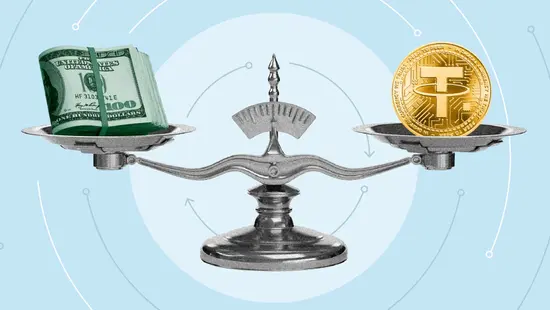
Although assets settled in 1USD versus 1 USDC (or other stablecoins) appear similar in price, their fundamentally different monetary mechanisms lead to significant differences in financial meaning for assets—particularly in programmability, composability, market liquidity, ecosystem-specific circulation, and the flexibility of financial derivatives.
Recently, when traditional finance professionals asked about the characteristics of CICADA Finance’s on-chain asset management, I used the analogy of a “financial motherboard.” Different financial asset strategies resemble various algorithmic “financial chips,” which can be plugged into or removed from the financial motherboard to create flexible financial combinations. In this system, stablecoins serve as the “financial current” (Note 1) connecting chips and motherboard.
3. This reform is rapidly dismantling long-standing cartels in traditional finance, creating opportunities for interest reorganization amid chaos
From Genius Act to Project Crypto, the reform driven by stablecoins and on-chain finance has fundamentally overturned the entrenched利益 model of traditional finance. At any other historical moment, such disruption would likely provoke massive conflict. Yet this time, the transition appears remarkably smooth and widely accepted. Is this because modern financial regulations have made competition fairer, or are today's institutions more civilized than in the past?
Not at all. The reason is simple: the pace of global societal development is now so rapid that enterprises capable of recognizing trends and transforming quickly stand to gain far greater profits than they would lose by resisting change. The previous financial cartels have been swiftly broken and abandoned by agile firms. From Wall Street to New York as a whole, the system has collectively chosen a (+3, +3) game-theoretic approach to enter this new landscape. This transformation will inevitably cause temporary chaos and restructuring in financial markets, while simultaneously generating abundant new trading opportunities involving novel assets and capital flows.
In the past month in New York, I observed that the degree of cartel entrenchment varies significantly across industries. While the financial sector rapidly transformed under the influence of Genius Act and Project Crypto, many traditional sectors (e.g., real estate) remain highly resistant. Due to strict cartel control over access conditions and information flow, transaction environments in many industries remain primitive, rendering most RWA assets unready for current tokenization upgrades.
4. Trump successfully aligned his personal interests with a historic transition point, achieving unprecedented legitimacy
Still noteworthy is President Trump, the crypto advocate who accelerated this rapid development. Historically, driving reforms is high-risk, faces strong resistance, and rarely earns public approval—especially when personal interests are involved, which usually exacerbates backlash. Yet Trump skillfully positioned himself at a unique historical inflection point, gaining remarkable legitimacy and perceived correctness. He leveraged the inevitable restructuring opportunities brought by an industry trend to neutralize widespread opposition, producing a rare and non-replicable outcome.
5. Two directions of coin-stock linkage: Securitization (Securitization) and Tokenization (Tokenization), and their market characteristics
Coin-stock linkage is a critical theme in Q3 2025. At its core, it involves two directions: first, embedding token assets into public companies to generate stock capital premiums; second, tokenizing existing stocks under evolving policies to create 7x24 tradable stock tokens. The former is the process of securitization, typically regulated by a country or region’s securities commission; the latter is tokenization, currently governed under alternative asset management rules—sometimes falling under banking regulations on money or payments, sometimes under alternative securities oversight.
The securitization aspect of coin-stock linkage has evolved a new term in Q3 2025: DAT (Digital Asset Treasury). More flexible and universal than ETFs, DAT refers to the process of placing token assets into public companies to generate capital premiums. The success of first-generation cases like Mstr created 1.5x–2x premium multipliers (peaking near 4x), making DAT a dominant wealth-generation trend in major financial centers like New York and Hong Kong over the past half-year. As we enter late Q3 and early Q4, the DAT market differs from early Mstr-BTC models in several ways: 1) Expansion of eligible assets beyond BTC to include ETH, SOL, and other non-BTC tokens; 2) Use of financial instruments to create leverage and achieve higher capital or monetary multipliers beyond direct asset-driven premiums; 3) Unlike Mstr’s politically symbolic significance, most small-to-mid-sized listed firms pursue purely commercial motives, making them more vulnerable to the "double whammy" effect post-premium.
The tokenization side of coin-stock linkage remains in its early stages in Q3 2025. Key challenges include: 1) Premature focus on consumer-facing (to C) applications where real demand is still weak (limited to needs like extended trading hours or tax avoidance during non-compliance periods), keeping the space in early infrastructure and business-facing (to B) development; 2) Unfriendly conditions for small-to-medium participants—due to low profitability from point 1—meaning only established players like Robinhood and Ondo Finance can sustain the initial market; 3) Infrastructure and to B demands are inherently hidden and prolonged, with standalone business models struggling to generate profit independently. A full ecosystem chain is required for resonance, necessitating a longer maturation period. Many entering institutions held flawed assumptions about the early stage of stock tokenization. What’s truly needed now includes: 1) Establishing compliant pathways across jurisdictions; 2) Low-cost acquisition, borrowing, or holding of shares to enable large-scale issuance of tokenized stocks; 3) Large-scale liquidity providers; 4) Leveraging financial tools like lending to build multiplier effects and derivative markets; 5) Supplying the saturated token quant strategy market with high-liquidity assets offering exploitable alpha.
In comparison, as of Q3 2025, the securitization path of coin-stock linkage is closer to monetization, but its opportunity window is shorter. Conversely, the tokenization of bonds, equities, and foreign exchange represents a long-term trajectory—an essential step in asset on-chain transformation—and will open much larger markets for strategy-driven quantitative financial assets.
6. Industry features and challenges of stablecoins, DAT, stock tokenization, RWA, and on-chain asset management
Stablecoins, DAT, stock tokenization, RWA, and on-chain asset management can be seen as the five golden flowers of Crypto’s second growth curve and asset on-chain evolution. Stablecoins, DAT, and stock tokenization have already been discussed.
RWA is an intriguing sector. Unpopular last year, it has regained favor in 2025—but with growing pains. Major issues include: 1) Most RWA assets or even platforms treat RWA solely as a fundraising tool, neglecting post-issuance concerns like tradability, exit mechanisms, liquidity, yield generation, market-making, and sustainability; 2) Lack of consideration—or inability—for assessing fair value of RWA assets and establishing reliable Oracle processes; 3) Beyond fundraising, no effort is made to design economic composability or programmability, nor to build ecosystems—making them indistinguishable from Web2 P2P or crowdfunding models.
In recent months, we’ve engaged with numerous RWA partners. Abstractly speaking, RWA is essentially building a one-and-a-half-tier market for non-standard assets. This presents a "do unto others as you would have them do unto you" dilemma: assets lacking inherent consensus, purchasing power, and liquidity cannot be instantly upgraded via RWA. The entire asset tokenization process still requires standardization, fair valuation, market validation, and financial engineering. The toughest challenge for RWA assets is solving large-scale, mid-term tradable liquidity—the same issue faced by structured finance and liquidity asset disposal institutions in traditional markets—which currently lacks effective solutions in the Crypto tokenization space.
Rather than intuitively popular categories like real estate, digital collectibles, and art, more viable RWA candidates at this stage are Supply Chain Fi and PayFi, whose underlying liquid assets support feasible tokenized transaction volumes.
On-chain asset management is a comprehensive sector emerging under the stablecoin wave, systematically managing diverse asset classes. At its core, it is an integrated engineering effort connecting liquid assets with liquid funds. Compared to TradFi, it involves more complex tasks—from economic modeling and platform design to asset selection and operational management—requiring multidisciplinary expertise in actuarial science and quantitative analysis. Over the past six months, CICADA Finance has rapidly iterated its on-chain asset management capabilities, pioneering new standards in this field. We welcome collaboration with diverse assets and ecosystems.
7. Industry and cultural fragmentation within Crypto after the launch of the second growth curve
After the SEC launched Project Crypto in August, the rapid rise of Crypto’s second growth curve accelerated further fragmentation across the entire Crypto market. North America, Southeast Asia, the Middle East, and Africa began showing starkly divergent trajectories.
Native DeFi and stablecoin ecosystems are strongest in New York and the East Coast. RWA and coin-stock linkage present opportunities across global financial cities, yet each is shaped by local policy specifics and the cognitive inertia of mainstream practitioners, resulting in varied interpretations. Africa, South Asia, and South America are advancing primarily through Supply Chain Fi and PayFi applications—representing true emerging mainstream markets that remain underpriced by the Crypto market but possess tremendous latent potential. Southeast Asia, conversely, has become a承接 base for the later stages of the first growth curve, attracting centralized exchanges and narrative-driven projects to form new sources of buying power.
Different socio-environmental contexts across geographies have led to fragmented layers within the Crypto market. Global finance now faces multidimensional reforms and disruptive changes in asset pricing models—stablecoins being merely the first step.
Join TechFlow official community to stay tuned
Telegram:https://t.me/TechFlowDaily
X (Twitter):https://x.com/TechFlowPost
X (Twitter) EN:https://x.com/BlockFlow_News
 @ary_yangge