








Deep dive into RWA technical details: Why is ERC-3643 the most suitable token standard?
TechFlow Selected TechFlow Selected
Deep dive into RWA technical details: Why is ERC-3643 the most suitable token standard?
ERC-3643 is a token standard designed for compliant RWA tokenization, bridging the regulatory gap between traditional finance and crypto assets through built-in identity verification and transaction restriction mechanisms.
 Navigating Web3 tides with focused insights
Author: J.A.E, PANews
The "permissionless" and "anonymous" DNA of the crypto world seems like a completely opposite universe compared to traditional finance (TradFi), which demands strict "compliance" and "traceability." This fundamental contradiction has long been a "shackle" preventing the large-scale tokenization of real-world assets (RWA). Conventional token standards such as ERC-20 and ERC-1400 each have their limitations, restricting the widespread application of tokenized securities, physical assets, and other RWAs.
Against this backdrop, a new token standard—ERC-3643—was developed specifically to bridge this "compliance gap." By embedding compliance logic directly into the token itself, it reshapes the technical components of on-chain finance, providing RWA tokenization with a "compliance engine" that ensures regulatory adherence while reducing costs and increasing efficiency. This article by PANews introduces the features, advantages, and common use cases of the ERC-3643 standard.
ERC-3643: The Token Standard for Compliant RWA
On July 31, 2025, SEC Chair Paul Atkins delivered a speech titled "America's Leadership in the Digital Finance Revolution" and announced the launch of "Project Crypto." ERC-3643 was explicitly mentioned, becoming the only standard publicly cited during the entire address. Paul Atkins stated that when the SEC builds its innovation exemption framework, it will prioritize token standards with "built-in compliance." ERC-3643 integrates functions such as identity verification, access control, and transaction restrictions, directly fulfilling securities law requirements for KYC/AML and accredited investors.

ERC-3643 evolved from the T-REX (Token for Regulated EXchanges) protocol and is a technical standard specifically designed for regulated assets, enabling the issuance, management, and transfer of "permissioned tokens."
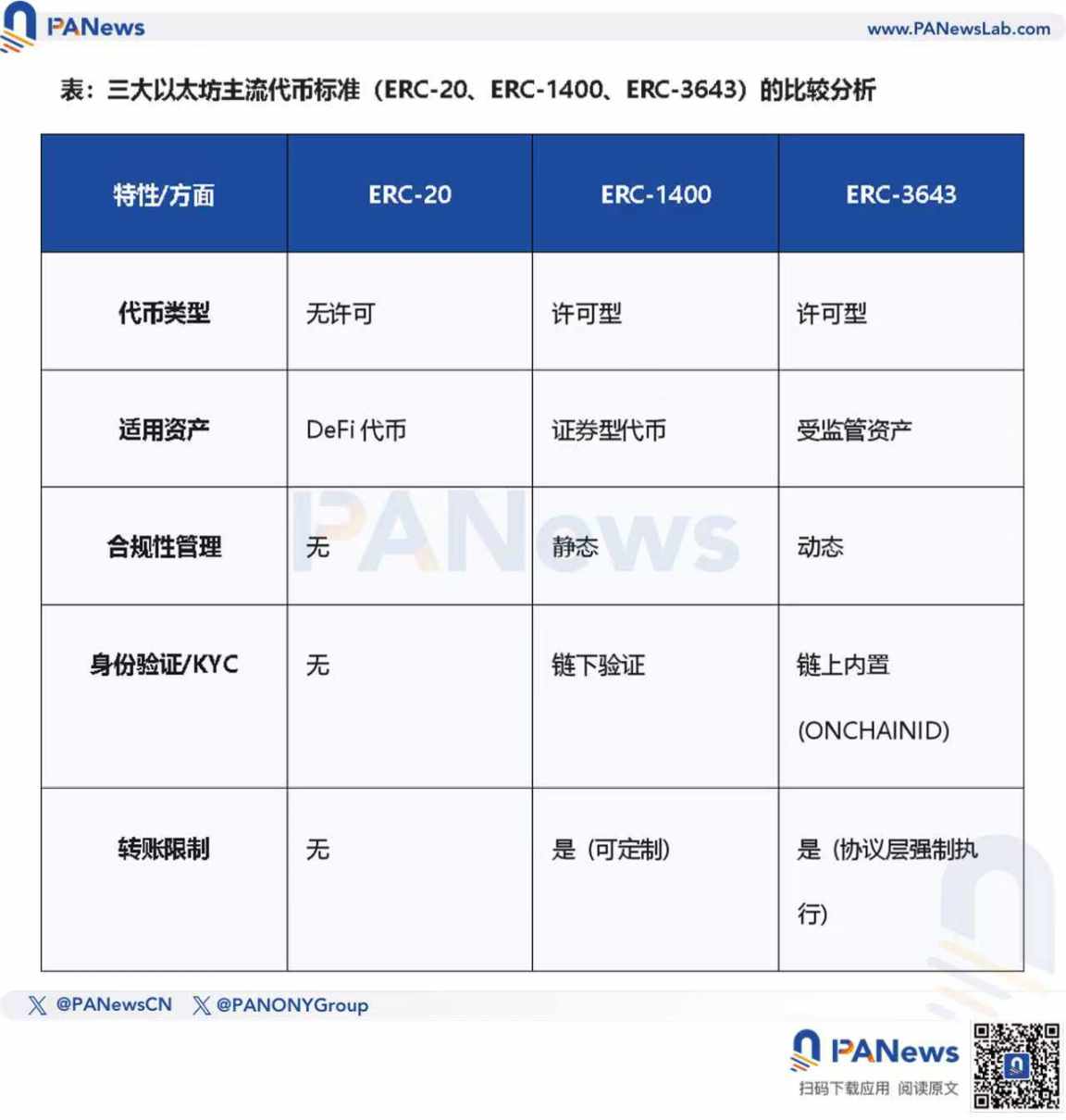
Prior to the rise of RWA tokenization, ERC-20 was the most widely adopted token standard on Ethereum, prioritizing simplicity and interoperability and operating in a "trustless" environment that allows free, anonymous transfers between any wallets.
However, the inherent permissionless nature of ERC-20 makes it unsuitable for RWA tokenization. RWAs require adherence to jurisdictional restrictions, identity verification (KYC/AML), and investor eligibility checks. ERC-20 grants holders full personal sovereignty over assets, allowing them to manage, hold, or transfer to other anonymous users, making it incompatible with compliance logic.
In contrast, ERC-3643 can be seen as a "compliant version" of ERC-20. While maintaining compatibility, it introduces unique functionalities through smart contract design, including token identity verification, conditional transfers, and compliance checks.
Another compliance-focused token standard, ERC-1400, predates ERC-3643 and was specifically designed for security tokens, adding transfer restrictions and features for storing regulatory documents related to transactions.
ERC-3643 is also an "upgraded" version of ERC-1400. In terms of compliance management, ERC-3643 emphasizes global dynamic compliance; regarding asset class support, it accommodates a broader range of asset types; and in technical efficiency and scalability, ERC-3643 employs a more efficient storage mechanism that helps reduce gas fees and facilitates easier expansion for new functionalities.
The evolution from ERC-20 and ERC-1400 to ERC-3643 reflects how the crypto industry has entered a "compliance token arms race," continuously refining standards to meet increasingly complex regulatory requirements. ERC-20 revealed limitations in RWA tokenization; ERC-1400 responded to the compliance needs of security tokens; ERC-3643 addresses the demand for global dynamic compliance and broader asset compatibility. The historical progression of token standards demonstrates the market's active development of solutions to bridge the gap between technological innovation and regulatory compliance, with ERC-3643 marking a significant milestone in this iterative process.
Cost Reduction and Efficiency: ERC-3643 Reshaping RWA Issuance Processes
High issuance costs of RWAs have further driven demand within the crypto industry for tokenization solutions capable of reducing expenses through technological means.
The root cause of high RWA issuance costs lies in the conflict between trustless on-chain transactions and real-world regulatory compliance, resulting in dependence on intermediaries and ongoing compliance expenditures. Traditional financial intermediaries such as broker-dealers ensure compliance through manual reviews, transaction monitoring, and offline procedures—these processes constitute the primary cost drivers for RWA projects.
Facing this challenge, ERC-3643 offers a new approach to RWA tokenization: leveraging automation and standardization to reduce long-term compliance costs and enhance overall efficiency.
Thus, ERC-3643 may become a key technology connecting TradFi and crypto assets, introducing a paradigm shift whose core mechanisms can be summarized as: permissioned tokens + on-chain identity (ONCHAINID). At its core, ERC-3643 defines tokens as non-freely transferable; every transfer must undergo mandatory protocol-level validation of the sender’s and receiver’s "identity and eligibility," requiring both parties to meet necessary compliance conditions on-chain. This grants assets the benefits of blockchain—such as instant settlement and programmability—without sacrificing regulatory compliance.
Developing "permissioned tokens" on-chain not only satisfies compliance requirements but also maintains the transparency and efficiency of distributed ledgers. While permissionless systems adhere strictly to pure decentralization principles, they are often incompatible with actual regulatory frameworks. ERC-3643 provides a hybrid model: the underlying public chain remains decentralized, offering transparency and consistency, while access to specific on-chain assets remains controlled. This design enables qualified investors to participate in a broader crypto ecosystem, benefiting from abundant liquidity while fulfilling required compliance obligations. This model could become a key driver for blockchain integration into TradFi.
The decentralized identity (DID) framework ONCHAINID built into ERC-3643 is a critical module for achieving compliance, ensuring that only pre-approved, authorized users can become token holders. After completing KYC/AML verification off-chain, an investor's identity information is mapped onto the blockchain and linked to a specific wallet address. This system forms the foundation of "compliance-native" design—non-compliant entities are fundamentally unable to acquire or hold the token from the outset.
The ONCHAINID framework can also be associated with token smart contracts to represent the asset's "identity," effectively serving as an "on-chain replica" of the asset and enabling the addition of any declarations throughout the token's lifecycle. Its high transparency and immutable log entries strengthen auditability and trust, reducing counterparty risks associated with intermediaries.
The ONCHAINID contract is not tied to any specific token, meaning each user needs to deploy it only once, after which their identity can be reused across multiple asset classes. This reusability is a crucial design choice that significantly improves investor user experience and accelerates ecosystem development. In TradFi, each new investment instrument typically requires repeating the KYC/AML process, creating cumbersome experiences for investors. By allowing a single verified ONCHAINID to be used across various issuances based on the same standard, ERC-3643 streamlines investor onboarding. This "verify once, reuse multiple times" model encourages broader participation in RWA offerings, thereby increasing liquidity and market depth across the entire ecosystem.
Compliance logic is automatically enforced at the smart contract level. Transfers of ERC-3643 tokens can only proceed if both investor rules and issuance rules are satisfied, effectively preventing tokens from flowing into unauthorized wallets. It also means issuers can set and update transfer rules at any time, such as establishing transaction whitelists, freezing designated accounts, or enforcing mandatory transfers.
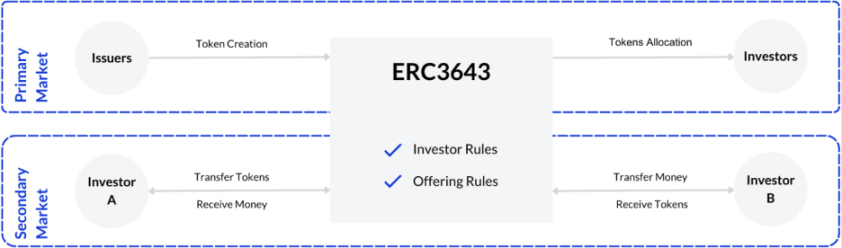
The value proposition of ERC-3643 lies in transforming off-chain regulatory requirements into on-chain, automatically executed "compliance logic" via code, fundamentally reshaping RWA compliance mechanisms. Traditional compliance processes are complex and costly, whereas ERC-3643 achieves real-time, automated, tamper-proof compliance checks by embedding compliance logic directly within token contracts. This not only reduces long-term audit and legal costs but also enhances transparency and transaction efficiency.
From Traditional to Emerging Assets: Diverse Use Cases of ERC-3643
As a compliance-native token standard, ERC-3643 has broad application potential, with its programmability enabling tokenization solutions across multiple asset classes.
Securities are the most mature and widespread use case for ERC-3643, applicable to the issuance and transfer of traditional financial instruments such as stocks, bonds, and funds. With ERC-3643, issuers can embed governance rules like dividend distributions and voting rights alongside on-chain compliance logic into smart contracts, ensuring only accredited investors can hold and trade the tokens. For example, a Dutch bank issued €5 million in green bonds on Polygon using the ERC-3643 standard in 2023, demonstrating the practical feasibility of issuing regulated assets on public blockchains. Additionally, ERC-3643 plays a role in reducing costs, improving liquidity and transparency, and expanding the investor base.
ERC-3643 also makes it possible to bring physical assets on-chain, enabling fractional ownership, automated asset management, and simplified trading of tangible assets. These include real estate, commodities (such as precious metals, agricultural products, crude oil), and artworks (such as collectibles and luxury goods). Through its "fractional ownership" feature, ERC-3643 divides high-value physical assets into smaller tokenized portions and encodes transfer rules, significantly lowering investment barriers, enhancing liquidity, and addressing challenges related to identity verification and jurisdictional restrictions inherent to physical assets. For instance, Inveniam Capital Partners used ERC-3643 to tokenize $260 million worth of U.S. commercial real estate, granting investors partial ownership and access to secondary markets.
Moreover, ERC-3643 is exploring applications in emerging asset categories. Carbon credits, as a form of green asset, require rigorous provenance tracking and transaction management. ERC-3643 can be used to issue and manage carbon credit tokens, ensuring transactions comply with specific regulatory requirements. It could provide the global carbon market with a transparent, traceable, and regulation-compliant on-chain infrastructure. ERC-3643 can also enable IP tokenization, allowing creators and inventors to monetize their works or rights. Smart contracts automatically distribute royalties or profits to token holders, reducing labor costs and operational errors while ensuring fair and timely payouts.
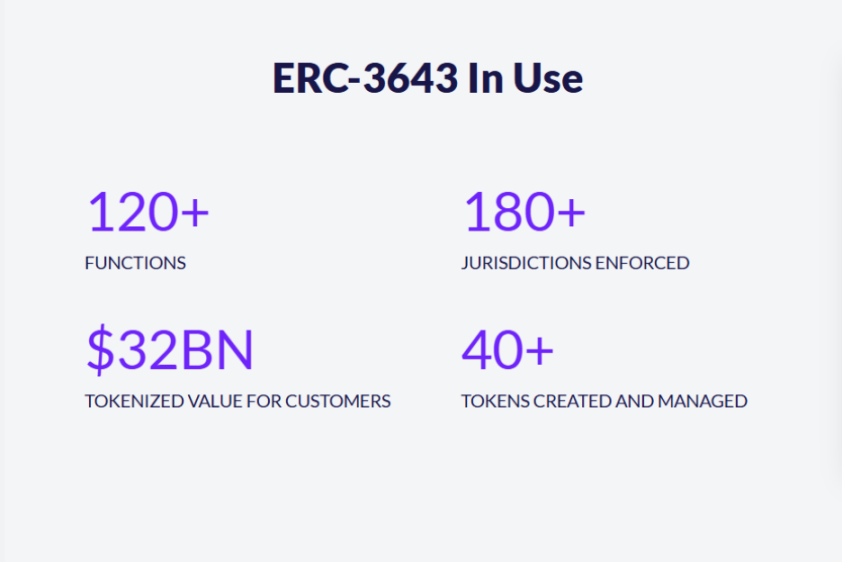
To date, ERC-3643 has demonstrated significant appeal, supporting over 120 features, meeting regulatory requirements in more than 180 jurisdictions, tokenizing over $32 billion in assets, and creating and managing over 40 different tokens—laying a solid foundation for mass adoption.
Join TechFlow official community to stay tuned
Telegram:https://t.me/TechFlowDaily
X (Twitter):https://x.com/TechFlowPost
X (Twitter) EN:https://x.com/BlockFlow_News
 PANews






